Back Training for Women to Feel Confident and Strong
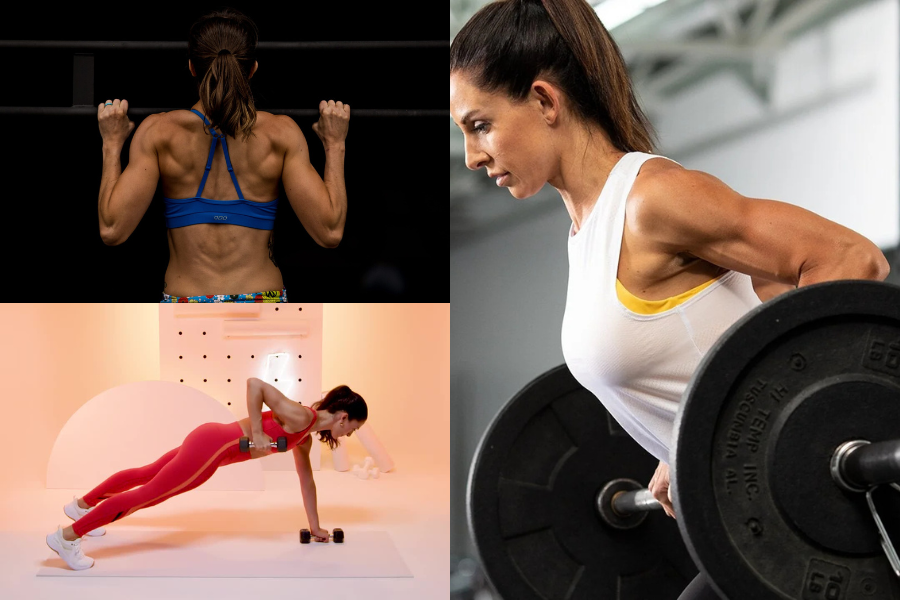
A strong, sculpted back does more than look good in a tank top. Effective back training for women helps you stand taller, move with ease, and feel confident in everyday life, from carrying groceries to sitting at your desk without slumping.
You do not need marathon gym sessions or heavy barbells to get there. With smart exercise choices, solid form, and a consistent routine, you can build a back that is both strong and resilient.
Why back training matters for women
Your back is part of your core, along with your abs, hips, and glutes. When these muscles are strong and coordinated, everyday tasks feel lighter and your risk of pain and injury drops.
According to Harvard Health Publishing, strengthening the back muscles supports posture, makes daily movements like putting on shoes or closing windows easier, improves athletic performance in activities like swimming or climbing, and helps prevent back pain. For women who sit a lot or spend time on phones and laptops, strong lats, traps, and spinal muscles also help correct the rounded shoulders and forward head posture that build up over time.
Back training is especially helpful if you:
- Sit for long stretches at work
- Have large breasts that strain your neck and shoulders
- Do repetitive lifting or push-pull motions
- Get upper back or lower back discomfort after a typical day
Certified personal trainer Colleen Conlon notes that strengthening the lats and traps improves posture, builds muscular endurance, and helps sculpt your upper body, especially if you spend much of the day seated. Certified athletic trainer Vanessa Abrams explains that targeting spine-supporting muscles can also ease pain related to large breasts, repetitive lifting, prolonged sitting, or holding your arms up for hairstyles like braids.
Key back muscles you will train
You do not have to memorize every anatomy term, but knowing the main players helps you understand what each exercise is doing.
Upper and mid-back
The upper and mid-back are responsible for pulling, rowing, and keeping your shoulders in a healthy position.
- Latissimus dorsi (lats): The large, wing-like muscles on the sides of your back that help you pull things toward you and assist in overhead movements.
- Trapezius (traps): From your neck across your shoulders and down your mid-back, these muscles support your shoulder blades and help with posture.
- Rhomboids and rear delts: Smaller muscles that pull your shoulder blades together and keep them from drifting forward.
Lower back and spinal support
Your lower back and spinal muscles stabilize you in almost every movement.
- Erector spinae: Muscles that run along your spine and help you extend, rotate, and stabilize your back.
- Deep core and glutes: Not technically “back muscles,” but they work together with your back to support your spine and pelvis.
When you train your back you are also training this whole core system. That is why back workouts can have such a big impact on how you feel throughout the day.
Safety basics before you start
Back training for women should feel challenging, not scary. A few safety habits go a long way in protecting your spine and keeping you on track.
Maintain a neutral spine
A neutral spine is your natural, gentle S-curve, not a rigidly straight line or an exaggerated arch. During exercises like pull-ups, chin-ups, rows, deadlifts, planks, and push-ups, you want to keep this neutral position.
If you round or overarch your back, you increase the risk of lower back strain, reduce how much your lats and upper back can work, and place more stress on your spine. Think of “long from head to tailbone,” with your ribs stacked over your hips.
Warm up and activate gently
If your back tends to feel tight or painful, a thoughtful warm-up is essential. A good warm-up increases blood flow, wakes up the muscles you are about to use, and improves mobility.
You can include:
- Arm circles for 20 to 30 seconds
- Dynamic band pull-aparts for 2 sets of 15 reps
- Cat-cow stretches for 10 reps
- Thoracic spine rotations for 10 reps per side
These dynamic moves prepare your joints and muscles more effectively than holding static stretches at the start. Save long static stretches for after your workout, especially for your hips and hamstrings, since tightness there is a common trigger for back pain.
Choose weights you can control
Avoid jumping to heavy loads just because they look impressive. Ego lifting, or choosing weights that are too heavy for you to control, usually leads to compromised form, limited range of motion, and a higher risk of injury.
Instead, start with lighter weights and higher repetitions while you master technique. You can gradually increase weight and slightly lower reps over time to keep progressing. Aim for steady, predictable progress rather than drastic jumps.
If you have a history of back pain or injury, consulting a doctor, physical therapist, or qualified trainer before starting a new back routine is a smart step. They can help you choose safe exercises and correct your form.
Crunches and core work without back pain
It is easy to assume that a strong core means endless crunches. For many women, that backfires.
Crunches heavily recruit your hip flexors, which can become tight and pull the lumbar spine forward. Over time this may contribute to lower back pain, especially if you sit a lot. If crunches make your back ache, skip them and focus on core exercises that keep your spine more neutral.
Good alternatives include:
- Planks and side planks to strengthen your abs and back together
- Bird-dogs, reaching opposite arm and leg while on hands and knees
- Dead bugs, lying on your back and moving arms and legs in a controlled way
These exercises strengthen your core and back without forcing your spine to flex repeatedly, which is often kinder to a sensitive lower back.
Beginner-friendly back exercises at home
You can start back training for women with just your body weight and a small amount of space. These beginner exercises help you build foundational strength and confidence.
Aim for 8 to 12 repetitions per set. Start with 1 to 2 sets and gradually work up to 3 sets as you feel stronger.
Bridge
The bridge strengthens your lower back, glutes, and core.
- Lie on your back with knees bent and feet flat on the floor, hip-width apart.
- Tighten your belly and squeeze your glutes.
- Press through your heels to lift your hips until your body forms a straight line from knees to shoulders.
- Pause, then lower with control.
The Mayo Clinic notes that you can begin with about 5 repetitions per day and gradually increase up to 30 as your strength improves.
Superman
This simple movement trains your entire back chain.
- Lie face down with arms extended in front of you and legs straight.
- Gently tighten your core.
- Lift your arms, chest, and legs a few inches off the floor at the same time.
- Hold briefly, then lower slowly.
Focus on lengthening rather than yanking up as high as possible. If your lower back feels pinchy, reduce your range of motion.
Side plank
Side planks build strength along the sides of your core and into your lower back.
- Lie on your side with your elbow under your shoulder and knees bent or legs straight.
- Lift your hips so your body forms a straight line from head to knees or feet.
- Hold for 10 to 20 seconds, keeping your hips stacked and your chest open.
- Lower, rest, and repeat on the other side.
These body-weight moves are a gentle way to train your back and core together, especially if you are easing into exercise or returning from a break.
Adding equipment: Dumbbells and bands
Once you are comfortable with body-weight exercises, you can add simple equipment for more challenge. Dumbbells, kettlebells, or resistance bands all work well for back training for women.
Row variations
Rowing motions are some of the most effective ways to strengthen your lats, mid-back, and biceps.
-
Bent-over row with dumbbells:
Hinge at the hips with a flat back, weights in your hands, arms hanging toward the floor. Pull the weights toward your ribcage, keeping your elbows close to your sides, then lower with control. -
One-arm dumbbell row:
Place one knee and hand on a bench or sturdy surface, keeping your back flat. Hold a dumbbell in your free hand, arm extended. Pull the weight toward your hip, pause, then lower slowly. -
Resistance band pull-apart:
Hold a band at chest height with arms straight and hands shoulder-width or slightly wider. Pull the band apart by squeezing your shoulder blades together, then return to the starting position with control.
These moves target slightly different angles of your back muscles, which helps you avoid overtraining just one area.
Reverse fly and pull-down movements
To hit the rear shoulders and upper back, include:
-
Reverse fly with dumbbells:
Stand in a hip hinge or sit with a flat back, holding light dumbbells. With a slight bend in your elbows, open your arms out to the sides, squeezing your shoulder blades together, then slowly return. -
Lat pull-down with a band:
Anchor a resistance band overhead. Hold the ends or handles, then pull your elbows down toward your sides while you draw your shoulder blades down and back.
For many women, free weights under 10 pounds are enough to start. A simple routine can include 8 to 10 repetitions of five exercises such as bent-over rows, reverse flyes, superman holds, and renegade rows, completed as a circuit in about 15 minutes. This format is one recommended back workout structure for women and can be repeated for multiple sets depending on your fitness level.
A helpful tip is to use eccentric control. For example, lift the weight in one count and lower it in three counts. That slower lowering phase can increase muscle activation and strength gains without requiring heavier weights.
Sample 15-minute back workout
Here is a simple, time-efficient routine you can do at home or in the gym. Adjust rest and weight based on how you feel.
- Bent-over row with dumbbells
- Reverse fly with dumbbells
- Superman hold
- Alternating renegade row (hands on dumbbells in a plank, row one arm at a time)
- Bridge
Perform 8 to 10 repetitions of each exercise, rest up to 60 to 90 seconds, then move to the next. Beginners can complete the circuit once. As you get stronger, repeat the whole circuit 2 to 3 times.
Back muscles tend to fatigue more quickly than some other muscle groups, so moderate to higher repetitions and multiple sets can be especially effective for building both strength and endurance.
How often to train your back
For most women, working your back at least twice per week is a good starting point. This frequency allows enough stimulus for growth and strength while giving your muscles time to recover.
If you prefer shorter sessions, three or four quick 15-minute routines across the week can be just as effective as two longer workouts. The key is consistency and progressive challenge over time.
A simple weekly structure might look like:
- Day 1: Back plus biceps
- Day 3: Lower body and core
- Day 5: Back plus shoulders
Because many back exercises also recruit your biceps, combining “pull” muscles in one session can be efficient. You may find you need less direct arm work when your back training is solid.
Tailoring your routine to your goals
Back training for women is not one size fits all. You can adjust your exercise selection, intensity, and volume based on what matters most to you.
If your priority is posture and pain relief
Focus on:
- Light to moderate resistance
- Higher reps with perfect form
- Consistent mobility and stretching for hips and hamstrings after workouts
Include exercises like bridges, supermans, band pull-aparts, rows, and gentle cat stretches. The Mayo Clinic suggests that daily back exercises, even just 15 minutes, can help ease back pain and strengthen the muscles that support your spine.
The Knee-to-chest stretch, performed on your back while pulling one knee toward your chest and tightening your belly, repeated 2 to 3 times per leg in the morning and evening, can help improve flexibility. The Cat stretch, arching and sagging your back slowly on hands and knees, is recommended 3 to 5 times twice daily to maintain mobility.
If your priority is strength and muscle definition
Emphasize:
- Slightly heavier weights you can control for 8 to 12 repetitions
- Multiple sets per exercise, working toward about ten or more total sets per back muscle group per week
- Progressive overload, gradually increasing weights, reps, or difficulty
Include compound lifts like deadlifts, pull-downs, rows, pull-ups or assisted pull-ups, and kettlebell swings. Varying your movements, such as mixing deadlifts, rows, and pull-downs, helps you avoid overtraining the same upper back muscles and encourages balanced development.
Small habits that support a healthy back
Your back does not only “work out” in the gym. Daily habits make a big difference in how your spine feels.
Try to:
- Sit tall with your ears over your shoulders, not in front of them
- Take brief standing or walking breaks if you are at a desk for hours
- Distribute the weight of bags evenly or use a backpack instead of a heavy shoulder bag
- Stretch your hips and hamstrings after training to reduce tension that can tug on your lower back
Even simple changes, like standing up every hour or relaxing your shoulders away from your ears, help reinforce the strength you are building in your workouts.
Back training for women is about more than sculpted muscles. It is about feeling stable, capable, and confident in your body. Start with a few of the exercises here, keep your spine neutral, choose weights you can control, and build from there. Over time, you will notice that your posture improves, everyday movements feel easier, and your back becomes one of your greatest strengths.
About The Author