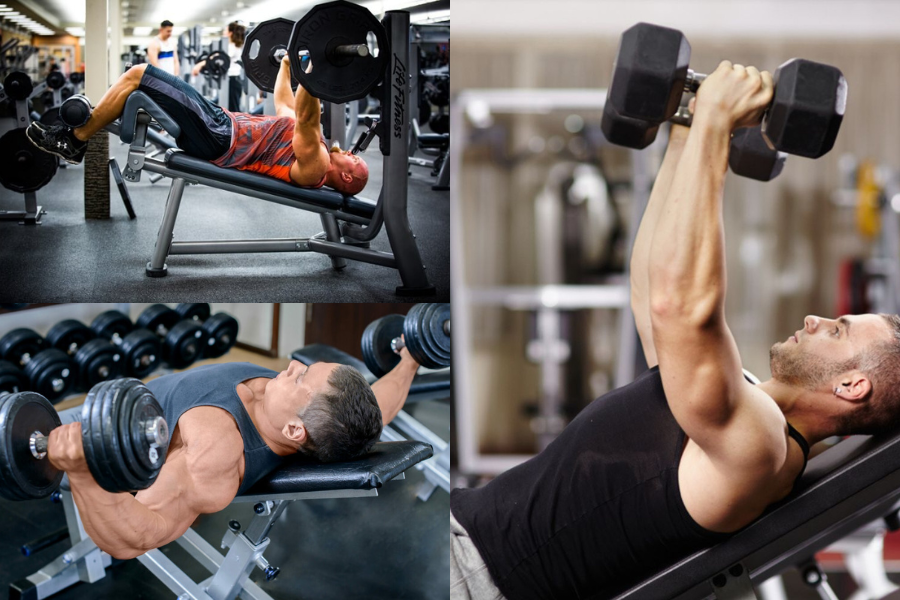
Power Up Your Workout with the Best Chest Exercises for Men
A strong, well defined chest does more than fill out your T shirt. It supports better posture, boosts pressing strength, and helps you move with more power in everyday life. If you want to build size and strength fast, choosing the best chest exercises for men and organizing them smartly in your workouts is key.
Below, you will find the most effective chest movements, why they work, and how to put them together into a simple, repeatable routine.
Understand your chest muscles
Before you load up the bar, it helps to know what you are actually training. Your chest is not one flat slab of muscle. It has regions that respond slightly differently depending on angle and movement.
The three main chest regions
You will target three areas in a good chest workout.
- Upper chest, the clavicular head under your collarbones
- Mid or inner chest, the thick central portion of your pecs
- Lower chest, the fibers that run toward your ribs
Incline presses and low to high cable moves hit the upper chest. Flat presses and fly variations hit the mid chest. Dips and high to low work tend to emphasize the lower chest.
If you want a balanced look and stronger pressing overall, you need to include movements that challenge all three regions, not just endless flat bench sets. Gymshark highlights this approach as the most efficient way to build a big, well rounded chest in their 2024 and 2025 chest training guides.
Core compound chest exercises
Compound lifts give you the most return for your effort. They allow you to push heavier weight, recruit more muscle groups, and create the raw strength base that your isolation work can then shape.
Barbell bench press
The bench press is the classic chest builder for a reason. It heavily recruits your pecs, shoulders, and triceps and lets you progressively overload with weight.
Start with 3 sets of 6 to 12 reps using a full range of motion. Lower the bar under control until it touches or nearly touches your chest, then press up until your elbows are almost locked out. Gymshark highlights the barbell bench press as one of the top exercises for inner and overall chest strength in men.
If you are a beginner, use a spotter, keep your feet planted, and focus on consistent bar path. Do not sacrifice form just to add plates.
Incline dumbbell bench press
If your upper chest looks flat, the incline dumbbell bench press should be near the top of your list of best chest exercises for men. By setting the bench at roughly 30 to 45 degrees and pressing with dumbbells, you shift more work to the clavicular head of the pecs and increase your range of motion.
A 2010 study referenced in a 2025 Gymshark article notes that this incline range increases activation in the upper chest and helps correct strength imbalances by forcing each side to work independently.
Perform 3 to 4 sets of 8 to 12 reps. Control the lower half of the movement, pause briefly at the bottom, and then press up in a slight arc so the dumbbells end above your upper chest, not your face.
Dips with a forward lean
Bodyweight dips are brutal in the best way. When you lean your torso slightly forward and avoid fully locking out your elbows, you shift a lot of tension into the chest rather than just the triceps.
Gymshark notes that dips done with this forward lean can activate the chest more than the bench press, especially in the lower chest region. Aim for 3 sets close to failure. If you are new to dips, start with band assistance or use a machine and gradually reduce the help.
Reverse grip bench press
If you have nagging shoulders or your upper chest refuses to grow, the reverse grip bench press is worth your time. By using a supinated, underhand grip, you naturally tuck your elbows and reduce stress on the shoulder joint.
Research summarized in the Journal of Strength & Conditioning Research, and referenced in a 2025 Gymshark article, shows that this grip increases activation in the upper chest and even brings the biceps into the movement. Keep the weight lighter at first, focus on safety, and use a spotter while you learn the groove.
Key isolation moves for definition
Once your big lifts are covered, isolation exercises help you concentrate tension directly on your chest. The goal here is control, stretch, and squeeze, not ego lifting.
Dumbbell flyes
Dumbbell flyes let you open your chest and feel a deep stretch that is hard to get from presses. As Gymshark points out, they work best after your compound work when you can use lighter weights and focus on form.
Lie on a flat bench, hold dumbbells above your chest with a slight bend in your elbows, and slowly lower out to the sides until you feel a strong but comfortable stretch. Then bring the weights back together by driving your elbows toward the ceiling, not by banging the dumbbells together. Go for 3 sets of 10 to 15 reps.
Low to high cable fly
If you want your upper chest to pop, the low to high cable fly is one of the most targeted movements you can choose. You start with the cables near hip height and sweep your arms up and in toward shoulder level.
A 2022 study by Schütz and colleagues, cited in a Gymshark article, found that this path produces larger shoulder joint moments and mechanical tension on the clavicular fibers, which is exactly what you need for upper chest growth. Use moderate weight, 3 sets of 12 to 15 reps, and focus on squeezing your upper chest at the top.
Cable crossover variations
Cable crossovers offer constant tension on your chest throughout the entire movement. You can adjust the angle to focus on different regions.
- High to low, more emphasis on lower chest
- Mid level, balanced mid chest focus
- Low to high, more emphasis on upper chest
Gymshark highlights single arm cable crossovers as a great option when you want to bring up one side or feel a stronger mind muscle connection. Use slightly higher reps and controlled tempo here.
Effective push up variations
Push ups are not just a beginner fallback. Done correctly and with the right variations, they can build serious size and strength, especially when you train at home.
Standard and incline push ups
Traditional push ups train your chest, shoulders, triceps, and core in one simple move. A common starting goal is 3 sets of 10 reps using strict form. Men’s Health UK and Gymshark both emphasize the push up as a key foundation exercise that you can do anywhere.
Incline push ups, with your hands on a bench or sturdy chair, make the movement easier and shift slightly more work into the lower chest. They are perfect if you are still building strength or coming back from a break.
Decline push ups for upper chest
If you elevate your feet instead, you get a decline push up. This version mimics the bar path of an incline press and puts more stress on your upper chest and front shoulders.
Gymshark recommends 3 to 4 sets of 5 to 15 reps, keeping your body in a straight line and your core tight. Adjust the height of your feet to match your strength level.
Diamond, isometric, and explosive push ups
You can also mix in more demanding variations.
- Diamond push ups, hands close together under your chest, hammer both your inner chest and triceps. Gymshark suggests 3 to 4 sets of 8 to 15 reps with short rests.
- Isometric push ups, where you hold the lowered position with elbows at about 90 degrees for around 15 seconds, increase time under tension and pump your chest without any equipment.
- Explosive or plyometric push ups, including clap push ups, recruit more fast twitch fibers by forcing you to push the ground away as hard as possible. According to Gymshark, 3 to 4 sets of 8 to 15 reps with 45 to 60 seconds rest can significantly boost power.
These can stand alone in a home workout or be used as finishers after heavy bench or dumbbell work.
How to structure your chest workout
You have the movements. Now you need a simple plan that you can actually follow. The best chest exercises for men work even better when you organize them in a logical order and use consistent training volume.
Weekly training volume and frequency
For growth, research and expert practice generally line up around these guidelines, summarized by Gymshark in their men’s chest training guides.
- At least 10 total sets per week for chest
- Mostly in the 6 to 12 rep range
- Train chest 2 times per week with at least one rest day in between
You can hit chest on a traditional chest day, or fold it into an upper body or push session. What matters most is that you hit those weekly sets and push for gradual progress.
Sample gym workout for size and strength
Here is a simple structure you can use twice a week, adjusting loads to match your level.
- Barbell bench press, 4 sets of 6 to 8 reps
- Incline dumbbell bench press, 3 sets of 8 to 10 reps
- Dips with forward lean, 3 sets close to failure
- Dumbbell flyes or incline cable flyes, 3 sets of 10 to 15 reps
- Optional finisher, 2 sets of explosive push ups to technical failure
Keep 60 to 90 seconds of rest between most sets. For your heaviest bench sets, you can rest up to 2 minutes if needed.
Sample home workout with no or minimal equipment
If you train at home, you can still cover all key regions of your chest with intelligent push up progressions and simple tools like a sturdy chair or a resistance band.
- Incline push ups, 3 sets of 10 to 15 reps
- Standard push ups, 3 sets of as many quality reps as possible
- Decline push ups, 3 sets of 8 to 12 reps
- Diamond push ups, 3 sets of 8 to 15 reps
- Isometric push up holds, 3 holds of 10 to 15 seconds
Men’s Health UK highlights similar bodyweight moves, including hands elevated and band resisted press ups, as effective options for building your chest without a gym.
Growth habits beyond the bench
Muscle does not grow only when you are under the bar. What you do between workouts matters just as much.
Prioritize recovery
The 28 day chest plan outlined by Men’s Health UK specifically calls for at least two rest days after each big chest session to let your muscles recover and grow. That advice generalizes well.
Get enough sleep, eat enough protein, and resist the urge to hammer your chest every day. Constant soreness and falling numbers are signs you need more rest, not more sets.
Progress slowly and track your lifts
Progressive overload is your long term engine. Aim to make at least one small improvement each week. That could be:
- One more rep at the same weight
- A slightly heavier load for the same reps
- Shorter rest while keeping performance similar
Write your workouts down so you can see those changes. Small, consistent steps will beat occasional heroic sessions every time.
Putting it all together
If you focus on the best chest exercises for men, organize them into 2 weekly sessions, and commit to steady, measurable progress, your chest will grow. Combine big compound lifts like barbell bench press, incline dumbbell press, and dips with targeted isolation moves, smart push up variations, and solid recovery.
Start with the version of the plan that fits your current situation, gym or home, and give it at least 8 to 12 weeks. Then adjust angles, switch a few accessories, and keep moving forward. Your shirt will fit differently, your posture will improve, and you will feel stronger every time you press weight off your chest.
About The Author


