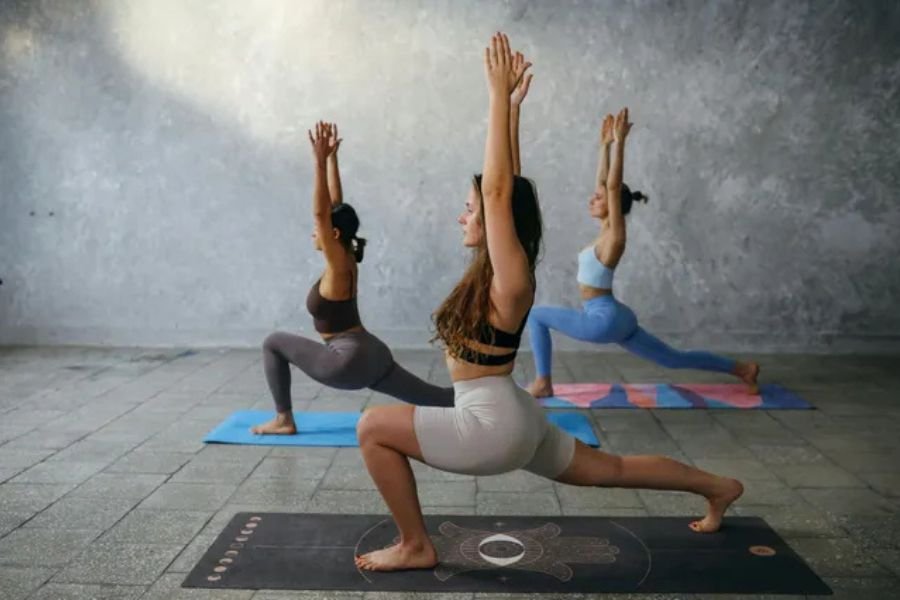
8 Small Habits Yoga Instructors Wish Students Would Avoid in Class
A strong yoga practice is not just about how deep you go into a pose. It is also about how you show up in class, how you treat your body, and how you share the space with others. Many common yoga class mistakes are small habits you may barely notice, yet they can affect your safety, focus, and enjoyment.
Below are eight small habits yoga instructors wish you would leave at the studio door, along with what to do instead.
Arriving just a few minutes late
Walking into class after it has started might feel harmless, especially if you are only a few minutes behind. In reality, those few minutes can disrupt the group, cut into your warm up, and leave you feeling rushed and scattered. Some studios consider being more than six minutes late a reason to skip class altogether, because it interrupts everyone who has already begun to settle in (Bamboo Garden Yoga).
When you miss the opening, you also miss your instructor’s overview of the sequence, any safety notes, and the first gentle movements that prepare your joints and muscles. That increases your risk of straining something as soon as the practice gets more active.
Try aiming to arrive 10 to 15 minutes early. Give yourself time to change, unroll your mat, grab props, and sit quietly. Those extra minutes often turn into a small ritual that marks your transition from the rush of your day into a more grounded state.
Holding your breath without realizing it
If you tend to grit your teeth and power through poses, you are not alone. In yoga, that usually shows up as holding your breath. Teachers often call this the number one mistake people make in class because it cuts off the free flow of energy, raises your stress response, and can make you push beyond what is safe for your body (Cultivate Calm Yoga).
You might notice you hold your breath in balance poses, deeper stretches, or any time you feel wobbly or unsure. Without steady breathing, your nervous system stays on high alert, which makes it harder to relax into the pose or listen to subtle sensations.
A simple reset is to match movement to breath. In general, inhale when you expand or lengthen, such as lifting your arms or arching your spine, and exhale when you contract or fold, such as rounding forward or twisting (Sri Sri School of Yoga). If you lose track, pause where you are and take three slow breaths in and out through the nose before moving again.
If a pose is so intense that you cannot breathe smoothly, that is usually a sign to ease out of it or take a gentler variation.
Comparing yourself to everyone around you
It is easy to glance around the room and immediately decide you are behind. Maybe someone next to you folds flat in a forward bend or balances effortlessly in a pose you are still figuring out. Comparing yourself to others in yoga class pulls your attention away from your own experience and progress, which is where the real benefits happen (Sri Sri School of Yoga).
When you chase someone else’s version of a pose, you may ignore your own limits, skip props that would help, or rush into positions your joints are not ready for. Over time that perfectionist mindset can lead to frustration, or worse, to injury.
Instead, treat each class as a check in with your unique body on that day. Your energy, flexibility, and balance all change from week to week. Once you feel comfortable with the basics of a pose, you can even experiment with closing your eyes for a few breaths. Practicing briefly with closed eyes can deepen your awareness of your own alignment and sensations, and it can gently quiet the urge to compare (Sri Sri School of Yoga).
Pushing past your limits in every pose
There is a big difference between a gentle edge and forcing your body into a shape. A common yoga class mistake is feeling pressure to keep up with the instructor or the rest of the group, then muscling into positions your tissues are not ready to support. Many people overdo poses this way, which can lead to real damage over time (Rehab and Revive).
Health experts warn that practicing yoga incorrectly can cause muscle strain, torn ligaments, or more serious injuries, especially in areas like the neck, shoulders, spine, legs, and knees (AAOS OrthoInfo). More than 34,000 yoga related injuries were treated in U.S. clinics and emergency rooms in just one year, which shows how important it is not to push too far too fast (AAOS OrthoInfo).
Focus on posture before depth. It is better to bend less but correctly than to bend more with poor alignment (Sri Sri School of Yoga). If you feel sharp pain, numbness, or tingling, or if you notice you are holding your breath to stay in the pose, that is your cue to back off. Your goal is a steady, sustainable effort, not a one time performance.
Ignoring props because you think they are “for beginners”
Blocks, straps, blankets, and bolsters are not a sign that you are bad at yoga. They are tools to help you practice in a way that respects your anatomy, injuries, and current level of flexibility. One of the most common yoga class mistakes is refusing props even when they are offered, or leaving them at the side of the room because you assume you should be able to do the pose without them (Cultivate Calm Yoga).
Props can shorten the distance between you and the floor, bring the floor closer to your hands, or support parts of your body that feel strained. Used well, they actually allow you to go deeper into poses because you are supported enough to relax instead of gripping.
If your hamstrings feel tight, place blocks under your hands in forward folds. If your shoulders complain during bridge or supported backbends, slide a block or bolster under your sacrum. If you live with chronic pain, modified poses with props can help you gain benefits without irritating sensitive areas, which is one way to practice in a heal smarter, not harder way (Rehab and Revive).
Letting strong scents fill the room
You might not notice your own perfume or lotion once you are used to it, but in a quiet yoga room those scents can be overwhelming. Wearing strong perfume, heavily scented lotions, or skipping deodorant can distract the people around you and interfere with deep breathing exercises that are central to class (Bamboo Garden Yoga).
Because everyone is encouraged to breathe deeply through the nose, intense smells can cause headaches, nausea, or simple irritation for your classmates. They can also pull people out of their focus if they are suddenly very aware of the air around them.
Plan to come to class clean and lightly scented, or not scented at all. Choose fragrance free or mild products on yoga days. If you like to use essential oils, apply a tiny amount and notice whether you can still smell it strongly after a few minutes. If you can, it is probably too much for a shared space.
Chatting while others are trying to focus
Yoga classes are often one of the few quiet hours in someone’s day. Another easy to overlook yoga class mistake is talking or socializing once you step onto your mat. While it is natural to greet a friend or answer a quick question, ongoing side conversations can pull attention away from the instructor and from the inner work people are there to do (Bamboo Garden Yoga).
Sound travels quickly in a studio. Even soft whispers can be surprisingly loud once the room settles. When the teacher offers alignment cues or safety instructions, talking can also mean you miss important information about how to move safely.
You do not have to be silent as soon as you enter the building. Instead, try to do your catching up in the lobby or waiting area. Once you are in the practice room, keep your voice brief and quiet, and let the shared silence become part of the calm you are there to cultivate.
Sneaking out before Savasana
The last few minutes of class may look like a simple rest pose, but Savasana is a core part of your practice, not an optional extra. Leaving before Savasana is over is often seen as disrespectful to your instructor and classmates, and it also means you miss the chance for your body and nervous system to absorb the benefits of your effort (Bamboo Garden Yoga).
Rest at the end of class helps your muscles release residual tension, allows your heart rate and breath to return to baseline, and gives your mind space to integrate what you have just done. When teachers design a sequence, they factor in this quiet period as part of the whole, similar to a cool down after other forms of exercise (Sri Sri School of Yoga).
If you truly must leave early, let your instructor know before class starts and choose a spot by the door. Exit quietly a few minutes before Savasana begins instead of popping up in the middle of it. When your schedule allows, commit to staying to the very end and notice how you feel when you give yourself that complete arc from arrival to rest.
Putting it all together
Many yoga class mistakes are not dramatic. They are small habits like rushing in late, skipping props, or checking what your neighbor is doing. Over time, though, those habits affect your safety, your stress levels, and your ability to get the most from each session.
If you want one simple place to start, choose just one habit from this list to shift in your next class. Maybe you arrive ten minutes early, focus on breathing in every pose, or stay for the full Savasana. These small adjustments add up to a practice that supports your body, respects your fellow students, and leaves you feeling more balanced when you roll up your mat.
About The Author