What kind of workout is Pilates?
A Pilates class can look calm from the outside, but once you try it you realize how much is happening beneath the surface. If you are wondering what kind of workout Pilates really is, the short answer is: a low-impact, full-body, mind-body workout that focuses on strength, stability, and control rather than high-intensity cardio. It is especially known for building core strength and improving posture, which can help you get in shape and support your long-term health (WebMD, Healthline).
What Pilates actually is
Pilates is a type of exercise and body conditioning method developed by Joseph Pilates in the early 20th century. He originally created it to help dancers recover from injury, so precision and control are built into every move (WebMD).
You will often hear Pilates described as a mind body workout. That is because each exercise asks you to coordinate your breathing, alignment, and muscle engagement at the same time. The focus is not on how many reps you do, but on how well you do each one (Better Health Victoria).
In practice, a typical Pilates session is:
- Low impact, so it is easier on your joints than running or high impact aerobics
- Structured, with movements done in a specific order to build on one another
- Moderate intensity, more about deep muscular work than breathless effort
- Accessible, with options to modify exercises for beginners or to challenge advanced students (Wikipedia)
How a Pilates workout is structured
Most Pilates classes are 45 to 60 minutes long and move through a flowing sequence of exercises with few breaks (WebMD). You will work your core in almost every move, but your arms, legs, and back are involved as well.
Mat Pilates
Mat Pilates uses your body weight as resistance. You usually work on a padded mat on the floor, starting with simpler positions and progressing to more complex ones. Many of the classic 34 exercises that Joseph Pilates created, sometimes called Classical Pilates, are performed on the mat (Alo Moves).
Expect a mix of:
- Core-focused moves like hundreds and roll ups
- Stability work such as bridges and side leg series
- Flexibility moves that lengthen tight muscles while you strengthen them
Reformer and equipment Pilates
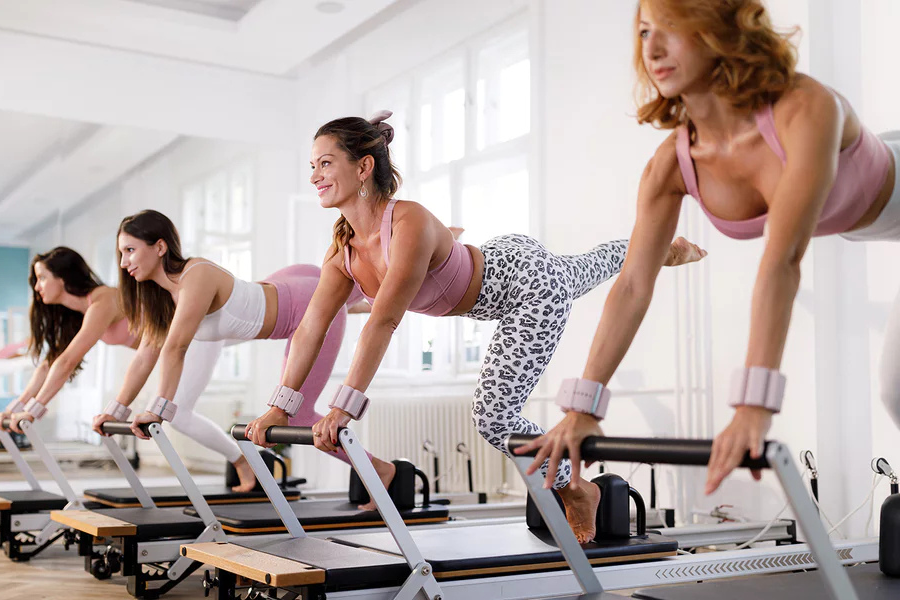
Equipment based Pilates uses machines like the Reformer, Cadillac, and Wunda Chair that rely on springs for resistance. The springs can make exercises easier or harder, which is why this format is so adaptable for injury rehab, beginners, and athletes alike (Wikipedia).
The machines guide your body into good alignment and help you feel which muscles you should be using. This makes reformer Pilates especially helpful if you struggle with body awareness or want extra feedback on your form.
What muscles Pilates works
If you have heard that Pilates is all about your core, that is mostly true, but not the whole story.
Pilates puts a heavy emphasis on what Joseph Pilates called the powerhouse. This includes your:
- Abdominal muscles
- Lower back
- Hips
- Pelvic floor
These deep core muscles support and stabilize your spine, hips, and pelvis. Over time, strengthening them can help reduce back and hip pain and improve pelvic floor function (Healthline).
Even though core work is central, Pilates also strengthens:
- Your glutes and legs through lunges, leg circles, and bridging
- Your shoulders and upper back through rowing and arm work
- Your arms through controlled lifting and pushing against springs or your own body weight
The positions you hold and the way you move your arms and legs keep your whole body engaged, not just your abs (WebMD).
Is Pilates strength training, cardio, or flexibility?
Pilates fits best into the strength and mobility category, with a strong mind body element.
- It is not considered an aerobic workout, so it will not usually replace your runs or brisk walks if your goal is pure cardio (WebMD).
- It is strength training, but with a focus on muscular endurance and control, not heavy lifting. You hold positions, move slowly, and work smaller stabilizing muscles as well as larger ones.
- It is flexibility and mobility training, since almost every exercise blends strengthening with stretching. The smooth, controlled transitions help improve your range of motion and fluidity of movement (Healthline).
You can think of Pilates as a foundation workout that supports everything else you do. It makes you more stable and aligned, which can improve how you feel during other activities like walking, running, cycling, or lifting weights.
Pilates is less about how hard you can push, and more about how precisely you can move.
Key health benefits of Pilates
If you are looking at what kind of workout Pilates is from a health perspective, several benefits stand out.
Better posture and alignment
Pilates trains you to stack your spine correctly, lengthen tight muscles, and strengthen the ones that support an upright posture. Over time, you become more aware of how you sit, stand, and move, which can help correct slouching and reduce strain on your back and neck (Healthline).
Stronger, more stable core
Core strength in Pilates goes beyond visible abs. You learn to engage deep muscles that stabilize your spine and pelvis. This can ease chronic back pain, improve hip stability, and support pelvic floor health (Healthline).
Improved flexibility and mobility
Instead of static stretching, Pilates uses controlled, flowing movements that take your joints through their full range of motion. This style of training improves mobility while you build strength, which helps you move more freely in everyday life (Healthline).
Joint friendly strength
Pilates is low impact and emphasizes alignment, which makes it gentle on joints while still challenging your muscles. It has been used as a rehabilitation tool for issues like back and neck pain, scoliosis, and multiple sclerosis, although you should always get medical clearance first if you have a health condition (WebMD).
Mind body connection and stress relief
Because you focus on breathing, body position, and controlled movement, Pilates naturally draws your attention inward. This increased body awareness, also called proprioception, can help you prevent injuries, reduce falls, and even become more in tune with hunger and fullness cues (Healthline). Many people also find the concentration required to be mentally calming.
Who Pilates is good for
One of the most helpful things about Pilates is how adaptable it is. Classes can be modified for many ages, fitness levels, and abilities.
According to health experts, Pilates is generally suitable for:
- Beginners who want a structured, low impact way to build strength
- Active people who want to balance high intensity workouts with stability and mobility work
- People with conditions like arthritis, diabetes, or low back pain, once they have medical clearance
- Pregnant women, seniors, and even children, as long as they work with a qualified instructor and appropriate modifications (WebMD, WebMD)
If you are new, it is a good idea to start with a beginner level class or a few one on one sessions so an instructor can help you learn the basics safely.
How Pilates compares to yoga and other workouts
Pilates and yoga are often grouped together, but they are not the same type of workout. Both connect movement with breath and emphasize mindful awareness. However:
- Pilates focuses more on core strength, muscular endurance, and precise control of movement
- Yoga tends to put more emphasis on holding poses, flexibility, and relaxation, and often includes a stronger spiritual component
- Many Pilates exercises start lying down, while yoga uses more standing and kneeling postures (Wikipedia, Better Health Victoria, WebMD)
Compared with traditional strength training or HIIT:
- Pilates uses lighter resistance and higher control, which is great for stabilizers and posture
- HIIT and heavy lifting build more maximal strength or cardio capacity, but often do not address alignment and deep core stability as directly
For many people, the best approach is not choosing one or the other. Instead you can let Pilates be the base that makes your other workouts feel better and safer.
What to expect in your first Pilates class
If you are ready to try Pilates, here is how your first session will likely feel.
You will:
- Spend time learning how to breathe properly and engage your core
- Move slowly through a sequence of exercises, usually with fewer repetitions
- Work hard in a way that feels controlled rather than chaotic
- Feel muscles you may not have paid attention to before, especially around your hips, glutes, and mid back
Most people notice that they feel taller, more aligned, and surprisingly worked, even without breaking a big sweat. Joseph Pilates suggested practicing at least four times a week for three months to see significant changes in strength, posture, and energy levels (Alo Moves).
If you prefer to test the waters at home, you can start with a short beginner mat routine and focus on learning basic principles like breathing, neutral spine, and gentle core activation before moving to more advanced sequences or equipment work.
Putting it all together
When you ask what kind of workout Pilates is, you are really asking what role it can play in your overall fitness. Pilates is a low impact, full body, mind body workout that builds deep strength, improves posture, and enhances flexibility and balance. It will not usually replace all your cardio, but it can become the steady, supportive base that helps you move better in everything else you do.
If your goals include getting stronger without pounding your joints, easing nagging aches, or simply feeling more at home in your body, Pilates is a smart place to start. Try one beginner class, pay attention to how your body feels during and after, and use that experience to decide how Pilates can fit into your weekly routine.
About The Author