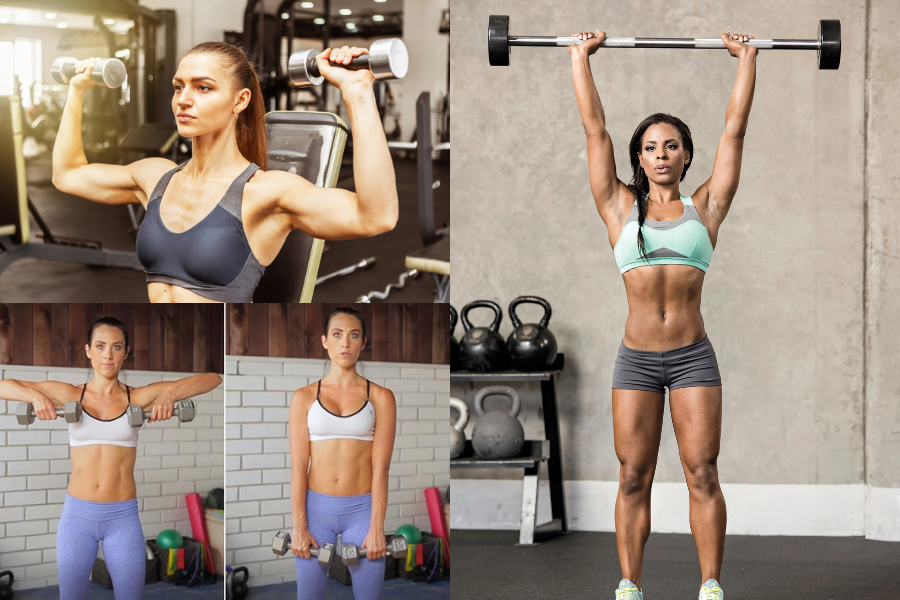
Your Guide to Perfect Exercises for Women’s Shoulders
A strong upper body is not just about defined arms. The right exercises for womens shoulders help you stand taller, protect your joints, and move with more ease in daily life. Whether you are reaching overhead, carrying groceries, or flowing through yoga, your shoulder muscles are doing quiet but essential work in the background.
You do not need a gym membership or heavy weights to get started. With a few focused moves and a simple plan, you can build stronger, more sculpted shoulders at home in under 30 minutes.
Why shoulder training matters for women
Your shoulder joint has a huge range of motion, which makes it useful but also naturally unstable. Strong muscles around the joint keep everything aligned, support your posture, and reduce the risk of aches or injury.
When you train your shoulders regularly, you:
- Improve posture by strengthening the muscles that pull your shoulder blades back
- Support everyday movements like lifting, pushing, and carrying
- Reduce neck and shoulder pain that often comes from desk work
- Create balanced upper body strength, not just stronger biceps or chest
One hour a week of shoulder specific strength training, including moves like front raises and lateral raises, has been shown to reduce neck and shoulder pain in office workers who often have tight, weak shoulders from desk jobs, according to research in the British Journal of Sports Medicine.
If you have ever worried that lifting weights will make you bulky, this is a good time to let that go. Controlled resistance training actually tones and shapes your muscles and improves your quality of life, rather than making you look bigger.
Get to know your shoulder muscles
Understanding the main muscles involved will help you choose effective exercises for womens shoulders and spot gaps in your routine.
The major players
Your shoulder area includes several key muscle groups:
- Deltoids: The rounded muscle on the top of your shoulder, with three parts
- Anterior (front) delts help you lift your arm forward
- Lateral (side) delts lift your arm out to the side
- Posterior (rear) delts pull your arm back and support posture
- Rotator cuff: A group of small muscles that stabilize the shoulder joint and control rotation
- Trapezius (traps): Upper back muscles that help you shrug, rotate, and stabilize your shoulder blades
- Rhomboids: Muscles between your shoulder blades that pull them together and support an upright posture
An effective shoulder workout does more than hammer the front of your shoulders with presses. It also targets your side and rear delts, your rotator cuff, and the muscles around your shoulder blades for strength, stability, and a balanced shape.
How often and how hard to train
You do not have to train shoulders every day to make progress. In fact, because your shoulders take part in many upper body moves, you need to be careful not to overdo it.
Frequency and volume
Here is a simple structure that fits most women:
- Aim for 1 dedicated shoulder workout per week, or
- Include 2 to 3 shoulder exercises in your total body or upper body sessions 1 to 3 times a week
For muscle growth and strength:
- Target 9 to 15 total sets per week for shoulders
- Work mostly in the 8 to 12 rep range
- Use about 70 to 80 percent of your one rep max, or a weight that feels challenging by the last 2 to 3 reps without breaking form
Spread these sets across more than one day when you can. Your shoulders also work hard during compound lifts like push ups, bench press, and rows, so they need recovery time too.
Choosing the right weights
Shoulder muscles are relatively small and delicate, so lighter weights are often best, especially at the beginning.
- If you are new, start with 3 to 5 pound dumbbells or resistance bands
- As you get stronger, most women do well with 5 to 20 pound dumbbells for pressing and raising movements
- Increase weight slowly over time, a method called progressive overload, so your muscles keep adapting
If you can breeze through 12 reps and feel like you could keep going forever, it is time to nudge the weight up a bit.
Warm up before you lift
A short warm up helps your shoulder joints feel safer and more mobile, and it prepares your muscles for work. Spend 5 to 10 minutes on dynamic movements that take your shoulders through different angles.
You can try:
- Standing straight arm circles: Small circles forward and backward, gradually getting larger
- Banded shoulder external rotations: Hold a light band with elbows at your sides, rotate your forearms outward to wake up the rotator cuff
- Band pull aparts: Hold a band at chest height and pull it wide, squeezing your shoulder blades together
After your workout, slow things down with static stretches like cross body shoulder stretches and overhead triceps stretches to support recovery and flexibility.
Best compound exercises for womens shoulders
Compound moves target several muscles at once and should usually come first in your workout when you are fresh. They help you build overall strength and muscle mass efficiently.
1. Overhead shoulder press
The overhead press is a classic for a reason. It works your anterior and lateral delts, triceps, and traps, and builds powerful pressing strength.
How to do it:
- Sit or stand tall with a dumbbell in each hand at shoulder height, palms facing forward or slightly in.
- Brace your core and press the weights straight up until your arms are almost fully extended.
- Lower slowly back to shoulder height with control.
Keep your ribs down and avoid arching your lower back. If standing bothers your lower back, perform the move seated.
2. Landmine press
If traditional overhead pressing feels tough on your shoulders, the landmine press offers a joint friendly angle while still targeting your anterior and lateral delts.
You will usually see this in a gym with a barbell anchored to the floor. At home, you can mimic the pattern with a single dumbbell pressed at a slight forward angle from a half kneeling position.
How to do a half kneeling variation:
- Kneel on one knee with the opposite foot flat in front, holding a dumbbell in the same hand as the kneeling leg.
- Start with the dumbbell near your shoulder, elbow bent.
- Press the weight up and slightly forward, then lower with control.
This angle reduces strain on the joint while still building strength.
3. Upright row
The upright row focuses on your lateral delts and traps and helps build shoulder width and upper back strength.
How to do it:
- Stand tall holding a pair of dumbbells in front of your thighs, palms facing your body.
- Lead with your elbows and pull the dumbbells up along your body to about chest height.
- Lower slowly back down.
Keep the weights close to your body and your shoulders relaxed away from your ears. If you feel pinching, reduce range of motion or swap this for a different movement.
Key isolation exercises to sculpt your shoulders
Once your compound work is done, isolation moves let you target specific parts of your shoulders for shape and symmetry.
4. Lateral raises
Lateral raises target your side delts, which create that rounded shoulder look and help balance your frame.
How to do it:
- Stand with a dumbbell in each hand at your sides, palms facing in.
- With a slight bend in your elbows, lift the weights out to the sides until they reach about shoulder height.
- Pause briefly, then lower slowly.
Use control rather than swinging and pick a weight that you can move without leaning your torso.
5. Front raises
Front raises focus on your anterior delts, which work hard when you lift your arms forward or push things away from you.
How to do it:
- Stand with dumbbells in front of your thighs, palms facing your legs.
- Lift one or both arms forward to shoulder height.
- Lower slowly and repeat.
If both arms at once feel too intense, alternate arms to reduce strain.
6. Rear delt flyes
Rear delt work is often skipped, but it is essential for good posture and balanced shoulders. Strengthening your posterior delts helps counteract rounded shoulders and supports pulling movements.
How to do it:
- Hinge forward at your hips with a flat back, holding a dumbbell in each hand, arms hanging down.
- With a soft bend in your elbows, lift your arms out to the sides until they are in line with your shoulders.
- Squeeze your shoulder blades gently, then lower with control.
Think of opening your arms like wings, not yanking the weights up with your traps.
7. Face pulls
If you have access to a cable machine or strong resistance band, face pulls are a powerful tool for upper back and rear delt strength.
How to do it with a band:
- Anchor a band at about eye level.
- Hold the band with both hands, palms facing each other.
- Pull the band toward your face, leading with your elbows and squeezing your shoulder blades together.
- Slowly return to the starting position.
This exercise helps correct rounded shoulders by strengthening the smaller stabilizing muscles that keep your shoulder blades in a healthy position.
8. Shoulder external rotations
The rotator cuff keeps your shoulder joint stable. External rotations are a small move with a big impact for joint health.
How to do it with a band:
- Attach a light band to a stable surface at elbow height.
- Stand sideways to the anchor, holding the band in the hand farthest from it.
- Keep your elbow tucked to your side at 90 degrees.
- Rotate your forearm outward, away from your body, then return slowly.
Use very light resistance here and focus on smooth, controlled movement.
Simple 25 minute shoulder workout plan
You can build an effective shoulder session by choosing 3 to 5 exercises and doing three sets of each. Here is one example using moves that target every part of your shoulders and your rotator cuff:
- Overhead shoulder press
- Upright row
- Lateral raises
- Rear delt flyes
- Shoulder external rotations
For each exercise:
- Do 8 to 12 reps with a weight that feels challenging but allows good form
- Rest 30 to 60 seconds between sets
- Complete 3 sets of each move
If you prefer to follow a structured routine, certified personal trainer Lindsey Bomgren has a 25 minute shoulder workout for women with seven dumbbell exercises designed to hit all heads of the shoulder and the rotator cuff so you can build strong, sculpted shoulders in less than half an hour at home.
This type of plan works well 1 to 2 times per week alongside your other strength or cardio workouts.
A handy rule of thumb: if your form starts to break down, shorten the set or reduce the weight. Quality reps build strength faster than sloppy ones.
Shoulder care, posture, and pain relief
If you sit at a computer for hours or notice your shoulders rounding forward, adding a few mobility and posture focused drills to your week can make a real difference.
Helpful options include:
- Cross body shoulder stretches and dead hangs for gentle decompression and flexibility
- Controlled articular rotations to explore your shoulder’s range of motion without load
- Lateral neck flexion stretch to relax the traps and scalene muscles that affect posture and breathing
- Chest doorway stretch to open tight chest muscles that pull your shoulders forward
- Prone I, T, Y moves and band pull aparts to strengthen small stabilizers in your shoulders and upper back
- Scapular wall slides to train your shoulder blades to sit back and down, which supports better alignment
Consistency matters more than perfection. Even five minutes of these drills a few times per week can help you feel less tight and more upright.
Putting it all together
When you are planning exercises for womens shoulders, think in terms of three pillars: strength, stability, and posture.
- Use compound presses and rows to build overall strength.
- Add isolation moves like raises and flyes to shape and balance your shoulders.
- Include rotator cuff and posture work to keep your joints healthy and your shoulders sitting back, not rounded forward.
Start light, move with control, and aim to be just a little stronger month by month. Over time, you will notice that lifting everyday objects feels easier, your posture improves, and your shoulders look more defined, all without spending hours in the gym.
About The Author


