The Truth About Creatine vs Whey Protein for Your Workouts
Creatine vs whey protein is one of the most common supplement questions you will hear in any gym. Both can help you build muscle and recover from workouts, but they work in very different ways. Understanding those differences helps you spend your money wisely and match each supplement to your goals.
Below, you will learn what creatine and whey protein actually do in your body, how they compare for muscle gain, when to take them, and whether it is worth using both.
What creatine does in your body
Creatine is a natural compound that your body stores in muscle cells. Its main job is to help you produce quick bursts of energy during short, intense efforts like heavy lifts or sprints. It does this by boosting your phosphocreatine stores, which helps regenerate ATP, your muscles’ primary energy source for fast contractions (Healthline).
You get about half of your daily creatine from protein rich foods such as meat and fish, and your liver, kidneys, and pancreas make the rest (Cleveland Clinic). When you supplement, especially with creatine monohydrate, you increase the total creatine stored in your muscles. This can:
- Increase strength and power in high intensity exercise
- Support more total work in a training session
- Help you gain additional muscle mass over several weeks when combined with lifting
In people aged 18 to 30, studies show creatine plus weight training can add around 2 to 4 pounds of muscle over 4 to 12 weeks compared with training alone (Cleveland Clinic). There is also emerging research that higher phosphocreatine levels in the brain may support memory and cognitive function in older adults, although this is still being studied (Cleveland Clinic).
What whey protein does in your body
Whey protein is very different. It is not about fast energy. Instead, whey is a high quality dairy protein that provides essential amino acids, especially leucine, which directly stimulate muscle protein synthesis. That is the process your body uses to repair and build muscle tissue after exercise (Healthline).
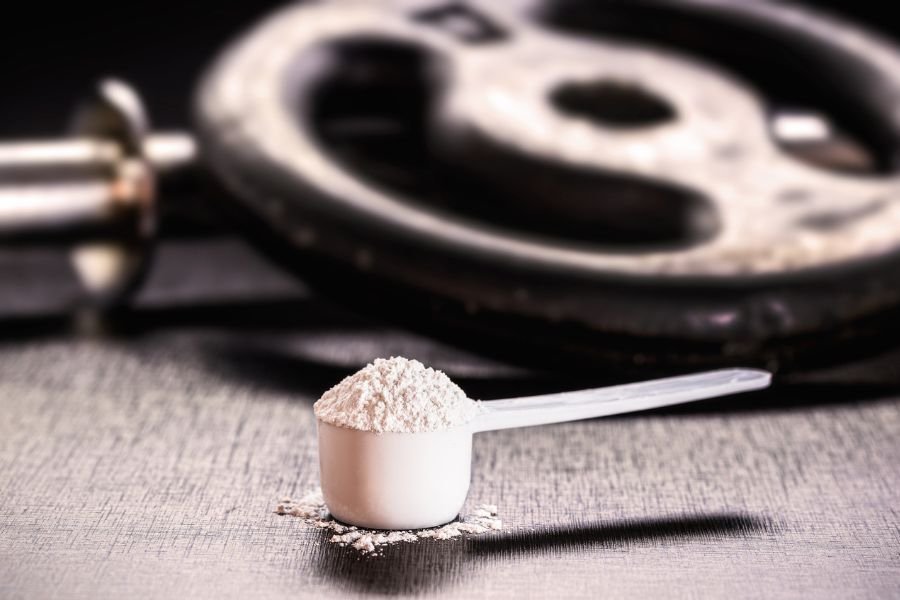
You usually see whey in powder form as a by product of cheese making. When you drink a shake after lifting, you give your muscles a quick, convenient shot of protein that can:
- Support muscle repair and reduce breakdown
- Increase muscle mass and strength when paired with resistance training
- Improve recovery so you feel ready for your next workout
Typical advice is to aim for about 20 to 25 grams of whey protein after resistance training to maximize muscle protein synthesis (Healthline). You can also use whey to help you reach your total daily protein target if you struggle to get enough from food alone.
Creatine vs whey protein: key differences
It can help to think of creatine vs whey protein as performance vs building blocks. They both support muscle gain, but through different pathways.
Creatine mainly improves what you can do in the gym, while whey protein mainly helps your body rebuild after you leave the gym.
Here are the main differences, based on current research:
- Primary role
- Creatine increases your ability to perform short, intense efforts by boosting phosphocreatine and ATP regeneration (Healthline).
- Whey protein supplies amino acids that trigger and support muscle protein synthesis, which helps repair and grow muscle (Healthline).
-
How they help muscle gain
Both supplements can increase muscle mass when combined with resistance exercise. Creatine tends to improve exercise capacity, so you can lift heavier or do more reps, which indirectly boosts gains. Whey protein directly supports the building process by giving you the materials your muscles need (Healthline). -
What the research says about combining them
Multiple studies, including trials in middle aged men and resistance trained women, have found no extra muscle or strength benefit from taking creatine and whey together versus taking either one alone (Healthline). In a 14 week double blind study of men aged 48 to 72, resistance training alone improved body composition, and adding creatine, whey, or both did not produce additional changes in muscle or fat compared with the placebo group (PubMed).
So while both are effective in their own ways, using them together does not seem to create a special “supercharged” effect on muscle growth beyond solid training and nutrition.
Safety and side effects
If you are healthy, creatine and whey protein are generally considered safe.
Creatine monohydrate is one of the most studied sports supplements. It is widely used by amateur and professional athletes to boost performance in short duration, high intensity activities like weightlifting, sprinting, and cycling, without harming aerobic endurance (Cleveland Clinic). You may notice some water retention in your muscles, and some people experience mild digestive discomfort if they take large doses at once.
Whey protein is also considered safe for most people who tolerate dairy. If you are lactose intolerant or allergic to dairy, you may need a lactose free whey isolate or a non dairy protein instead. Common side effects, when they occur, are usually mild bloating or digestive upset.
When it comes to combining creatine and whey, research has not found any negative interactions. Taking both at the same time is recognized as safe, and there is no evidence of harmful effects from stacking them in healthy adults (Healthline).
Should you take creatine, whey, or both?
The right choice depends on your goals, your diet, and your budget. Since creatine and whey protein are complementary, you do not need to pick a permanent side in the creatine vs whey protein debate.
When creatine makes the most sense
Creatine is usually a good fit if you:
- Focus on strength training, powerlifting, or explosive sports
- Want to increase your performance in short, intense efforts
- Already eat enough protein from food or other supplements
Because creatine helps you do more high quality work in each session, it pairs especially well with progressive strength programs. Over time, that extra volume can translate into better strength and muscle gains.
When whey protein is the better choice
Whey protein is worth prioritizing if you:
- Struggle to hit your daily protein target through food alone
- Want a convenient post workout option for muscle repair
- Care about overall health and satiety, not just gym performance
Protein is foundational. If your protein intake is low, creatine will not fully make up for it. In that situation, getting your daily protein in order often delivers more noticeable results than adding creatine.
When using both can help
Even though studies do not show extra muscle gains from combining creatine and whey compared with taking one alone, you might still choose to use both. Reasons include:
- Convenience of putting creatine into a daily whey shake
- Desire to cover both performance and recovery bases
- Preference for a simple, consistent routine
Some research suggests that taking creatine along with protein and carbohydrates around workouts might support lean body mass and strength, especially when timed close to exercise (Performance Lab). However, the total effect still depends heavily on your overall training plan and diet.
How and when to take each supplement
Once you decide what to use, the next step is fitting creatine and whey protein into your routine in a way you can stick with.
Creatine timing and dosage
Most research uses creatine monohydrate at:
- Around 3 to 5 grams per day for long term use
Some people start with a short “loading” phase of higher doses, but this is not essential. You can simply take 3 to 5 grams daily and let your muscles gradually saturate over a few weeks.
There is evidence that taking creatine after workouts might be slightly more effective than taking it before, especially for improving body composition and strength (Performance Lab). In practice, the most important factor is consistency. Choose a time that you can remember every day, whether that is with a post workout shake, a meal, or even at breakfast.
Whey protein timing and dosage
For whey protein, a common approach is:
- 20 to 25 grams within a few hours after resistance training (Healthline)
- Additional servings during the day if needed to reach your total daily protein target
You can mix whey with water or milk, or blend it into smoothies with fruit, oats, or nut butter. The exact timing window is flexible. As long as your total daily protein intake is adequate, the precise minute you drink your shake is less important than making it a regular habit.
Taking creatine and whey together
If you prefer simplicity, you can absolutely combine creatine with your whey shake. Research suggests that stacking creatine and protein is safe and may improve creatine retention and muscle power during resistance training (Performance Lab).
From a practical standpoint, mixing 3 to 5 grams of creatine into your usual 20 to 25 gram whey shake after training is an easy way to cover both supplements without adding extra steps to your day.
Putting it all together for your workouts
When you strip away the marketing claims, creatine vs whey protein is not really a fight. They solve different problems:
- Creatine helps you push harder in short, intense efforts, which can improve your strength and performance over time.
- Whey protein helps you repair and build muscle tissue by supplying high quality protein after you train.
You can successfully build muscle and get stronger with either one, or even with neither, as long as your training program is smart and your overall nutrition is solid. Supplements are tools, not shortcuts.
If you are just starting, focus on getting enough daily protein and following a consistent strength routine. Then, consider adding creatine if you want a simple, well researched boost for power and performance. If you already train regularly, try one change this week, such as adding a daily 3 gram creatine serving or making sure you get 20 to 25 grams of protein after each workout, and see how your body responds over the next month.
About The Author