Build Impressive Quads with These Best Quadricep Exercises
A strong set of quadriceps does more than fill out your shorts. The best quadricep exercises help you walk up stairs with ease, protect your knees, and power everyday movements like standing up, sprinting, and jumping. With a few smart choices, you can build impressive quads whether you train at home or in the gym.
Below, you will learn how your quads work, the best exercises to target them from every angle, and how to put those moves into a simple, effective workout.
Understand your quadriceps
Your quadriceps, often called your quads, sit on the front of your thighs and control knee extension and hip flexion. You use them every time you stand up from a chair, get out of a car, or take a step.
Your quads are made up of four muscles that work together:
- Rectus femoris, crosses the hip and knee, helps flex your hip and extend your knee
- Vastus lateralis, the largest muscle on the outside of your thigh
- Vastus medialis, on the inner thigh, helps extend and stabilize your knee
- Vastus intermedius, sits deep between lateralis and medialis, extends your knee
A well rounded quad routine targets all four. Strong quadriceps help stabilize the knee and can lower your risk of issues like ACL or meniscus injuries and even help with fall prevention and balance, according to exercise physiologist Karen Feakes and guidance from the Cleveland Clinic.
Why quad strength matters for everyday life
You might think of quad training as a bodybuilder or athlete priority, but you rely on these muscles all day.
When your quadriceps are strong you can:
- Stand up from low seats without pushing on your thighs with your hands
- Climb stairs and hills with less effort
- Absorb impact when you land from a jump or step off a curb
- Keep your knees aligned when you lunge, squat, or change direction quickly
Weak quads can shift stress into your knees and hips. Over time this makes it harder to stay active and can increase the chance of overuse injuries. Investing in the best quadricep exercises now supports both performance and long term joint health.
If you have knee pain or a history of knee injury, talk with your healthcare provider before changing your routine, and consider working with a fitness professional for personalized guidance, as the Cleveland Clinic recommends.
Best quadricep exercises for beginners
If you are new to strength training or coming back from time off, bodyweight variations are the safest place to start. These moves build a foundation that prepares you for heavier squats and lunges later.
Bodyweight squat
Bodyweight squats are one of the best overall exercises for strengthening the quadriceps, along with your hamstrings, glutes, core, and spinal erectors. You do not need any equipment, so you can practice them anywhere.
How to do it:
- Stand with your feet about hip to shoulder width apart, toes slightly turned out.
- Brace your core and keep your chest tall.
- Sit your hips down and slightly back, bending your knees so they track in line with your toes.
- Drop to a depth that feels comfortable while keeping your heels on the floor.
- Push through your mid foot and heel to stand back up.
Aim for 2 to 3 sets of 8 to 12 controlled reps.
Sit to stand
This simple move mimics standing up from a chair, one of the most common daily tasks your quads handle. It is also recommended by the Cleveland Clinic as an easy way to strengthen your legs at home.
How to do it:
- Sit on a sturdy chair with your feet flat on the floor, hip width apart.
- Lean slightly forward, brace your core, and press your feet into the floor.
- Stand up without using your hands if possible.
- Slowly lower back down to the chair with control.
Start with a higher chair if needed, then progress to a lower surface as your strength improves.
Forward lunge
Forward lunges target your quadriceps, hamstrings, glutes, and core. They also challenge your balance, which is helpful for daily movement and sports.
How to do it:
- Stand tall with your feet hip width apart.
- Step forward with one leg and bend both knees. Drop your back knee toward the floor.
- Keep your front knee in line with your toes and your torso upright.
- Push through your front foot to return to standing.
- Repeat on the other leg.
If a full lunge feels tough, lower only halfway or hold on to a wall or counter for support.
Step up
Step ups build quad strength in a way that looks like climbing stairs. They are one of the nine effective quadriceps exercises highlighted by the Cleveland Clinic.
How to do it:
- Stand in front of a stable step or low bench.
- Place one foot on the step, making sure it is fully supported.
- Press through your front foot to lift your body up.
- Gently tap your trailing foot on the step, then step back down with control.
- Repeat all reps on one side, then switch.
Choose a step height where you feel your quad working but not straining, and avoid letting your knee cave in or wobble.
Best quadricep exercises for size and strength
Once you move beyond bodyweight basics, it is time to load your quads more heavily. The best quadricep exercises for building muscle size and strength emphasize knee flexion and an upright torso so your quads, rather than your hips, do most of the work. Guidance from Gymshark and the Cleveland Clinic highlights the following moves as especially effective.
Front squat
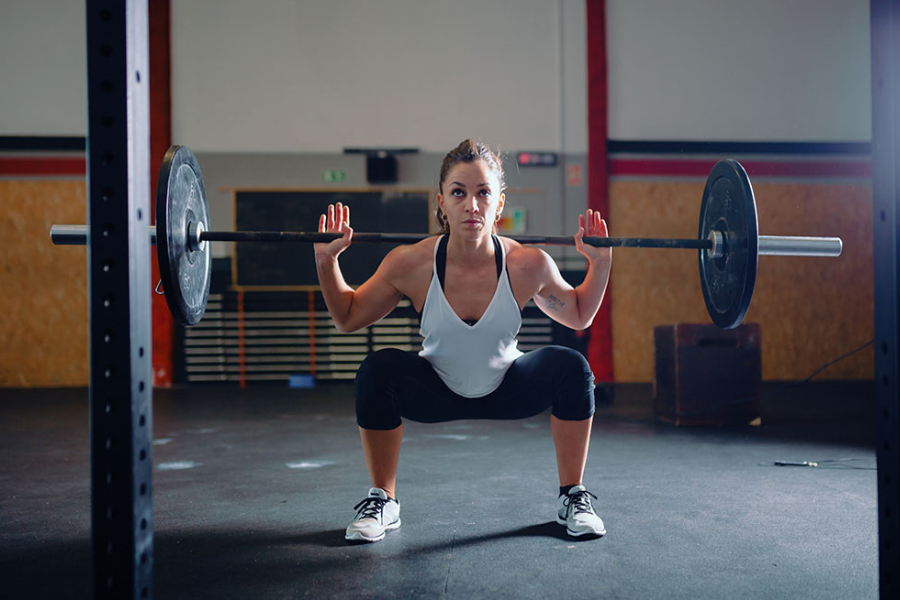
In a front squat, the barbell sits in front of your body, which encourages a more upright torso and greater quad loading compared to a traditional back squat.
How to do it:
- Set a barbell on a rack at about shoulder height.
- Step under the bar so it rests across the front of your shoulders, near your collarbone.
- Hold the bar with your fingertips or cross your arms in front to keep it in place.
- Step back, set your feet shoulder width apart, and brace your core.
- Squat down, keeping your chest tall and knees tracking over your toes.
- Drive through your feet to return to standing.
Start with lighter weights and focus on keeping your torso upright. If you lack wrist or shoulder mobility, front squats may feel uncomfortable, so give yourself time to adjust.
Heel elevated goblet squat
Elevating your heels increases knee bend and makes your quads work even harder. This variation is especially helpful if your ankles are tight.
How to do it:
- Place your heels on small weight plates or a slant board.
- Hold a dumbbell or kettlebell close to your chest, like a goblet.
- Squat down, allowing your knees to travel over your toes while keeping your torso tall.
- Push through your mid foot to stand.
Gymshark notes that heel elevated goblet squats are among the best quad focused squats because they increase knee extension demand while reducing the load on your hips.
Hack squat machine
If your gym has a hack squat machine, it offers a supported way to load your quads heavily while keeping your torso upright.
Tips for more quad focus:
- Place your feet lower on the platform to shift more work into your quads
- Use a stance that feels natural, slightly narrower or wider for inner or outer quad emphasis
- Avoid letting your lower back round at the bottom, known as butt wink
According to the Gymshark guide, hack squats are excellent for driving the knees forward safely and targeting quad growth when performed with proper depth and control.
Leg press with low foot placement
The leg press can target many parts of your legs depending on where your feet sit on the platform. To focus on quads, use a lower foot position and moderate stance width.
How to do it:
- Sit in the leg press machine with your back flat against the pad.
- Place your feet on the lower half of the platform, shoulder width apart.
- Unlock the safety handles and lower the platform by bending your knees.
- Stop before your hips roll or your lower back lifts.
- Press the platform back up without locking your knees hard at the top.
A lower foot placement increases knee flexion, which boosts quad activation as highlighted in Gymshark’s quad training recommendations.
Unilateral quad exercises to fix imbalances
Training one leg at a time can reveal and correct strength differences between your left and right sides. It also forces stabilizing muscles around your hips and knees to work harder.
Bulgarian split squat
Bulgarian split squats are a powerful unilateral exercise that targets quads, hamstrings, hips, and core. You can perform them with bodyweight or added load.
How to do it:
- Stand about two feet in front of a bench or step, back to the bench.
- Place the top of one foot on the bench behind you.
- Keep your torso upright and take a shorter stance to emphasize the quads.
- Bend your front knee, lowering until your thigh is close to parallel with the floor.
- Push through the middle of your front foot to stand back up.
Gymshark suggests elevating the front heel and keeping an upright torso with a shorter stance to further increase quad involvement.
Walking lunges
Walking lunges build leg and core strength while challenging your balance. They target quads, hamstrings, glutes, and core and can be scaled to your level.
How to do it:
- Stand tall with your feet together.
- Step forward into a lunge, lowering until both knees are bent about 90 degrees.
- Push off your back foot and step straight into the next lunge with the opposite leg.
- Continue alternating legs as you move forward.
To adjust difficulty, you can lunge only halfway down or add dumbbells for additional resistance.
Single leg raise
The straight leg raise targets your rectus femoris, the part of the quadriceps that crosses your hip joint. It is especially useful if you cannot bend your knee deeply due to discomfort.
How to do it:
- Lie on your back with one leg straight and the other bent, foot flat on the floor.
- Tighten the quad of your straight leg so your knee locks.
- Lift your straight leg to the height of the opposite knee.
- Lower it slowly with control.
This move also works your hip flexors and core, which support stable knee positioning.
Isolation work with leg extensions
The leg extension machine isolates your quadriceps and lets you train them with less overall fatigue than heavy compound lifts. Both the Cleveland Clinic and Gymshark highlight leg extensions as one of the best isolation exercises for quad development.
How to do it:
- Adjust the seat so your knees line up with the machine’s pivot point.
- Set the pad just above your ankles.
- Grip the handles and brace your core.
- Extend your legs until your knees are almost straight.
- Squeeze your quads briefly at the top, then lower with control.
To increase the challenge:
- Try single leg extensions to correct imbalances
- Use slow negatives, taking three to four seconds to lower
- Add brief pauses halfway up or at the top for extra tension
Because leg extensions isolate your quads while the rest of your body rests against the machine, you may be able to include them more often without feeling as drained.
How often to train your quads
For most people, training quads twice per week works well. Research summarized by Gymshark suggests aiming for at least 10 sets of quad focused work per week in the 8 to 12 rep range to maximize muscle growth while still allowing recovery.
Here is a simple structure:
- 2 quad focused workouts each week
- 2 to 4 quad exercises per session
- 3 to 4 sets of 8 to 12 reps for each exercise
Make sure at least one exercise each day allows your knees to track over your toes and move through a comfortable range. Techniques like heel elevation or lower foot placement on platforms can increase quad activation.
If you are new to strength training, start at the lower end of that volume and build up over a few weeks. Pay attention to how your knees and hips feel the day after training. Mild soreness is normal, but sharp or persistent pain is not.
Putting it all together
To bring everything together, here is a sample week built around the best quadricep exercises:
Day 1: Bodyweight squats, forward lunges, heel elevated goblet squats, leg extensions
Day 2: Rest or light activity
Day 3: Step ups, Bulgarian split squats, front squats or leg press, leg extensions
Adjust sets and reps to your level, and keep at least one rest day between heavy leg sessions.
Start with one or two of the exercises in this guide and focus on form first. As your strength and confidence grow, you can add more challenging variations and weight. Over time, those consistent reps add up to stronger, more powerful quads that support everything you want your body to do.
About The Author