Crush Your Goals with This Powerful Beginner Ab Workout
A beginner ab workout can feel confusing at first. Do you need 5 minutes or 45? Crunches or planks? Every day or once a week? The good news is that you can build a strong core with short, focused sessions, as long as you use smart structure and solid form.
Below, you will find a clear beginner ab workout you can do at home or in the gym, plus tips to make every rep count.
Why a beginner ab workout should be short and focused
As a beginner, your ab workouts should typically last between 10 and 30 minutes. That is long enough to challenge the muscles without overwhelming your form or your lower back. A simple 10 minute ab workout can be very effective if it is well planned, properly intense, and performed with control.
Your core muscles recover relatively quickly and respond well to focused, high effort sets of movements such as planks, reverse crunches, and mountain climbers. What they do not respond well to is endless, sloppy repetitions. Overtraining your abs with sessions longer than 30 minutes often leads to fatigue, poor mechanics, and a higher risk of injury, especially when you are still learning basic technique.
Think of your beginner ab workout as practice for good movement patterns, not punishment. Quality beats quantity every time.
Key principles for beginner ab training
Before you lie down on the mat, it helps to know what you are actually training and how to get results safely.
Focus on all major core muscles
A strong core is more than a six pack. Your beginner ab workout should target four main muscle groups that help you move and stabilize your torso:
- Rectus abdominis, the front “six pack” muscles that flex your spine
- Transverse abdominis, the deep corset like muscles that brace your midsection
- Internal and external obliques, the muscles along your sides that rotate and bend your trunk
- Supporting muscles in your hips, spine, and pelvic floor that help with posture and balance
When you include a mix of crunch like moves, planks, and twisting or anti rotation exercises, you train your core from every angle and build functional strength, not just appearance.
Prioritize control over speed
As a beginner, your biggest win is to perform every rep with control and a full, comfortable range of motion. Slowing down the lowering, or eccentric, phase of your exercises for 2 to 3 seconds increases time under tension and helps you build strength and size faster. It also makes your abs fatigue sooner, so you do not need very high rep counts to feel that they are working.
If you catch yourself using momentum, yanking your neck, or letting your lower back arch off the floor, it is worth starting the set over and resetting your form. Physical therapist and strength coach Jeff Cavaliere has even recommended redoing an entire ab workout if you realize you have been making a common form mistake throughout, because good technique is that important to visible results.
Train often enough, but not every day
Your abs are muscles like any other, so they need both consistent training and rest. For growth and strength, aim to train your abs two to three times per week. That is frequent enough to build progress without overtraining.
Rest days are essential. After a full beginner ab workout, give your core at least 24 hours off from direct ab exercises. Light stretching or gentle yoga is fine on those days and can even help with recovery.
Your 10 minute beginner ab workout
You can do this routine at home on a mat or on a soft carpet. It uses only your body weight and hits your entire core in about 10 to 15 minutes.
Structure it like a circuit:
- Do each exercise for 30 to 40 seconds
- Rest for 15 to 20 seconds between exercises
- Rest 45 to 60 seconds at the end of the circuit
- Repeat the circuit 2 times for about 10 minutes, 3 times if you have the energy and solid form
Exercise 1: Dead bug
The dead bug teaches you how to brace your core while moving your arms and legs, which is a foundation for almost every other ab exercise.
- Lie on your back with your arms straight up toward the ceiling and your hips and knees bent to 90 degrees.
- Gently press your lower back toward the floor by bracing your abs.
- Slowly lower your right arm and left leg toward the floor while keeping your back pressed down.
- Return to the starting position and switch sides.
Move slowly and breathe steadily. If your lower back pops off the floor, reduce your range of motion.
Exercise 2: Glute bridge
The glute bridge works your glutes and hamstrings along with your deep core, which supports better posture and reduces strain on your lower back.
- Lie on your back with knees bent and feet flat on the floor, hip width apart.
- Brace your abs, then drive through your heels to lift your hips until your body forms a straight line from shoulders to knees.
- Squeeze your glutes at the top, pause for a second or two.
- Lower with control for 2 to 3 seconds.
Keep your ribs down and avoid arching your lower back at the top of the movement.
Exercise 3: Bird dog
Bird dog builds core stability and coordination by forcing your trunk to stay steady while your limbs move.
- Start on your hands and knees with shoulders stacked over wrists and hips over knees.
- Brace your core and keep your spine neutral, looking at the floor.
- Extend your right arm forward and left leg back until they line up with your torso.
- Hold for a second, then return with control and switch sides.
If this feels wobbly, shorten your reach and focus on keeping your torso as still as possible.
Exercise 4: Bear plank with knee taps
This variation of a plank is very beginner friendly and hits your entire core without putting as much strain on your lower back or shoulders.
- Begin on hands and knees, shoulders over wrists and hips over knees.
- Tuck your toes under and brace your abs by gently pulling your belly button toward your spine.
- Lift your knees an inch or two off the floor so they hover, keeping your back flat.
- Holding that position, gently tap your right knee to the ground, then your left, alternating while keeping your hips steady.
If your wrists feel uncomfortable, you can make fists so that you are on your knuckles instead of your palms.
Exercise 5: Modified side plank
The modified side plank strengthens your obliques and the muscles that support your hips and spine.
- Lie on your side with your bottom elbow under your shoulder and your knees bent at 90 degrees.
- Stack your knees and hips, and keep your top hand on your hip or reaching toward the ceiling.
- Brace your core and lift your hips off the floor so your body forms a straight line from shoulders to knees.
- Hold for 20 to 30 seconds, then switch sides.
If this is too intense, shorten the hold time and focus on a clean, straight line rather than duration.
Tip: As you get stronger, you can extend your legs for a full side plank or add a leg lift to increase the challenge, but only once you can hold the modified version with perfect form.
How to progress your ab workouts over time
Once this beginner ab workout starts to feel easier, you do not need to jump to extreme moves. Small changes in time, sets, and resistance will keep your core progressing safely.
Add sets and variety gradually
A good starting point is 1 to 2 sets of each exercise in a session, and 2 to 3 sessions per week. Over time, work up to:
- 2 to 3 sets per exercise
- 2 to 5 different ab exercises per week, mixed across your workouts
You can also play with rep ranges. For example, perform some movements in the 10 to 15 rep range and others for 20 to 30 controlled reps. The key is to stop each set when your form starts to break down, not when you reach an arbitrary number.
Introduce weighted ab exercises
When you can do 20 to 30 high quality reps of a bodyweight exercise, such as sit ups or crunches, you are ready to add light resistance. You might:
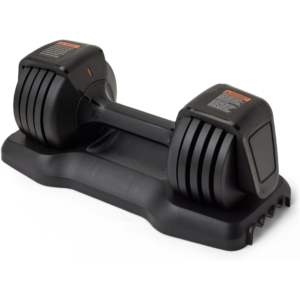
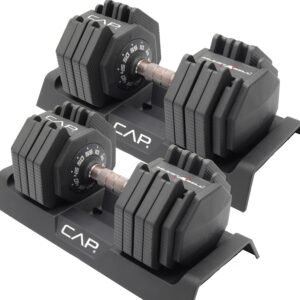
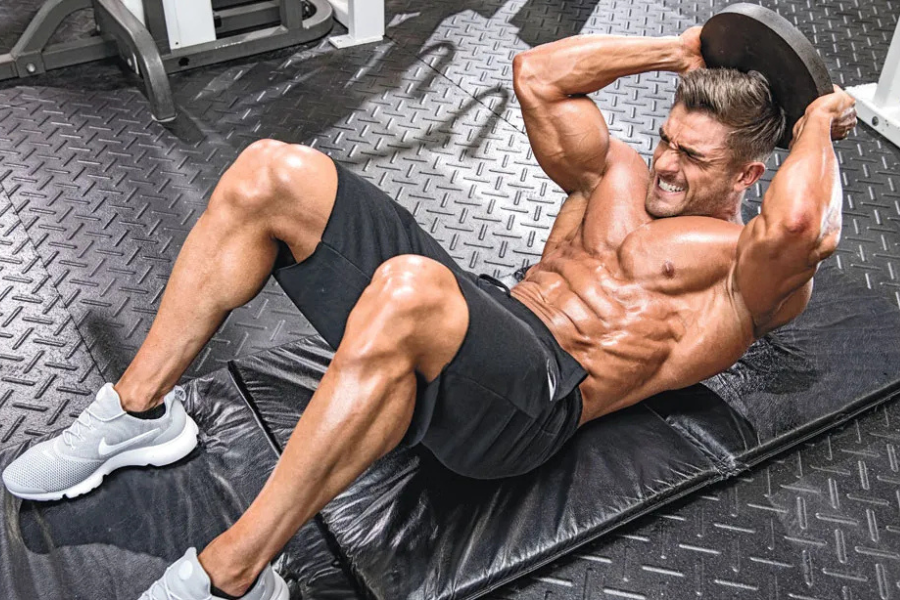
- Hold a small dumbbell or weight plate during sit ups
- Drag a lightweight across the floor during planks by sliding it from one side to the other with your hand
- Use a cable machine for crunches if you are in the gym
Adding weight challenges your abs and promotes muscle growth without needing endless repetitions.
Consider beginner friendly machines
If you prefer using equipment, certain machines are helpful for beginners because they guide your movement and offer adjustable resistance:
- Seated crunch machine, which mimics a crunch in an upright position and allows you to start with light weight for 10 to 12 controlled reps
- Rotary torso machine, for gentle, controlled rotational work for your obliques
- Captain’s chair, which lets you do knee raises that effectively engage your core
- Decline bench, which uses gravity to engage your rectus and transverse abdominis and can later be combined with light weights
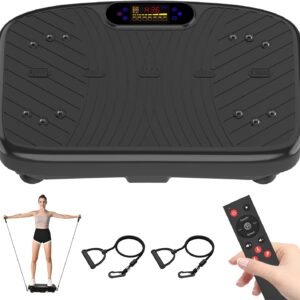
At home, adjustable foldable ab machines like the FLYBIRD Ab Machine, the ZELUS Ab Machine, the HOTSWEAT Ab Machine, or similar height adjustable options from brands like Fitlaya can provide guided motion and support for beginner ab workouts without taking up much space.
If you use machines, it can help to ask a trainer to check your settings and form the first time so you build good habits.
How often you should do this beginner ab workout
For most beginners, two to three ab focused sessions per week is ideal. You can:
- Do this 10 minute circuit on non consecutive days, such as Monday, Wednesday, and Friday
- Add 1 or 2 ab exercises, like cable crunches or hanging knee raises, at the end of your regular strength workouts on other days
Make sure you still allow at least 24 hours of rest between intense ab sessions. On off days, light walking, stretching, or yoga can improve recovery without overtaxing your core.
If you ever feel sharp pain, especially in your lower back or neck, stop and reassess your form. Mild muscular fatigue or a gentle burn is expected, but joint or nerve pain is not.
Remember: visible abs start in the kitchen
You can have a strong core without a visible six pack, because body fat sits on top of your abdominal muscles. To reveal more definition, your main fitness goal needs to be getting leaner by creating a sustainable calorie deficit through nutrition and overall activity levels, not just doing more ab exercises.
Instead of relying on endless intense cardio sessions, slightly increasing your daily movement is often more sustainable. Simple habits, such as taking longer walking routes or adding a few extra minutes of movement throughout your day, help you support a calorie deficit without burning yourself out.
Pair that with balanced meals that provide enough protein, carbohydrates, and healthy fats, and your beginner ab workout will work with your lifestyle, not against it.
Putting it all together
To recap, a powerful beginner ab workout is:
- Short, about 10 to 15 minutes
- Built around controlled movements like dead bug, glute bridge, bird dog, bear plank with knee taps, and modified side plank
- Performed two to three times per week with at least one rest day between sessions
- Focused on form, not just feeling tired
Try one round of the circuit today, even if you only do 30 seconds per exercise. Pay attention to your breathing, your posture, and how your core feels as it works. With consistent practice, you will notice better stability, posture, and confidence in how your body moves long before you worry about counting every ab.
About The Author