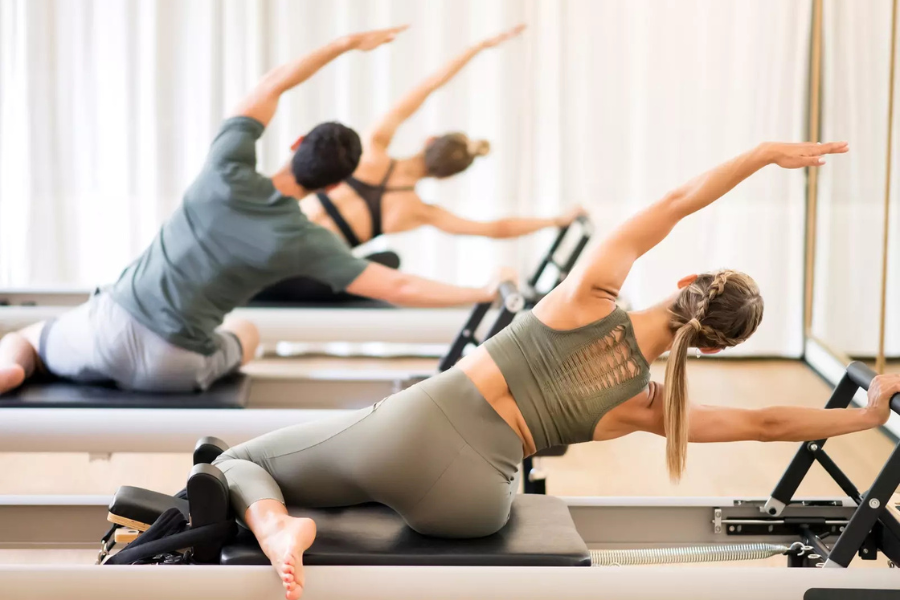
Which is better? yoga or Pilates?
A lot of people ask, “Which is better, yoga or Pilates?” especially when you want to get in shape, feel stronger, and take better care of your body. The short answer is that both can help you lose weight, build strength, and improve your health. The better question for you is, “Which one fits my body, my goals, and my lifestyle right now?”
Below, you will see how yoga and Pilates compare so you can choose the option that makes sense for you, or decide to combine both.
Understand the basics
Before you decide which is better, yoga or Pilates, it helps to know what each one actually focuses on.
Yoga is a long-standing mind–body practice that combines physical poses, breathing, and mindfulness. It started more than five thousand years ago in India and today usually involves holding poses or moving through flowing sequences while staying aware of your breath and how your body feels (Healthline). Many people use yoga to improve flexibility, balance, and overall wellness, as well as reduce stress and support meditation.
Pilates is a low impact exercise system that targets your core muscles first, especially the small stabilizing muscles around your spine and hips. You work through controlled, precise movements while coordinating your breath, either on a mat or on equipment that uses springs and levers for resistance (Healthline). This focus on control and stability makes Pilates especially helpful for posture, back care, and functional strength.
In simple terms, yoga leans more toward flexibility and whole body balance, while Pilates focuses more on strength, control, and alignment.
Compare benefits for weight loss
If your main question is which is better, yoga or Pilates, for weight loss, you will want to know how each one affects calorie burn and body composition.
Both yoga and Pilates build muscle strength, which supports weight management by increasing your overall calorie burn, improving metabolism, and helping you move more efficiently in daily life (Lose It). In yoga, holding poses for longer periods raises time under tension, so your muscles work harder and burn more calories. In Pilates, you often use props or resistance to challenge your muscles which can further support fat loss and muscle tone.
A 2024 American Council on Exercise study, shared by Lose It, found that a 50 minute Pilates session burned slightly more calories than a 50 minute yoga session, although both were lower in calorie burn compared with high intensity workouts (Lose It). That means neither is a quick fix, but both can be powerful when you practice consistently and pair them with a balanced diet.
You can also adjust each style to support weight loss more directly. For yoga, heated or more vigorous formats like power yoga, vinyasa, Ashtanga, or Bikram increase intensity and energy expenditure. For Pilates, adding tools such as reformers, resistance bands, and rings increases resistance and muscle challenge, which can improve strength and calorie burn over time (Lose It).
If you prefer a slower, mindful practice, you might do better sticking with yoga consistently. If you like focused strength and core work, Pilates may feel more satisfying and therefore easier to maintain.
Look at strength, posture, and flexibility
Beyond weight loss, you might be wondering which is better, yoga or Pilates, for strength, posture, and flexibility.
Pilates is designed around core stabilization. Many exercises begin from a set position, then challenge your core while your arms and legs move. This helps you build strength and control in the muscles that support your spine and pelvis. A review of 23 studies found that Pilates reduces pain and disability in conditions like back pain, neck pain, scoliosis, and multiple sclerosis, which shows how powerful this approach can be for physical rehabilitation and long term function (WebMD).
Yoga often targets broader muscle groups and places a stronger emphasis on flexibility and joint mobility, especially in the spine, hips, and wrists (Healthline). Holding standing poses, balances, and deep stretches can increase range of motion and muscular endurance. Over time, you may notice that daily movements like bending, reaching, or getting up from the floor feel easier and smoother.
Both practices also support better posture, but they do it in slightly different ways. Pilates helps you become aware of your alignment and teaches you how to use your deep core muscles to support neutral spine and open shoulders. Yoga uses poses that open the chest, lengthen the back of the body, and strengthen the legs and glutes which all contribute to standing and sitting more upright (Future Fit).
If you feel weak in your core, struggle with back discomfort, or want to improve body control, Pilates may be the better starting point. If you feel tight, stiff, and want more flexibility and balance, yoga may feel more helpful at first.
Consider flexibility, mobility, and injury risk
Any time you try a new activity, it is smart to think about how it fits your current body and injury history.
Yoga generally requires more joint mobility and flexibility, particularly in your spine, hips, and wrists. Some poses can be challenging or even risky if you have severe limitations, arthritis, or spinal concerns, especially if you push into advanced variations too quickly. There are many modified styles though, such as restorative or chair yoga, that can make the practice more accessible when you need gentler options (Healthline).
Pilates tends to be lower impact and is often recommended for older adults or people returning to exercise after an injury. Since the movements are small, controlled, and done with careful attention to alignment and breath, you can usually work at a pace that feels safe while still challenging your muscles (Healthline). Some forms do require equipment, which can add cost or limit access, but mat based classes are widely available.
Both yoga and Pilates can actually help with injury prevention when you practice them correctly. For example, a study of elite adult female fencers found that 8 weeks of either Pilates or yoga significantly improved dynamic balance and functional movement patterns, both of which are important for preventing injuries in sport (PMC – NCBI). Neither approach outperformed the other in that study, which suggests that both can be equally effective for building safer, more coordinated movement.
At the same time, both practices carry risks if you move too fast, skip proper instruction, or ignore pain signals. Physiotherapy sources note that Pilates helps prevent injuries by targeting weak stabilizing muscles that can otherwise cause overcompensation, joint pain, and strains, while yoga helps by releasing chronic tension and stiffness around joints. They also emphasize the importance of gradual progression and modifications, and recommend consulting a physiotherapist if you have a complex injury history or are unsure which practice is safest for you (Musculoskeletal Physiotherapy Australia).
If you have existing pain or a recent injury, talking with a health professional before starting a new class is always a wise step.
Support your mental health and stress levels
You might also be weighing which is better, yoga or Pilates, for your mental health. Both can help, and they often work in slightly different ways.
Both yoga and Pilates involve focused movement and breathwork, which naturally encourages mindfulness. This kind of mindful exercise can increase heart rate variability, a measure of how well your nervous system responds to stress. Higher variability is generally linked with better stress regulation and recovery (Vanessa Michielon).
Pilates has been associated with reduced symptoms of depression and anxiety, as well as lower feelings of fatigue and lack of energy, in research that followed participants over several weeks of practice (Vanessa Michielon). The combination of strength building, breath control, and body awareness can boost your sense of control and confidence in how you move.
Yoga often has an even stronger mindfulness component. Many styles incorporate meditation, guided relaxation, or specific breathing techniques designed to calm your nervous system. One study found that yoga practitioners had increased levels of GABA, a neurotransmitter that is often lower in people with anxiety and mood disorders, compared with people who only did walking exercise with similar calorie expenditure (Vanessa Michielon). For many people, this means yoga offers mental health benefits that go beyond what you might get from general exercise alone.
If you are mainly looking for stress relief, better sleep, or support for anxiety, yoga, particularly slower or restorative styles, may meet those needs especially well. If you want both mental health support and a strong focus on physical control and posture, Pilates is an excellent option.
Check how each fits your lifestyle
Sometimes the “better” choice is simply the one you can actually maintain with your schedule, budget, and preferences.
Yoga classes are widely available in many communities and online. You usually only need a mat and enough space to stretch out. This makes it easier to practice at home, follow videos, or attend group classes in studios, gyms, or community centers. Because yoga is so popular, you can often choose from a variety of styles, from gentle to vigorous, which lets you match your energy levels from day to day (WebMD).
Pilates also offers a range of options. Mat Pilates can be done at home with minimal equipment, while studio based Pilates might include machines such as reformers that offer more resistance and support. These equipment based classes can provide great results for strength and alignment but may cost more and require access to a specific studio (Healthline).
If you enjoy a quicker pace and love the feeling of your muscles working during controlled movements, you might feel more motivated by Pilates. If you prefer a slower, breath centered practice that combines movement with mental calm, yoga might fit better (Future Fit).
It can also help to think about the community and teaching style available to you. The quality of instruction and how comfortable you feel with your teacher often has a bigger impact on your experience than the type of class alone (WebMD).
If you are uncertain, consider trying a short beginner series in both yoga and Pilates, either in person or online, then notice which one you look forward to more.
Decide which is better for you
In the end, there is no universal winner in the debate about which is better, yoga or Pilates. Both are generally safe for many people, including older adults and pregnant women, as long as you get proper guidance and avoid pushing into pain or advanced movements too quickly (WebMD).
You might lean toward Pilates if:
- You want to build core strength and improve posture.
- You have a history of back pain and want targeted support, with medical clearance.
- You enjoy controlled, technical movement and clear cues.
You might lean toward yoga if:
- You want to improve flexibility and balance.
- You are drawn to mindfulness, meditation, or a more spiritual side of movement.
- You are looking for stress relief, better sleep, and overall wellness support.
You can also combine both. For example, you might do Pilates twice a week for strength and core control, then add one or two yoga sessions for flexibility and mental recovery. Research from South Korea found that both practices improved health promoting behaviors and self perceived wellbeing over eight weeks, with Pilates showing slightly stronger improvements in overall health habits and yoga showing clear benefits in nutrition, activity, and stress management (PMC – NCBI).
If you are dealing with pain, chronic conditions, or past injuries, a conversation with a physiotherapist or healthcare provider can help you decide which practice is safest to start and how to modify it for your body (Musculoskeletal Physiotherapy Australia).
The best choice is the one you can stick with, that feels good in your body, and that supports the kind of life you want to live. Start with one beginner friendly class, notice how you feel during and after, and let your own experience guide your next step.
About The Author





