Everything You Need To Know about Starting Yoga
A yoga practice does not have to be complicated or intense to be effective. When you approach yoga for beginners with curiosity instead of pressure, it becomes a practical tool for better strength, flexibility, and stress relief that fits into your everyday life.
Below, you will learn what yoga actually is, how it benefits your body and mind, which poses to start with, and simple ways to build a routine you will actually keep.
Understand what yoga is (and is not)
At its core, yoga is a mind-body practice. It usually includes physical postures, breathing exercises, and moments of stillness or meditation. These elements work together to help you move better, feel calmer, and become more aware of your body.
You do not need to be flexible, spiritual, or fit before you start. Yoga is often used to improve flexibility and balance, and a 2019 study found that it may be especially helpful for adults over 65 who want to slow age-related losses in mobility (Healthline). You can think of it as a customizable toolkit. You pick the poses, pace, and style that match what your body needs on any given day.
Yoga is also highly adaptable. If you have limited mobility, you can choose chair yoga or gentler styles, which experts recommend when you are new or working with physical limitations (Johns Hopkins Medicine).
Instead of trying to fit yourself into a rigid idea of what yoga should look like, you shape yoga to fit your life.
Learn the key benefits for beginners
The benefits of yoga show up in both your body and your mind. You do not have to wait months to notice a difference, you may start to feel changes in your mood and comfort after only a few short sessions.
Physical benefits you can expect
Research highlights several ways yoga supports your physical health:
- Improved flexibility and balance, which are key for staying mobile and independent as you age (Healthline)
- Increased strength in both your upper and lower body, especially with styles that involve holding poses or flowing between them (Healthline)
- Better posture and body awareness, thanks to changes in the brain areas related to sensing your own body, known as interoception (Healthline)
- Support for back health, particularly through gentle spine-focused movements like Cat-Cow that can ease lower back discomfort (Johns Hopkins Medicine)
A 2020 review also found that yoga can help counteract the effects of long hours at a desk by improving body awareness and alignment (Healthline). If you sit a lot for work, this is especially valuable.
Mental and emotional benefits
Yoga is not just stretching. It combines movement with breathing and mindfulness, which can be powerful for stress relief.
Reports from the American Psychological Association note that practices like yoga, which blend physical activity with meditation, breath work, and sometimes sound, may help reduce tension and stress levels (Healthline).
Other potential benefits include:
- Better mood and emotional balance
- A sense of calm and clarity after practice
- Support for people living with chronic pain by helping them manage symptoms as part of a broader care plan (Healthline)
Even short sessions matter. One study cited in 2023 found that just 10 minutes of daily yoga can reduce physical discomfort and improve mood in people working from home (Fit&Well).
Start with foundational beginner poses
When you explore yoga for beginners, you do not need a long list of complicated moves. A handful of foundational poses can build strength, balance, and confidence without overwhelming you.
According to several yoga educators, beginner-friendly sequences often include:
- Mountain Pose (Tadasana) for posture and balance
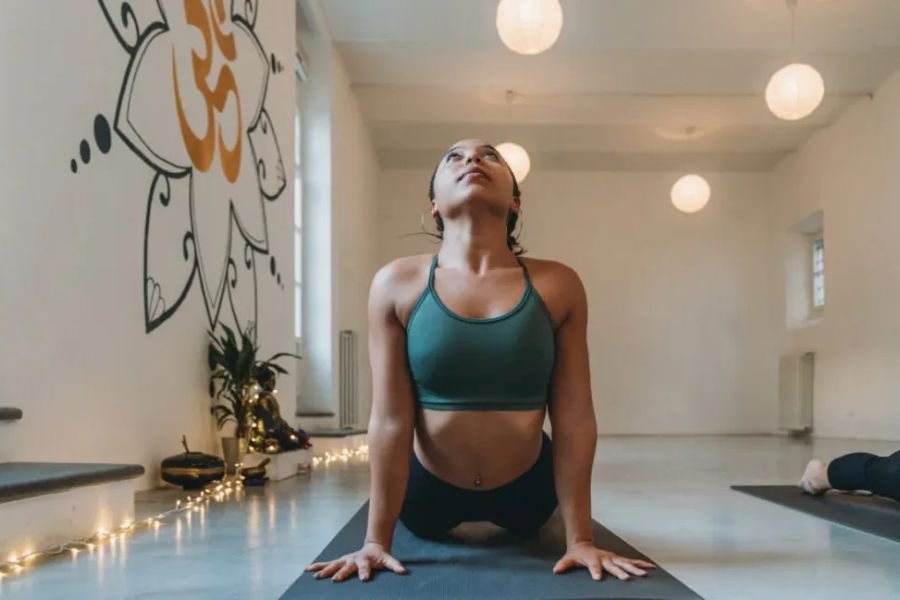
- Downward-Facing Dog (Adho Mukha Svanasana) for arm and back strength
- Warrior I and Warrior II for hip opening, leg strength, and focus
- Child’s Pose (Balasana) for rest and stress relief
- Tree Pose (Vrksasana) for balance and concentration (Center For Yoga LA, Verywell Fit)
Poses like Cat-Cow, Bridge Pose, and gentle forward folds are also especially good for your spine and for releasing tightness from sitting (Verywell Fit).
A simple starting plan is to pick four or five poses that feel good and repeat them consistently. Teachers often recommend choosing enjoyable postures instead of the most impressive ones, because you are more likely to stick with them long term (Yoga International).
Use props and modifications without hesitation
If you are new, stiff, or working with an old injury, props are your friends. They make yoga more accessible, not less serious.
Props might include:
- A yoga block or a sturdy stack of books
- A strap or belt
- A folded blanket or cushion
Teachers often suggest using blocks under your hands in poses like Triangle or Extended Side Angle, and placing a blanket under your hips or knees in seated or kneeling poses. These small changes help you get the benefits of the stretch without straining your joints (Verywell Fit).
In fact, many instructors consider props essential for personalizing poses to your body, anatomy, and limitations. They can help you find better alignment and prevent injury, which is especially important when you are still learning what feels right for you (Cultivate Calm Yoga).
If a full version of a pose is too challenging, modify it. For example, if Low Plank is hard on your shoulders or wrists, practicing it on your knees is a common and recommended alternative until you build more strength (Cultivate Calm Yoga).
Any yoga pose can be tailored to your body. The goal is not to match a picture. The goal is to feel stable, safe, and present in your own version of the shape.
Focus on breathing and common beginner mistakes
One of the easiest ways to make yoga feel smoother is to pay attention to your breath. The most frequent mistake beginners make is holding their breath when poses feel hard. This creates more tension and makes you feel stressed instead of relaxed (Cultivate Calm Yoga).
Aim to:
- Inhale through your nose as you lengthen or open your body
- Exhale through your nose as you fold or soften
- Keep your breath steady, not forced, throughout the practice
Breath becomes your built-in guide. If it gets choppy or strained, that is a sign to ease off or modify the pose.
Form also matters, especially in a few key postures:
- In Downward-Facing Dog, think of making an inverted V shape. Bend your knees if your hamstrings are tight and focus on keeping your spine long. Distribute your weight roughly 40 percent in your arms and 60 percent in your legs to protect your wrists (Cultivate Calm Yoga).
- In Warrior II, keep your front knee stacked above your ankle. Avoid letting the knee cave inward or stepping so wide that you lose stability. Proper alignment helps protect your knees as you build strength (Cultivate Calm Yoga).
When you are unsure about form, starting with a beginner-friendly class or video can be very helpful. Health experts often recommend signing up for a class at least a few times to learn the basics of safe alignment (Johns Hopkins Medicine).
Build a home yoga routine that fits your life
A consistent home practice is one of the most convenient ways to experience yoga for beginners. It lets you choose the time, length, and mood of your sessions without commuting or scheduling around a studio.
Yoga teachers suggest a few simple guidelines for creating a sustainable routine:
- Begin with stillness, such as an easy seated position or lying down in Corpse Pose, so you can tune into how your body and mind feel before you start moving (Yoga International).
- Match your practice to your current energy. If you feel tired, choose gentler, more restorative poses. If you feel energized, flow a little more or hold strength-building postures for longer (Yoga International).
- Aim for consistency instead of intensity. Practicing two or three times per week for 20 to 60 minutes is often recommended for beginners, but even shorter, frequent sessions work well if that feels realistic for you (Center For Yoga LA, Fit&Well).
A 10 minute routine is a practical starting point. For example, one widely recommended beginner sequence includes reclining hamstring stretches, a seated forward fold, Downward Dog, a Low Lunge on each side, Pigeon prep, and Child’s Pose. This combination addresses both strength and flexibility while giving you a built-in rest at the end (Yoga International).
If you enjoy structure, a 30 day beginner series can help you build the habit. Programs designed for new or inflexible practitioners often introduce new poses gradually, use props to keep things accessible, and repeat the motto “slow and steady wins the race” so you can progress at a comfortable pace (Yoga With Bird).
Listen to your body and measure progress differently
Traditional fitness routines often focus on numbers like reps, miles, or calories. With yoga, your progress shows up in quieter ways that are just as meaningful.
Over time, you may notice:
- More ease in daily movements, such as bending to tie your shoes or reaching for items overhead
- Better balance when standing on one leg or climbing stairs, especially if you regularly practice poses like Tree Pose (Johns Hopkins Medicine)
- Less stiffness after long periods of sitting and a more comfortable, upright posture
- A shorter fuse for stress, where a few deep breaths or a gentle stretch help you reset more quickly
Regular practice of beginner-friendly poses often increases your range of motion, builds strength, and supports emotional wellbeing by giving you time to breathe and connect with yourself (Verywell Fit).
The most important skill you develop is learning to listen. When your body says “enough,” you pause. When a pose feels supportive, you stay a little longer. This kind of awareness is what turns yoga into a long term tool for health, rather than just another exercise trend.
Your next small step
To start, you do not need a full routine, special clothes, or a complex plan. Choose one simple action you can take today:
- Spend 5 quiet minutes lying on your back with your knees bent, breathing slowly.
- Try Mountain Pose, Tree Pose with a hand on the wall, and Child’s Pose, holding each for a few breaths.
- Look up a short beginner sequence that uses props and focuses on gentle stretching.
As research and teachers consistently show, yoga offers benefits for people of all ages and fitness levels, and regular practice can improve your physical and mental health from head to toe (Johns Hopkins Medicine).
When you treat yoga for beginners as an exploration instead of a test, you give yourself space to grow at your own pace. That is where the real transformation happens.
About The Author