Whey Protein Powder for Older Adults
A scoop of whey protein can seem like a simple shortcut to better health. If you are over 50 and wondering whether whey protein powder belongs in your kitchen, you are not alone. You might hear that it helps preserve muscle, support bones, and speed recovery, but you may also worry about safety, side effects, and whether you really need it.
This guide walks you through how whey protein for older adults actually works, what the research says, and how to use it safely alongside a balanced diet.
Why protein matters more as you age
As you get older, your body naturally loses muscle. This gradual decline, called sarcopenia, affects nearly half of adults over age 80 and is linked to frailty, disability, and loss of independence (Harvard Health Publishing). Even before that, adults lose roughly 3 to 8% of muscle mass each decade after age 30, which raises the risk of fractures and shortens lifespan (Healthline).
At the same time, many older adults simply do not eat enough protein. Almost 46% of people aged 51 and older fall short of the daily protein they need to maintain and build muscle (Harvard Health Publishing). Appetite can dip, chewing may be harder, or cooking might feel like a chore.
This combination, less intake and more muscle loss, makes protein especially important later in life. Your body also develops what researchers call “anabolic resistance”. In plain terms, your muscles do not respond as strongly to smaller protein doses, so you need a bit more at each meal to get the same muscle-building effect you had when you were younger (Stanford Lifestyle Medicine).
How much protein you really need
If you are used to hearing that adults need 0.8 grams of protein per kilogram of body weight daily, that guideline is actually too low for most older adults.
Several expert groups now suggest higher targets:
- Many studies recommend 1.0 to 1.2 grams of protein per kilogram per day for older adults to maintain muscle and function (PMC, MD Anderson).
- Some lifestyle medicine experts advise 1.2 to 1.6 grams per kilogram daily for people over 50 to slow age-related muscle loss (Stanford Lifestyle Medicine).
You also need enough protein at each meal, not just by the end of the day. To overcome anabolic resistance, older adults usually require about 30 to 45 grams of protein per meal to maximally stimulate muscle building (PMC). Researchers have found that older adults around age 71 may need roughly 0.4 grams per kilogram of body weight per meal, about twice what younger adults need, to trigger muscle protein synthesis (Stanford Lifestyle Medicine).
In practical terms, that often means:
- Aim for 25 to 30 grams of protein at breakfast, lunch, and dinner.
- Use snacks or supplements to fill gaps if a meal falls short.
This is where whey protein powder can be a helpful tool.
What whey protein is and how it helps
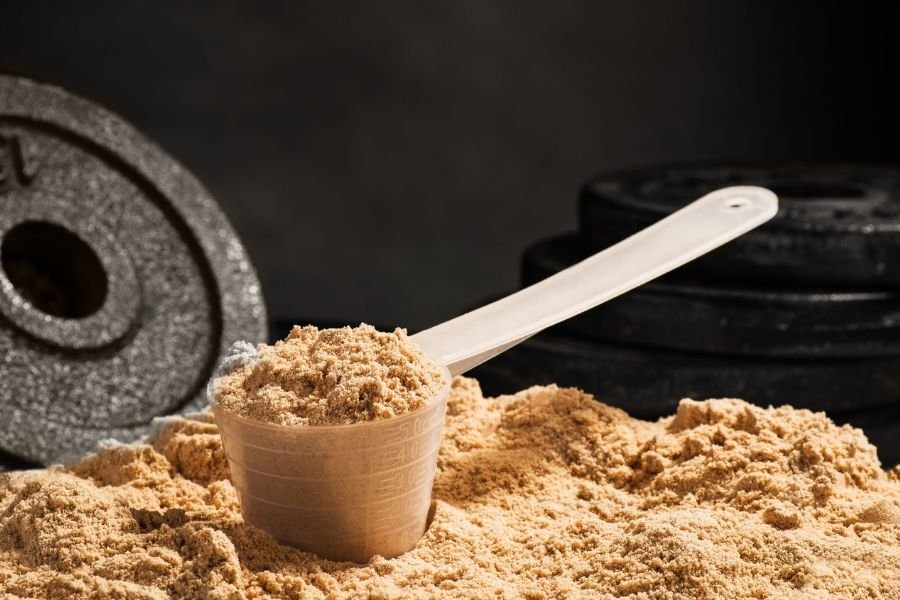
Whey protein comes from milk. It is the liquid that separates from curds during cheese production and it is then filtered and dried into a powder. You can mix it with water, milk, or blend it into smoothies.
Two common types you will see are:
- Whey protein concentrate, which contains protein along with some lactose, carbs, and fat.
- Whey protein isolate, which is more processed to remove most lactose, carbs, and fat. It provides more protein per scoop and is usually easier to digest for people with lactose intolerance (MD Anderson).
For older adults, whey has several advantages:
- It is a complete protein with all nine essential amino acids your body needs but cannot make on its own (Healthline).
- It is rich in leucine, a key amino acid that “switches on” muscle protein synthesis. This is especially helpful for older adults whose muscles are less responsive to smaller protein doses (PMC).
- It digests quickly, so it can support muscle repair and growth shortly after you drink it (MD Anderson).
Research specifically notes that whey protein is particularly effective at building muscle in older adults compared to casein or some plant-based powders (Harvard Health Publishing), and it can enhance muscle protein synthesis in women aged 65 to 75 (Stanford Lifestyle Medicine).
What the research says about whey and aging
Studies on whey protein for older adults have looked at muscle mass, strength, and function. The findings are nuanced, and context matters.
Protein plus exercise works best
Across multiple studies, the strongest improvements in muscle mass and strength appear when older adults combine protein supplementation with resistance exercise. Heavy or challenging resistance work, tailored to your ability and health, plus extra protein produces the most significant gains in healthy older adults (Harvard Health Publishing, PMC).
Timing also plays a role. Consuming about 30 grams of protein, such as whey, within a couple of hours after strength training helps stimulate muscle growth and counteract age-related muscle loss (Stanford Lifestyle Medicine). Protein intake soon after exercise appears to be especially beneficial for older adults (PMC).
Whey and sarcopenia
A large 2023 meta-analysis looked at 10 randomized controlled trials involving 2,498 older adults with sarcopenia, with average ages from 74 to almost 84 years. The researchers examined how whey protein supplementation affected muscle mass, handgrip strength, mobility tests, and body weight (PMC).
They found that whey protein alone did not significantly improve:
- Appendicular muscle mass
- Handgrip strength
- Chair stand tests
- Short Physical Performance Battery scores
- Overall body weight
However, when they analyzed the data more closely, they saw that the effects varied based on age, study duration, and sample size. Shorter studies, older participants, and smaller trials tended to show larger improvements in function (PMC).
The key takeaway from this research is that whey protein by itself is not a magic fix for sarcopenia. But combining whey with age-appropriate physical activity may help prevent or slow muscle loss in higher risk older adults, particularly if you tailor the program to the person’s age and health status (PMC). The authors also emphasize that more large, high-quality trials are needed.
Does whey affect appetite or weight?
You might worry that adding whey will reduce your appetite for regular meals. Interestingly, studies have found that supplementing with 30 grams or more of whey protein at a time does not suppress appetite or reduce later food intake in older adults (PMC). That means you can usually raise your protein intake without accidentally eating fewer calories overall, which can be helpful if you are underweight or losing weight unintentionally.
On the other hand, some research suggests that whey can increase feelings of fullness and may help with weight loss for people who need to manage their weight (Healthline). In other words, the impact on your weight depends on your overall eating pattern and goals.
How to use whey protein in daily life
If you decide to use whey protein for older adults as part of your routine, you will get the most benefit if you think of it as a tool to support good habits rather than a replacement for meals.
Fill protein gaps at low‑protein meals
Older adults tend to eat less protein at breakfast compared with lunch and dinner. Spreading your protein evenly through the day, about 25 to 30 grams per meal, helps preserve muscle mass as you age (Healthline).
Using a scoop of whey at meals that are typically lower in protein, like breakfast or a light evening snack, can help you even out your intake (Healthline). For example:
- Blend whey into a smoothie with fruit and yogurt at breakfast.
- Stir whey into oatmeal or mix it into pancake batter.
- Pair a whey shake with a small sandwich or salad at lunch if you are short on protein.
Pair whey with strength training
To support muscle growth and strength:
- Include resistance exercises two or more days per week, such as bodyweight squats, resistance bands, or weight machines, as approved by your healthcare provider.
- Have about 30 grams of protein, from whey or food, within a couple of hours after your session to support muscle repair and growth (Stanford Lifestyle Medicine, PMC).
You do not need to be a gym regular. Even light to moderate strength work, like chair stands, wall pushups, or supervised exercises, can make a difference when combined with adequate protein.
Consider nighttime protein if needed
Some research has found that consuming casein, a slower-digesting milk protein, before bed can promote muscle growth in older adults by providing a steady protein supply overnight, even in those who are less active (Healthline). Doses around 40 grams before bedtime have been linked to better overnight muscle building, strength, and recovery in this age group (Healthline).
If you do not tolerate casein or prefer whey, you can still benefit from an evening snack that includes protein, but the research on specifically using whey right before bed in older adults is less robust than for casein.
Safety, side effects, and hidden risks
Used thoughtfully, higher protein intakes of at least 1.2 grams per kilogram per day from whey supplements appear safe for most healthy older adults with normal kidney function (PMC). Protein shakes are even recommended in clinical settings to help older adults with low appetite or illness meet their needs (MD Anderson).
Still, you should be aware of a few potential issues.
Kidney, liver, and digestive concerns
If you have existing kidney or liver disease, high protein intake, including from whey, may pose risks. In this case, you should talk with your doctor or a dietitian before starting a supplement (Healthline).
On the digestive side, whey protein can cause:
- Bloating
- Gas
- Diarrhea
These side effects are more common if you are lactose intolerant, a condition that affects up to 65% of people worldwide (Healthline). Whey protein isolate, which contains very little lactose, is typically better tolerated for people with lactose intolerance (Healthline, MD Anderson).
Contaminants in protein powders
The quality of supplements is another concern. Protein powders are not as tightly regulated as medications, and their content can vary widely. Some have a lot of added sugar, and protein per scoop can range from about 10 to 30 grams (Harvard Health Publishing).
A 2023 report from the Clean Label Project found that many protein powders, including whey products, contained contaminants such as heavy metals like lead, arsenic, cadmium, and mercury, as well as BPA and pesticides, sometimes at levels that may pose health risks (Harvard Health Publishing).
Because of this, a registered dietitian at Harvard-affiliated Brigham and Women’s Hospital advises using protein powders only rarely and with medical supervision, particularly for older adults (Harvard Health Publishing).
If you choose to use whey:
- Look for third‑party tested products, for example NSF, Informed Choice, or USP.
- Avoid powders with long ingredient lists, artificial sweeteners you do not tolerate, or very high sugar content.
- Discuss your choice and dose with your healthcare provider, especially if you take medications or have chronic conditions.
Whole foods versus whey: finding a balance
Even though whey protein can be an effective supplement, experts consistently recommend that you get most of your protein from food. Whole food sources also provide vitamins, minerals, and other beneficial compounds that powders cannot match.
For older adults, good protein sources include (Harvard Health Publishing):
- Fish and seafood
- Poultry and lean meats
- Eggs
- Low‑fat dairy, such as yogurt, milk, and cheese
- Legumes, including beans and lentils
- Nuts and seeds
Several studies suggest that a higher protein intake may actually help maintain bone health in older adults, who are more prone to osteoporosis, rather than harming bones as was once feared (Healthline). Combined with resistance exercise, protein helps support both muscle and bone strength.
You might find that a small amount of whey powder is most useful when:
- You have days with low appetite or trouble chewing.
- You are recovering from illness, surgery, or cancer treatment.
- You want a quick, convenient option after exercise.
- You struggle to hit 25 to 30 grams of protein at breakfast or another meal, even with food.
In these situations, a whey shake can bridge the gap while you continue to build your meals around whole, nutrient‑dense foods.
Think of whey protein as a supporting actor, not the star of the show. Your daily meals should still carry most of the load, while whey steps in when convenience or appetite would otherwise leave you short.
Putting it all together
Using whey protein for older adults can be helpful, but the real benefits come from the combination of three things: enough total protein, strength‑building activity, and a focus on whole foods.
If you are considering adding whey to your routine, you can start by:
- Estimating your daily protein goal based on your body weight and health conditions, with guidance from your clinician if possible.
- Checking how much protein you already get at each meal, especially breakfast.
- Adding whey where it fills a clear gap, such as a low‑protein meal or post‑exercise snack.
- Choosing a high‑quality, third‑party tested product and watching for any digestive changes or interactions with your medical conditions.
With a bit of planning, you can use whey protein to support stronger muscles, better balance, and more independence as you age, while still letting real food remain the foundation of your diet.
About The Author