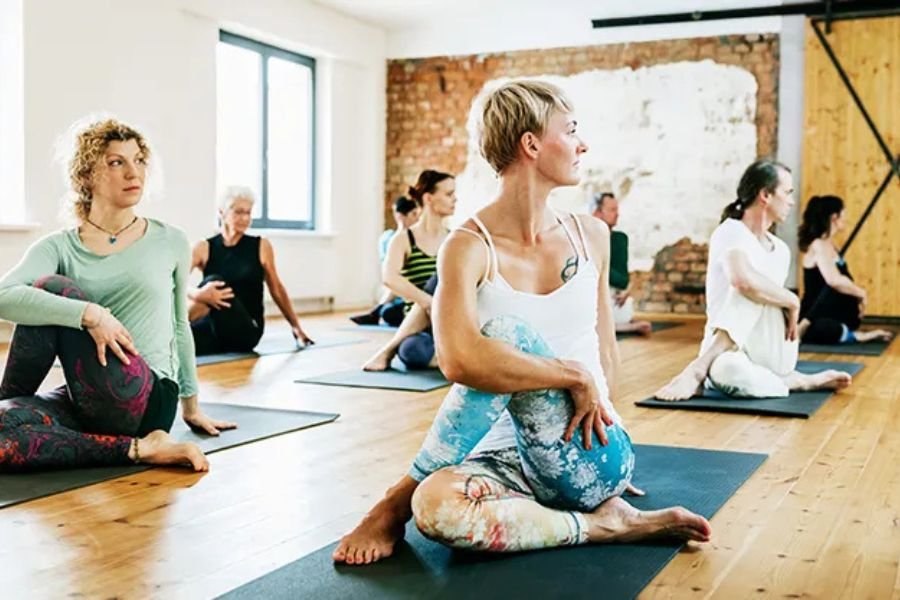
9 Benefits of Yoga
A regular yoga practice offers far more than flexibility. The most powerful yoga benefits show up in your mind, your mood, and even your long‑term brain health. Instead of thinking of yoga as just stretching, you can see it as a full‑body, full‑mind tune‑up that supports you now and as you age.
Below, you will find nine science‑backed benefits of yoga, along with simple ways to start experiencing each one.
1. Sharper brain and better memory
Yoga does not just work your muscles. It also works your brain.
Research suggests that practicing yoga can strengthen areas of your brain involved in memory, attention, awareness, thought, and language, which means it supports learning and mental clarity over time (Harvard Health Publishing). MRI scans show that regular practitioners often have a thicker cerebral cortex and hippocampus, brain regions that usually shrink with age. This pattern suggests yoga may help slow age‑related cognitive decline and protect your memory as you get older (Harvard Health Publishing).
You also see improvements in executive functions, such as reasoning, decision making, reaction time, and accuracy on mental tests, especially when you combine yoga with meditation (Harvard Health Publishing). In daily life, that can look like focusing more easily at work, switching between tasks with less mental fatigue, and remembering details without feeling so scattered.
If you want to support your brain, start with 10 to 20 minutes of yoga a few times a week. Quiet, steady movement paired with breathing is often enough to notice that your thinking feels clearer.
2. Major stress relief and calmer mood
One of the most noticeable yoga benefits is how quickly it calms your nervous system.
Yoga combines physical poses, controlled breathing, and meditation, which together promote both mental and physical relaxation and help lower anxiety and stress (PMC – NCBI). Studies show that yoga can increase feel‑good brain chemicals such as endorphins and GABA, which are linked to improved mood and reduced anxiety, while also lowering stress hormones like cortisol (Houston Methodist).
Yoga also activates your parasympathetic nervous system, the “rest and digest” mode that helps you move out of fight, flight, or freeze. This shift reduces feelings of depression, anger, and anxiety, and helps your body feel safe again (Houston Methodist).
Electroencephalogram, ECG, and EMG research shows what is happening under the surface. Yoga and meditation increase brain waves associated with relaxation, reduce stress‑linked beta activity, lower heart rate, improve heart rate variability, and decrease muscle tension in areas like your shoulders and face (PMC – NCBI). All of that lines up with what you feel after a good class, a sense of ease in both body and mind.
A short, consistent routine often works better than infrequent long sessions. Even 10 minutes of gentle movement and breathing on stressful days can become your reset button.
You can think of yoga as a built‑in pause button for your nervous system, something you can press whenever life starts to feel too loud.
3. Stronger, more flexible body
Yoga absolutely counts as strength and mobility work.
Slow, controlled movements paired with deep breathing increase blood flow and warm your muscles. Holding poses builds strength while stretching improves your flexibility and range of motion (Johns Hopkins Medicine). In one study, participants improved their flexibility by up to 35 percent after only eight weeks of regular practice (WebMD).
Different styles deliver different physical benefits. More vigorous forms like ashtanga or power yoga build muscle tone and endurance, while gentler styles such as hatha or Iyengar increase strength through longer holds and precise alignment (WebMD). Poses such as plank, downward‑facing dog, and chair pose work your upper body, core, and lower back so that everyday tasks feel easier and your body feels more stable.
You do not have to be flexible to begin. Flexibility is something you gain with practice, not a requirement to get started.
4. Better balance and coordination
Balance might not seem urgent until you notice you are a bit unsteady. Yoga helps you address that early.
In a 10‑week study of male college athletes, those who practiced yoga twice a week significantly improved their flexibility and balance compared to teammates who skipped yoga, even though both groups continued their regular sports training (International Journal of Yoga). The yoga group showed better performance on balance tests and improved joint angles in common poses like lunges and downward dog, which indicates more efficient, coordinated movement across the whole body.
Yoga challenges your balance in multiple ways. You practice standing on one leg, shifting your weight, and moving slowly through transitions. At the same time, you build awareness of where your body is in space, which reduces your risk of falls and awkward missteps, especially as you age.
Simple single‑leg balances, gentle lunges, and slow transitions from standing to the floor are a good way to begin. As you get more comfortable, you can progress to more complex balance poses if you want an extra challenge.
5. Less back, joint, and muscle pain
If you live with stiffness or discomfort, yoga can be a supportive part of your pain management plan.
The American College of Physicians recommends yoga as a first‑line treatment option for chronic low back pain because it can be as effective as basic stretching for easing pain and improving function (Johns Hopkins Medicine). Gentle yoga has also been shown to reduce the discomfort that comes with tender, swollen joints in people with arthritis (Johns Hopkins Medicine).
According to the U.S. National Center for Complementary and Integrative Health, there is evidence that yoga can help relieve low‑back and neck pain, although current research does not support its effectiveness for other painful conditions like headaches, fibromyalgia, or carpal tunnel syndrome (NCCIH). That means it is not a cure‑all, but it can be a valuable tool alongside other treatments your health care provider recommends.
Because yoga is low impact, it is generally easier on your joints than many forms of exercise. Slow movements, mindful alignment, and focused breathing can help you release tension and move more comfortably, especially when you work with a qualified teacher who can offer modifications.
6. Heart health and weight management support
Your heart and metabolism benefit when stress levels drop and movement becomes a regular part of your life, and yoga helps on both fronts.
Research from Johns Hopkins suggests that consistent yoga practice may improve heart health by reducing stress and body‑wide inflammation and by supporting healthy blood pressure and body weight, all of which are key factors in heart disease risk (Johns Hopkins Medicine). Although yoga is not always aerobic, moderate and vigorous styles can raise your heart rate and build endurance.
Yoga can also support weight management in more indirect but powerful ways. It burns calories, especially in more active classes, and it helps reduce stress and balance hormones such as cortisol that are linked to belly fat and emotional eating (WebMD). Regular practice can improve your mood and your relationship with your body, which may make it easier to make food choices that truly feel supportive instead of reactionary.
You do not have to treat yoga as your only workout. Many people find that combining yoga with walking, strength training, or other activities gives them the best mix of cardiovascular and mental health benefits.
7. Better sleep and deeper relaxation
If you struggle to fall asleep or stay asleep, the relaxation skills you build in yoga can help.
Consistent practice calms both body and mind so you can drop into rest more easily. Johns Hopkins notes that yoga can help people fall asleep faster and stay asleep longer and that bedtime yoga routines in particular seem to support deeper, more restorative sleep (Johns Hopkins Medicine).
Breathwork, or pranayama, plays a big role here. Focused breathing teaches you how to slow your heart rate, relax tight muscles, and quiet racing thoughts, which makes it easier to transition from the pace of your day to a restful night (Healthline).
A 2020 study on yoga nidra, a guided relaxation practice, found that just 11 minutes a day for 30 days reduced stress levels, improved sleep quality, and boosted overall well‑being, with benefits that lasted weeks after the study ended (Healthline). You can practice a simple restorative pose like legs‑up‑the‑wall paired with slow breathing before bed and notice how your body responds.
8. Emotional resilience and mental health
Yoga can be a supportive addition to mental health care by helping you regulate emotions and respond to stress differently.
In a review of relaxation techniques for older adults, yoga and music stood out as especially effective for reducing depression and anxiety, with yoga offering the longest‑lasting benefits (Harvard Health Publishing). A separate study found that women who practiced Hatha yoga three times a week for four weeks experienced significant reductions in stress, depression, and anxiety after 12 sessions (Healthline).
Yoga and meditation appear to elevate GABA levels and decrease the activity of brain regions tied to emotional reactivity, which can translate into feeling less overwhelmed by your own thoughts and feelings (Harvard Health Publishing). With regular practice, you build a habit of pausing, breathing, and noticing what is happening inside you before reacting.
Popular poses for stress relief such as Cat‑Cow, Child’s Pose, Legs‑Up‑the‑Wall, and Corpse Pose encourage you to soften physically and mentally, release built‑up tension, and reset your energy (Healthline). Over time, that reset becomes more accessible even off the mat.
If you are dealing with a mental health condition, yoga is not a replacement for therapy or medical care, but it can be a complementary practice that helps you apply coping tools in your daily life.
9. Accessible movement for almost every body
One of the most overlooked yoga benefits is how adaptable it is.
Yoga has been around for thousands of years and centers on three core elements: breathing exercises, meditation, and physical poses that stretch and strengthen different parts of your body (Emory Healthcare). Because it is built on these flexible building blocks, you can usually find a version that fits your age, body type, and fitness level.
Health organizations note that yoga is generally safe for healthy people when practiced with proper guidance. Common injuries tend to be minor sprains or strains and serious injuries are rare, especially compared to high impact sports. If you are older, pregnant, or living with health conditions, working with a qualified teacher and talking with your health care provider will help you modify poses as needed (NCCIH).
The American Academy of Pediatrics even recommends yoga as a potentially helpful therapy for children and teens dealing with emotional, mental, physical, and behavioral challenges. Regular practice can support self‑regulation, focus, peaceful problem solving, balance, tension relief, and strength in younger people (NCCIH).
Many instructors emphasize self‑acceptance and mindfulness, inviting you to appreciate your body as it is right now rather than pushing it to match a certain image (Houston Methodist). That mindset alone can be transformative, especially if you are used to workouts that feel punishing instead of supportive.
How to start enjoying yoga benefits today
You do not have to overhaul your routine to tap into the benefits of yoga. You can start small and keep things simple.
Here is a straightforward way to begin:
- Pick three days this week and set aside 10 to 15 minutes.
- Choose two or three gentle poses, such as Cat‑Cow, Child’s Pose, and Legs‑Up‑the‑Wall.
- Move slowly and breathe in and out through your nose as steadily as you comfortably can.
- End each mini‑session by lying on your back in Corpse Pose for a minute or two, letting your body completely relax.
As you become more comfortable, you can try longer classes, explore different styles, or add short meditation and breathing practices. The key is consistency. A regular, realistic routine will serve you better than an ambitious plan you cannot maintain.
Yoga asks only that you show up as you are, pay attention, and keep breathing. The benefits, from sharper thinking to calmer nights, build from there.
About The Author