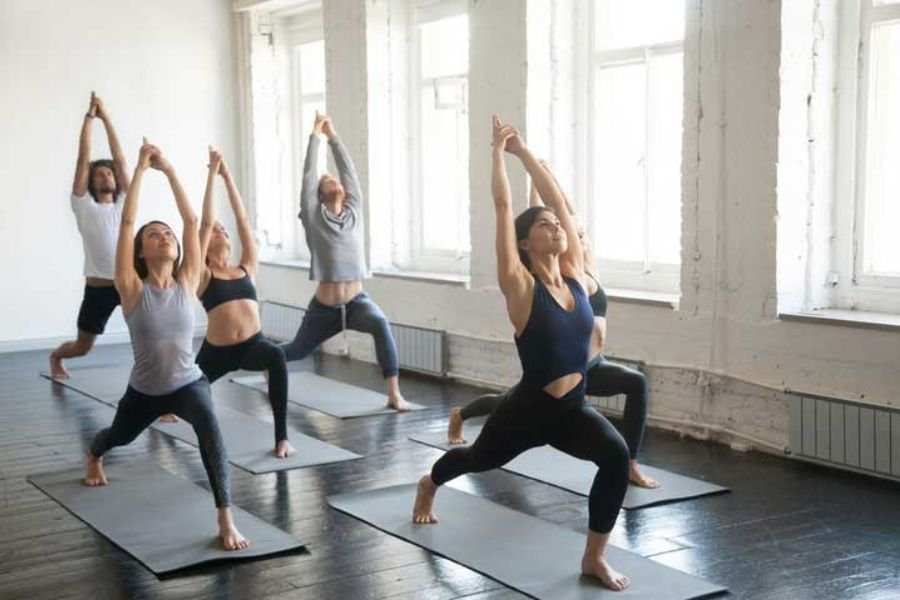
What is yoga and what does it do?
A regular yoga practice can do far more than help you touch your toes. When you ask, “what is yoga and what does it do?” you are really asking how one simple routine can support your body, mind, and long-term health at the same time.
Below, you will learn what yoga actually is, where it comes from, and the specific ways it can help your strength, flexibility, stress levels, sleep, and overall well-being, whether you are brand new or returning after a long break.
Understand what yoga actually is
Yoga is more than a stretching class. Traditionally, it is a holistic system that includes physical postures, breathing exercises, meditation, and ethical principles that work together to support your health and self-awareness. The word “yoga” comes from the Sanskrit root yuj, which means to yoke or unite, referring to the union of body, mind, and spirit (NCBI PMC).
Modern yoga classes usually focus on:
- Poses, called asanas, that strengthen and stretch your body
- Breathing techniques, called pranayama, that train your lungs and nervous system
- Relaxation or meditation that helps calm your mind
According to researchers, yoga is best understood as a mind-body practice. It blends movement with breath and attention, which is why it can influence both your physical and mental health at once (NCBI PMC).
See how yoga affects your body
You feel yoga in your muscles first, but the effects go much deeper. With regular practice you train your joints, heart, lungs, and even your blood pressure.
Build strength, flexibility, and posture
Common styles like Hatha yoga use a sequence of postures to build strength and flexibility throughout your whole body. Research shows that these poses can improve physical flexibility, coordination, and muscular strength while also helping your cardiovascular system function more efficiently (NCBI PMC).
Simple poses like lunges, standing balances, and gentle backbends ask you to support your own body weight. This type of training is especially helpful as you age, because it supports joint health and makes everyday movements, such as climbing stairs or lifting groceries, feel easier.
Backbends like Upward-Facing Dog also open your chest and shoulders, which can improve posture and oxygen flow if you spend hours at a desk. These posture-focused movements are one reason yoga is often recommended to counteract the effects of sitting (Northwestern Medicine).
Support your heart and blood pressure
Yoga can also be part of a heart-healthy routine. Long-term practice has been linked with improvements in ambulatory systolic blood pressure, which helps reduce hypertension and slow age-related cardiovascular decline in people over 40 (Northwestern Medicine).
The combination of moderate physical effort, slower breathing, and relaxation encourages your blood vessels to relax and your heart rate to settle. Over time, that pattern can ease strain on your cardiovascular system, especially when you pair yoga with other healthy habits.
Improve breathing and lung function
If you have ever finished a day feeling like you never took a deep breath, pranayama can help. These controlled breathing exercises are a core part of yoga and are more than just “inhale, exhale.”
Studies show that pranayama can improve lung function and is particularly helpful for people living with bronchial asthma (Northwestern Medicine)). Slower, more deliberate breathing supports better oxygen exchange, which can leave you feeling more energized and less winded during daily activities.
Learn what yoga does for your mind
The mental health benefits are a major part of what makes yoga different from traditional workouts. Because you coordinate breath, movement, and focus, you train your nervous system at the same time as your muscles.
Reduce stress and calm your nervous system
Yoga activates the relaxation response in your body, which is the opposite of the fight-or-flight state. Researchers have found that yoga stimulates the parasympathetic nervous system, which lowers heart rate, blood pressure, and cortisol levels while increasing blood flow to vital organs. This shift helps relieve anxiety, depression, and chronic stress (NCBI PMC).
In simple terms, yoga teaches your body how to step away from constant alert mode. As you progress, you may notice you react less intensely to everyday stressors and recover more quickly after difficult days.
Support anxiety, depression, and trauma recovery
The question “what does yoga do” often centers on mental health. Evidence suggests that regular practice can be a helpful complement to therapy and medical care.
One review notes that yoga improves mood, optimism, attentiveness, and self-confidence, and can serve as a non-pharmacological tool to help manage mood disorders, anxiety, and depression (NCBI PMC). Another source reports that yoga reduces the stress hormone cortisol and may significantly reduce symptoms of anxiety, depression, and PTSD. In one study, 54 percent of women with PTSD were symptom-free after 10 weeks of weekly yoga classes (Northwestern Medicine).
Yoga is not a replacement for professional care, but it can give you practical tools such as grounding through breath, body awareness, and relaxation that you can use between appointments.
Improve focus, self-awareness, and emotional balance
Because yoga invites you to notice your breath and sensations in real time, it naturally builds mindfulness. Over time, this awareness can spill into the rest of your life. You may catch tension in your shoulders sooner, notice when your thoughts start spiraling, or recognize when you need a break.
Researchers describe yoga as a practice that enhances quality of life by reducing distress and improving mood, resilience, and self-regulation (NCBI PMC). In daily life this might look like pausing to breathe before you respond, or feeling more grounded in your body during a stressful conversation.
You can think of yoga as strength training for your nervous system, not just your muscles.
Explore different types of yoga
There is no single “right” way to practice. Different styles place different emphasis on movement, breath, and stillness, which gives you room to find what fits your body and personality.
Common styles you might try
According to medical and yoga experts, there are more than one hundred different types of yoga, and many are accessible to beginners with simple modifications (Emory Healthcare)). Some of the most common options include:
-
Hatha yoga
Often used as an umbrella term and typically slower paced. It focuses on foundational poses, basic breathing, and gentle transitions. Hatha is widely recommended as a beginner-friendly entry point (NCBI PMC, Cleveland Clinic). -
Vinyasa yoga
A more flowing style where you synchronize breath and movement in a continuous sequence. It can feel like a moving meditation while also providing a workout, and it suits both new and experienced students (Yoga Medicine). -
Restorative or Yin yoga
Very slow and meditative. You hold supported poses for longer periods with props like blankets and bolsters. These styles focus on deep relaxation, nervous system down-regulation, and improved flexibility, which can be especially helpful if you are dealing with pain or burnout (Yoga Medicine). -
Iyengar and similar alignment-based styles
These use props like blocks and straps to make poses more accessible and to refine alignment, which is helpful if you are working with injuries or mobility limitations (NCBI PMC). -
Kundalini yoga
Combines repetitive movements, breath work, chanting, and meditation. It particularly emphasizes the spine and can help prevent spinal rigidity and ease pain in conditions like fibromyalgia (Northwestern Medicine).
Some classes lean more spiritual, others feel like a fitness session with moments of calm. You can explore until you find a teacher and style that suit your energy level and goals.
Understand the deeper roots of yoga
If you are curious about the background of what you are practicing, yoga has a long and complex history. It originated in ancient Indian philosophy thousands of years ago and appears in texts like the Rig Veda, where it referred to “yoking” the physical and the spiritual (Rubin Museum).
Over centuries, different schools and traditions emerged, including those within Hinduism and Buddhism. Each emphasized different combinations of physical postures, breath work, meditation, and ritual, but the core aim remained the same: to cultivate awareness and reach deeper states of consciousness (NCBI PMC, Rubin Museum).
Modern therapeutic yoga adapts these elements to help prevent or ease structural, physiological, emotional, and spiritual pain. Practitioners use postures, breath, and relaxation to improve muscle strength, flexibility, heart and lung function, sleep, stress, addiction recovery, and overall quality of life (NCBI PMC).
You do not need to adopt any particular belief system to benefit. However, it can be helpful to know that yoga comes from a rich tradition built around the idea of caring for your whole self.
Make yoga work for your life
Knowing what yoga is and what it does is only useful if you can actually fit it into your routine. The good news is that researchers view yoga as a cost-effective, adaptable practice that you can partly use as self-care. It provides lifelong skills for managing stress and improving confidence, especially when you keep practicing consistently (NCBI PMC).
Here are simple ways to start:
- Begin with short sessions, even 10 to 15 minutes at home or a beginner class once a week
- Focus on styles that emphasize breath awareness and self-kindness, which experts say are important for a safe and supportive experience (Cleveland Clinic)
- Listen to your body and follow the core principle of ahimsa, or non-harming, by not pushing past pain or forcing shapes that do not feel right (Yoga Medicine)
- Combine movement, breath, and a short relaxation at the end to get both physical and mental benefits
Over time, you may notice that yoga does more than check the “exercise” box. It can help you feel steadier under stress, move with more ease, sleep more deeply, and relate to your body with a bit more kindness.
If you started today with just a few gentle stretches and slow breaths, you would already be practicing yoga in its most practical sense: using movement, breath, and awareness to take better care of yourself.
About The Author