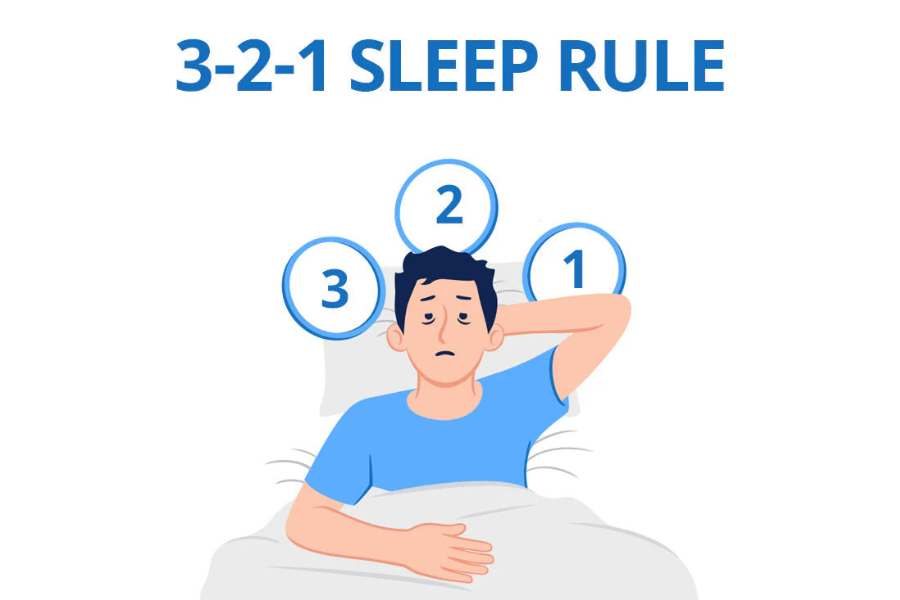
What is the 3 2 1 rule for bedtime?
A consistent wind‑down routine makes it easier to fall asleep and stay asleep. The 3 2 1 rule for bedtime gives you a simple countdown to follow in the hours before you go to sleep, so your brain and body have time to switch out of daytime mode.
In this guide, you will learn what the 3 2 1 rule for bedtime is, how it connects to the broader 10 3 2 1 0 sleep rule, and how you can start using it tonight in a realistic way.
What is the 3 2 1 rule for bedtime?
When people ask, “what is the 3 2 1 rule for bedtime,” they are usually talking about a simple sleep hygiene routine that tells you what to stop doing as you get closer to bed.
There are two closely related versions that appear in expert sources:
-
In the popular 10 3 2 1 0 rule, the 3 2 1 part means:
-
3 hours before bed, no food or alcohol
-
2 hours before bed, no work
-
1 hour before bed, no screens
This countdown is intended to improve sleep quality and duration by aligning your habits with your natural sleep wake cycle (Health, HIF Health Hub). -
A related “3 2 1” approach from sleep psychologist Michael Breus focuses on cutting out three categories before bed, especially during seasonal changes. In his version, 3 refers to avoiding blue light from screens for three hours before sleep, 2 focuses on limiting late exercise, and 1 refers to cooling your bedroom to a sleep friendly temperature (Today).
In everyday use, most people mean the first version, where you gradually remove late eating, work, and screens as bedtime gets closer. That is the version this article focuses on, since it is part of a full, time based routine that has been widely shared by health experts.
How the 3 2 1 rule fits into the 10 3 2 1 0 routine
The 3 2 1 rule does not stand alone. It is part of a five step system known as the 10 3 2 1 0 sleep rule. This longer routine looks like this (HIF Health Hub, Health):
- 10 hours before bed, avoid caffeine
- 3 hours before bed, stop food and alcohol
- 2 hours before bed, stop work
- 1 hour before bed, stop screens
- 0 times hitting snooze in the morning
The first step, the 10 hour caffeine cutoff, aims to reduce the stimulant effect of caffeine that can last in your system for many hours and interfere with sleep onset and quality (HIF Health Hub).
The last step, aiming for zero snoozes, is about waking up at a consistent time every day and reducing grogginess.
The middle steps, the 3 2 1 part, are what you feel most strongly at night. They shape the last three hours of your day and help your body recognize that sleep is coming soon.
Step 1: 3 hours before bed, stop food and alcohol
Three hours before your target bedtime, you pause eating and drinking alcohol. This gives your digestion time to wind down and helps protect your natural sleep rhythms.
Why late meals and alcohol matter
Eating right before bed can trigger several issues:
- It can disrupt your circadian rhythm, the internal clock that guides your sleep wake cycle (HIF Health Hub, Health).
- Heavy or spicy foods can cause heartburn or discomfort when you lie down.
- Your body may spend more time digesting and less time in deeper, restorative stages of sleep.
Alcohol adds another layer of disruption. Even if a nightcap makes you feel drowsy at first, alcohol reduces REM sleep, fragments your sleep, and often leads to more awakenings during the night (HIF Health Hub).
How to make the 3 hour cutoff realistic
You do not have to overhaul your entire diet. You can start by:
- Planning dinner a bit earlier so you finish eating around three hours before bed.
- Keeping any late evening snack light and easy to digest, and working toward phasing it out.
- Moving drinks that contain alcohol to earlier in the evening and gradually reducing how much you have.
If three hours feels impossible at first, aim for two hours and slowly move your last bite earlier as your schedule allows.
Step 2: 2 hours before bed, stop work and intense mental tasks
Two hours before sleep, you stop work, studying, and other stimulating tasks. This break gives your brain time to switch out of problem solving mode.
Why your brain needs a buffer
When you work or study until the moment you climb into bed, your mind often keeps spinning. You might replay conversations, revisit your to do list, or start mentally drafting emails.
The 2 hour cutoff is meant to:
- Reduce stress and mental stimulation so your brain can gradually relax.
- Prevent work and worry from creeping into your sleep window.
- Make space for more calming activities that signal wind down time (HIF Health Hub, Health).
Ways to ease out of work mode
If you are used to answering messages late into the evening, it helps to create a short “shutdown ritual” two hours before bed:
- Wrap up open tasks and write down tomorrow’s priorities so they are not stuck in your head.
- Log out of work accounts or physically move your laptop out of the bedroom.
- Let coworkers or clients know your new boundaries if you can, so they do not expect late night replies.
After you stop working, you can shift into relaxing, low pressure activities, for example reading a novel, light stretching, or chatting with family.
Step 3: 1 hour before bed, no screens
One hour before you want to be asleep, you turn off screens. That includes your phone, tablet, computer, and television. This step might feel the hardest in our always connected world, but it has a clear purpose.
How screen time affects sleep
Screens emit blue light, which signals to your brain that it is daytime. This light exposure can suppress melatonin, the hormone that helps your brain tell your body it is time to sleep, and can disrupt your natural sleep wake cycle (HIF Health Hub, Health).
Content on screens can also be mentally activating. News, social media, and intense shows can raise your heart rate or trigger strong emotions right before bedtime.
The 1 hour buffer helps you:
- Allow melatonin to rise naturally.
- Avoid emotional or mental stimulation that keeps you alert.
- Build a calming pre sleep routine that your body starts to recognize as a cue for rest.
Ideas for a screen free hour
If you are not used to unplugging, this hour can feel like a big empty space at first. You can fill it with:
- Reading a paper book or magazine
- Journaling or writing a short gratitude list
- Gentle stretching or yoga
- A warm shower or bath
- Light tidying, preparing clothes or your bag for the next day
You can also dim the lights in your home to reinforce the signal that bedtime is coming.
Think of the 3 2 1 rule less as a strict set of rules and more as a soft landing strip that guides you from busy daytime into restful sleep.
Other expert variations of the 3 2 1 approach
You might also notice another version of the 3 2 1 idea in articles or on social media, especially during seasonal transitions. Sleep psychologist Michael Breus has described a “3 2 1 sleep rule” that focuses on three cutoffs before bed: avoiding blue light for three hours, limiting exercise within about two to four hours, and cooling your bedroom one hour before sleep (Today).
Health experts at Columbia University describe a related “10 3 2 1 0” style routine that includes the 3 and 2 steps as part of an evidence based approach to better sleep hygiene and long term health outcomes (ColumbiaDoctors).
The details differ, but the core idea stays the same. You give yourself enough time before bed to:
- Avoid things that interfere with your body’s natural sleep signals
- Gradually reduce stimulation
- Engage in relaxing activities that make it easier to fall and stay asleep
You can adapt these ideas to fit your lifestyle, as long as you keep the spirit of a steady wind down.
How to start using the 3 2 1 rule tonight
You do not have to follow every detail perfectly for the 3 2 1 rule to help you. Consistency is more important than perfection. An easy way to begin is to pick one step and build from there.
For example, you could:
- Start with the 1: choose a bedtime and commit to a no screens hour beforehand.
- Once that feels comfortable, add the 2: stop checking emails and doing work two hours before bed.
- Finally, layer in the 3: move your last meal and any alcohol to earlier in the evening.
If you already drink a lot of caffeine later in the day, you might also experiment with the “10” part of the full rule by cutting off caffeine about ten hours before your planned bedtime, since caffeine can stay in your system for that long and affect sleep onset and quality (HIF Health Hub).
You can treat the 3 2 1 rule like a template, not a rigid law. The goal is to design an evening routine that helps you feel calmer, sleep more soundly, and wake up more refreshed.
Key takeaways
- When you ask “what is the 3 2 1 rule for bedtime,” you are really asking how to structure the last three hours of your day so sleep comes more naturally.
- In the widely used 10 3 2 1 0 system, the 3 2 1 steps mean no food or alcohol three hours before bed, no work two hours before bed, and no screens one hour before bed (Health, HIF Health Hub).
- These cutoffs protect your circadian rhythm, reduce mental and emotional stimulation, and support natural melatonin production.
- Other expert versions share the same goal, which is to give your brain and body time to wind down before sleep (Today, ColumbiaDoctors).
- You can start small, choose one step to try tonight, and adjust the details so the routine fits your real life.
If you are dealing with ongoing insomnia, breathing troubles, or significant daytime sleepiness, consider talking with your doctor or a sleep specialist. The 3 2 1 rule is a helpful sleep hygiene tool for many people, but it does not replace medical advice or treatment for underlying sleep disorders.
About The Author