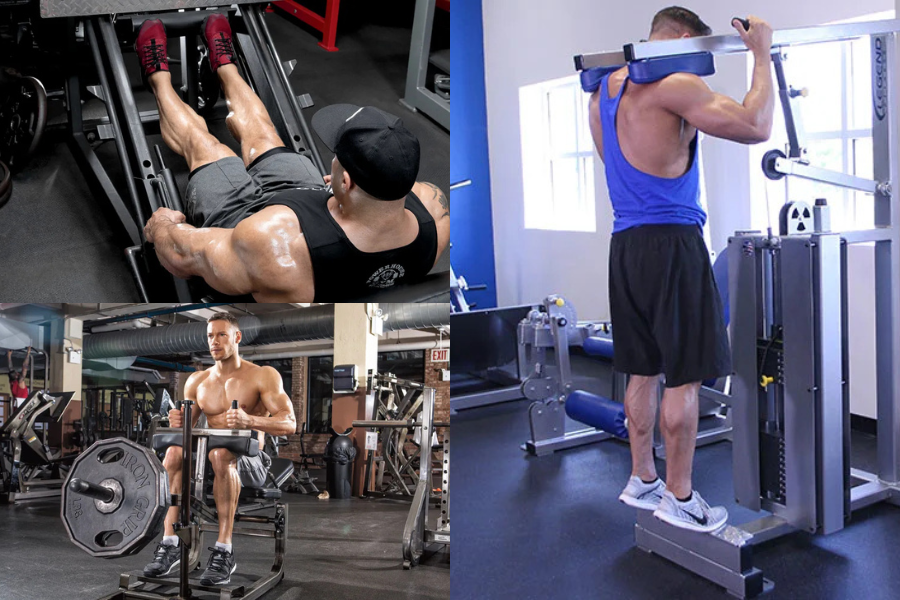
How Weighted Calf Raises Can Transform Your Leg Fitness
A lot of lower‑body workouts skip past your calves. Yet every time you walk, climb stairs, or sprint, your calf muscles are doing quiet but serious work. Adding weighted calf raises to your routine helps you build strength, protect your joints, and improve overall performance, without needing complex equipment.
Below, you will learn exactly how to perform weighted calf raises, why they matter, and how to progress them safely.
Why your calves deserve more attention
Your calves are made up of two main muscles: the gastrocnemius, which gives the calf its shape, and the deeper soleus muscle. Together, they help you push off the ground, keep your balance, and absorb impact.
When these muscles are weak, other joints pick up the slack. Stronger calves can:
- Support your ankles and knees during walking, running, and jumping
- Help protect the Achilles tendon from strain, as noted by Mayo Clinic experts
- Improve stability on uneven ground
- Reduce your risk of lower leg injuries
Bodyweight calf raises are a solid starting point. Weighted calf raises simply increase resistance so you keep challenging the muscles and avoid plateaus.
What are weighted calf raises?
Weighted calf raises are a variation of the standard calf raise in which you add resistance using dumbbells, a barbell, a kettlebell, or another loading method. The basic movement remains the same: you rise up onto the balls of your feet, then lower your heels in a slow and controlled way.
According to guidance from the Mayo Clinic, the calf raise exercise targets and strengthens the muscles at the back of your lower legs and helps protect your Achilles tendon and calf from injury. Adding weight makes that strengthening effect more pronounced.
You can perform weighted calf raises:
- Standing, which emphasizes the gastrocnemius
- Seated, which shifts more work to the soleus
- On one leg at a time, to increase intensity and address imbalances
Each variation offers a slightly different challenge, but they all build stronger, more resilient calves.
Benefits of weighted calf raises
When you turn simple calf raises into weighted calf raises, you give your lower legs a focused, progressive workout. Some key benefits include:
Stronger and more defined calves
Adding resistance, such as dumbbells or a barbell, increases the load your calves must move. Over time, this promotes muscle growth and strength in both the gastrocnemius and soleus muscles. Lifters who commit to slow, controlled repetitions often notice better size and definition compared with bodyweight work alone.
Single leg calf raises can be especially effective. When you stand on one leg, the working calf handles essentially your full body weight, which is like doubling the load compared with two‑legged raises. People who perform high‑rep single leg raises with a full range of motion often report noticeable size gains and improved endurance.
Better balance and ankle stability
Your calves play a big role in keeping you upright. Weighted calf raises challenge your ankle joint to stay stable as you move up and down. Over time this can:
- Improve your balance
- Help you feel more confident on stairs, uneven sidewalks, or trails
- Support dynamic sports movements that involve quick changes of direction
Using methods that free your hands, such as a kettlebell attached to a belt, can make it easier to use a support for balance while still loading the exercise.
Improved performance in sports and daily life
Stronger calves contribute directly to movements like running, jumping, and pushing off for a sprint. Bodyweight and weighted calf raises have been associated with improvements in vertical jump height and readiness for higher impact activities like running.
Physical therapists sometimes use single leg calf raises as a benchmark. Being able to perform around 20 controlled single leg calf raises can signal that your lower legs are ready for higher impact work.
Support in rehab and injury prevention
If you are recovering from a lower leg injury, calf strengthening is often part of the process. Single leg calf raises, especially, help restore a normal walking pattern and reduce limping. They are commonly recommended in rehabilitation programs such as those for Achilles rupture recovery.
For everyday training, incorporating weighted calf raises 2 to 3 times per week can enhance lower leg strength and ankle stability. This may reduce your risk of overuse injuries when you walk, run, or play sports, as long as you avoid overtraining and progress gradually.
How to do standing dumbbell calf raises
Standing dumbbell calf raises are one of the simplest and most effective versions of weighted calf raises. You only need a pair of dumbbells and, ideally, a small step or weight plate.
Here is how to perform them correctly, based on guidance from Mayo Clinic trainers and strength standards data:
- Stand upright holding a dumbbell in each hand by your sides, with your arms hanging straight below your shoulders.
- Place the balls of your feet on an exercise step or weight plate, with your heels starting close to or slightly below the level of the step. This increases your range of motion and allows for a deeper stretch.
- Keep your back and knees straight. Look ahead rather than down, and engage your core.
- Slowly rise up onto your toes, lifting your heels as high as you comfortably can. You should feel your calves contract.
- Pause briefly at the top.
- Lower your heels in a smooth, controlled motion until you feel a stretch in your calves.
- Repeat for 12 to 15 repetitions.
Mayo Clinic experts recommend one set of 12 to 15 reps as adequate for basic strengthening for many people. If you want more muscle growth, you can add sets or adjust the weight and repetitions over time.
If you have trouble balancing, lightly hold a chair, wall, or pole with one hand, and hold a single dumbbell in the other hand.
Other effective weighted calf raise variations
You do not have to stick to just one variation. Rotating between a few options can keep your training effective and more engaging.
Standing weighted calf raises with a belt or barbell
A simple progression from bodyweight calf raises is adding weight while standing. There are two popular methods:
-
Weight belt with kettlebell
Some coaches, such as those at Athlete Movement, recommend attaching a kettlebell to a belt. This method keeps your hands free so you can hold onto something for balance. It is a practical choice if you have limited equipment or train at home. -
Standing barbell calf raises
You can also place a barbell across your upper back and perform calf raises standing on flat ground or on a block for more extension. This setup lets you load heavier weights. You may need a block or step under your feet to increase the range of motion, and you can modify your stance or use supports to help you balance.
Seated dumbbell calf raises
Seated calf raises primarily target the soleus, the deeper calf muscle that works hard when your knees are bent.
To perform seated dumbbell calf raises:
- Sit on a sturdy bench or chair with your feet flat on the floor and knees at about 90 degrees.
- Place a dumbbell or weight across your thighs, close to your knees.
- Keeping your back straight, raise your heels off the ground as high as possible, lifting the weight with your calves.
- Pause briefly at the top, then slowly lower your heels back to the floor for a full stretch.
Seated variations are especially helpful if you have balance difficulties with standing exercises, since you can focus on the calf muscles without worrying about staying upright.
Single leg calf raises
Single leg calf raises can be done with or without weights. Even bodyweight alone on one leg significantly increases the load on the working calf, which can be enough to stimulate muscle growth for many people.
You can perform them:
- On flat ground, holding a wall or countertop for support
- On a step, which lets your heel drop for a deeper stretch
- With a dumbbell in the hand opposite the working leg, for added resistance
Gradually progressing from assisted to full single leg calf raises, while aiming for full height and a good stretch at the bottom, is recommended for both strength gains and rehabilitation. Using a support at first helps you build stability over time.
How often and how hard should you train calves?
Like any muscle group, your calves respond best to consistent and progressive training.
A simple starting framework is:
- Frequency: 2 to 3 sessions per week, with at least one rest day between sessions
- Sets and reps:
- General strength and health: 1 set of 12 to 15 reps, as suggested by Mayo Clinic, can be adequate for many people
- Muscle growth and endurance: 2 to 4 sets of 12 to 20 reps, focusing on slow, controlled movements
Smooth and controlled repetitions are crucial. Jerking or bouncing reduces muscle tension and can increase the risk of injury. Make sure your knees stay straight during standing calf raises unless you are specifically working on bent‑knee variations.
If your calves are very sore or feel unusually tight, give them more recovery time and avoid increasing the weight or volume until they feel better.
Aim for a full range of motion on every rep: a solid stretch at the bottom and a strong squeeze at the top. Quality matters more than chasing the heaviest weight.
How much weight should you use?
The right weight for weighted calf raises depends on your training level and goals. Strength standards for dumbbell calf raises offer a rough reference point:
- The average male lifter has a one rep max (1RM) of about 85 lb for a dumbbell calf raise, which is considered an Intermediate level. A male beginner might aim for a 1RM around 17 lb, which is still impressive compared with the general population.
- The average female lifter has a 1RM of about 48 lb, also at an Intermediate level. A female beginner might aim for around 16 lb for a one rep max.
You do not need to test a true one rep max. Instead, choose a weight that lets you complete your planned reps with good form and only the last few reps feeling challenging.
A practical approach is:
- If you can easily exceed your rep range with perfect form, increase the weight slightly next time.
- If you cannot reach your target reps or your form starts to break down, reduce the weight or number of sets.
When to progress and when to hold back
Progression keeps your results moving forward, but your calves can fatigue quickly, especially if you also run, jump, or play sports.
Consider progressing when:
- You can complete your sets and reps with consistent, controlled form
- You no longer feel much muscle fatigue or a mild burn by the end of a set
- You have been using the same weight and rep scheme for several weeks without difficulty
You can progress by:
- Increasing the weight slightly
- Adding a set
- Switching from two‑leg to single leg variations
- Increasing the range of motion by using a step
On the other hand, hold back or maintain your current level if you notice:
- Persistent soreness that does not fade after a day or two
- Sharp pain in your calf or Achilles area
- Significant stiffness that affects your walking or usual activities
In these cases, it can be wise to reduce frequency, volume, or load until your calves feel normal again. If pain persists, consider speaking with a healthcare professional.
Bringing it all together
Weighted calf raises are a simple upgrade that can transform your leg fitness. By adding resistance to a basic movement, you strengthen the muscles that help you walk, run, jump, and balance every day.
You now have the tools to:
- Understand why stronger calves matter
- Perform standing dumbbell calf raises with proper form
- Explore variations like belt‑loaded, barbell, seated, and single leg raises
- Choose appropriate weights and set up a realistic training schedule
Start with one or two variations that feel comfortable, add them to your routine a couple of times per week, and pay attention to how your lower legs feel and perform. With consistent practice, you will likely notice steadier balance, more powerful push‑offs, and calves that finally match the work the rest of your legs are doing.
About The Author





