Simple Tricep Muscle Exercises to Transform Your Arm Workout
A strong set of triceps does more than fill out your sleeves. Because your tricep muscles make up most of your upper arm mass, the right tricep muscle exercises can quickly change how your arms look and how strong your pushing movements feel.
You do not need a complicated program to get results. With a handful of simple, focused exercises and some smart structure, you can build stronger, more defined triceps at home or in the gym.
Understand your tricep muscles
Before you start training, it helps to know what you are targeting.
Your triceps brachii sits at the back of your upper arm and is responsible for straightening your elbow. It has three heads, or sections, that work together:
- Long head, the largest part that crosses your shoulder and elbow
- Lateral head, the outer part that pops when you flex
- Medial head, the deeper section that helps with control and precise movements
Research shows that the medial head is active during all forms of elbow extension, while the long and lateral heads are more involved when you extend against resistance, such as during presses and pushdowns. That is useful to know because it means you want both heavy, resistance-based moves and lighter control work in your routine.
Your triceps are especially active in pushing or thrusting movements like push-ups, bench presses, and getting up from a chair. If you improve these muscles, you help almost every upper body push you do.
Key benefits of tricep muscle exercises
When you focus on tricep muscle exercises, you are doing more than chasing arm definition.
Stronger triceps can:
- Add noticeable size and shape to your upper arms, because they make up around 70% of total arm mass
- Improve your lockout strength on pressing exercises like bench press and overhead press
- Help stabilize your shoulders during pushing and overhead work
- Make everyday tasks like pushing heavy doors or getting up from the floor feel easier
They also support your elbows. When you train with good form and a smart amount of resistance, you build the tendon strength that helps protect you from overuse issues.
Simple bodyweight tricep exercises
If you are starting out or training at home, your own body weight is enough to build serious strength.
Tricep dips (chair or bench)
Triceps dips are a classic for a reason. They target the back of your arms and your shoulders using just a sturdy chair, bench, or low table.
How to do them:
- Sit on the edge of a stable chair or bench. Place your hands next to your hips, fingers pointing toward your feet.
- Walk your feet forward and slide your hips off the edge so your weight is on your hands and heels.
- Keep your chest up and shoulders away from your ears.
- Bend your elbows to lower your body in front of the chair. Go only as far as is comfortable for your shoulders.
- Press through your palms to straighten your arms and return to the start.
Start with 3 sets of about 10 repetitions, and rest 60 to 90 seconds between sets. As a beginner, you can reduce the range of motion, bend your knees to bring your feet closer, or keep your hips higher to make the move easier. To make dips harder, you can place a second chair under your heels or move to parallel bars.
Pay attention to common mistakes, such as dipping too low, hunching your shoulders, leaning forward into your chest, or locking your elbows hard at the top. These changes shift work away from the triceps or increase strain on your shoulders and elbows.
Close grip and diamond push-ups
Bringing your hands closer together in a push-up moves more of the work to your triceps.
You can use a close grip by placing your hands just inside shoulder width and keeping your elbows close to your sides as you lower and press. Diamond push-ups go a step further. You set your hands under your chest with your index fingers and thumbs touching in a diamond shape.
Both versions hit the triceps hard by keeping your elbows tucked instead of flared. If floor push-ups are too challenging right now, start with your hands on a wall, counter, or bench and gradually lower the angle as you get stronger.
Effective dumbbell tricep exercises
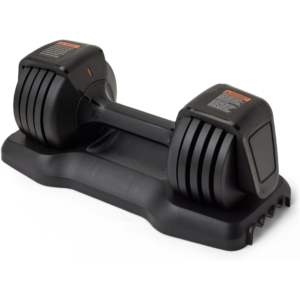
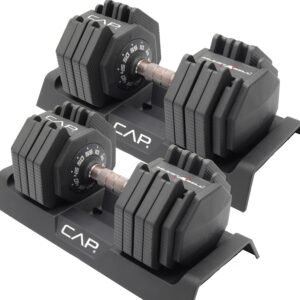
If you have a pair of dumbbells, you can add excellent isolation work to your tricep routine.
Overhead tricep extensions
Overhead tricep extensions are one of the best tricep muscle exercises for the long head. That is because this head is most stretched and active when your arm is raised overhead.
You can perform the move seated or standing:
- Hold one dumbbell with both hands or one in each hand.
- Raise your arms overhead, elbows pointing forward, biceps close to your ears.
- Keeping your upper arms still, bend your elbows to lower the weight behind your head.
- When you feel a gentle stretch in your triceps, press back up until your elbows are straight, but do not jam the joint.
Research highlighted by Gymshark notes that overhead tricep extensions significantly increase long head activation and hypertrophy compared to neutral elbow positions where your arms are by your sides. That means you get more growth stimulus from fewer sets when you include an overhead option.
Skull crushers with dumbbells
Skull crushers are a lying tricep extension that place the long head under deep stretch and high tension. They are powerful for adding mass and thickness if you perform them carefully.
To do them:
- Lie on a bench or the floor with a dumbbell in each hand.
- Press the weights straight up over your chest, palms facing each other.
- Keeping your upper arms still and elbows pointing to the ceiling, bend your elbows to lower the dumbbells toward the sides of your head or just behind it.
- Stop when you feel a strong stretch but no pain, then extend your elbows to return to the start.
Keep your elbows tucked and avoid letting them flare wide. Control the lowering portion to protect your elbows and maximize time under tension. Because skull crushers provide a lot of mechanical stress, it is best to place them earlier in your workout with moderate weight and 3 to 4 sets of 8 to 12 reps.
Tricep kickbacks
Tricep kickbacks are a straightforward way to isolate the muscle and practice full elbow extension.
- Hold a dumbbell in one hand and hinge forward at the hips with a flat back.
- Bend your working elbow to 90 degrees so your upper arm is close to your body.
- Keeping your upper arm fixed, straighten your elbow until your arm is in line with your torso.
- Squeeze your triceps briefly at the top, then return slowly.
Use light weights to start so you can move without swinging. When you reach the top of each rep, focus on a gentle pause to feel the contraction.
Cable and band tricep exercises
If you have access to a cable machine or resistance bands, you can create constant tension on the triceps through the entire range of motion.
Tricep pushdowns
Tricep pushdowns with a cable or band are joint friendly and adaptable for beginners and advanced lifters.
Here is how to perform them on a cable:
- Set the handle (straight bar, V-bar, or rope) at about chest height.
- Stand tall with your elbows close to your sides and your forearms up.
- Grip the handle and press it down by straightening your elbows, keeping your upper arms still.
- At the bottom, fully straighten your arms and lightly squeeze your triceps, then let the handle rise under control.
Cable pushdowns keep the muscle under steady resistance and particularly emphasize the lateral and medial heads. They are perfect for higher repetition ranges like 12 to 20 reps and for extra volume at the end of your session without hammering your elbows.
You can replicate the same pattern with a resistance band anchored above you. Step back to create tension, then perform the same elbow straightening motion.
Resistance band overhead work
Bands are also useful for overhead tricep moves that are easy on your joints. For example:
- Overhead band tricep extensions
- Plank tricep kickbacks with a loop band
- Standing presses that finish with your elbows straight and locked
These options build strength and challenge your stabilizer muscles, especially around the shoulders, without heavy loading.
How to structure your tricep workouts
You do not need to hit every tricep exercise in one day. Instead, aim for a mix that covers different angles and muscle heads each week.
Most people will do well training triceps at least twice per week. Research suggests that 3 to 6 sets of 6 to 12 repetitions at about 60 to 80 percent of your one repetition max is effective for hypertrophy, or muscle growth.
Here is a simple structure you can use whether you are at home or in a gym:
Day 1, Strength focus
- Close grip push-ups or close grip bench press, 3 to 4 sets of 6 to 10 reps
- Skull crushers or dumbbell overhead extensions, 3 sets of 8 to 12 reps
Day 2, Volume and control
- Tricep dips (chair or parallel bars), 3 sets of 8 to 12 reps
- Tricep pushdowns or band pushdowns, 3 sets of 12 to 20 reps
- Optional, light kickbacks, 2 sets of 15 reps for extra blood flow
If you want a bigger challenge, you can combine a heavy move like skull crushers with a lighter, high rep move like rope pushdowns in a superset. For example, 3 sets of 8 to 10 skull crushers immediately followed by 3 sets of 12 to 15 pushdowns targets all three heads with both mechanical tension and metabolic stress.
A reliable rule of thumb: start your workout with the heaviest, most demanding tricep exercise, then move to lighter, higher rep isolation work at the end.
Warm up and protect your elbows
Your elbows and shoulders work hard during tricep training, so a quick warm up helps keep them happy.
Spend 5 to 10 minutes on light cardio and dynamic arm movements, then add a few sets of very light tricep extensions or kickbacks. Simple stretches, such as raising one arm overhead and gently pulling the elbow behind your head, prepare the muscles and the surrounding tissues for work.
As you train, watch for sharp pain in the back of your elbow or deep in your shoulder. Tricep tendon or nerve irritation can limit your ability to extend your elbow strongly against resistance. If you notice consistent pain, reduce the weight, shorten your range of motion, or swap out the offending exercise. In cases of sudden trauma, such as a fall on an outstretched hand and immediate loss of elbow extension, you should stop training and seek medical assessment, because full tricep ruptures, while rare, require professional care.
Putting it all together
When you understand how your triceps work and you focus on a few effective tricep muscle exercises, you do not need long, complicated routines. Pick two or three exercises that you can do with your current equipment. Train them two or three times a week, gradually adding reps or a bit of weight.
Over the next several weeks, you will notice not only fuller, more defined arms, but also stronger, smoother pushing movements in your everyday life.
About The Author