Why Intermittent Fasting Before and After Photos Motivate You
A single set of intermittent fasting before and after photos can sometimes motivate you more than a page of numbers on the scale. You see a real person, real clothes, real posture, and you imagine yourself in that “after” frame. That is why intermittent fasting before and after transformations have become such a powerful tool for staying consistent with your own plan.
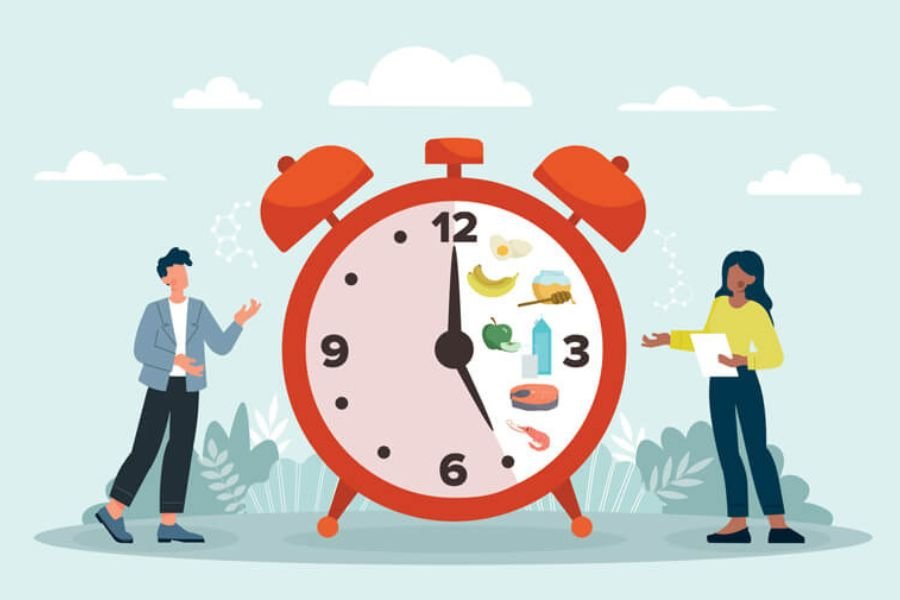
You might already know the basics of intermittent fasting. You eat only during specific time periods, such as an eight hour window, and you fast the rest of the day. After about 12 hours without food, your body begins to switch from burning sugar to burning fat for fuel, which is a key reason intermittent fasting can support weight loss and metabolic health (Johns Hopkins Medicine). Before and after photos capture what this internal shift can look like on the outside.
Understand what intermittent fasting actually does
To use intermittent fasting before and after photos as motivation, it helps to understand what is happening behind the scenes in your body. Intermittent fasting is less about what you eat and more about when you eat. You restrict your eating window, which usually leads you to eat fewer calories overall without tracking every bite (Women’s Health).
Several benefits stack up when you follow a consistent fasting routine. After hours without food, your body starts using stored fat for energy instead of relying on a constant stream of glucose. Research links these fasting periods not only to fat loss but also to a leaner body, improved brain function, and potential protection against chronic conditions such as type 2 diabetes, heart disease, neurodegenerative disorders, and some cancers (Johns Hopkins Medicine).
You can follow different schedules, and you can still see meaningful changes in your health. The popular 16:8 method has you eat during an eight hour window and fast for 16 hours each day, for instance from 11 a.m. to 7 p.m. (Women’s Health). Other patterns like the 5:2 diet let you eat normally five days a week and then keep calories very low on two nonconsecutive days. Both focus on tightening the timing of eating so you can move toward a calorie deficit and trigger that helpful metabolic shift.
See how before and after photos keep you accountable
When you commit to intermittent fasting, motivation usually feels high on day one. Where it gets tricky is week three, when you are tired, busy, and not sure your clothes feel that different yet. This is where intermittent fasting before and after photos can be more honest than your memory.
Photos document what you might overlook in the mirror. You might notice a softer jawline becoming more defined, less bloating through your midsection, or a more relaxed posture. Research supports that intermittent fasting can drive these kinds of changes. In one 12 week study of obese adults with type 2 diabetes, people who followed a 16:8 or 14:10 intermittent fasting schedule three days a week lost around 3 to 4 percent of their body weight, while the control group lost less than 1 percent (Journal of Diabetes Investigation).
Progress photos also help you stay honest about consistency. If your pictures look the same after a month, it nudges you to ask difficult but useful questions. Are you keeping your full fasting window? Are you grazing during the evening? Are you using your eating window to fill up on ultra processed snacks instead of balanced meals? This kind of visual feedback is not judgment, it is data you can use to adjust your habits.
Focus on health, not only the visual change
It is easy to get wrapped up in what you see in intermittent fasting before and after photos, but the most important shifts are often the ones you cannot capture on camera. Studies show that intermittent fasting can help lower fasting blood sugar and improve HbA1C levels, especially in people living with type 2 diabetes. In the same 12 week trial, participants in both fasting groups saw meaningful drops in fasting blood sugar compared with controls, and their HbA1C levels improved by about 0.5 percentage points, while the control group saw only modest change (Journal of Diabetes Investigation).
Intermittent fasting can also improve cholesterol profiles and support heart health. In that study, people who fasted experienced greater reductions in triglycerides, total cholesterol, and LDL cholesterol and an increase in HDL cholesterol compared with the group who did not fast (Journal of Diabetes Investigation). Other research suggests intermittent fasting may lower blood pressure and improve insulin sensitivity, partly by increasing fatty acid oxidation and supporting healthier blood vessels (Nutrients).
When you look at your own before and after, try to pair what you see with how you feel. Do you sleep more deeply. Do your energy dips and cravings feel less intense. Are your lab results moving in a better direction. Combining visual proof with these internal wins makes your progress feel more real and gives you more reasons to keep going.
Think of your photos as one part of a bigger progress picture that also includes energy, mood, strength, and health markers.
Choose the intermittent fasting style that suits you
Not every intermittent fasting method will fit your life or your body. You are more likely to get dramatic before and after results if you choose a pattern that you can stick with for months, not days.
Time restricted eating strategies such as 16:8 are popular because they fit around regular schedules. You might skip breakfast, have your first meal at 11 a.m., and finish dinner by 7 p.m. This gives you a 16 hour overnight fast that can trigger the metabolic switch from glucose to fatty acids after around 12 hours (Nutrients). Some people prefer a 14:10 approach, which eases you in with a 14 hour fast and a 10 hour eating window.
Alternate methods like the 5:2 diet ask you to eat normally five days a week, then consume about 500 to 600 calories on two nonconsecutive days (Women’s Health). This structure works better if you like having full days without restriction, but it may be harder if very low calorie days leave you drained.
Whichever approach you choose, remember that fasting is not a free pass to forget nutrition on your eating days. Experts recommend focusing on a nutrient dense pattern similar to the Mediterranean diet, with leafy greens, healthy fats, lean protein, and whole grains during eating windows (Johns Hopkins Medicine). You can drink water, black coffee, and unsweetened tea while you fast. That way, your before and after photos reflect not only fat loss but also better nourishment.
Set up your own before and after in a healthy way
If you want your intermittent fasting before and after photos to feel motivating instead of discouraging, it helps to be intentional with how you take them. You do not need fancy equipment, but you do want consistency.
Take your “before” photos at the start of your intermittent fasting plan, and then pick regular check in points. Every four weeks works well for many people, because it allows enough time to see visible change. Use the same clothes or a similar fitted outfit so your body, not the fabric, shows the difference. Stand in the same spot, use the same lighting, and take front, side, and back views.
It also helps to track more than just photographs. You can keep a simple progress log that includes:
- Your fasting schedule and how often you hit it
- A short note on energy, mood, and hunger that day
- Any changes in measurements like waist or hip circumference
- The date of each photo set and how you felt when you took it
Remember that hunger is a normal part of the adaptation phase. In the 12 week trial, people following intermittent fasting reported moderate hunger levels of about 4 to 5 out of 10, but this did not cause them to stop the program or experience serious side effects (Journal of Diabetes Investigation). Most people find that after two to four weeks their body adjusts, their energy improves, and fasting feels less like a struggle and more like a routine (Johns Hopkins Medicine).
Keep expectations realistic and safe
Before and after galleries can inspire you, but they can also set unrealistic standards if you are not careful. Not everyone will lose weight at the same pace, and researchers note that intermittent fasting does not always outperform more traditional calorie restriction for long term weight loss. In one year long study, people who followed alternate day fasting and people who simply reduced daily calories both lost about 7 percent of their starting weight after six months, and around 4.5 percent after one year, with no major difference between the groups (Nutrients).
Your own progress may look slower or faster than someone else in the same time frame. That does not mean intermittent fasting is not working for you. Genetics, hormones, stress levels, sleep, and even medications can all shape how your body responds.
It is also important to know that intermittent fasting is not right for everyone. Experts caution that it may not be appropriate if you are pregnant, breastfeeding, under 18, or if you have a history of disordered eating, and you should talk with your healthcare provider before starting if you have any chronic health conditions (Women’s Health). Longer fasts of 24 to 72 hours are not automatically better either. These extended periods can push your body to hold onto fat more stubbornly and can be harmful if you treat them as a regular habit rather than an occasional, medically supervised practice (Johns Hopkins Medicine).
If you ever notice that taking or looking at photos triggers anxiety, body obsession, or unhealthy restriction, step back. You can still track progress with how you feel, with your workouts, or with health markers, and you can get support from a professional who understands both nutrition and mental health.
Use intermittent fasting photos as one tool, not the whole story
Intermittent fasting before and after photos can be powerful motivation when you use them with intention. They remind you that consistent, small choices like closing your kitchen after dinner and choosing water over late night snacks add up to very visible change over time. They give you evidence on days when your brain tells you nothing is happening.
If you decide to start your own intermittent fasting journey, take a simple “before” photo this week, choose a fasting schedule that fits your life, and commit to four weeks. Pair your photos with notes about energy, mood, and health so you see your full progress story, not just what is in the mirror.
When you look back, you may find that the most meaningful “after” is not only how you look, but how much more in control and energized you feel.
About The Author