Full Body Rowing Workouts That Transform Your Health Fast
Rowing can be your go-to solution when you want a quick, efficient way to work multiple muscle groups in one session. Full body rowing workouts focus on everything from your legs and core to your back, arms, and shoulders. This balanced approach helps you burn calories, build lean strength, and boost stamina, all in a single routine. Whether you are new to exercise or already have a favorite fitness habit, rowing offers a low-impact but high-reward path to feeling healthier and more energetic.
If you have been searching for an activity that supports weight loss, cardiovascular endurance, and whole-body muscle conditioning, rowing might be exactly what you need. The continuous pulling and pushing motion engages your entire body and encourages better posture over time. Plus, once you master the technique, you can easily adjust the intensity to suit your goals, making it a perfect fit for beginners and experienced athletes alike.
Discover why rowing works
The power of rowing lies in how it coordinates many major muscle groups in one smooth movement. When you push off with your legs, you activate your quads and glutes. As your back and core stabilize your upper body, your arms and shoulders handle the finishing pull. In essence, each stroke demands that nearly every part of your body plays a role.
If you have been relying solely on activities like running or cycling for cardio, consider adding full body rowing workouts for some welcome variety. Because rowing challenges the upper and lower body equally, it increases your total energy output, leading to a higher calorie burn. This efficiency cuts down on the total time required for an effective session and can be a game-changer if you juggle a busy schedule.
It also helps that rowing is notoriously low-impact. Unlike running or high-intensity circuit workouts, rowing minimizes stress on your joints. That makes it an excellent choice if you want to stay active while reducing the risk of knee or hip discomfort. With proper form, you can enjoy a vigorous workout that boosts endurance without leaving your joints feeling sore or strained.
Embrace the health benefits
One of the most noticeable advantages of rowing is how fast it can improve your cardiovascular health. Rowing sessions require steady exertion, so your heart rate elevates and your lungs work harder to supply oxygen. Over time, this leads to better cardiovascular endurance, which can help reduce fatigue in everyday life and make other physical activities seem easier.
By demanding effort from nearly every muscle group, rowing also plays a role in building and maintaining muscle mass. You do not have to aim for bodybuilder-level muscle gains to optimize your health. Even moderate improvements in muscle tone can enhance your balance, support bone density, and protect against injuries.
If weight loss is part of your health plan, rowing makes the most of each workout minute by burning calories effectively. Increased calorie utilization combined with consistent muscle engagement steadily improves body composition. As your technique, stamina, and power grow, you may discover that rowing not only helps you manage your weight but also boosts your energy and confidence.
Learn the correct technique
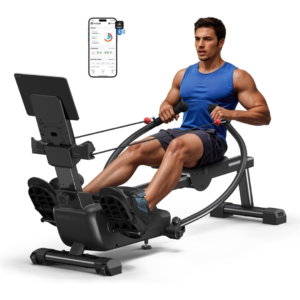
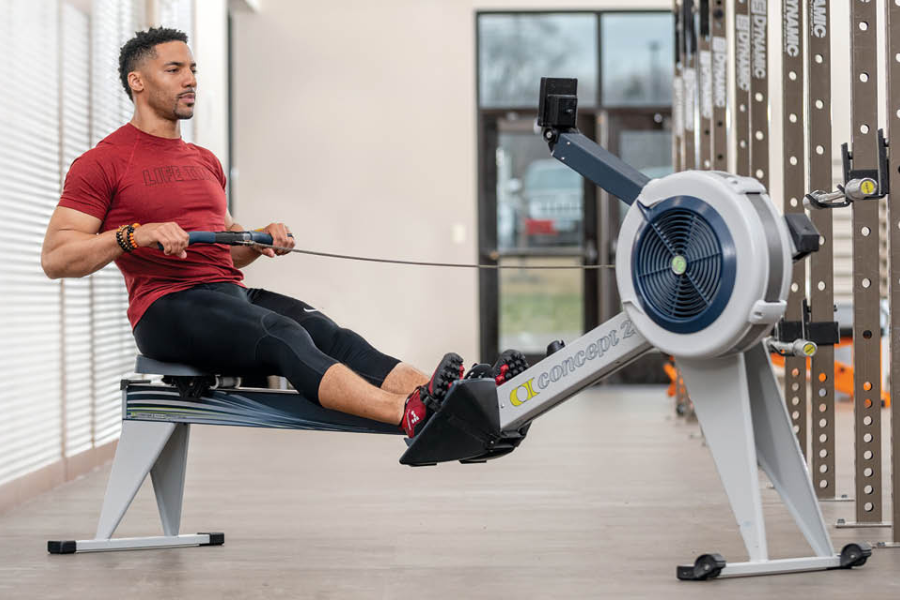
Before you pump up the intensity, it is crucial to understand the basics of form. Good technique protects you from strain and ensures that every stroke counts. Think of rowing in four main phases—catch, drive, finish, and recovery. At the catch, you hinge forward with your arms extended. During the drive, you push with your legs and engage your core. The finish involves pulling the handle to your lower chest as your legs fully extend. Finally, the recovery brings you back to the start position, arms straightening and knees bending in a smooth, continuous flow.
Practice a slow, controlled motion at first. Focus on feeling your legs push off the footplates and your core stabilizing your spine. As your arms pull the handle into your body, keep your elbows close and your wrists neutral. A steady sequence helps you keep your back in a safe position while finding a rhythm that is comfortable but challenging.
“Rowing teaches you to harness your whole body in one motion. Once you sync your legs, core, and arms, each stroke becomes more powerful and less tiring.”
Remember to breathe consistently throughout each stroke—inhale before you drive and exhale on the pull. This simple pattern helps keep your muscles supplied with oxygen. As you gain confidence, you can gradually increase your pace, adjust resistance levels, or experiment with intervals to elevate your heart rate further.
Build your rowing routine
When it comes to structuring full body rowing workouts, variety prevents boredom and encourages continuous progress. A balanced schedule might alternate between steady-state endurance sessions and high-intensity interval training. For a moderate rowing routine, you could start with two or three sessions a week, each lasting 15 to 25 minutes. As your fitness improves, you can extend that time or add an extra weekly session.
If you are aiming for intense calorie burn and fast gains in cardiovascular health, try intervals: row hard for 30 seconds to a minute, then row gently for the same amount of time. Repeat for several rounds, and gradually lengthen the work segments as your stamina grows. This approach can make your workout fly by and keep your metabolism humming even after you step off the rowing machine.
Remember, the best routine is one that fits your schedule and feels sustainable. It is more beneficial to maintain two weekly sessions you consistently enjoy rather than pushing yourself through five stressful workouts you quickly abandon. Build your plan around your lifestyle, and celebrate every time you beat a personal milestone, even if it is just holding a slightly faster pace for a minute at a time.
Enhance results with daily habits
While rowing is an efficient way to get fitter, supporting your workouts with healthy everyday habits can accelerate your results. A well-balanced diet of lean proteins, fruits, vegetables, and whole grains supplies key nutrients that help your muscles recover. Staying hydrated also supports overall performance, particularly when you are pushing through intense intervals.
Making time for light stretching or mobility exercises helps your body stay flexible and reduces the likelihood of soreness. A few simple stretches for your hips, hamstrings, and shoulders before and after rowing can make a significant difference in how you feel. Even a brisk walk or a few minutes of gentle yoga on rest days can help you recover and stay active without straining your muscles.
Finally, prioritize your sleep. High-quality rest is crucial for muscle repair, mental clarity, and stress relief. Aim for seven to nine hours of sleep per night, adjusting as needed for personal factors like your activity level or daily responsibilities. By combining rowing with these daily practices, you set yourself up for a transformative experience that goes beyond the workout itself.
Incorporating full body rowing workouts into your life can unlock a blend of strength, endurance, and improved well-being. Even small steps—like adding a short rowing session after a warmup or focusing on better technique—make a difference over time. Let each session remind you that the effort you put in is an investment in your overall health. With consistent practice, you can watch your energy levels rise, your muscles firm up, and your confidence soar.
About The Author