Tips to Choose the Best Fish Oil Omega-3 Supplements for Your Health
A good fish oil omega-3 supplement can support your heart, brain, eyes, and even your mood. The challenge is that once you start shopping, the labels and numbers get confusing quickly. If you understand a few key terms and what really matters, you can choose fish oil omega-3 supplements that actually match your health goals instead of just guessing.
Understand what omega-3s you are paying for
When you look at the front of the bottle, you usually see a big number like “1,000 mg fish oil.” That number is not what matters most. You want to focus on how much EPA and DHA you get in each serving.
EPA (eicosapentaenoic acid) and DHA (docosahexaenoic acid) are the marine omega-3s that support your heart, brain, eyes, and inflammation response. They provide more proven health benefits than plant-based alpha-linolenic acid, or ALA, from flax or chia seeds (Healthline).
Most health organizations suggest that healthy adults aim for about 250 to 500 mg per day of combined EPA and DHA, which is roughly 8 ounces of fatty fish each week (Healthline). If you do not eat fish regularly, a supplement can help you reach this range.
Compare the label, not the front of the bottle
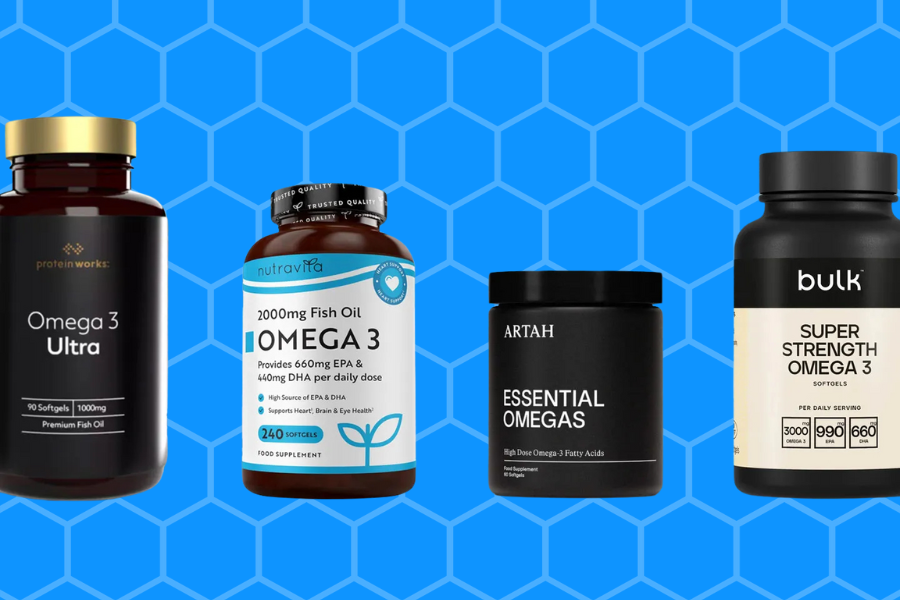
Once you flip the bottle around, you will see why two “1,000 mg fish oil” products can be very different.
A typical supplement might provide about 1,000 mg of fish oil with only 180 mg EPA and 120 mg DHA per softgel (NIH ODS). That means only 300 mg of what you actually want. A more concentrated formula can give you much more EPA and DHA in the same capsule size.
When you read the label, pay attention to:
- Total EPA per serving
- Total DHA per serving
- Serving size (how many softgels or teaspoons)
- Form of the oil (triglyceride, ethyl ester, or re-esterified triglyceride)
Triglyceride and re-esterified triglyceride forms are somewhat better absorbed than ethyl esters, according to current evidence (NIH ODS). You will often see this highlighted in higher quality products.
Match your dose to your health goals
Your ideal dose of fish oil omega-3 supplements depends on why you are taking them. General wellness needs are different from heart disease or very high triglycerides.
Most healthy adults can start with roughly 250 to 500 mg daily of combined EPA and DHA. Some experts suggest 200 to 600 mg per day for anti-inflammatory and cognitive support, and note that going above 900 mg EPA plus 600 mg DHA might start to suppress immune function in some people (Healthline).
If you have a specific condition, recommendations are usually higher and should always involve your healthcare provider:
- People with coronary heart disease or heart failure are often advised to take about 1,000 mg per day of combined EPA and DHA (Healthline).
- Those with very high triglycerides may need up to 4,000 mg per day, usually from prescription products, and always under medical supervision (Healthline).
For safety, regulators in the United States and Europe consider up to 5,000 mg per day of EPA and DHA from supplements generally safe for adults, but going beyond that can increase bleeding risk without adding extra benefits (Healthline).
Look at the evidence for heart and brain support
You are not just buying numbers on a label. You are buying potential health outcomes, so it helps to know what the research actually shows.
For heart health, marine omega-3s are among the most studied nutrients available. More than 30,000 studies link fish oil omega-3s to reduced inflammation and better heart and brain health overall (Cooper Complete). A 2019 meta-analysis in the Journal of the American Heart Association found that marine omega-3 supplements reduced the risk of heart attack by 8 percent, death from heart disease by 8 percent, and death from cardiovascular disease by 7 percent (Forbes Health).
Higher dose EPA-focused therapy has shown even stronger effects in high risk groups. In the REDUCE-IT trial, 4 grams per day of EPA ethyl ester lowered cardiovascular events by 25 percent, cardiovascular death by 20 percent, and fatal or nonfatal heart attack by 31 percent in people with cardiovascular disease or high risk (NIH ODS).
For brain and mental health, omega-3s are also promising. Some higher dose EPA-focused regimens, usually 200 to 2,200 mg per day, can help reduce symptoms of depression and anxiety, though results are mixed and more research is needed (Healthline). A 2023 meta-analysis of 48 studies found that omega-3 supplements may reduce dementia and age related cognitive decline by up to 20 percent (Healthline).
Decide between liquid and softgel formats
You can find fish oil omega-3 supplements in both liquid and capsule form. Your choice usually comes down to convenience, taste, and dose.
Softgels are simple to take and easy to travel with. Many popular options, like Nordic Naturals Ultimate Omega, provide 1,280 mg combined EPA and DHA from wild caught sardines and anchovies in two softgels, and add lemon flavor to help reduce fishy aftertaste (Healthline). This kind of product works well if you want a predictable daily routine with a moderate to high dose.
Liquids make sense if you need a larger dose in fewer servings or struggle with swallowing pills. For example, Carlson Labs The Very Finest Fish Oil delivers about 1,600 mg omega-3s per teaspoon, including roughly 1,300 mg of EPA and DHA, in a lemon flavored liquid (Healthline). Because these doses are so concentrated, it is especially important to check with your clinician before using them regularly.
If you want additional support for specific concerns, you can also find combination products, such as Thorne Omega-3 with CoQ10, which adds 30 mg of CoQ10 to 630 mg of EPA and DHA per capsule to support cholesterol management and brain function (Healthline).
Compare fish oil to krill oil
You might see krill oil sitting next to fish oil on the shelf and wonder if it is worth the extra cost.
Both fish oil and krill oil provide EPA and DHA, and both have been shown to improve heart and brain health (Healthline). Some research suggests your body may absorb EPA and DHA in krill oil a bit better, because they are bound to phospholipids rather than triglycerides (Healthline). Krill oil also contains the antioxidant astaxanthin, which may help support heart health and HDL cholesterol (Healthline).
However, most krill oil capsules contain less EPA and DHA per serving than a typical fish oil softgel. One example fish oil product provides about 360 mg EPA and 240 mg DHA in a single softgel, which is significantly more than many krill oil supplements (Cooper Complete). Krill oil is also often up to ten times more expensive than fish oil, largely because of harvesting and processing costs (Healthline).
Given that fish oil has a much larger research base, with over 30,000 studies compared to about 1,500 on krill oil, and typically offers more EPA and DHA per dollar, fish oil tends to be the more cost effective and evidence backed choice for most people (Cooper Complete).
Know the benefits without expecting miracles
It is helpful to be realistic about what fish oil omega-3 supplements can and cannot do. They are supportive tools, not magic cures.
Regular fish oil intake has been linked to several potential benefits:
- Lower triglyceride levels, especially in people who are overweight or have high cholesterol (Forbes Health)
- Reduced markers of inflammation, including C reactive protein (CRP) (Forbes Health)
- Support for overall heart health, such as modest reductions in heart attack risk and cardiovascular mortality (Forbes Health)
- Possible improvements in depression symptoms and lower risk of age related cognitive decline (Healthline)
- Better support for pregnancy outcomes and infant brain and eye development, when taken during pregnancy and nursing, although more research is needed (Forbes Health)
You will see the best results when you combine a quality supplement with diet and lifestyle habits that support heart and brain health, like eating fatty fish a couple of times per week, being active, not smoking, and managing blood pressure and blood sugar.
Check safety, side effects, and drug interactions
Fish oil supplements are considered safe for most adults when used as directed. During processing, mercury and other contaminants are removed, so purified fish oil products generally do not contain methyl mercury (NIH ODS).
However, they are not risk free. Mild side effects such as digestive upset, loose stools, or fishy aftertaste can occur. At high doses, especially above 3,000 to 5,000 mg of EPA and DHA per day, fish oil may increase your risk of bleeding or bruising and might affect immune function (Healthline; Mayo Clinic).
Drug interactions are another important reason to talk with your doctor before starting a supplement:
- Fish oil may slow blood clotting. Taking it with blood thinners or antiplatelet drugs, such as warfarin, can raise your risk of bruising or bleeding and may require closer monitoring (WebMD).
- Combining fish oil with blood pressure medications can sometimes lower your blood pressure too much, which means your numbers should be checked regularly (WebMD).
- Fish oil might increase blood levels of some immunosuppressant drugs, such as cyclosporine, sirolimus, and tacrolimus, and raise side effect risk (WebMD).
- Orlistat, a weight loss medication, can reduce absorption of fatty acids from fish oil if you take them together. Separating the doses by at least two hours can help (WebMD).
If you are pregnant, breastfeeding, on multiple medications, have a bleeding disorder, or have a seafood allergy, you should always discuss fish oil with your healthcare provider before you start. Safety for people with seafood allergies is not fully clear, so medical guidance is especially important in that situation (Mayo Clinic).
A simple rule of thumb: bring the bottle or a photo of the label to your next appointment and ask your clinician to confirm if the dose and product are right for you.
Put it all together when you choose a supplement
When you are ready to pick a fish oil omega-3 supplement, use these steps as a quick guide:
- Clarify your goal, for example general wellness, heart support, or help with high triglycerides.
- Choose your daily EPA and DHA target with your healthcare provider, based on that goal.
- Read the Supplement Facts panel to see how much EPA and DHA you get per serving and how many capsules or teaspoons you need to reach your target.
- Look for a product that uses well absorbed forms, lists EPA and DHA amounts clearly, and ideally is third party tested for purity.
- Start with a consistent daily routine and revisit your plan with your clinician after a few months, especially if you take other medications.
Once you understand what the numbers mean and what the research supports, fish oil omega-3 supplements become much easier to evaluate. You can move past marketing claims, choose a product that fits your health needs and budget, and use it as one more tool to support your long term heart and brain health.
About The Author