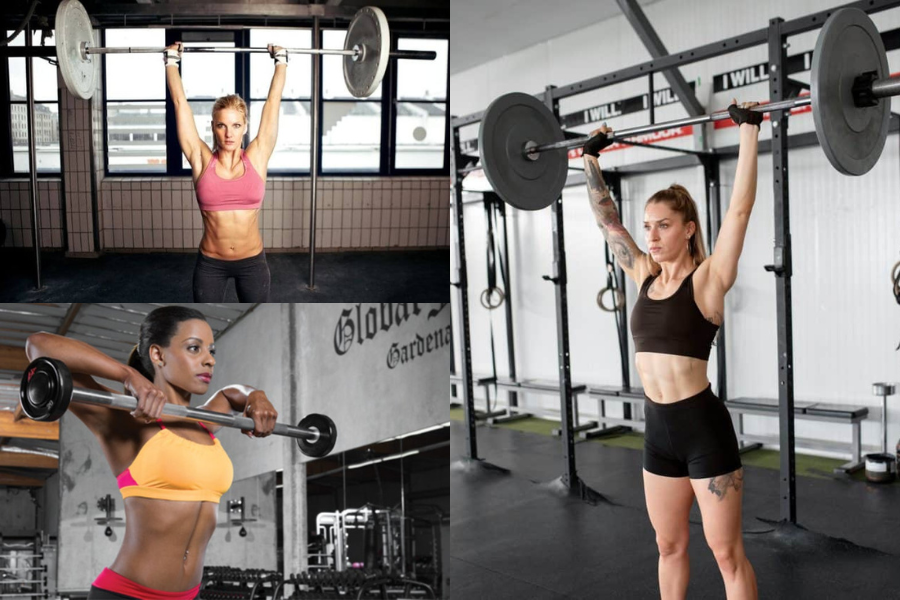
Female Shoulder Workout Ideas to Sculpt Your Upper Body
Shoulder strength does more than sculpt your upper body. A smart female shoulder workout also supports your posture, protects your joints, and makes everyday lifting feel easier. With a few focused moves and light weights, you can build strong, defined shoulders without spending hours in the gym.
Below you will find how your shoulder muscles work, beginner friendly moves, and plug and play workout ideas you can use at home or at the gym.
Why train your shoulders
Your shoulder is one of the most mobile joints in your body and also one of the least stable. That combination makes it powerful but prone to injury if you ignore it.
When you follow a consistent female shoulder workout plan, you:
- Support better posture so you do not slump forward at your desk
- Stabilize the shoulder joint so movements like pushing, pulling, and pressing feel safer
- Make yoga poses, pilates, and strength classes feel more controlled
- Build strength that helps with daily life, like carrying groceries or lifting kids
Strength training, including shoulder work, is also linked to heart health benefits that rival cardio when you do it a couple of times per week, according to a 2018 study referenced by Squatwolf. That same article notes that resistance training can improve bone density and help lower the risk of osteoporosis in women as they age, and can even ease symptoms of anxiety and depression through mood boosting effects.
In other words, stronger shoulders support much more than your upper body.
Key shoulder muscles to know
You do not need an anatomy degree to get value from your female shoulder workout, but a quick overview helps you choose smarter exercises.
Your main players are:
Deltoids
These sit on top of your shoulders and have three parts.
- Anterior (front) delts help you lift your arms forward and press overhead.
- Lateral (side) delts lift your arms out to the side.
- Posterior (rear) delts help you pull your arms back and support posture.
Rotator cuff
A small group of muscles that stabilize the ball and socket of your shoulder. They guide rotation and keep the joint centered when you move.
Upper back supporters
Muscles around your shoulder blades, like the trapezius and rhomboids, pull the shoulder blades back and down. These are important for standing tall and avoiding rounded shoulders.
An effective female shoulder workout touches all these areas, not just the obvious front delts you feel during overhead presses. Balanced strength reduces the risk of pain and overuse injuries that can show up when one area gets much stronger or tighter than the others.
How often you should work shoulders
You do not need endless upper body days to see progress. Since your shoulders assist in most pushing and pulling movements, they are already involved whenever you train your chest, back, or arms.
A practical weekly structure is:
- One dedicated female shoulder workout per week
- Plus shoulder exercises sprinkled into one or two total body strength sessions
This is enough volume for most women, especially if you are pairing compound lifts like presses and rows with a few isolated moves for detail work.
Listen to your joints and give your shoulders at least one full rest day between heavy or high volume sessions.
Choosing the right weights and equipment
If you are a beginner, lighter is better while you learn proper form. Most women do well starting with:
- Dumbbells in the 3 to 5 pound range for isolation moves like lateral raises
- Medium dumbbells from 5 to 20 pounds for compound presses and rows, depending on your current strength
- Resistance bands for joint friendly pulling and rotation work
- Bodyweight only for early mobility and control drills
Using lighter dumbbells with higher repetitions is ideal when you want long, lean muscles and good endurance. Over time, you can increase the weight, the repetitions, or both to keep challenging your muscles safely.
If an exercise feels unstable, painful, or jerky, lower the weight until you can move smoothly and control the full range of motion.
Warm up before you lift
A short warm up prepares the shoulder joint and surrounding muscles, which helps you generate more power and reduces injury risk.
Spend 5 to 10 minutes on:
- Gentle arm circles, both forward and backward
- Shoulder rolls up, back, and down
- Band pull aparts or light rows to wake up your upper back
- Controlled overhead reaches and cross body swings
Keep everything in this phase light and dynamic. You are not trying to fatigue your shoulders, only to bring blood flow and movement into every direction your shoulders can move.
Foundational female shoulder exercises
Use this section like a menu. Choose three to five movements that suit your equipment and experience for each workout. For most of these, aim for 2 to 3 sets of 8 to 12 repetitions.
1. Overhead press
The overhead press is a staple in any female shoulder workout because it targets the front and side delts and trains you to push weight above your head.
How to do it:
- Stand or sit tall with a dumbbell in each hand.
- Raise the weights to a goalpost position, elbows bent at 90 degrees and in line with your shoulders, palms facing forward.
- Brace your core and press the dumbbells straight up until your arms are nearly straight, without shrugging your shoulders to your ears.
- Lower slowly back to the starting position.
Keep your ribs stacked over your hips so you do not arch your lower back.
2. Arnold press
Named after Arnold Schwarzenegger, this variation combines a curl, rotation, and press so you work more of your shoulder through a greater range of motion.
How to do it:
- Start seated or standing with dumbbells in front of your shoulders, palms facing your chest and elbows close to your body.
- As you press the weights overhead, rotate your palms to face forward.
- At the top, pause briefly, then reverse the motion, rotating your palms back toward you as you lower.
Perform about 10 controlled repetitions. Choose a lighter weight than your regular overhead press since this move is more demanding on your stabilizers.
3. Upright row
The upright row targets your side delts and upper traps, which contribute to rounded, sculpted shoulders when trained correctly.
How to do it:
- Stand with your feet hip width apart holding a dumbbell in each hand in front of your thighs, palms facing your body.
- Pull your elbows straight up along your body so the dumbbells travel close to your torso.
- Stop when your elbows reach about shoulder height. Keep your wrists below or in line with your elbows.
- Lower slowly back down.
Use a controlled motion and avoid jerking the weights. If you feel pinching in the front of your shoulders, reduce the range of motion or swap this move for lateral raises or a landmine press variation like the one highlighted by Gymshark.
4. Lateral and front raises
These two simple movements isolate and define the front and side heads of your delts.
Lateral raise:
- Hold light dumbbells at your sides, palms facing your body.
- With a soft bend in your elbows, lift your arms out to the sides until they are at or slightly below shoulder height.
- Lower with control.
Front raise:
- Same starting position, dumbbells at your thighs.
- Lift one or both arms straight in front of you to shoulder height.
- Lower slowly.
Keep the weights moderate and focus on a smooth lift and a slow lower, which keeps tension on the muscle.
5. External rotation
Rotator cuff strength is critical for long term shoulder health and pain free overhead lifting.
How to do it:
- Sit or stand with a very light dumbbell or a resistance band.
- Bend your elbow to 90 degrees and keep it snug against your side.
- With your palm facing in, rotate your forearm outward away from your body, only as far as you can go without moving your upper arm.
- Return slowly to the start.
Perform 10 to 15 gentle repetitions per side. This should feel like low level work, not a max effort exercise.
6. Band pull aparts
Band work is an easy way to train your upper back and rear delts, which counteracts forward shoulder posture.
How to do it:
- Hold a light to medium resistance band at shoulder height with straight arms in front of you, palms facing down.
- Pull the band apart by moving your hands out to the sides while squeezing your shoulder blades together.
- Pause when the band touches your chest, then return with control.
Keep your shoulders down away from your ears and your ribs stacked over your hips.
7. Reverse snow angel
This bodyweight move hits your rear delts and upper back while teaching you to stabilize your shoulders.
How to do it:
- Lie face down on a mat with your arms extended overhead, palms facing down.
- Lift your chest slightly off the floor and engage your glutes to protect your lower back.
- Sweep your arms out to the sides and down toward your hips like drawing a snow angel, keeping them just off the floor.
- Reverse the motion back to overhead.
Perform slow, controlled repetitions and stop if you feel neck strain.
A simple 25 minute shoulder workout
You can create an effective female shoulder workout by combining several of the moves above into one routine. Here is a sample session that fits into roughly 25 minutes, including brief rest periods.
Repeat this sequence 2 to 3 times:
- Overhead press, 8 to 12 reps
- Upright row, 8 to 12 reps
- Lateral raises, 10 to 15 reps
- Band pull aparts, 12 to 15 reps
- External rotations, 10 to 15 reps per arm
Rest 45 to 60 seconds between exercises or longer if you need it to maintain good form. Choose weights that make the last few repetitions challenging but still controlled.
If you want a little more variety, you can swap moves from this base template, for example:
- Replace overhead press with Arnold press
- Replace upright row with a landmine press if you have access to that setup, which can be more shoulder friendly for some women
- Add a set of reverse snow angels for additional rear delt work
Shoulder friendly stretching and recovery
After your workout, give your shoulders a few minutes of gentle stretching. This helps maintain mobility and can ease post workout tightness.
Try:
- Cross body shoulder stretch
Bring one arm across your chest and gently hug it toward you with the opposite hand. Hold 20 to 30 seconds per side. - Overhead triceps stretch
Reach one arm overhead, bend the elbow so your hand drops toward your upper back, and lightly press on the elbow with your other hand.
If your shoulders often feel stiff from sitting or phone use, you can also sprinkle in mobility work on your off days. Movements like controlled arm circles, scapular retraction drills, and light internal and external rotations can keep things moving smoothly.
Putting it all together
A well planned female shoulder workout is not about lifting the heaviest dumbbells in the room. It is about training all the muscles that support your shoulder joint, from your delts to your rotator cuff and upper back, with good technique and consistent effort.
Start with light weights, prioritize form, and build the habit of dedicating at least one focused session per week to your shoulders. Over time you will notice:
- More defined shoulders and arms
- Better posture in photos and in the mirror
- Greater ease in everyday lifting and workout moves
Pick three exercises from the list above for your next workout, set a timer for 25 minutes, and see how strong and steady your shoulders can feel when you give them a little dedicated attention.
About The Author





