Maximize Gains with a Dynamic Chest Workout Routine
A smart chest workout routine does more than build a bigger bench press. When you train your chest efficiently, you support stronger shoulders and triceps, improve posture, and add definition across your upper body. With the right mix of exercises and rep ranges, you can design a chest day that fits your schedule and your current fitness level.
Below, you will learn how your chest muscles work, how often to train them, and how to build an effective chest workout routine using dumbbells, barbells, cables, and bodyweight movements.
Understand your chest muscles
Before you choose exercises, it helps to know what you are actually training. Your chest is mainly made up of two muscles:
- Pectoralis major. This is the large, fan-shaped muscle on the front of your chest. It drives most pushing movements such as pressing a weight away from you, hugging, or bringing your arm across your body.
- Pectoralis minor. This smaller, triangular muscle lies underneath the pectoralis major. It helps stabilize your shoulder blade and supports lifting and rotating movements.
Because these muscles are involved in many daily tasks, training them burns a lot of energy and supports both strength and fat loss. When you focus on different angles in your chest workout routine, you teach the upper, middle, and lower fibers to work together for fuller, more balanced development.
Decide how often to train chest
For most people, a chest workout routine two times per week is enough to see steady progress without overtraining. This schedule gives your muscles time to repair and grow between sessions, which is when real gains happen.
Many lifters respond well to:
- One chest workout every 4 to 6 days, with a total of about 12 to 20 sets per week for chest-focused exercises, which lines up with current research on optimal volume for muscle growth.
If you stay consistent, you can usually feel performance improvements in 3 to 4 weeks and start to notice visible changes in your chest after about 8 to 12 weeks of regular training.
Structure a balanced chest workout routine
A strong chest day does not require dozens of different moves. What matters most is the order and type of work you do.
Start with compound exercises
Begin your session with compound lifts that use multiple joints and muscle groups. These exercises let you handle the most weight and stimulate the most fibers when you are fresh. Examples include:
- Barbell bench press
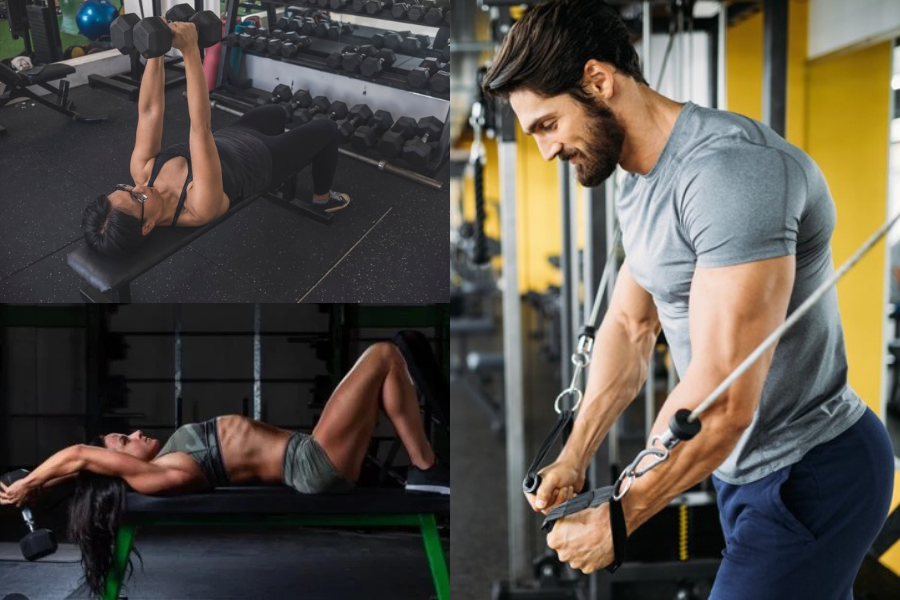
- Dumbbell bench press
- Incline dumbbell press
- Decline dumbbell press
- Chest dips
Compound exercises train your chest, shoulders, and triceps together, which is how your upper body tends to work in real life.
Follow with isolation work
After your heavy pressing, move to isolation exercises that focus more directly on the chest. These usually involve a single joint and a controlled range of motion:
- Flat chest fly
- Incline dumbbell fly
- Cable crossover
- Standing cable chest flyes
These movements help you feel a strong stretch and squeeze in your chest, which supports muscle growth in areas that may not get enough work from pressing alone.
Choose sets, reps, and rest
You can tailor your chest workout routine to your main goal by adjusting your sets and reps.
- For strength, keep most of your sets in the 5 to 10 rep range with heavier weights and 2 to 3 minutes of rest on big lifts like the bench press.
- For muscle growth, aim for 10 to 30 reps per set with a moderate weight that brings you close to fatigue, and rest 1 to 2 minutes on isolation moves.
A typical chest session might include:
- 2 to 5 sets per exercise
- 2 to 4 total exercises per workout
- Longer rest periods early in the session and shorter ones toward the end when you chase a pump
Warm up properly for better performance
Warming up for your chest workout routine does more than keep you safe. It can help you lift more and feel more stable on each rep.
A simple warm up could look like:
- 5 minutes of light cardio, such as brisk walking, easy cycling, or a gentle row, to increase your heart rate.
- Dynamic upper body stretches, such as arm circles, band pull-aparts, and gentle chest openers to increase blood flow around your shoulders.
- Ramp-up sets of your first exercise, for example a few light sets of bench press before you reach your working weight. These sets prepare your nervous system and reinforce good form.
Taking this time reduces the chance of shoulder irritation and makes heavy sets feel smoother and more controlled.
Build a dumbbell chest workout routine
If you have access to dumbbells, you can create a complete chest session without any machines. Dumbbell chest workouts are especially effective because they offer a greater range of motion and train each side of your body independently.
Why dumbbells work so well
When you press dumbbells instead of a barbell, you allow your hands and wrists to move in a more natural path. This can relieve stress on your shoulders and elbows. Other benefits include:
- Greater range of motion, which lets you lower deeper for more stretch and finish with a stronger contraction.
- Balanced development, since each arm has to carry its own load, which helps correct strength and size differences between sides.
- Improved stability and coordination, because smaller stabilizing muscles must work harder to keep the dumbbells steady.
- Safety when training alone, since you can drop dumbbells to the side if you fail a rep instead of getting stuck under a bar.
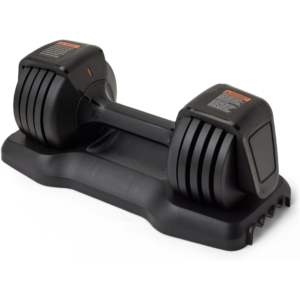
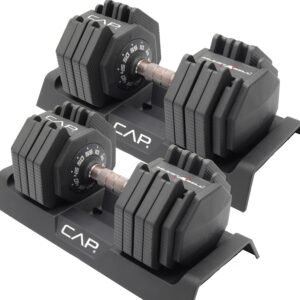
Because dumbbells are widely available, they make it easy to maintain your chest workout routine at the gym or at home.
Ten effective dumbbell chest exercises
You can rotate through the following options to keep your training fresh. Start with compound presses and finish with isolation moves that emphasize stretch and squeeze.
Compound dumbbell presses
- Dumbbell bench press
- Incline dumbbell press
- Decline dumbbell press
- Neutral grip dumbbell press
- Chest squeeze press
- Dumbbell floor press
- Dumbbell reverse grip press
Isolation and stretch-focused moves
- Flat chest fly
- Incline dumbbell fly
- Dumbbell pullover
Pick 2 or 3 of these exercises per workout, then adjust the angle of the bench or your grip to shift emphasis to upper, mid, or lower chest as needed.
Try a beginner-friendly chest workout plan
If you are new to strength training, you do not need a complicated schedule. A well-rounded beginner chest workout can use a mix of bodyweight, free weights, and cables to teach proper technique and build a base of strength.
A sample beginner routine might include:
- Pushup. Teaches your body to brace your core while you push. If standard pushups are too hard, elevate your hands on a bench or sturdy table to reduce the load.
- Bench press. Use a barbell or light dumbbells. Focus first on control and keeping your shoulder blades pulled back against the bench.
- Incline dumbbell bench press. Set the bench around 30 degrees. This angle shifts work to the upper chest and reduces front shoulder dominance.
- Cable crossover. Stand in the middle of a cable station and draw the handles together in front of your chest, pausing briefly to squeeze.
- Partner medicine ball chest pass. Stand facing your partner and pass a light medicine ball from your chest to theirs and back. This trains power and coordination in a low-impact way.
For this beginner chest workout routine, you can:
- Rest about 90 seconds between exercises and 60 seconds between sets
- Start with light weights on dumbbells and cables and little or no load on the barbell
- Focus on smooth, controlled reps and full range of motion
If you are dealing with a concave chest or extra chest fat, this type of routine provides a solid starting point to build firmer, fuller pecs over time, especially when combined with an overall calorie-controlled diet.
Progress to more advanced chest days
Once your beginner routine stops feeling challenging and your progress slows, you can increase the stimulus in a few ways:
- Add volume by increasing sets or adding a second weekly chest day.
- Raise intensity by using heavier weights in the same rep ranges.
- Introduce advanced routines, such as a dumbbell-only chest day or a full gym program that combines barbells, dumbbells, cables, and bodyweight work.
Programs designed for intermediate and advanced lifters often emphasize hitting the upper, middle, and lower chest in every session. They use a combination of compound presses like the barbell bench press and incline dumbbell press, dips to target the lower chest, and cable fly variations to bring extra focus to specific fibers.
On these more demanding days, longer rest periods of 2 to 3 minutes are common for big lifts, with shorter 1 to 2 minute rests on flyes and other isolation movements to finish with a strong pump.
Train chest effectively at home
You do not need a full gym to build a strong chest. With a bit of creativity, you can design an at-home chest workout routine using bodyweight and simple equipment.
Bodyweight pushup variations
Pushups are one of the most practical chest exercises you can do without equipment. Research that compares bench press and pushup training in trained young men has found similar gains in muscle size and strength when total effort is matched, which shows how effective pushups can be for your chest.
Pushups mainly work the pectoralis major and minor, triceps, front shoulders, and core. As a compound move, they train multiple muscle groups in one efficient package. Variations you can use include:
- Regular pushups, with hands slightly wider than shoulders for better chest engagement
- Incline pushups, with hands on a bench to target lower chest with less body weight
- Decline pushups, with feet elevated to emphasize upper chest and front delts
- Plyometric pushups, where you push up explosively to build power
- Time under tension pushups, performed slowly to increase muscle-building stress
A sample no-equipment chest circuit could be:
- 10 regular pushups
- 10 incline pushups
- 10 decline pushups
- 5 slow time under tension pushups
- 60 seconds of star jumps
- 30 mountain climbers
Repeat this circuit three times. The mix of pushups and cardio keeps your heart rate elevated while your chest gets a serious workout.
Adding dumbbells at home
If you have a pair of dumbbells and a bench or a firm surface, you can add:
- Flat dumbbell chest presses
- Incline or decline dumbbell presses
- Dumbbell chest flyes
Start with weights that let you complete your sets with good form. Over time, increase the load as your strength improves.
Using dips for width and depth
If you have access to parallel bars or sturdy surfaces at home or in a park, chest dips are one of the most powerful moves for adding depth and width to your chest. By leaning your torso slightly forward and letting your elbows flare a bit, you shift more work to the chest.
Because dips challenge your shoulders, lower yourself under control and avoid going too deep if you feel any discomfort. Over time, as your strength and mobility improve, you can increase the range of motion gradually.
Put it all together
A dynamic chest workout routine does not have to be complicated, but it should be intentional. Aim to:
- Train chest about twice per week, with enough sets and effort to challenge yourself
- Start each session with compound presses, then finish with focused isolation work
- Use dumbbells, barbells, cables, and bodyweight variations when available to hit your chest from different angles
- Warm up thoroughly and respect rest intervals to get the most from every rep
- Progress gradually as exercises feel easier by adding weight, sets, or new variations
Choose one change to apply in your next workout, such as adding an incline dumbbell press or swapping machine presses for dumbbells. Over the coming weeks, these small upgrades will add up to noticeable strength, better posture, and a chest that looks and feels stronger.
About The Author