Simple Hamstring Mobility Exercises to Improve Your Performance
A few targeted hamstring mobility exercises can do more than just help you touch your toes. When you improve how your hamstrings move and control force, you support your knees, hips, and lower back, and you set yourself up for better performance in almost any sport or workout.
Below you will find simple hamstring mobility exercises you can do at home or in the gym, plus tips on how to stretch in a way that actually targets the muscle instead of just irritating your sciatic nerve.
Understand what you are really stretching
Before you dive into hamstring mobility work, it helps to know what you are feeling when you stretch.
Many runners and lifters feel a strong burn behind the knee when they lean forward into a classic straight-leg stretch. That intense pull is often tension on your sciatic nerve, not your hamstring muscle. The sciatic nerve runs down the back of your leg, and aggressive rounding through your lower back and locking your knees can put it under unnecessary strain.
You want your stretches to target the muscle belly, which is the thick, meaty part in the middle of the back of your thigh. Slightly bending your knee and hinging from your hips makes a big difference. You get more genuine hamstring stretch and less nerve irritation, which means better results and less risk of discomfort later.
Why hamstring mobility matters for performance
Your hamstrings help you extend your hip, bend your knee, and control your pelvis. When they are both strong and mobile, you can sprint, jump, and change direction more efficiently.
Tight or weak hamstrings can show up as:
- Reduced stride length when you run
- Stiffness that limits your squat or hinge depth
- Extra strain on your lower back and knees
Spending hours sitting with your knees and hips flexed can leave your hamstrings short and underused. Combine that with sports that involve repetitive sprints or quick changes of direction and you get a higher chance of strains, pulls, or nagging tightness.
Research also suggests that hamstring stretching can help with certain types of low back pain by improving flexibility and function in the back of your body. A meta analysis of 14 randomized controlled trials found that hamstring stretching exercises reduced pain and improved disability scores in people with low back pain, and improved straight leg raise range of motion in those with radiating pain, which indicates better hamstring flexibility and function.
How to structure your hamstring mobility work
You will get the most out of hamstring mobility exercises if you match them to your training schedule.
Dynamic hamstring stretches are best before activity. These are controlled movements that take your leg through a range of motion without long holds. They increase blood flow and prepare your muscles and nervous system to move.
Static hamstring stretches are better after workouts or on recovery days. Here you move into a stretch, hold it, and breathe. Short holds of about 15 to 30 seconds, repeated a few times, are usually more effective and safer than forcing a deep stretch for a minute or more, especially if you are just starting out.
Aim to work on your hamstring mobility two to three times per week. You can add these exercises into your warm up, blend them into leg day, or use them as a quick routine on off days.
Gentle, consistent stretching and smart strength work will change your hamstrings more than one aggressive session ever will.
Simple dynamic hamstring mobility exercises
Use these before running, lifting, or any sport that asks your hamstrings to work hard.
1. Supine dynamic hamstring stretch
This exercise opens the back of your thigh while keeping your spine relaxed.
- Lie on your back with both legs straight.
- Bend your right knee toward your chest and lace your hands behind your thigh.
- Gently extend your right knee until you feel a mild stretch in the middle of your hamstring, then bend again.
- Move slowly in and out of the stretch for 10 to 15 reps, then switch legs.
Keep your ankle relaxed and avoid forcing your leg perfectly straight. Your goal is smooth movement, not maximum range on day one.
2. Runner’s lunge to hamstring rock-back
This combines a hip opener with a hamstring stretch, which is useful if you feel tight in multiple spots.
- Start in a low lunge with your right foot forward and your left knee on the floor.
- Place your hands on either side of your front foot and keep your chest lifted.
- From here, shift your hips back, straighten your front knee, and pivot on your front heel so your toes lift slightly.
- You should feel a stretch in the belly of your front hamstring, not just the back of your knee.
- Rock forward into the lunge again and repeat for 8 to 10 smooth reps per side.
Think about pushing your butt back rather than rounding your spine forward. This helps you hinge at the hips and keeps the tension where you want it.
3. Leg swings for hamstrings and hips
Leg swings loosen your hamstrings while also preparing your hips for more dynamic moves.
- Stand sideways near a wall for balance.
- Swing your outer leg forward and back, keeping the movement controlled and your torso tall.
- Start with small swings and increase the range of motion as you warm up.
- Perform 15 to 20 swings per leg.
Let your leg move freely, but do not throw it so high that you feel a sharp pull. You are looking for rhythmic motion that wakes your muscles up.
Effective static hamstring stretches
Use these hamstring mobility exercises after your workout, or at the end of your day to unwind tight legs.
4. Bent knee hamstring stretch
This is one of the simplest ways to target the muscle belly without cranking on your sciatic nerve.
- Sit on the floor with your right leg straight and your left knee bent, foot near the inside of your right thigh.
- Slightly bend your right knee so it is not locked.
- Hinge forward from your hips, keeping your back flat or gently arched, and reach your hands toward your shin or ankle.
- Stop when you feel a comfortable stretch in the middle of your hamstring.
- Hold for 20 to 30 seconds, then switch sides.
If you feel the stretch mostly behind your knee, bend that knee a little more and focus on folding from your hips instead of rounding from your low back.
5. Supine wall or towel hamstring stretch
This position lets you relax your upper body so you can focus on your hamstrings.
- Lie on your back near a wall or with a long towel or strap in hand.
- If using a wall, place one leg up the wall with your heel resting on it and your other leg straight on the floor. Scoot closer to the wall until you feel a stretch.
- If using a towel, loop it around your foot, then gently pull your straight leg toward you until you feel a stretch in the back of your thigh.
- Keep your knee slightly bent to start, especially if you are very tight.
- Hold for 20 to 30 seconds, relax, and repeat 2 to 3 times per side.
Stay just below your maximum stretch. Forcing it will only trigger your stretch reflex, which tightens the muscle and works against you.
6. Kneeling hamstring stretch (reverse hamstring stretch)
This variation is a nice option if getting down to the floor is not comfortable.
- Start in a tall kneeling position on a mat. Step your right foot forward so you are in a half kneeling stance.
- Straighten your front knee partially and sit your hips back, keeping your chest lifted.
- Place your hands lightly on your front thigh or on blocks for support.
- Push your hips back until you feel a stretch in the belly of your hamstring.
- Hold 20 to 30 seconds and repeat on the other side.
Think of reaching your tailbone away from your heel to lengthen the back of your leg instead of collapsing your chest toward your knee.
Strength based hamstring mobility drills
Hamstring mobility is not only about stretching. Strengthening the muscle through a long range of motion helps you keep your new flexibility under load and reduces injury risk.
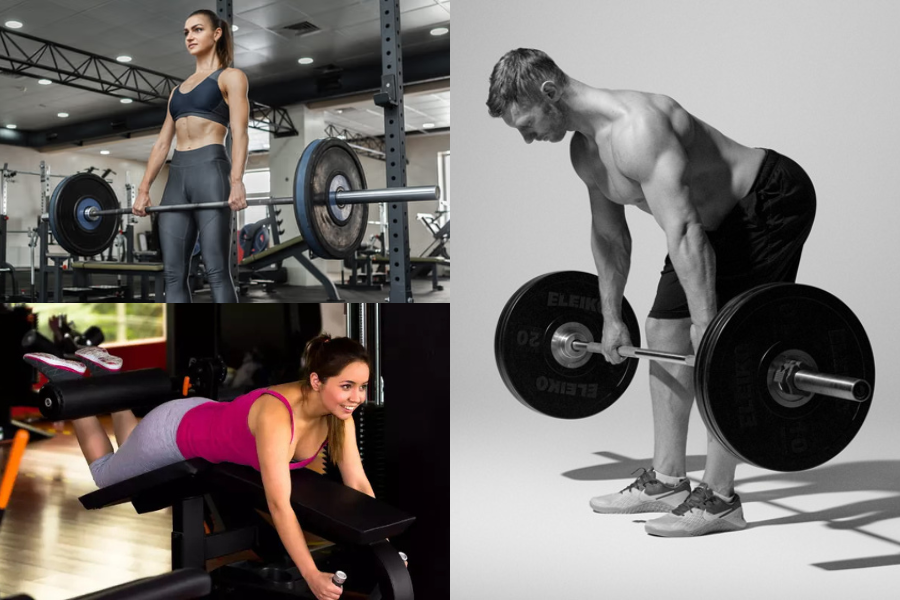
7. Romanian deadlifts
Romanian deadlifts, often called RDLs, are a staple for hamstring strength and mobility. Eccentric isometric RDLs, where you lower slowly and pause in the stretched position, are particularly effective for lengthening muscle fibers, improving movement control, and building strength.
- Stand with your feet hip width apart, holding a pair of dumbbells or a barbell in front of your thighs.
- Slightly bend your knees and brace your core.
- Hinge at your hips and slide the weights down your thighs, pushing your hips back while keeping your back flat.
- Stop when you feel a strong but comfortable stretch in your hamstrings, usually when the weights reach mid shin.
- Pause for 2 to 5 seconds in that stretched position, then drive through your heels to stand tall.
- Repeat for 6 to 8 controlled reps.
You do not need heavy weight to feel this. Focus on a slow lowering phase of 3 to 7 seconds and precise hip movement instead of chasing maximum load.
8. Single leg Romanian deadlifts
Single leg RDLs challenge your balance, hip control, and hamstring strength on each side.
- Stand tall with your weight on your right leg and a light dumbbell in your left hand.
- Soften your right knee and hinge at the hip while you reach the dumbbell toward the floor and extend your left leg behind you.
- Keep your hips square to the floor and your back straight.
- When you feel a deep stretch in your right hamstring, pause, then return to standing.
- Perform 6 to 10 reps per side.
This exercise helps you discover and address side-to-side differences, which can be important for runners and field sport athletes.
9. Glute bridge variations
Weighted glute bridges primarily target your glutes, but they also involve your hamstrings and help coordinate the whole posterior chain.
- Lie on your back with your knees bent and feet hip width apart.
- Press your heels into the floor and lift your hips until your body forms a straight line from shoulders to knees.
- Squeeze your glutes at the top and hold for 2 to 3 seconds, then lower with control.
- To emphasize the hamstrings more, walk your feet slightly farther away from your hips or try a single leg bridge.
Integrating these with your mobility work teaches your hamstrings to handle force in the ranges you are building through stretching.
Tips for safer, smarter hamstring mobility
A few small habits can make your hamstring mobility exercises more productive.
Start with bent knees. Bending your knees a bit takes tension off your calves and the hamstring attachment behind the knee so you can hinge at your hips more safely.
Loosen the surrounding areas first. Gentle mobility for your back, hips, and calves can make your hamstring work feel easier and more effective. Think cat cow for your spine, hip circles, or ankle stretches.
Do not chase pain. A good stretch is usually a mild to moderate pull that eases slightly as you hold. Sharp, burning, or tingling sensations, especially down into your calf or foot, can signal nerve tension rather than healthy muscle stretch. In that case, back off and reassess your position.
Use your new range of motion. After stretching, include a few active moves like deep bodyweight squats, light hinges, or gentle jumps to teach your body to use the extra mobility. This helps your nervous system accept the new range so it lasts longer.
Putting it all together
You do not need a long, complicated routine to benefit from hamstring mobility exercises. A realistic starting point might look like this:
- Before workouts: 5 minutes of leg swings, supine dynamic hamstring stretches, and runner’s lunge rock backs
- After workouts: 5 to 10 minutes of bent knee stretches, wall or towel stretches, and a kneeling hamstring stretch
- Twice per week: 3 sets of Romanian deadlifts or single leg RDLs as part of your strength training
Consistent practice will usually feel better than being able to flatten your palms to the floor once. Pay attention to where you feel your stretches, move slowly, and let your hamstring mobility improve week by week. Your running, lifting, and everyday movement will all feel smoother as a result.
About The Author


