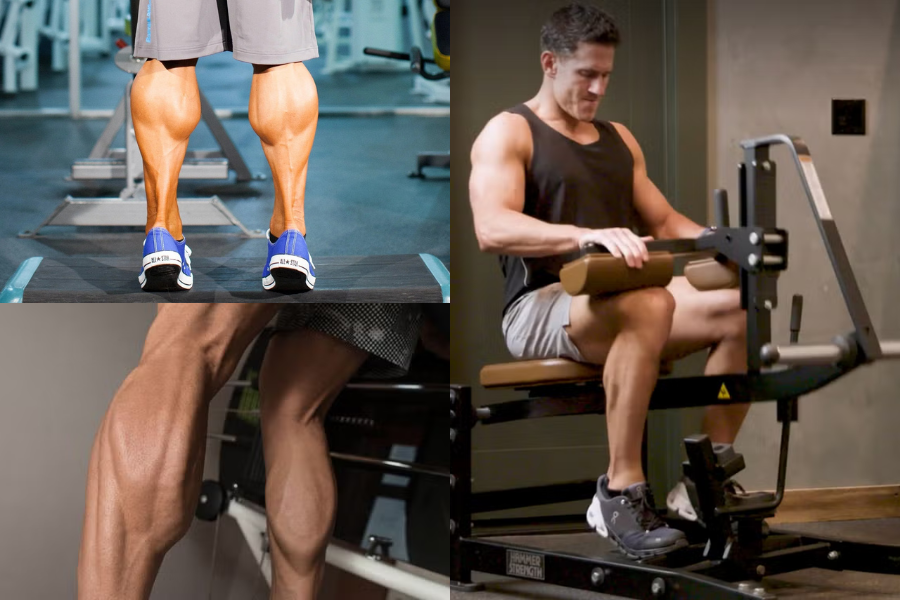
Surprising Tips to Get Bigger Calves You’ll Love
A lot of people search for how to get bigger calves and end up doing endless, half-hearted calf raises at the end of a workout. You do not need marathon sessions to grow your calves, but you do need smarter strategy than “a few sets when you remember.” With a few surprising tweaks to your form, schedule, and recovery, your lower legs can finally start to change.
Below, you will learn what actually makes calves grow, how often to train them, and the specific tweaks that turn “nothing happens” into real progress.
Understand what you are training
If you want bigger calves, it helps to know what is under the skin. Your calf is not just one muscle, it is a team.
The two main players are:
- Gastrocnemius. This is the visible, diamond-shaped muscle on the back of your lower leg. It does most of the work when your knee is straight, for example in standing calf raises.
- Soleus. This sits underneath the gastrocnemius. It works more when your knee is bent, for example in seated or bent-knee calf raises.
Both muscles help with plantar flexion, which is the movement you use to point your toes down, push off when you walk, and jump. Because they respond differently depending on your knee position, you grow bigger calves faster when you train both, not just one angle, as explained by ISSA in May 2023.
Think of it this way. Straight-knee exercises shape the upper “ball” of your calf, bent-knee exercises add thickness lower down. You want both for a fuller look from every angle.
Use the right calf exercises
You do not need ten different moves in every workout. To get bigger calves, focus on a small handful of exercises that you can gradually load heavier over time.
Effective options include:
- Standing calf raises
- Seated calf raises
- Elevated calf raises on a step or block
- Bent-knee calf raises
- Single-leg calf raises
- Jump rope and other jumps
- Farmer’s carry on your toes
These exercises cover both heavy strength work and more explosive, athletic movement. Research suggests that including between 1 and 3 different calf exercises per training session and 2 to 4 different calf exercises per week is enough to keep things fresh without overuse in most cases, according to RP Strength’s hypertrophy guide (2024).
A simple structure is:
- One straight-knee exercise, like standing calf raises, to target the gastrocnemius
- One bent-knee exercise, like seated or bent-knee calf raises, to hit the soleus
Rotate the exact variations every few weeks if you like, but keep those two roles in your plan.
Train more often than you think
Calves are used to working hard all day when you walk and climb stairs, so they usually need a bit more attention to grow. The good news is that they also tend to recover quickly.
Because of their high blood supply and the fact that they are not limited by many other helper muscles, calves can bounce back faster between sets and sessions. RP Strength notes that some people can work calves effectively with rest intervals as short as 10 seconds when recovery allows, though your own recovery should always guide how much rest you take (2024).
For frequency, a useful guideline is:
Many people can train calves 3 to 6 times per week at effective volumes and still recover well (RP Strength, 2024).
You do not need to start at six days a week. Instead, try this progression:
- Begin with 2 calf sessions per week for 3 to 4 weeks.
- If soreness is manageable and your performance is stable or improving, move to 3 sessions per week.
- Advanced lifters who are stuck can experiment with 4 or more shorter sessions per week, alternating exercises so the same tissues are not stressed in exactly the same way every time.
If you increase frequency, shorten individual workouts. A little work often is better than crushing your calves once every ten days and then limping.
Get the rep ranges working for you
If you only ever do 15 reps with the same weight, your calves adapt and stall. To grow, they respond best to a mix of heavy, moderate, and light work across the week.
According to RP Strength’s hypertrophy guide (2024), calf training benefits from a wide load range that corresponds roughly to 5 to 30 reps per set, with an emphasis on moderate sets in the 10 to 20 rep window for most of your weekly work. Sprinkle in some heavier sets of 5 to 10 reps and some higher-rep sets of 20 to 30 reps for variety and maximum hypertrophy.
Here is an example of how to mix this in one week:
- Day 1: Standing calf raises, 4 sets of 8 to 10 reps, heavier weight
- Day 3: Seated calf raises, 3 sets of 12 to 15 reps, moderate weight
- Day 5: Single-leg calf raises on a step, 2 or 3 sets of 20 reps each leg, lighter weight and slow tempo
Changing the reps changes the stimulus, which helps you avoid plateaus without having to constantly invent new exercises.
Lean into the stretch at the bottom
One of the most surprising and powerful tips to get bigger calves is to chase the stretch at the bottom of every rep. Most people bounce right through the hardest part. That is where your calves have the most room to grow.
RP Strength suggests that holding a strong, sometimes painful stretch for up to 2 seconds at the bottom of a calf raise can be a major growth trigger, but they caution that beginners should start with low volume because this can create intense delayed onset muscle soreness (DOMS) (2024).
To use this safely:
- Lower slowly until your heel is below your toes on a step or raised surface.
- Pause for 1 to 2 full seconds in the stretched position.
- Then drive up hard to the top, squeeze briefly, and repeat.
If you are new to this, begin with fewer sets and do not exceed 1 or 2 stretching-focused exercises per week. Let your soreness and performance guide how fast you progress.
Increase time under tension
Your calves spend most of their life doing quick, springy actions. To signal growth, you want to increase time under tension, which is the total time they spend working in a set.
You can do this even with the same weights you already have by:
- Slowing the lowering phase to 2 to 4 seconds
- Pausing in the stretched position as described above
- Squeezing hard at the top for a brief moment instead of bouncing
Research-based training principles for calf hypertrophy emphasize the value of more time under tension, longer ranges of motion, and shorter rest periods between sets, as long as you can still hit your target reps with good form (RP Strength, 2024).
This type of training burns, but that burn is part of the signal your body uses to prioritize muscle growth in that area.
Use plyometrics to spark new growth
Traditional calf raises are not the only way to get bigger calves. Explosive, athletic jumps can challenge your lower legs in a different way and provide a growth stimulus that standard resistance moves sometimes miss.
Plyometric and explosive movements like:
- Box jumps
- Jump squats
- Single-leg jumps
- Jump rope
have been shown to positively impact calf muscle hypertrophy by loading the muscles quickly and dynamically compared to slow lifting alone (RP Strength, 2024).
You do not need a full plyometric workout to benefit. Try adding 3 short sets of jumps at the start of a leg or calf session:
- 8 to 10 controlled box jumps, or
- 30 to 60 seconds of jump rope, or
- 6 to 8 single-leg jumps per side
Use soft landings, pay attention to your joints, and stop well before your technique breaks down. Let these moves “wake up” your calves and ankles, then shift into your strength-focused calf raises.
Respect recovery and volume
More is not always better. If your calves are constantly sore, your form crumbles, or your performance drops, you are not giving them the recovery they need to actually grow.
Key training principles that help balance stimulus and recovery for bigger calves include:
- Gradually increasing your weekly set volume rather than jumping suddenly
- Slowing down your reps to get more from less weight
- Using full ranges of motion instead of half reps
- Shortening rest periods just enough to keep the work honest but still productive
RP Strength notes that calves can often handle short rest periods, even as short as about 10 seconds in some cases, but you should let your own recovery status lead. Take enough rest so that each set is effective and technically solid, not just rushed for the sake of fatigue (2024).
Think of recovery not as time “off” but as the part of the process when your calves actually rebuild.
Support growth with sleep and nutrition
You can have the perfect calf routine and still see minimal changes if your body does not have the resources to build new muscle.
Adequate sleep and nutrition are essential for calf muscle growth just like for any other muscle group. Quality sleep supports hormone regulation, muscle recovery, and protein synthesis. Your nutrition needs to supply enough:
- Protein for muscle repair
- Carbohydrates to fuel training and recovery
- Healthy fats for hormones and cell health
- Hydration and micronutrients to keep your performance high
These basics support overall hypertrophy, including the stubborn muscles of the lower leg (RP Strength, 2024). For many people, a simple rule of thumb is to prioritize a protein-rich meal or snack within a few hours around training and to aim for consistent, adequate sleep most nights.
Put it all together into a sample week
To make this concrete, here is one simple way you could organize your week around how to get bigger calves, using the ideas above.
Sample 3-day calf plan (add to your usual workouts):
- Day 1: Standing calf raises, 4 sets of 8 to 10 reps, 2-second stretch at bottom.
- Day 3: Seated calf raises, 3 sets of 12 to 15 reps, slow lowering.
- Day 5: Single-leg calf raises on a step, 2 or 3 sets of 20 reps per leg, lighter weight and focus on control. Add 30 seconds of jump rope at the start.
Start with this for 4 to 6 weeks. Track the weight you use, your reps, and how your calves feel. When a weight becomes easy within the target rep range, increase it slightly or add a rep or two.
With consistent work, smart progression, and attention to recovery, your calves will not stay “stubborn” forever. Begin with one or two of these changes in your next workout, then layer in more as your body adapts.
About The Author


