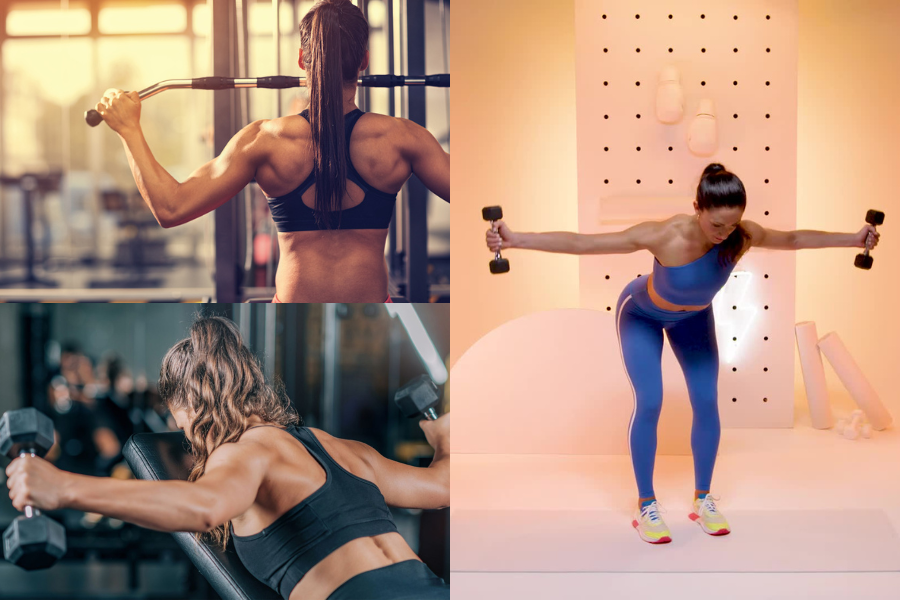
Top Back Workouts for Women You’ll Love Trying
A strong back does much more than help you look toned in photos. The best back workouts for women support your posture, protect your spine, and make everyday tasks like lifting groceries or carrying kids feel easier and safer. With the right mix of moves, you can build strength without spending hours at the gym.
Below, you will find simple, effective back exercises and complete workout ideas you can tailor to your fitness level, whether you are a beginner or more advanced.
Why back workouts matter for women
Your back is part of your core, and it is involved in almost every movement you make. Strengthening these muscles helps you stand taller, move with more ease, and avoid many common aches that can show up as you get older.
Stronger back muscles can also help reduce pain from carrying heavy breasts, repetitive lifting, prolonged sitting, or even certain arm positions when you style your hair, as certified athletic trainer Vanessa Abrams explains. When you train your back regularly, you support the spine and take pressure off overworked areas like your neck and lower back.
Because back muscles tend to fatigue faster than some other muscle groups, high repetitions and multiple sets are especially useful to build endurance and strength over time.
Key form and safety tips to prevent pain
Before you start a new routine, focusing on form keeps your back safe and helps you get better results from every rep.
Protect your spine
For most back moves, you want a neutral spine. That means your back is straight, not rounded like a “C” and not arched dramatically. Think of keeping your ribs stacked over your hips. This applies when you row, deadlift, perform pull ups, or even hold a plank.
Try to avoid crunch-heavy ab work that pulls your lower back off the floor. Traditional crunches can tighten your hip flexors and tug your lumbar spine forward, which is a common cause of back discomfort in women. Choose core exercises that teach your abs to stabilize without stressing your spine, such as dead bugs, bird dogs, and side planks.
Choose the right weight
Ego lifting, or grabbing weights that are too heavy, limits your range of motion, reduces proper muscle activation, and increases injury risk. Instead, start light, for example 2 to 8 pounds for dumbbell work if you are newer to strength training, and increase as your form feels solid.
If you are not familiar with an exercise, practice the pattern with body weight or an empty bar first. Add resistance only once you feel comfortable.
Warm up and stretch
A short warmup that wakes up your back muscles helps you move better and avoid strains. You might include:
- 1 to 2 minutes of light cardio, such as marching in place or walking
- Dynamic arm circles and shoulder rolls
- Gentle cat cow and hip hinges with no weight
After your workout, full body stretching with extra focus on your hips and hamstrings helps reduce muscle tightness and back pain. Tight hips often pull on your lower back, so do not skip this part.
Best beginner back exercises for women
If you are just starting, body weight and light resistance moves are enough to build a strong foundation. Aim for 8 to 12 repetitions per exercise and 1 to 3 sets, resting about 60 seconds between sets.
Bridge
The bridge strengthens your glutes and lower back, which both support your spine.
- Lie on your back with knees bent and feet hip width.
- Press your heels into the floor and squeeze your glutes to lift your hips until your body forms a straight line from shoulders to knees.
- Hold briefly at the top, then lower with control.
Keep your ribs pulled slightly down so you do not over arch your lower back.
Bird dog
This move trains your entire core to stabilize while your arms and legs move.
- Start on hands and knees with wrists under shoulders and knees under hips.
- Extend your right arm forward and left leg back until both are in line with your torso.
- Pause, then return to the starting position and switch sides.
Move slowly and keep your hips level so your lower back stays stable.
Superman
The superman exercise works your upper and lower back along with your glutes and hamstrings.
- Lie face down with arms extended overhead and legs straight.
- Lift your head, chest, arms, and legs a few inches off the floor at the same time.
- Hold for 1 or 2 seconds, then lower back down.
Repeat up to 10 times. Focus on length, as if someone is gently pulling your hands and feet in opposite directions, rather than height.
Bent over row with light weights
Bent over rows target the latissimus dorsi, rhomboids, and smaller rotator cuff muscles that support your shoulders.
- Stand with feet hip width and hold a light dumbbell or household item in each hand.
- Hinge at your hips, keeping your back flat and chest slightly lifted, arms hanging straight down.
- Pull the weights toward your ribs, squeezing your shoulder blades together.
- Lower with control.
If your lower back feels strained, reduce the weight or place one hand on a sturdy chair or bench for support.
Upper back moves for strength and posture
Once you are comfortable with the basics, you can add more focused upper back work to help with posture and upper body definition.
Single arm dumbbell row
This is a great unilateral move to prevent muscular imbalances, since you work each side independently.
- Place your left hand and left knee on a bench or sturdy surface.
- Hold a dumbbell in your right hand, arm extended down.
- Keeping your back flat, row the weight up toward your hip, leading with your elbow.
- Pause, then lower. Complete your reps, then switch sides.
Think of pulling with your back muscles rather than just your arm.
Reverse fly
The reverse fly targets your rear deltoids and mid back, which are often under trained and key for good posture.
- Stand with feet hip width, holding light dumbbells at your sides.
- Hinge at the hips and let the weights hang under your shoulders, palms facing each other.
- With a slight bend in your elbows, lift your arms out to the sides until they are in line with your shoulders.
- Lower slowly.
If you feel this in your neck, reduce the weight and focus on squeezing your shoulder blades together.
Resistance band pull apart
If you work at a desk, this simple band exercise can help undo some of the rounded shoulder position from sitting.
- Hold a resistance band in front of you at shoulder height with arms straight.
- Keeping your elbows soft, pull the band apart by squeezing your shoulder blades back and down.
- Return to the start with control.
Aim for 12 to 15 reps. Remember to keep your ribs down and avoid arching your lower back.
Lower back and full back power moves
Training your lower back is essential for functional strength in daily life. These exercises also involve your hips and glutes, which share the load with your spine.
Dumbbell deadlift
Deadlifts are one of the best back workouts for women when done with proper form.
- Stand with feet hip width, dumbbells in front of your thighs.
- Hinge at your hips and bend your knees slightly, sliding the weights down your legs.
- Keep your back flat and chest open. When you feel a stretch in your hamstrings, push through your heels and squeeze your glutes to stand.
Start with very light weights and focus on the hip hinge pattern. Your spine should stay neutral through the entire movement.
Kettlebell swing
The basic kettlebell swing builds lower back endurance and teaches powerful hip extension.
- Stand with feet a bit wider than hip width, kettlebell on the floor in front of you.
- Hinge at your hips and grab the handle with both hands.
- Hike the bell back between your legs, then snap your hips forward to swing the bell up to chest height.
- Let the bell swing back between your legs and repeat.
Keep your core tight and avoid leaning back at the top. The power comes from your hips, not your arms.
Medicine ball squat with overhead toss
This move combines a squat with an overhead reach to train your entire posterior chain.
- Stand holding a light medicine ball at chest height.
- Sit back into a squat, keeping your chest lifted.
- As you stand, press or lightly toss the ball overhead.
- Catch it and flow right into the next squat.
If overhead work bothers your shoulders or neck, press to shoulder height instead.
Sample 15 minute back workouts for women
You do not need a long workout to see results. A focused 15 minute session can strengthen commonly neglected back muscles like your lats and traps and quickly improve posture. Choose one of the sample routines below and adjust sets based on your level.
Pick weights that make the last 2 reps of each set feel challenging but still allow you to maintain good form.
At home, no equipment
Do 3 sets of 12 to 15 reps for each move. Rest 45 to 60 seconds between sets.
- Bridge
- Bird dog
- Superman hold
- Reverse snow angel (lying face down, sweep arms from hips to overhead off the floor)
- Plank, 20 to 30 seconds
This routine targets your entire back with body weight only. As it gets easier, increase your hold times and reps.
Dumbbells only back workout
Choose weights of 10 pounds or less to start, especially if you are new to strength training. Aim for 8 to 10 reps of each, two or three rounds total.
- Bent over row, focus on slow lowering
- Single arm bent over row (right and left)
- Reverse fly
- Renegade row in a high plank or on knees
- Dumbbell deadlift
Move through the exercises in sequence, rest up to 2 minutes at the end, then repeat. You should feel fatigue in your back by the final reps, without pain.
Gym based machine workout
Back machines offer guided movement that is helpful if you are learning form or prefer more support.
A beginner friendly routine could include:
- Lat pulldown machine, 3 sets of 12 reps
- Seated row machine, 3 sets of 12 reps
- Assisted pull up machine, 3 sets of 8 to 10 reps
- Seated back extension machine, 3 sets of 15 reps
Machines like the lat pulldown, seated row, and T bar row help you target your lats, traps, rhomboids, and rear delts with controlled resistance. Over time, you can progress to more advanced combinations like weighted pull ups, T bar rows, and Roman chair back extensions as your strength grows.
How often to train your back for best results
Research summarized by brands like Gymshark suggests that performing about ten or more sets per muscle group per week and training major muscle groups twice a week is effective for building muscle size and strength. You can apply this guideline by:
- Training your back 2 or 3 days per week
- Doing 3 to 5 exercises per session
- Aiming for 2 to 4 sets per exercise, depending on your level
Make sure you include at least one active recovery day each week, such as walking, gentle yoga, or mobility work. Your muscles grow stronger when you rest, not just when you train.
If you want more background on why a strong back is so important for balance, coordination, and overall health, resources like WebMD regularly highlight the benefits of regular back exercise.
Putting it all together
You do not need complicated routines to get the best back workouts for women. Focus on:
- Neutral spine and controlled form
- Warmups that activate your back and core
- A mix of upper, middle, and lower back exercises
- Gradual weight increases as you get stronger
Start by picking five moves from this guide that fit your space and equipment. Try them in a short 15 minute circuit, and notice how your posture, comfort, and confidence begin to shift over the next few weeks.
About The Author


