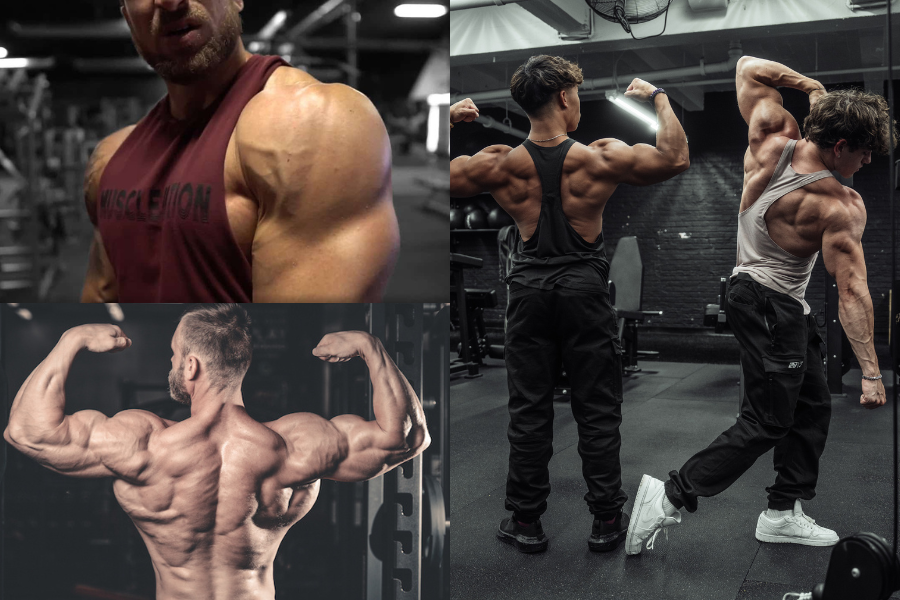
Transform Your Physique with These Shoulder Exercises
A great shoulder workout does more than build bigger arms in your T‑shirt. The best mens shoulder exercises improve posture, protect your joints, and add strength to almost every upper body lift you do. With a focused plan, you can shape broader, more powerful shoulders without spending hours in the gym.
Below, you will learn which shoulder exercises deserve a place in your routine, how to structure your workouts for growth, and simple form tips that keep your joints safe as you get stronger.
Understand your shoulder muscles
Before you load up the bar, it helps to know what you are trying to build. Your shoulder is built around the deltoid muscle, which has three heads that each control different movements:
- Anterior delts (front) move your arms forward, like in an overhead press or front raise
- Lateral delts (side) lift your arms out to the side and are key for shoulder width
- Posterior delts (rear) move your arms backward and help stabilize your shoulder blade
Surrounding muscles like the rotator cuff, rhomboids, and trapezius support these movements and keep the joint stable. When you choose the best mens shoulder exercises, you want a mix that trains all three heads plus these supporting muscles. This is what creates that rounded, strong look without sacrificing shoulder health.
Why shoulder training matters
Strong shoulders do a lot of invisible work. They stabilize your upper body when you bench, row, or do pull ups. They also influence how wide and athletic your frame appears, especially if you want that V‑taper shape.
Targeted shoulder training can help you:
- Add mass to your upper body
- Improve your performance on big compound lifts
- Correct a slouched posture by developing the often neglected rear delts
- Reduce your risk of rotator cuff irritation when you push or pull heavy
You do not need a separate “shoulder day” to get these benefits. In many cases, you will make better progress by pairing shoulders with other muscle groups, such as chest or back, and focusing on quality work instead of marathon sessions.
Best compound shoulder exercises for men
Compound movements should form the base of your shoulder workouts. They let you move more weight, recruit multiple muscle groups, and create a strong growth signal in less time.
Overhead shoulder press
The overhead shoulder press is one of the best mens shoulder exercises you can do. It primarily targets the anterior delts, but it also works the medial and lateral delts, traps, triceps, and even your upper chest. You can perform it seated with dumbbells, or standing with dumbbells or a barbell, depending on what feels best on your joints.
Focus on keeping your ribs down and your core tight so you do not arch your lower back as you press. Use a controlled tempo, drive the weight straight up, and lock out without shrugging your shoulders toward your ears. Working in the 8 to 12 rep range at about 70 to 80 percent of your one rep max is ideal for muscle growth, as highlighted in guides like the 2024 Gymshark shoulder training overview.
Upright row
The upright row is a powerful builder for your lateral delts and traps, with secondary work for the front delts and biceps. You can use a barbell, EZ bar, or dumbbells. To keep your shoulders happy, use a slightly wider grip rather than pulling straight up under your chin. A wider grip reduces internal shoulder rotation and helps shift the effort more directly to the delts.
Pull the weight to about mid‑chest level, keep your elbows higher than your wrists, and avoid jerking the weight up. This exercise works well after pressing movements for sets of 8 to 10 reps, either on its own or as part of a superset.
Landmine press
If traditional overhead pressing bothers your shoulders, the landmine press is a smart alternative. You press a barbell anchored in a landmine attachment at a diagonal angle rather than straight overhead. This angle targets your anterior and lateral delts while putting less strain on the shoulder joint.
You can perform the landmine press standing or in a half kneeling position. Keep your torso tall, press the bar away from your chest, and control the path back down. This is a great choice when you want to press heavy without aggravating mobility issues.
Push press and military press
Two other effective compound options are the push press and the military press:
- The push press lets you use your legs to help drive a heavy weight overhead, then you control the lowering phase slowly to maximize growth in the delts and triceps.
- The military press, usually done standing, is a strict full body lift that demands core tension and shoulder stability. Classic set schemes like 5 x 5 for strength or 6 to 10 reps for size both work well if your form is solid.
These can be rotated into your training when you want to focus more on strength along with size.
Best isolation shoulder exercises for definition
Once you have your compound lifts in place, isolation work lets you carve out detail and fix weak points. The aim is to feel the target muscle working rather than just moving the weight from A to B.
Lateral raises for side delts
If your goal is broader shoulders, lateral raises deserve a permanent spot in your plan. They isolate the lateral delts, which are the main muscles that add width to your upper body. You can do them with dumbbells, cables, or machines, lifting the weight from your sides up to about shoulder height in a smooth arc.
Many lifters go too heavy and end up swinging the weight. You will see better results by using lighter to moderate loads, focusing on 8 to 12 controlled reps per set. Research and coaching experience point out that pushing sets to about 3 to 5 reps short of complete failure is important for fully activating the side delts and driving muscle growth. Only increase the weight once you can hit 15 to 20 clean reps with no cheating.
Behind the body cable lateral raises can be especially effective for growing the side delts, since they create more stretch at the bottom of the movement than typical dumbbell raises. That stretch position appears to be a strong trigger for hypertrophy in the lateral head.
Rear delt fly and rear delt row
Rear delt flies and rear delt rows target the often neglected posterior delts, along with the traps and rhomboids. Training this area helps correct rounded shoulders and supports your pulling strength.
You can perform rear delt flies with dumbbells, on a pec deck machine, or in a bent over position. Rear delt rows are done by pulling a weight toward your chest with your elbows flared slightly out to the side. Use lighter weights and higher reps at first so you can feel the rear delts working rather than your upper traps taking over.
Front raises and face pulls
Front raises isolate the anterior delts. Since your front delts already handle a lot of work during pressing, you may not need many extra sets here, but a few well controlled sets can help bring up lagging front shoulders.
Face pulls are one of the most shoulder friendly moves you can do. Using a rope attachment on a cable, you pull toward your face while externally rotating your shoulders. This hits the rear delts, rhomboids, and traps, and it does a lot for long term shoulder health and posture. Many strength coaches consider face pulls essential for balancing all the pressing most lifters do.
External rotation and band work
Light external rotation exercises with bands or cables train your rotator cuff, which stabilizes the shoulder joint. Movements like mini band external rotations and bulletproof shoulder style warm up series are frequently recommended in modern shoulder programs, especially before heavy overhead work.
These exercises will not build big muscles on their own, but they create the foundation that lets you train hard without pain.
Think of isolation exercises as your sculpting tools. The compound lifts build the mass. The isolation work shapes it and keeps your shoulders healthy enough to keep progressing.
How to structure a shoulder workout for growth
The best mens shoulder exercises will not help much if they are thrown together with no plan. To grow, your shoulders need evenly distributed volume, the right intensity, and enough recovery.
Sets, reps, and intensity
For muscle growth, most of your shoulder work should fall in the 8 to 12 rep range at about 70 to 80 percent of your one rep max. You can include some heavier sets of 5 to 6 reps on presses if you enjoy strength work, but hypertrophy ranges should dominate if size is your main goal.
Weekly training volume matters more than how many days you train. Aim for roughly 9 to 15 hard sets per week focused on your shoulders. That total can be spread across 2 or even 3 sessions. Because shoulder muscles recover fairly quickly, you generally can train them multiple times per week as long as your joints feel good.
Sample shoulder focused routine
Here is a simple structure you can adapt to your program. Use it twice per week with at least one rest day between sessions:
- Overhead shoulder press, 3 sets of 6 to 10 reps
- Upright row or landmine press, 3 sets of 8 to 10 reps
- Lateral raises, 3 sets of 10 to 15 reps
- Rear delt fly or rear delt row, 3 sets of 10 to 15 reps
- Face pulls, 2 to 3 sets of 12 to 15 reps
Keep 1 to 3 reps in reserve on your compound lifts and push your isolation sets closer to failure, stopping when you feel you could only manage 2 or 3 more good reps.
Warm up and mobility
Your shoulders are one of the most mobile joints in your body, which also makes them easier to irritate. A short warm up can save you months of frustration.
Before you lift, spend 5 to 10 minutes on:
- Light cardio to raise your temperature
- Dynamic shoulder circles and arm swings
- A few sets of band pull aparts, face pulls, and external rotations
This type of warm up, often called a bulletproof shoulder style prep, increases blood flow, improves mobility, and primes the rotator cuff and upper back for heavier work.
Nutrition and recovery for bigger shoulders
No list of the best mens shoulder exercises is complete without a note on nutrition and recovery. You will not add much size to your delts if you are underfeeding yourself, even with perfect workouts.
To build muscle, you generally need a small, consistent calorie surplus. That means eating a bit more than you burn each day, especially on training days. Lifters who have tracked their progress often report that real shoulder growth showed up after months of steady eating in a surplus, not just from training harder.
Prioritize:
- Enough protein each day to support muscle repair
- Slow, steady increases in weight on your key lifts
- Sleep and rest days so your shoulders can recover between sessions
If you stay in a long term calorie deficit, you might see better definition in your shoulders, but you will struggle to add noticeable size.
Putting it all together
To transform your upper body with the best mens shoulder exercises, you do not need a complicated program. You need a balanced mix of heavy compound presses, smart isolation work for all three heads of the delts, band based stability exercises, and consistent effort week after week.
Start by choosing two or three compound presses you like and can perform pain free. Add lateral raises, rear delt work, and face pulls for balance and detail. Train your shoulders 2 times per week with about 9 to 15 total working sets, push your sets close to failure with good form, and support your effort with enough food and sleep.
Pick one change to make in your next workout, such as adding rear delt flies or tightening up your lateral raise form, and build from there. Over the coming months, those small improvements will add up to stronger, wider, and more resilient shoulders.
About The Author