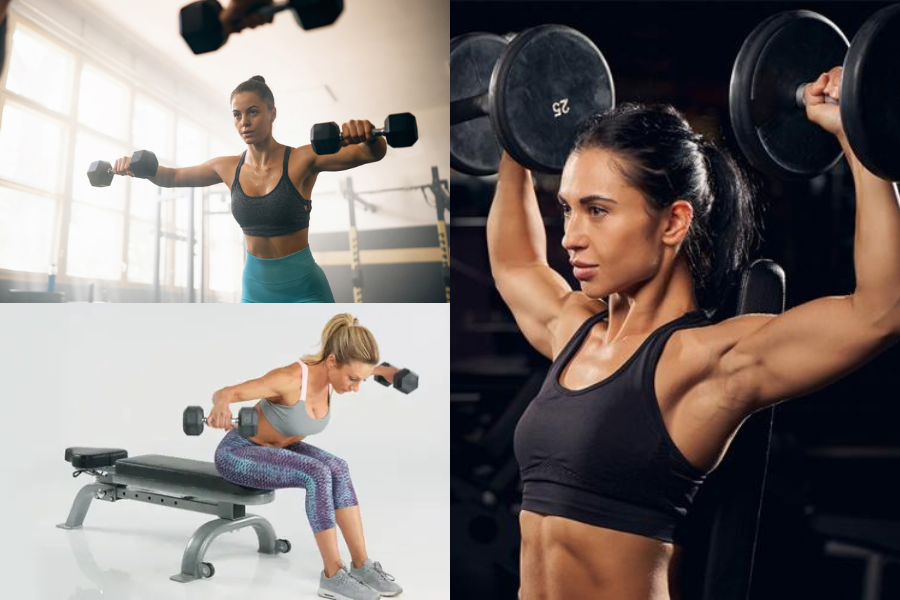
The Ultimate Shoulder Workout for Female Muscle Definition
A focused shoulder workout for female strength and definition can change how your entire upper body looks and feels in a surprisingly short time. Because your deltoid muscles are relatively small, they respond quickly to smart training, which means you can start to see more shape, better posture, and stronger lifts in just a few consistent weeks.
This guide walks you through why shoulder training matters, how often to train, beginner and advanced workouts, and simple form tips that keep your joints happy.
Understand your shoulder muscles
When you know which muscles you are training, it is easier to choose exercises and feel them working.
The three heads of the deltoid
Your main shoulder muscle, the deltoid, has three distinct heads that shape your upper arm:
- Anterior deltoid, the front, used in front raises and most pressing movements
- Lateral deltoid, the side, key for shoulder width and targeted by lateral raises
- Posterior deltoid, the rear, trained with rear delt flyes and face pulls
A complete shoulder workout for female muscle definition should include at least one exercise for each of these heads. Lateral raises are especially important for that rounded, wide shoulder look, while rear delt work helps balance your posture and protect the joint.
The rotator cuff and supporting muscles
Underneath your delts, four small rotator cuff muscles help stabilize your shoulder joint. They are heavily involved in overhead presses, throwing motions, and reaching overhead. Strengthening them with light resistance, like bands or small dumbbells, can lower your risk of pain or injury during heavier training, as orthopedic experts from Banner Health explain regarding repetitive overhead movement and shoulder problems.
Other supportive muscles, such as your trapezius and rhomboids, also contribute to upper back strength and overall shoulder stability. When you include pulling exercises like face pulls and band pull aparts, you create a more resilient shoulder girdle instead of just chasing definition in the mirror.
Benefits of shoulder training for women
You might start a shoulder workout for female aesthetics, but the benefits go well beyond a sculpted look.
Better posture and less neck pain
Many women spend long hours hunched over laptops or phones. Strong shoulders help pull your chest open and bring your head back over your spine. According to strength coaches at Results Fitness Alexandria, focused shoulder work can reduce neck and upper back discomfort by supporting healthier posture and alignment.
Over time, this can make everything from yoga poses to long workdays feel less taxing on your body.
Everyday strength that actually helps
Strong shoulders show up in daily life. Carrying groceries, lifting a toddler, sliding a suitcase into an overhead bin, or pushing a heavy door all become easier when you build shoulder and upper body strength.
Upper body resistance training also supports stronger bones and reduces injury risk as you age, and this is one reason many trainers recommend a few sessions per week of upper body strength work for women.
Toned, not “too bulky”
A common worry is that shoulder training will make you look overly muscular. In reality, this is very unlikely. Due to lower testosterone levels, most women build a more balanced, athletic look rather than a bulky one, even when they lift heavy weights.
Results Fitness Alexandria notes that shoulder workouts for women tend to enhance definition and symmetry. You see more outline where the shoulder meets the arm, and your waist and hips can even look more proportionate as your upper body becomes stronger.
How often to train your shoulders
Training frequency is about finding the sweet spot between enough work to stimulate growth and enough rest so your muscles can recover.
Exercise scientists commonly suggest 10 to 20 hard sets per muscle group per week for muscle growth, although it is not fully clear if this applies to each individual head of the shoulder or the group as a whole, as discussed on r/naturalbodybuilding. For most women, a practical guideline is:
- Total weekly sets: 9 to 15 challenging sets for your shoulders
- Frequency: 1 to 2 shoulder-focused sessions per week on nonconsecutive days
If you are a beginner, aim for the low end of that range. As you gain experience, you can gradually increase sets or add more intensity techniques like supersets or drop sets.
Warm up before every shoulder workout
Your shoulder joint is mobile and relatively unstable compared to other joints, so an intentional warm up matters.
Spend 8 to 12 minutes getting blood flowing before you lift. A simple sequence might include:
- 2 to 3 minutes of light cardio, such as brisk walking or easy cycling
- Dynamic shoulder movements, such as arm circles, windmills, and arm swings
- Band work, such as banded external shoulder rotations and band pull aparts
Fitness guides from Gymshark and Results Fitness both emphasize dynamic warm ups with banded shoulder external rotation, arm circles, and face pulls to reduce injury risk and improve range of motion. Keep the weight light here. The goal is activation, not fatigue.
After your workout, a few minutes of gentle stretching and optional foam rolling can help maintain flexibility and ease post workout tightness.
Beginner shoulder workout for female lifters
If you are new to strength training or coming back after a break, start with light weights and simple movements. Focus on smooth control and pain-free range of motion.
Aim to do this routine 1 to 2 times per week, with at least 72 hours of rest between sessions.
Beginner guidelines
- Start with 3 to 5 pound dumbbells or light resistance bands
- Choose a weight that lets you complete your reps with good form, but the last 2 reps feel challenging
- Rest 60 to 90 seconds between sets
Sample beginner workout
- Seated dumbbell shoulder press
- 3 sets of 10 to 12 reps
- Targets: front and side delts
- Sit tall, press the dumbbells overhead without locking your elbows, then lower under control.
- Dumbbell lateral raise
- 3 sets of 10 to 12 reps
- Targets: side delts
- Raise your arms to shoulder height with a soft bend at the elbow and pause briefly before lowering.
- Dumbbell front raise
- 2 to 3 sets of 10 to 12 reps
- Targets: front delts
- Lift one or both arms in front of you to shoulder height, avoid leaning back or swinging.
- Band pull apart
- 3 sets of 12 to 15 reps
- Targets: rear delts and upper back
- Hold a light band at chest height and pull it apart, squeezing your shoulder blades together.
- External rotation with band or light dumbbell
- 2 sets of 12 to 15 reps each arm
- Targets: rotator cuff
- Keep your elbow at your side at 90 degrees, rotate your forearm outward, then slowly return.
If any movement causes sharp or pinching pain, stop and adjust your range of motion or substitute a similar exercise. Mild muscular burning is normal, joint pain is not.
Intermediate and advanced shoulder workout
Once you can complete the beginner workout comfortably and your form feels natural, you can progress to heavier loads and higher volume. Many experienced women lifters use a mix of compound and isolation movements to maximize development in all three deltoid heads.
Gymshark recommends working primarily in the 8 to 12 rep range at about 70 to 80 percent of your one rep max for muscle growth, with some heavier low rep sets and lighter high rep finishing sets to round out your training.
Programming tips for progress
- Increase weight when you can complete all sets and reps with solid form
- Use 6 to 8 reps for heavier strength focused sets and 10 to 15 reps for lighter pump work
- Try supersets, for example, pairing lateral raises with rear delt flyes
- Rotate exercise variations, for example, barbell vs dumbbell press, every 4 to 6 weeks
Sample high volume workout
This is a demanding routine and suits more advanced trainees. Use it once per week for 4 to 6 weeks, then consider rotating to a slightly lower volume phase.
- Standing barbell or dumbbell overhead press
- 4 sets of 6 to 8 reps
- Focus on a tight core and controlled lowering phase. This is your primary mass builder for front and side delts.
- Arnold press
- 3 sets of 8 to 10 reps
- Starts as a biceps curl and rotates into an overhead press, which challenges multiple shoulder heads and promotes definition in the upper arms, as explained in a 2023 TODAY.com article.
- Dumbbell lateral raise
- 4 sets of 10 to 15 reps
- On the last set, consider a drop set by immediately lowering the weight and continuing to raise to near failure.
- Cable or dumbbell front raise
- 3 sets of 10 to 12 reps
- Slightly lean forward to avoid arching your back and keep tension on the front delts.
- Face pull (cable or band)
- 4 sets of 12 to 15 reps
- Pull toward your upper chest or face with elbows high, focus on your rear delts and mid back. Many experienced lifters highlight face pulls as essential for rear delt development and shoulder health.
- Bent over rear delt flye
- 3 sets of 12 to 15 reps
- Keep a neutral spine, lift out to the side, and pause at the top without shrugging.
- Upright row with barbell or dumbbells
- 3 sets of 8 to 10 reps
- Use a moderate grip and do not pull higher than your lower chest to keep stress off your joints.
- Band or light dumbbell external rotation
- 2 sets of 15 to 20 reps
- A finisher for your rotator cuff to reinforce stability after heavier work.
This full session totals around 40 sets, so pay close attention to your recovery. If your shoulders stay sore for several days or your performance drops, reduce the overall volume or frequency.
Technique tips for safe, effective training
Good form protects your shoulders and directs the work where you want it: into the muscle, not the joint.
Maintain control and alignment
- Avoid swinging the weights or using momentum to complete your reps
- Keep a small bend in your elbows during raises instead of locking them out
- For overhead pressing, keep your ribs down and your core braced
- Only move through ranges of motion that feel smooth and pain free
Dr. Kade McQuivey notes that many common shoulder injuries come from sustained overhead positions and repetitive motions, so using controlled reps and not living in your end range for long periods is critical.
Balance pushing and pulling
If you only perform pressing and front focused movements, you can create muscular imbalances that pull your shoulders forward. Include plenty of rear delt and upper back work like face pulls, band pull aparts, and rear delt flyes so you maintain a neutral, open posture.
Respect rest and recovery
Rest days are part of the plan, not a sign you are slacking. Shoulder muscles and the surrounding tendons need time to repair, especially when you are training hard and using higher volumes.
If you notice lingering discomfort, consider:
- Taking an extra rest day
- Swapping a heavy overhead press for a landmine press, which is more joint friendly
- Focusing on light band work and mobility until the area feels better
If pain persists or worsens, consult a medical professional or physical therapist.
Putting your plan into action
You do not need hours in the gym to build defined, capable shoulders. Start with a short warm up, pick three to five focused exercises, and train them consistently 1 to 2 times per week. As your strength and confidence grow, you can gradually adjust weights, sets, and exercise variations to keep progressing.
Over the next month, pay attention not just to how your shoulders look in the mirror, but also to how you stand, how you move, and how everyday tasks feel. Strong shoulders support more than your workouts. They support your life.
About The Author


