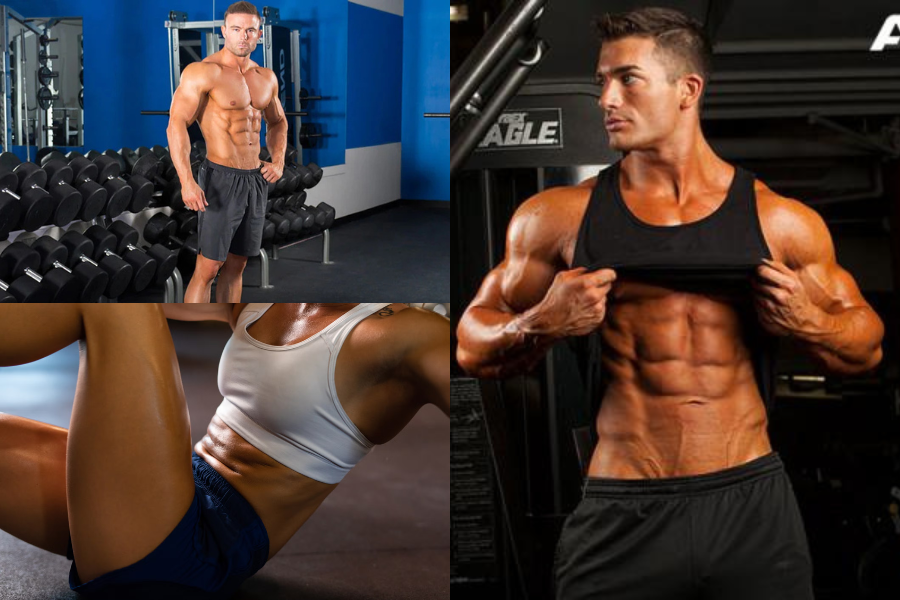
Your Path to Six-Pack Abs Starts with These Exercises
A strong core does much more than help you see definition in the mirror. The best ab exercises help you stand taller, move with more control, and protect your back during daily tasks. If your goal is a visible six-pack, you need a mix of smart training, recovery, and sustainable nutrition, not just endless crunches.
Below, you will find beginner friendly ab moves, progressions, and a realistic plan that shows you how to put the best ab exercises to work for your body and your schedule.
Understand what “best ab exercises” really means
When you look for the best ab exercises, what you really want are movements that train your entire core, not just the visible six-pack muscles.
Your core includes your abdominals, the muscles around your spine, your pelvic floor, and your hips. Strong core muscles support balance, stability, posture, and make almost every physical activity feel easier. Core-strength exercises target your abs, back, and the muscles around your pelvis so that everyday movements like walking, lifting, and twisting feel more controlled and less tiring.
You also have four main abdominal muscle groups that work together to move your torso and support your upper body. You cannot fully separate the “upper abs” from the “lower abs” with specific moves. What you can do is choose exercises that emphasize certain functions, like bending, rotating, or bracing, so your whole core gets stronger over time.
Start with beginner friendly core moves
If you are new to working out or coming back after a break, start with ab exercises that focus on control and stability. These help you build a solid foundation while keeping the risk of sloppy form low.
Five move core routine for beginners
NASM certified trainer Maricris Lapaix designed a simple five exercise routine that is ideal when you want the best ab exercises without complicated equipment. You only need a mat and about 10 to 15 minutes.
The five moves are:
- Dead bug
- Glute bridge
- Bird dog
- Bear plank with knee taps
- Modified side plank
You perform each exercise for 30 to 45 seconds, then rest for 15 seconds before moving to the next. Start with one full round, which takes roughly 7 minutes. Over time, you can build up to four rounds as your core gets stronger and your form improves.
How to do each exercise with good form
You can follow these cues the next time you are on your mat.
Dead bug
Lie on your back with arms straight up over your shoulders and your knees bent to 90 degrees over your hips. Gently pull your belly button toward your spine to brace your core, then slowly lower your right arm and left leg toward the floor. Stop before your lower back arches. Return to the starting position and switch sides. Move slowly and keep your ribs from flaring up.
Glute bridge
Lie on your back with knees bent and feet flat, hip width apart. Press your feet into the floor, squeeze your glutes, and lift your hips until your body forms a straight line from shoulders to knees. Avoid arching through your lower back. Pause at the top, lower with control, and repeat. This strengthens your glutes, hamstrings, and many core muscles at once.
Bird dog
Start on hands and knees with wrists under shoulders and knees under hips. Keep your spine neutral, then extend your right arm forward and left leg back. Imagine balancing a glass of water on your lower back so you do not twist or sag. Hold briefly, then return and switch sides. Research suggests that bird dog exercises effectively target the rectus abdominis and obliques while improving lower back function and reducing back pain, making them a great choice if your back feels sensitive.
Bear plank with knee taps
Begin on hands and knees with hands under shoulders and knees under hips. Brace your abs and lift your knees just a few inches off the floor. From there, slowly tap one knee to the floor at a time, keeping your hips level and your back flat. If your wrists bother you, you can make fists and support your weight on your knuckles instead of your palms.
Modified side plank
Lie on your side with your knees bent and stacked, and your elbow directly under your shoulder. Engage your core and lift your hips until your body forms a straight line from head to knees. Hold for 30 to 45 seconds, then switch sides. This version is easier on your lower back and shoulders while still building strong, stable obliques.
Add classic and advanced ab exercises
Once you are comfortable with the basics, you can fold in more traditional ab exercises that challenge your body in slightly different ways.
Tried and true bodyweight ab exercises
Many of the best ab exercises are classics for a reason. They are simple, effective, and adaptable.
-
Abdominal crunch
Lie on your back with knees bent and feet flat. Cross your arms over your chest or lightly support your head. As you exhale, lift your head, neck, and shoulders, focusing on curling your ribcage toward your pelvis. Aim for sets of 12 to 15 repetitions. The abdominal crunch focuses on the transversus abdominis, one of your deepest abdominal muscles, when you brace correctly. -
Standard plank
Start on forearms and toes, body in a straight line from head to heels. Do not let your hips sag or pike. Planks are fundamental ab exercises that train bracing, which is one of the core’s main jobs. Aim for 4 sets of 30 seconds to 1 minute. -
Side plank
Progress from the modified version to a full side plank on straight legs when you feel ready. Side planks are highly effective isometric exercises that target the obliques and deep core muscles. They help you resist side bending, which can improve posture and support spinal alignment. Holds of 15 to 60 seconds per side work well. -
Leg raises
Lie on your back with legs extended. Place your hands by your sides or under your hips for a bit of support. Keeping your lower back lightly pressed into the mat, lift your legs toward the ceiling, then lower them slowly. Leg raises emphasize your lower abs and hip flexors and can improve control for movements like running and jumping.
High impact ab moves that research supports
Some exercises recruit your abs more intensely by combining spinal movement and rotation.
-
Bicycle crunches
The American Council on Exercise ranks bicycle crunches as one of the best ab exercises for engaging the obliques and the transverse abdominis, with no equipment needed. Lying on your back, lift your shoulders, bring one knee toward your chest, and twist your opposite elbow toward that knee while extending the other leg. Move slowly and focus on the twist rather than speed. -
Mountain climbers
From a plank position, drive one knee toward your chest, then switch legs. For toning and strengthening your abs at home, WebMD recommends 15 to 20 reps per side for beginners. Keep your hips low and your shoulders stacked over your wrists. -
Lying leg raises and variations
WebMD suggests lying leg raises for 10 to 15 repetitions as part of a home ab routine. Over time, you can progress to incline or hanging leg raises. A slower tempo, such as 3 seconds lowering, 1 second pause, then 2 seconds up, makes each rep much more challenging.
Use weights to build stronger, more defined abs
If you want visible definition and more powerful core muscles, eventually you need to add resistance. Just like any other muscle group, your abs respond well to progressive overload.
Weighted core exercises such as Russian twists, cable woodchoppers, and cable crunches allow you to gradually increase resistance for more strength and muscle growth. These moves are especially helpful if you play sports that involve twisting, since they build rotational strength and power.
Some examples you can include in your gym sessions are:
-
Cable crunch
Kneel in front of a cable machine with a rope attachment. Grip the rope by your ears, brace your core, and curl your torso down toward your thighs. Focus on flexing your spine with control instead of pulling with your arms. -
Cable woodchopper
Stand sideways to a cable machine with the handle set high. With arms mostly straight, pull the handle down and across your body toward the opposite hip, rotating through your torso. This builds rotational power and challenges your obliques. -
Weighted situp with overhead reach
Hold a light dumbbell at your chest as you sit up, then reach it overhead at the top. Lower with control. This variation adds load and teaches you to brace while moving your arms.
For real core strength and definition, a guide from Gymshark recommends choosing three core exercises that include both flexion and rotational movements, performing 10 to 15 reps for 3 sets, three times per week, and then increasing resistance over time as you get stronger.
Train your abs safely and allow rest
It is tempting to hit your abs every day, especially when you feel motivated. Your muscles, however, need time to recover so they can grow and get stronger.
At least 24 hours between full ab workouts is a good rule of thumb. Rest days help prevent overuse injuries and can keep your lower back and hips from feeling cranky. On days off, gentle stretching or yoga can ease soreness and help you stay consistent without overdoing it.
Overtraining can also raise cortisol levels, which may be linked to belly fat accumulation. That is one reason it is smart to start new routines gradually, particularly if you are adding high intensity interval training to help control weight and burn fat. HIIT mixes short bursts of effort with rest periods and can be an efficient way to improve your conditioning at most fitness levels.
Know why ab exercises alone are not enough for a six pack
Even if you follow all the best ab exercises perfectly, you will not see a six pack if your abs are covered by a layer of body fat. Targeted abdominal exercises cannot spot reduce belly fat. When you exercise, your body uses fat from all over, not just from your midsection.
To reveal ab muscles, you need a combination of:
- A sustainable, healthy diet
- Enough protein to support muscle
- Strength training for your whole body
- Regular cardio or other movement you enjoy
- Quality sleep and stress management
Research suggests that visible abs typically appear when body fat drops to about 6 to 13 percent for many men and about 14 to 20 percent for many women. That is a general guideline, not a rule, and genetics play a role in where you store and lose fat.
Diet remains the most important factor for core definition. Even with a perfect workout plan, you will not see sharp lines if nutrition, recovery, and overall activity levels are not in a good place for fat loss.
Put it all together into a simple weekly plan
You can use this sample structure as a starting point, then adjust based on how your body feels.
Aim for 2 to 3 focused ab sessions per week, plus regular full body strength training and cardio that you actually enjoy.
Example week
- Day 1: Beginner 5 move core routine, 1 to 2 rounds
- Day 2: Cardio or HIIT, plus light stretching
- Day 3: Full body strength training, finish with side planks and leg raises
- Day 4: Rest or walking and mobility work
- Day 5: Weighted core session, for example cable crunches, Russian twists, and mountain climbers, 3 sets each
- Day 6: Moderate cardio, like cycling, brisk walking, or swimming
- Day 7: Rest
As you get stronger, add seconds to your holds, reps to your sets, or a bit of weight to your exercises. This steady progression keeps your core challenged without burning you out.
Start with the beginner friendly moves, practice them until they feel natural, and then layer in more advanced and weighted options. Over time, your core will support you in everything you do, from daily chores to intense workouts, and your path to six pack abs will feel more like a series of practical steps than a distant goal.
About The Author


