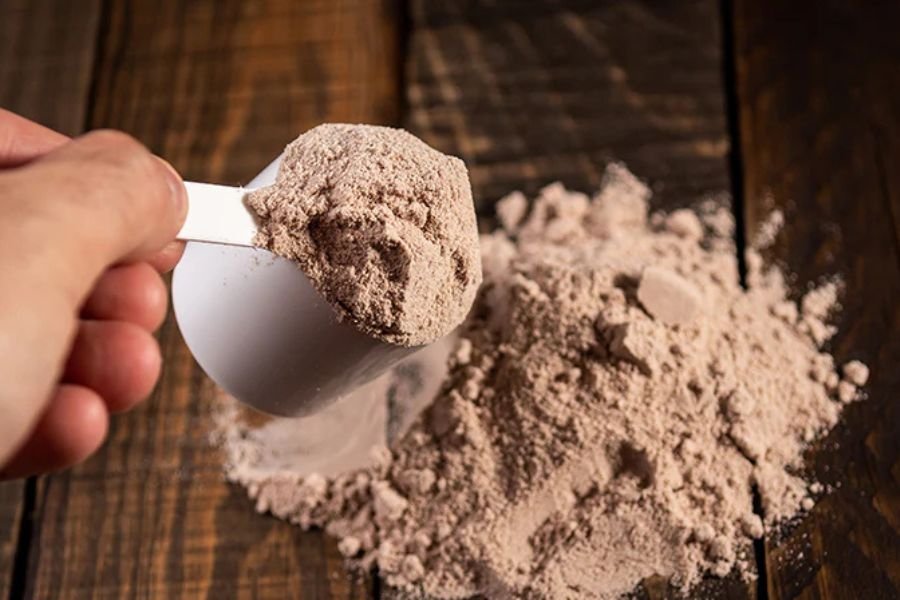
Whey Protein Powder Side Effects and Safety
A scoop of whey protein powder can seem like the easiest way to support your workouts or fill protein gaps in your diet. At the same time, you might worry about less-talked-about issues like bloating, acne, or long-term kidney strain. Understanding possible whey protein powder side effects helps you use it safely, or decide whether you want to use it at all.
Below, you will learn what the research actually says about whey protein safety, which side effects to watch for, and practical ways to protect your health if you choose to supplement.
What whey protein is and how you typically use it
Whey is the liquid that separates from milk during cheese making. When that liquid is processed and dried, it becomes whey protein powder. You usually see it in three forms:
- Whey concentrate
- Whey isolate
- Hydrolyzed whey
Most people mix whey protein powder with water or milk as a shake, add it to smoothies, or stir it into recipes like oatmeal or pancakes. It is popular because it digests quickly and contains all nine essential amino acids your body needs for muscle repair and recovery.
Health organizations point out that most people already meet their protein needs through food, so you are not required to take whey to be healthy. The Cleveland Clinic notes that whey protein is generally safe for most people except those with a dairy allergy and that having more than 20 to 40 grams at one time is not useful because your body cannot use more than that in a single sitting (Cleveland Clinic).
Common digestive side effects
Digestive problems are the side effects you are most likely to notice first. These can range from mildly annoying to disruptive enough that you want to stop using whey entirely.
Bloating, gas, and stomach cramps
You might feel gassy, bloated, or crampy after drinking a whey protein shake. Lactose, the natural sugar in milk, is a major reason this happens. Many people do not digest lactose well and up to 65 percent of the global population has some degree of lactose intolerance (Healthline).
If your body struggles to break down lactose, it can ferment in your gut and trigger:
- Gas
- Bloating
- Cramping
- Loose stools or diarrhea
Everyday Health reports that whey protein powders often cause constipation, diarrhea, or nausea for this reason (Everyday Health).
Constipation and low fiber intake
Whey protein powder side effects are not always about “too much movement.” Constipation is common as well. Healthline notes that constipation can happen when whey shakes push high fiber foods like fruits and vegetables off your plate, gradually lowering your fiber intake (Healthline).
Johns Hopkins Medicine and Harvard Health Publishing, summarized by Everyday Health, also highlight that a high protein, low fiber pattern can easily lead to digestive discomfort and constipation (Everyday Health).
Role of sweeteners and additives
Your reaction might not be to whey itself but to what is mixed in. Many powders contain:
- Sugar alcohols
- Stevia
- Luo han guo (monk fruit)
- Other artificial sweeteners or flavorings
Cleveland Clinic and Harvard Health Publishing note that these ingredients can trigger gas, bloating, and diarrhea in some people (Everyday Health). Additives and fillers can also irritate your digestive system and make symptoms worse.
How to ease digestive issues
If you want to keep using whey while minimizing stomach trouble, you can:
- Choose a whey isolate instead of concentrate because isolate contains less lactose and is often easier to digest for people with mild lactose intolerance (Everyday Health).
- Start with half a serving and increase slowly so you can see how your body responds.
- Check the label for sugar alcohols and unnecessary additives and try a simpler formula if you suspect they are a problem.
- Make sure your overall diet still includes plenty of high fiber foods, such as vegetables, fruits, legumes, nuts, and whole grains.
If you continue to have constipation, diarrhea, or pain, it is important to talk with your doctor rather than just pushing through.
Allergies and who should avoid whey entirely
Some side effects are not just uncomfortable, they can be dangerous. That is the case if you are allergic to milk.
Cow’s milk allergy vs lactose intolerance
Cow’s milk allergy and lactose intolerance are not the same thing. Lactose intolerance is about difficulty digesting lactose. A milk allergy is an immune reaction to proteins in milk, including whey. People with a cow’s milk allergy can experience symptoms such as:
- Hives or rash
- Swelling of the lips, tongue, or throat
- Wheezing or trouble breathing
- Vomiting
- Anaphylaxis, which is a severe reaction that can be life threatening
Healthline reports that people with cow’s milk allergy, which affects 2 to 3 percent of children under age 3, should avoid whey protein completely because it can trigger severe allergic reactions including anaphylaxis (Healthline). WebMD also notes cases where milk-allergic children had anaphylaxis after foods containing traces of whey (WebMD).
If you have any history of milk allergy, even if it seems mild, you should not use whey protein supplements unless your allergist or physician explicitly says it is safe for you.
When to seek immediate help
You should seek emergency medical care if you ever develop:
- Difficulty breathing
- Swelling of your mouth, tongue, or throat
- Dizziness or feeling like you might faint
- A fast spreading rash after using whey
These are signs of a possible severe allergic reaction and they require urgent treatment.
Kidney and liver concerns
A common worry is that whey protein will damage your kidneys or liver. The research is more nuanced than many myths suggest.
Effects in healthy people
Healthline notes that current evidence does not conclusively show that high protein intake from whey damages kidneys in healthy people, or that it directly causes liver damage in otherwise healthy individuals (Healthline). Some studies even find neutral or beneficial effects in specific conditions.
However, “no proven harm” is not the same as “no limit.” The Cleveland Clinic emphasizes that most people already get enough protein from food, and that taking large amounts of whey does not provide extra performance benefits (Cleveland Clinic). When you go far beyond your needs, your kidneys and liver still have to process the extra waste products from protein metabolism.
Higher risk if you have kidney disease
If you already have chronic kidney disease (CKD), your kidneys are more vulnerable. The American Kidney Fund explains that excessive protein intake from supplements like whey can lead to kidney damage or a faster decline in kidney function in people with CKD stages 3 to 5 who are not on dialysis (American Kidney Fund).
They also note that:
- Extra protein can increase kidney workload and raise waste products in your blood.
- Some powders contain added phosphorus, potassium, or sodium, which can be harmful for kidney health.
Because of this, they recommend that anyone with kidney disease or at high risk talk with a registered dietitian nutritionist or nephrologist before using protein supplements (American Kidney Fund).
What about your liver?
In healthy people, there is no strong evidence that whey protein causes liver damage (Healthline). However, if you already have liver disease, very high protein intake may increase blood ammonia levels and harm brain function, so experts recommend medical guidance before you add whey.
Research up to early 2024 has linked whey supplementation to elevations in liver enzymes and oxidative stress markers in some sedentary individuals and people with preexisting liver conditions, even while other studies show potential benefits in nonalcoholic steatohepatitis (PMC – NIH). That mixed picture is another reason to involve your healthcare team if your liver is already under strain.
Skin, mood, and gut microbiome effects
Beyond your stomach, kidneys, and liver, whey protein powder side effects can show up in less obvious ways.
Acne and skin changes
Several human studies have found a consistent increase in acne severity and lesion development among people using whey protein supplements, especially male bodybuilders and adolescents. When participants stopped taking whey, their acne often improved, which suggests a strong link between whey intake and acne flare ups (PMC – NIH).
If your skin breaks out more after you start using whey, you might want to:
- Track your intake and your acne patterns.
- Try lowering your dose or pausing whey for a few weeks to see if your skin improves.
- Consider switching to a different protein source, such as pea or soy, if you suspect whey is a trigger.
Mood and behavior
Some research has explored how whey protein might influence mood. A review noted that:
- Very high protein intakes in male bodybuilders were associated with increased expressions of anger.
- At the same time, alpha lactalbumin, a component of whey, has been linked to anxiolytic and mood improving effects in some contexts (PMC – NIH).
This means the impact on your mood can vary depending on the dose, your overall diet, and your personal biology. If you notice significant mood swings, irritability, or changes in your emotional state after starting a whey supplement, it is worth bringing up with your doctor or a mental health professional.
Changes in your gut microbiota
Your gut is home to trillions of bacteria. Some studies show that whey protein supplementation can shift this microbial community in different directions:
- In some cases, there is an increase in potentially harmful bacteria such as certain Bacteroidetes species.
- Other studies report higher levels of beneficial bacteria like Bifidobacterium and Lactobacillus and greater production of short chain fatty acids, which support gut health (PMC – NIH).
Because the results are mixed and context dependent, there is no single answer about whether whey is “good” or “bad” for your microbiome. If you want to support gut health while using whey, you can focus on a diet rich in plant fibers, fermented foods, and a variety of whole foods rather than relying on protein powder alone.
Contaminants and supplement quality
Another layer of safety has nothing to do with whey itself and everything to do with what else is in your tub of powder.
Harvard Health Publishing reports that protein powders often contain added sugars, excess calories, and potentially toxic chemicals (Harvard Health Publishing). Testing by the Clean Label Project found that many protein powders contained:
- Heavy metals such as lead, arsenic, cadmium, and mercury
- Bisphenol A (BPA) from plastic containers
- Pesticides
One product even had BPA levels 25 times higher than what is normally allowed (Harvard Health Publishing). Contaminants can come from manufacturing equipment or from toxins in the soil that are absorbed by plants used in plant based powders.
Because of these concerns, registered dietitian Kathy McManus advises against using protein powders, including whey, except in rare cases and only under medical supervision. She also recommends meeting daily protein needs through whole foods like nuts, seeds, dairy, legumes, fish, poultry, eggs, and lean meats whenever possible (Harvard Health Publishing).
If you decide to supplement, you can reduce risk by choosing brands that:
- Use third party testing and share certificates of analysis.
- Keep ingredient lists short and avoid unnecessary additives.
- Disclose amounts of minerals such as phosphorus and potassium, especially if you have kidney concerns.
If a label is vague, overly complicated, or makes big promises without clear testing information, it is a good sign to look for a different product.
Medication interactions and special situations
You also need to consider how whey protein might interact with medications or existing conditions.
WebMD notes that whey protein can interact moderately with several drugs, including:
- Levodopa, a medication for Parkinson’s disease. Whey can reduce levodopa absorption and potentially decrease its effectiveness.
- Quinolone and tetracycline antibiotics. Whey can interfere with how well these antibiotics are absorbed.
- Bisphosphonates, used for osteoporosis. Taking them with whey at the same time can reduce absorption (WebMD).
To lower your risk, you can:
- Avoid taking whey protein at the exact same time as these medications.
- Separate your shake and medication doses by several hours, based on your doctor’s guidance.
- Always let your healthcare team know about any supplements you are using regularly.
The Cleveland Clinic also points out that whey supplements may be harmful for people with certain health conditions or allergies, so it is wise to speak with your physician before starting a new whey product, especially if you have chronic disease or take daily medications (Cleveland Clinic).
How to use whey more safely, or decide against it
If you choose to use whey protein, you can do so more safely by focusing on:
- Dose. Stay within about 20 to 40 grams at a time as recommended by Cleveland Clinic, and avoid stacking multiple large servings each day unless your healthcare provider advises it.
- Purpose. Use whey to fill specific protein gaps, not as a complete replacement for balanced meals.
- Quality. Prioritize tested, reputable brands and simple formulas with minimal sweeteners and additives.
- Your body’s feedback. Pay attention to digestion, skin, mood, and energy. Side effects are your body’s way of asking for a change.
If you prefer to skip whey entirely, you can still meet your protein needs through regular food. Harvard Health Publishing highlights options such as nuts, seeds, dairy, legumes, fish, poultry, eggs, and lean meat as reliable ways to hit about 46 grams of protein per day for most women and 56 grams per day for most men (Harvard Health Publishing).
When to talk with a professional
You should consider getting personalized advice if you:
- Have kidney or liver disease, diabetes, or heart disease.
- Take prescription medications that may interact with whey.
- Notice ongoing digestive issues, acne, mood changes, or fatigue after starting a protein powder.
- Are pregnant, breastfeeding, or planning pregnancy and thinking about supplements.
A registered dietitian or your physician can help you decide whether whey protein fits your health picture, which dose is appropriate, and when it might be better to choose another approach.
By understanding potential whey protein powder side effects and how they relate to your body, you can make clearer decisions about if, when, and how to use these supplements.
About The Author


