How High Intensity Rowing Workouts Transform Your Health
If you have ever scrolled through a workout app wondering which cardio routine delivers the best results, high intensity rowing workouts might surprise you. Rowing is often overlooked for treadmills or stationary bikes, but it offers a powerful combination of muscle-building resistance and heart-pumping cardio. By using your entire body—from legs and core to back and arms—rowing challenges you in a balanced, efficient way. Plus, it remains low-impact, meaning you can work up a sweat without jarring your joints or feet.
When you approach the rowing machine with the goal of high intensity bursts, you’ll elevate your heart rate faster than many other exercises. This boost not only helps you burn calories and shed weight, but also supports a range of health benefits like improved cardiovascular endurance, increased muscle tone, and better overall stamina. Whether you’re completely new to rowing or want to break out of a fitness plateau, embracing a high intensity rowing session can truly transform your health.
Experience full-body benefits
One of the biggest strengths of a rowing workout is its capacity to engage multiple muscle groups at once. Unlike many other forms of cardio that focus on one area—such as running targeting your legs—rowing calls on nearly every major group in your body. You’ll press with your legs, stabilize with your core, and pull with your arms and back, all in a single fluid motion. This full-body engagement means that even shorter, intense sessions can produce noticeable results.
By increasing the resistance levels on a rowing machine, you’re adding an element of strength training. Pushing firm against the footplates during every stroke engages your quads, calves, and glutes. Meanwhile, pulling the handle toward your chest involves your lats, shoulders, and biceps. It’s a movement that requires balance and coordination, encouraging you to focus on proper form so each rep counts. With consistency, you’ll start seeing toned muscles and enhanced endurance within a matter of weeks.
A secondary benefit is the low-impact nature of rowing. Because your feet stay in contact with the footrests, you avoid the joint stress you might experience while running or jumping. This makes rowing an attractive option if you have concerns about knee or ankle discomfort. High intensity rowing workouts let you push your limits without constant pounding on your lower body. Instead, you get a smooth, rhythmic motion that is easier on your joints but still provides a challenge.
Master your rowing technique
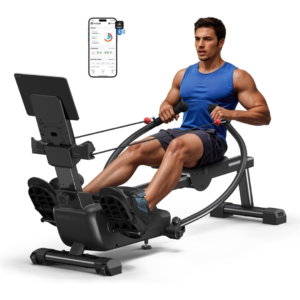
Even the most motivated rower can lose efficiency by overlooking proper form. If you’re investing time in high intensity rowing, take a moment to check the essential technique points that protect your body and maximize your performance:
- Start position: Sit tall with your back straight and core engaged. Your knees should be bent, and your arms should be fully extended ahead of you holding the handle.
- The drive: Push through your legs first, then lean back slightly, and finally pull with your arms. Visualize a fluid chain reaction where legs, core, and arms move in sequence.
- The recovery: Reverse the order, extending your arms first, hinging your torso forward, and then bending your knees to return to the start.
Gaining confidence in your form makes each stroke more effective, and it also reduces the likelihood of straining your lower back or shoulders. If you can, set up in front of a mirror or ask a friend to record your stroke. Making small tweaks based on visual feedback can dramatically improve how you feel during lengthy or intense intervals.
Another tip is to maintain a strong core throughout the entire movement. While your legs and arms may be doing most of the obvious work, your core is the stabilizer that links the power of your lower body to the pull of your upper body. When you keep your abs engaged, you help maintain proper posture and efficiently transfer energy into each stroke. Over time, this focus on technique can lead to quicker gains in strength and endurance.
Rev up intensity with intervals
Once you have a good handle on your form, adding short, intense bursts to your rowing routine is a direct way to ramp up calorie burn and cardiorespiratory fitness. High intensity intervals involve pushing as hard as you can for a short period, followed by lighter recovery strokes, and then repeating. This method intentionally spikes your heart rate, which promotes better stamina, fat burning, and metabolic health.
Begin by warming up at a moderate pace for five to ten minutes. Then, row as hard as you can for 20 to 30 seconds. Reduce the effort and row lightly for 60 seconds before you repeat the cycle. You can experiment with different intervals—some people prefer longer intense sets, like a full minute of hard rowing, paired with two minutes of gentle recovery. The key is determining the balance between challenge and recovery that fits your current level.
These explosive intervals can also bring a fun challenge to your workout. Instead of settling into a steady rhythm, you’re periodically pushing your limits and testing your willpower. As you adapt, you can gradually increase the duration or the difficulty of those intense bursts. Over time, you’ll notice improved cardiovascular performance and a quicker heart-rate recovery, strong indicators that your overall fitness is climbing to new levels.
Customize your training plan
When it comes to high intensity rowing workouts, there isn’t a one-size-fits-all formula. Your ideal plan might differ from someone else’s, depending on your experience level, available time, and fitness goals. One person might prefer a quick 20-minute interval session three times a week. Another might program 45-minute workouts to focus on endurance and technique. The point is to adapt your schedule so it feels both challenging and sustainable.
If weight loss is at the top of your priorities, you may benefit from pairing rowing with a balanced diet and including some strength training off the machine. Doing so ensures that you preserve lean muscle mass while shedding fat. On the other hand, if you’re targeting cardiovascular improvements, you might include two or three interval-focused rowing workouts a week and then add moderate, steady-state sessions to strengthen your aerobic base.
It’s also wise to progressively increase your workload. If you jump straight into daily rowing at peak intensity, you risk burnout or injury. Instead, begin with a couple of intense sessions per week, interspersed with lighter recovery or cross-training days. Listen to your body’s signals—are you feeling extreme fatigue or persistent muscle soreness? Dial back and rest or perform a gentle activity like stretching or foam rolling. This approach helps you build a regimen you can maintain in the long run.
Keep track of your progress
Tracking your progress is a huge motivator and can help you see the benefits of high intensity rowing workouts. Many rowing machines have performance monitors that display metrics like split times, distance, and calories burned. Watching these numbers improve is an exciting way to gauge how far you have come, and it can encourage you to push a bit harder next time.
Creating mini goals can add purpose to each workout. For instance, you might aim to complete each 500-meter interval one second faster than the last session. Or you might challenge yourself to row a certain distance in 15 minutes. Every time you break your own record, you see tangible evidence of your growing fitness level and dedication.
If numbers don’t hold your attention, look for other measurement ideas. Maybe you track how you feel after a workout, noticing a gradual increase in energy or endurance. Some rowers even keep a short fitness journal. You can jot down which intervals you completed, how intense they felt, and how your body responded the next day. Over time, these details build a personal road map to better health, reminding you of the small victories that define real progress.
Final thoughts
High intensity rowing workouts can be your secret weapon for achieving powerful fitness gains and better overall health. By engaging every major muscle group, you amplify calorie burn and develop lean, functional strength. When you weave in short bursts of maximum effort, you elevate your cardiovascular conditioning and speed up improvements in stamina. Paying attention to technique, pacing your progress, and steadily challenging yourself are all part of the journey.
Remember that consistency matters more than perfection. On days when motivation wanes, remind yourself of the many benefits you’ve already experienced—from feeling more energetic to noticing visible changes in muscle tone. Each session you complete is an investment in your well-being. Embrace the rhythmic, full-body motion of rowing, and confidently enjoy the results that come from adding a high-intensity twist to your routine.
About The Author