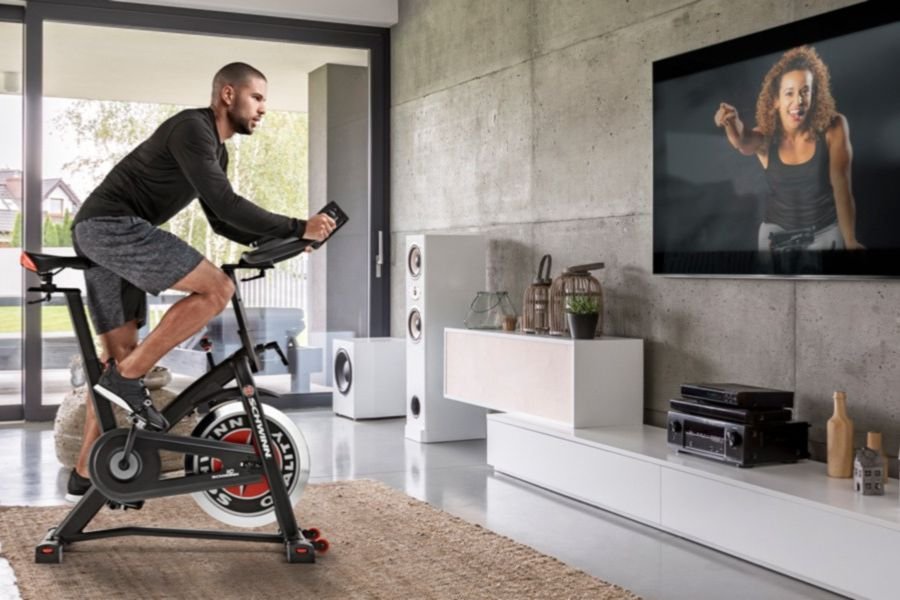
Boost Your Health with Interval Training on Exercise Bike
Interval training on an exercise bike is one of the most efficient ways to improve your health, boost fitness, and support weight loss without spending hours at the gym. By alternating short bursts of harder effort with easier recovery periods, you teach your body to work smarter, not just harder.
You can use interval training whether you want to lose fat, build endurance for outdoor rides, or simply feel stronger in everyday life. You also get the big advantage of precise control: resistance, speed, and time are easy to track and adjust on a stationary bike.
Understand what interval training is
Interval training, often called high intensity interval training (HIIT), means you cycle hard for a short period, then recover at an easier pace, and repeat. On an exercise bike, that might look like 1 minute of fast, high resistance pedaling followed by 2 minutes of gentle spinning.
Researchers describe HIIT on bikes as repeated short bursts at very high effort, often above 75 percent of your maximum power or at least 90 percent of your maximal oxygen uptake, with low intensity or rest in between (NCBI). In simpler terms, you push close to your personal limit for a bit, then back off and catch your breath.
You can also use more moderate intervals if you are a beginner or coming back from a break. The structure stays the same, you just adjust how hard the “hard” parts feel to you.
Compare intervals to steady cycling
If you are used to riding at a steady pace for 40 to 60 minutes, you already know what moderate intensity feels like. One gym rider, for example, started with continuous cycling at a moderate resistance of about 10 to 12 out of 20, with heart rate around 160 beats per minute (Reddit Fitness). This is classic steady state cardio.
When the same person switched to interval training on the exercise bike, they kept the overall workout length similar but changed the structure. They rode 2 to 3 minutes at moderate resistance, then 1 minute at higher resistance and speed, around 14 to 15 out of 20. During those high intensity bursts, their heart rate climbed above 170 beats per minute (Reddit Fitness).
Both styles work your heart and lungs, but in different ways. Steady state feels more constant and often easier to sustain mentally. Intervals feel tougher in the moment, yet they can take less time over the week and deliver similar or greater fitness benefits (NCBI).
Know why intervals are so effective
Interval training on an exercise bike benefits both your health and fitness in several powerful ways.
Short, intense sessions can improve:
- Cardiovascular fitness and VO2 max
- Endurance and muscular power
- Insulin sensitivity and fat burning
- Overall time efficiency of your workouts
Studies on sprint interval training, which is an extreme form of HIIT using all out 30 second efforts, have shown big gains in skeletal muscle oxidative capacity, endurance, insulin sensitivity, and resting fat oxidation, along with reductions in fat mass, even in people with overweight (NCBI).
In one comparison, sprint intervals and moderate intensity continuous cycling delivered similar improvements in muscle capacity and time trial performance, even though the sprint group did about 90 percent less total training volume (NCBI). In other words, you can get a lot of benefit from a surprisingly small amount of hard work if you structure it well.
Interval workouts have also been linked with improved endurance in just two weeks (Bicycling). That is helpful if you want to feel progress quickly and stay motivated.
Use intervals for weight loss
If weight loss is one of your goals, interval training on an exercise bike can support you in two main ways: by increasing the calories you burn and by improving your fitness so you can move more overall.
High intensity intervals are especially good at creating an “afterburn” effect. Your body keeps using extra oxygen and energy for a while after you finish, which means additional calories burned beyond what you see during the workout itself (Carolbike).
One commercial bike program that uses a Reduced Exertion HIIT (REHIT) protocol has riders do a 5 minute session that includes just two 20 second sprints. This very short format has been shown to trigger strong metabolic adaptations and, in a 15 minute version, burned an average of 281 calories during and after the workout (Carolbike).
A 12 week HIIT cycling program, done three times per week with 10 intervals of 45 seconds at 80 to 85 percent of maximal heart rate, plus 90 seconds of active recovery, also led to reductions in body weight and fat mass in men with overweight or obesity (PubMed).
You do not need to copy any one protocol exactly. The takeaway is that structured hard efforts, balanced with rest, can help you burn fat efficiently as long as you also maintain an overall calorie deficit through diet and daily movement.
Start interval training safely
If you have not done much intense cardio recently, it is smart to ease into interval training on your exercise bike.
Begin with a base of comfortable steady cycling at a pace where you can still talk in short sentences. Experts recommend using longer, easier intervals at first and gradually making them more challenging before you start adding harder anaerobic efforts (Shimano).
Pay attention to:
- How your breathing feels
- How quickly your heart rate comes down during recovery
- Any unusual pain or dizziness
Consistency and self awareness are key. You want to compete with your own progress, not with the person on the bike next to you. Over time, your legs and lungs will adapt, and what feels hard today will feel manageable later (Shimano).
If you have any heart, lung, or metabolic conditions or you are older and new to high intensity workouts, talk with your healthcare provider first. The good news is that a five year study in older adults who did twice weekly HIIT cycling found that this style of training was safe and showed the lowest mortality rates compared to moderate intensity or general activity guidance (NCBI).
Try beginner friendly interval workouts
You can build a simple interval routine that suits your current fitness level. Below is a sample progression you can adjust based on how you feel.
Aim to do 5 minutes of easy pedaling to warm up and 3 to 5 minutes of easy pedaling to cool down after every session.
Level 1: Gentle introduction
Use this if you are new to intervals or returning after a break.
- 1 minute at a slightly faster pace or slightly higher resistance, you should feel like you are working but still in control
- 2 minutes very easy pedaling to recover
Repeat this 6 to 8 times for a total of 18 to 24 minutes of intervals. Add this twice per week around your regular easier rides.
Level 2: Moderate intervals
Once level 1 feels comfortable, you can increase either intensity or the number of rounds.
- 2 minutes at moderate to hard effort, talking is possible but broken into short phrases
- 2 minutes easy pedaling
Repeat 6 to 8 times. This structure is close to what many recreational riders use to build fitness and can also be helpful if you are preparing for hilly outdoor rides.
Level 3: Short power bursts
When you feel ready for a bigger challenge and your base is solid, you can try short, sharper efforts.
- 30 seconds hard, around 8 or 9 out of 10 effort
- 90 seconds easy
Repeat 8 to 10 times. Short micro intervals of 20 to 30 seconds have been shown to increase VO2 max, burn fat, and improve endurance quickly (Bicycling).
As your confidence grows, you can explore specific styles like “Flying 40s” for muscular endurance or 10 second speed intervals for smoother pedaling technique (Bicycling).
Balance intervals with steady riding
While intervals are powerful, you do not want every ride to be all out. Most experts recommend a mix of lower intensity and high intensity work. One popular guideline suggests that about 80 percent of your training time should be below your threshold and about 20 percent can be harder efforts (Shimano).
For example, your week might look like:
- 2 to 3 easy to moderate steady rides of 30 to 45 minutes
- 2 interval sessions that last 20 to 30 minutes including warm up and cool down
This combination helps you build a strong aerobic base while still getting the health and fitness boost of intervals. It also protects you from overtraining, burnout, and overuse injuries.
A well rounded schedule that hits different energy systems, including both aerobic and anaerobic work, prepares you for everyday tasks and for specific goals like longer rides or climbing hills (Shimano).
Adjust as you get fitter
As your fitness improves, you will probably notice:
- Your heart rate does not spike as quickly
- You recover faster between intervals
- Your legs feel less heavy after hard sessions
At that point, you can gently progress your interval training on the exercise bike by changing just one variable at a time:
- Increase resistance during work intervals
- Add one or two extra intervals to a session
- Shorten recovery periods slightly
- Add one extra interval day every few weeks if you are recovering well
For instance, one rider using a recumbent bike for rehab gradually increased the resistance from level 5 to level 10 over time while maintaining around 50 minutes of interval work twice per week as they built toward longer, hillier outdoor rides (Reddit).
Listen to your body as you make changes. It is better to progress slowly and stay consistent than to jump too quickly and need to back off due to fatigue.
Put it all together
Interval training on an exercise bike gives you a practical, controlled way to:
- Burn calories efficiently and support weight loss
- Improve heart health and endurance
- Build leg strength and power
- Get noticeable results in less time
You do not need complicated plans to get started. Begin with a short warm up, add a few rounds of slightly harder efforts with easy spinning in between, and cool down. As you feel more confident, you can experiment with different interval lengths and intensities.
Try one simple interval session this week, even if it is just 10 to 15 minutes of gentle pushes and easy spins. Pay attention to how you feel during and after. With a bit of consistency, you will notice that your rides, your energy, and your overall health all start to move in the right direction.
About The Author


