10-Minute Total Core and Ab Workout With No Equipment
A strong core supports nearly every movement you make, from daily tasks to advanced workouts. This 10-minute total core and ab routine targets your upper abs, lower abs, and obliques using controlled movements and smart sequencing. You do not need equipment, and you never repeat an exercise. You only need a soft surface, enough space to move, and full focus on form.
This workout emphasizes slow, intentional reps, proper spinal alignment, and consistent core engagement. Each exercise builds on the last, creating steady fatigue across the entire midsection without relying on momentum.
How This Core Workout Is Structured
This routine flows continuously from one movement to the next. Each exercise challenges a different part of the core while giving other areas brief recovery. The result is a balanced session that feels intense but manageable.
Key Principles Used Throughout the Workout
Before starting, keep these fundamentals in mind:
- Maintain a neutral spine whenever possible
- Avoid excessive arching or flattening of the lower back
- Keep the neck long and relaxed during crunching motions
- Move with control rather than speed
- Stop each movement where you can still hold proper form
These principles matter more than the number of reps or how far you extend your legs.
Warm Start: Tabletop Crunch Reach
The workout begins on your back with your legs in a tabletop position. Your knees stack directly over your hips, forming a 90-degree angle. This position protects the lower back and encourages deep core engagement.
How to Perform the Movement
- Lie flat on your back with arms extended overhead
- Engage your core and keep your spine neutral
- Lift your shoulders off the floor
- Reach your fingertips under your legs as you crunch upward
- Lower back down with control
This movement wakes up the upper abs while reinforcing proper crunch mechanics. Focus on lifting the shoulder blades rather than pulling the neck forward.
Controlled Leg Drops for Lower Ab Strength
Next, you extend your legs straight up toward the ceiling. This transition keeps tension on the core while shifting emphasis to the lower abs.
Form Cues to Follow
- Place your hands under your hips if you need extra support
- Press your lower back lightly into the floor
- Lower your legs only as far as you can without losing control
- Move slowly on the way down and back up
This exercise rewards patience. Smaller ranges of motion often create better results than forcing your legs too low.
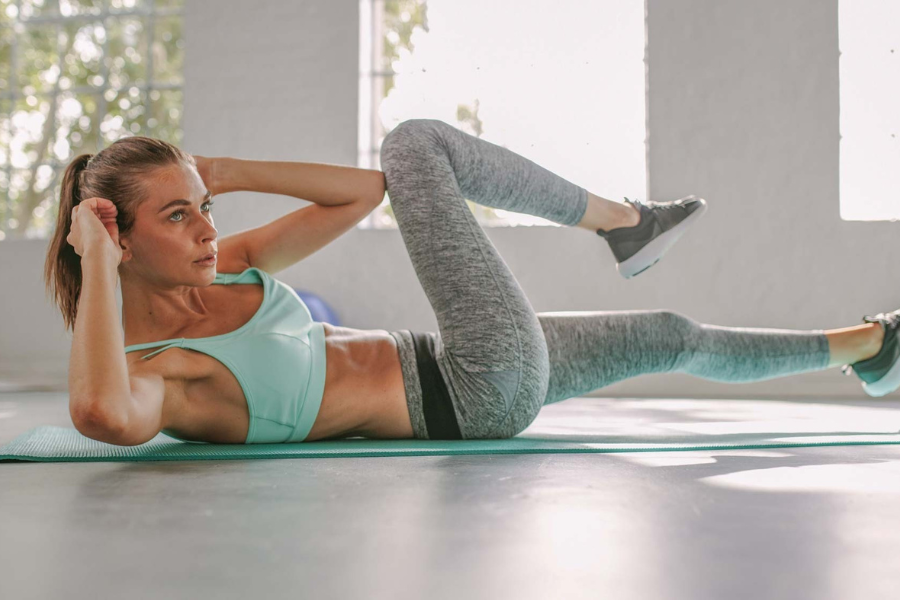
Alternating Elbow-to-Knee and Reach Crunch
This sequence introduces rotation and coordination. You pair a cross-body crunch with a straight reach, which challenges both the rectus abdominis and obliques.
Execution Tips
- Start with your left elbow and right knee
- Crunch elbow to knee, then return to center
- Follow with a straight crunch, reaching fingers toward toes
- Keep each rep deliberate and smooth
This combination keeps the core under constant tension without repetitive strain.
Forearm Rainbow Toe Taps
You then flip onto your forearms in a supported tabletop position. This move targets the lower abs and deep stabilizers while reducing neck strain.
How to Adjust Difficulty
- Bend your knees more to reduce intensity
- Extend your legs farther to increase the challenge
- Draw a wide arc with your toes, like a rainbow
- Press your forearms firmly into the floor
Avoid collapsing into your shoulders. Keep your chest lifted and your back flat.
Second Side Alternating Crunch Sequence
Returning to your back, you repeat the earlier elbow-to-knee and reach crunch on the opposite side.
What to Focus On
- Keep your neck relaxed
- Initiate each crunch from the core
- Match the same tempo as the first side
Balancing both sides helps prevent strength imbalances and improves overall stability.
Twisting Scissor Crunches
This exercise adds continuous motion and rotation, increasing intensity while maintaining control.
Proper Setup and Modifications
- Lift your shoulders off the floor
- Extend one leg while bending the other
- Twist your torso so the opposite elbow moves toward the bent knee
- Switch sides in a smooth scissor pattern
You can bend both knees or tap a toe to the floor if needed. The goal stays the same: steady rotation with lifted shoulders.
Seated Lean-Back Oblique Reach
Next, you sit upright and lean back slightly with a flat spine. This position challenges balance and recruits the lower abs.
Key Technique Notes
- Keep your chest open and spine straight
- Extend your feet slightly away from you
- Reach one hand toward the opposite foot
- Twist through the torso rather than rounding forward
You may feel your hip flexors engage. That sensation is normal, but your core should still drive the movement.
Side-Lying Oblique Crunch
This targeted oblique exercise shifts you onto your side, isolating one half of the core at a time.
Setup and Options
- Stack your hips and extend your bottom arm out
- Place your top hand lightly by your ear
- Lean back slightly
- Crunch both knees in together, or alternate one leg at a time
Hovering your feet increases difficulty. Keep movements small and controlled for better engagement.
Tabletop Open-Close Leg Extensions
After a brief reset, you return to a tabletop position on your back. This sequence blends lower ab control with coordination.
Movement Breakdown
- Start with knees bent and lifted
- Extend your legs outward
- Open and close them before pulling them back in
- Keep your back pressed gently into the floor
Only extend your legs as far as you can maintain control. Depth matters less than stability.
Final Side-Lying Oblique Crunch
The workout ends with the same side-lying oblique crunch on the opposite side.
Finishing Strong
- Maintain stacked hips
- Keep your movements smooth
- Focus on quality reps rather than speed
This final exercise completes full core coverage, ensuring both sides receive equal attention.
Why No-Repeat Workouts Work Well for Core Training
A no-repeat structure keeps your muscles guessing and reduces mental fatigue. Instead of counting reps, you focus on form and engagement. This approach works especially well for core training because it limits overuse while still building intensity.
Short, focused sessions like this one fit easily into busy schedules. They also pair well with strength training, cardio, or recovery days.
Tips to Get More From This Workout
To maximize results, keep these strategies in mind:
- Breathe steadily and avoid holding your breath
- Engage your core before each movement begins
- Stop early if your form breaks down
- Repeat the workout two to four times per week
Consistency and control matter more than rushing through the routine.
Who This Workout Is Best For
This routine suits beginners and experienced exercisers alike. Beginners can modify leg positions and reduce range of motion. More advanced users can slow down each rep or extend the legs farther to increase intensity.
Because it requires no equipment, this workout works well at home, while traveling, or as a finisher after strength training.
Final Thoughts on This Total Core Session
A strong core supports better posture, improved balance, and stronger performance across all forms of exercise. This 10-minute no-repeat workout delivers efficient training without unnecessary complexity. By focusing on form, control, and balanced muscle activation, you can build core strength that carries over into daily movement and long-term fitness progress.
About The Author