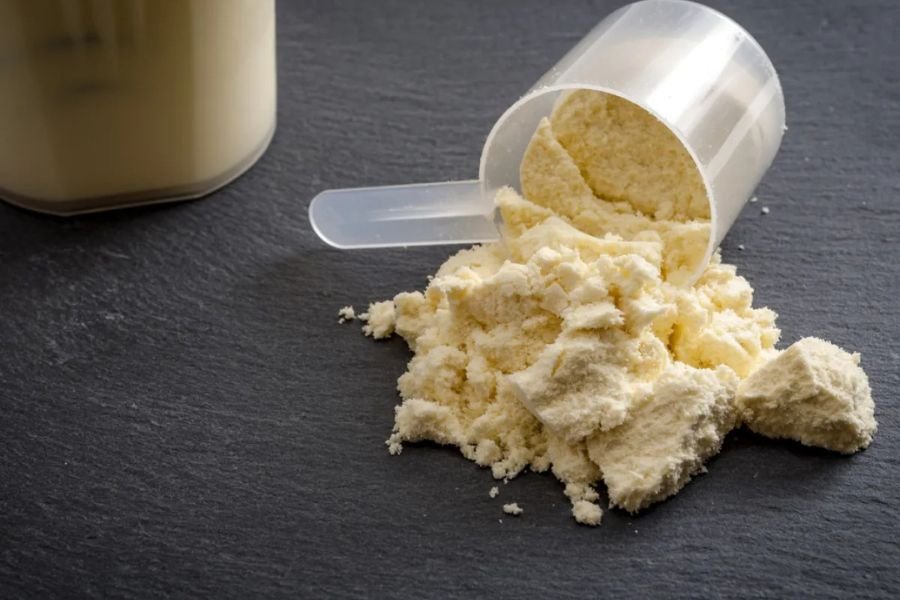
Whey Protein Powder Before or After a Workout
A scoop of whey protein can feel like a shortcut to better results in the gym. The tricky part is figuring out whether you should drink your shake before or after a workout. When you look at the research on whey protein before or after a workout, you will find a mix of advice, especially about the so-called anabolic window.
Below, you will see what actually matters for muscle growth and recovery, how timing fits into the picture, and how to choose an approach that works with your schedule and goals.
What whey protein does in your body
Whey protein is a fast-digesting, high quality protein that gives your muscles the building blocks they need to recover and grow. It is rich in essential amino acids, especially leucine, which plays a key role in switching on muscle protein synthesis, the process your body uses to repair and build muscle tissue after exercise (Healthline).
Because your body absorbs whey quickly, it fits well around workouts. You can think of it as a convenient way to:
- Support muscle repair after resistance training
- Help preserve lean mass when you are trying to lose fat
- Boost your total daily protein intake when food alone is not enough
Most people use 25 to 50 grams of whey protein per day, which is about 1 to 2 scoops, to help cover their protein needs (Healthline).
Why timing around workouts is confusing
You have likely heard that you must drink your shake within 30 minutes of your last rep or you will miss your chance to build muscle. That short post workout “anabolic window” has been repeated in gyms for years, but newer research paints a different picture.
Several studies have looked directly at protein timing and found that as long as your total daily protein intake is high enough, the exact timing around workouts does not make a big difference for muscle size or strength:
- A 10 week study in 21 men compared taking 25 grams of whey protein immediately before versus immediately after training. Both groups gained similar strength and muscle, with no meaningful differences in results (PeerJ via PMC).
- A meta analysis of 23 studies involving 525 people found that consuming protein within 1 hour before or after lifting did not significantly enhance muscle growth or strength when total daily protein was matched between groups (Journal of the International Society of Sports Nutrition).
- An 8 week trial in resistance trained men compared high protein intake right around workouts versus 3 hours away from workouts. Both groups gained similar muscle and strength, which suggests the “window” for building muscle is much wider than 30 minutes (Frontiers in Nutrition).
These findings all point in the same direction. Your total daily protein intake is the key driver of muscle growth, not whether your shake lands a few minutes before or after your session.
Pros of taking whey protein before a workout
Even though timing is flexible, taking whey protein before a workout can still offer some advantages, especially if you train on an empty stomach or several hours after your last meal.
When you drink whey 30 to 60 minutes before exercising, you give your body a ready supply of amino acids during your workout. This can:
- Limit muscle breakdown while you train
- Provide a small boost in energy and endurance
- Set you up for faster recovery once you finish
Wellbeing Nutrition notes that pre workout whey can help reduce muscle breakdown and support performance by supplying amino acids while you are exercising (Wellbeing Nutrition).
A pre workout shake can be especially useful if:
- You train first thing in the morning and do not have time for a full breakfast
- Your last meal was 3 to 4 hours ago
- You feel better in the gym with a little protein in your system
If you choose this approach, aim to finish your shake 30 to 60 minutes before your warm up so you are not training with a full stomach.
Pros of taking whey protein after a workout
Post workout whey is popular for good reason. After you finish a tough session, your muscles are primed to use amino acids for repair, and a fast digesting protein like whey fits that need well.
Several trusted sources highlight the benefits of a post workout shake:
- Cleveland Clinic notes that drinking a protein shake after your workout can help your body recover and refuel because your muscles are in a more anabolic state and use protein more efficiently for rebuilding (Cleveland Clinic).
- Wellbeing Nutrition points out that taking whey after training takes advantage of a period where muscles are very receptive to nutrients, which helps optimize muscle protein synthesis and speed up repair. It can also reduce soreness and fatigue so you can train hard again sooner (Wellbeing Nutrition).
- Glanbia Nutritionals highlights research where 25 grams of whey taken after resistance exercise improved tissue repair and short term recovery of performance, and where daily whey intake supported greater muscle mass and strength gains over time (Glanbia Nutritionals).
If your main goal is muscle growth and recovery, a shake after your workout is an easy habit to build. Try to get roughly 25 to 40 grams of whey protein in that post workout period, then follow it up with a regular meal later that includes both protein and carbohydrates.
What about weight loss and body composition?
If you are using whey to support fat loss as well as muscle, timing can also be a tool for appetite control.
Cleveland Clinic notes that a post workout shake can help with weight loss because protein digests slowly, helps you stay full, preserves muscle mass, and encourages your body to use more fat for energy (Cleveland Clinic). Choosing to drink your shake right after the gym and then planning a balanced meal later can help you avoid overeating out of extreme hunger.
The research that compares pre versus post workout intake has also shown that when people keep calories in check and hit a high protein target, they often lose body fat while gaining or maintaining muscle (PeerJ via PMC). That suggests your overall calorie balance and daily protein intake matter most for changing your body composition.
How much protein you actually need
To make timing work for you, it helps to know your daily protein target. For strength training and muscle gain, several reviews suggest aiming for around 1.6 grams of protein per kilogram of body weight per day. That is roughly 0.72 grams per pound (Healthline).
A meta analysis on protein timing found that increases in muscle size were linked far more closely to higher total daily protein intake than to timing itself. For every 0.5 g/kg increase in daily protein, people saw a clear rise in muscle gain effect size, regardless of when they drank their shakes (Journal of the International Society of Sports Nutrition).
A simple way to think about it is:
Hit your daily protein goal first, then decide where a shake before or after your workout fits best.
For most active people, spreading your protein across the day in doses of 20 to 40 grams every 3 to 4 hours is a practical approach that supports muscle protein synthesis repeatedly (Frontiers in Nutrition).
Can you do both before and after?
You can also use whey before and after a workout, especially if you struggle to eat enough protein from meals alone.
One 12 week study in untrained young men tested a protein blend that provided 40 grams of protein, including hydrolyzed whey, taken both immediately before and after resistance exercise. This approach led to greater increases in muscle size, strength, and workout volume compared with a placebo group (Journal of Exercise Nutrition & Biochemistry).
In that study, the supplement delivered about 26 grams of whey based protein and 5.8 grams of branched chain amino acids in a 2:1:1 leucine:isoleucine:valine ratio. That composition likely helped stimulate muscle protein synthesis and supported the larger performance gains seen over 12 weeks (Journal of Exercise Nutrition & Biochemistry).
If you choose a before and after setup, you can split your normal daily whey amount. For example:
- 1/2 scoop 30 to 45 minutes before training
- 1 to 1.5 scoops right after training
Just keep total daily protein in mind so you do not rely on shakes at the expense of whole foods.
Practical tips to choose your timing
Since the research supports flexibility, you can base your timing on your routine, your stomach, and your goals. Use these quick guidelines to decide:
-
If you train fasted or early in the morning
Have a whey shake 30 to 60 minutes before your workout. This helps reduce muscle breakdown and gives you a small energy boost during your session (Wellbeing Nutrition). -
If you work out after a recent meal
Focus on a post workout shake. Your pre workout meal already covers you going in, so a shake within a couple of hours after training is a convenient way to kick start recovery. -
If your goal is pure convenience
Healthline summarizes the research by noting that it does not really matter whether you drink a shake before or after your workout. What matters is that you hit your protein target for the day (Healthline). So pick the time you are most likely to remember and stick with it. -
If you want to reduce soreness and train often
Lean toward a post workout shake, since multiple studies highlight benefits for muscle repair, soreness reduction, and faster recovery (Glanbia Nutritionals).
If you ever feel uncomfortable drinking a shake right before exercise, shift that serving to after your workout or mix it into a meal later in the day.
What about shakes on an empty stomach?
You might wonder whether it is safe or useful to drink whey on an empty stomach. Cleveland Clinic notes that for most people, a protein shake on an empty stomach is not harmful. During very intense exercise sessions, it is more important to stay hydrated with water while you are training, then have your shake afterward for better digestion and recovery (Cleveland Clinic).
If you have a sensitive stomach, you may feel better pairing your shake with a small amount of carbohydrate, such as a banana or toast, rather than drinking it completely alone.
The bottom line on whey protein timing
When you strip away the myths, whey protein before or after a workout both work. The research consistently shows that:
- Total daily protein intake is the main driver of muscle gain
- The anabolic window is likely several hours long, not a tight 30 minute slot
- Pre and post workout shakes produce similar strength and muscle gains when protein intake is matched
If you like the idea of a simple rule, you can keep it this straightforward: choose the timing that fits your routine, hits about 25 to 40 grams of protein around your workout, and helps you reach your daily protein goal. Then stay consistent and let your training and nutrition do the rest.
About The Author