Feel Amazing After Every Ladies Chest Workout Session
A ladies chest workout can do far more for you than simply tone your upper body. When you train your chest regularly, you support better posture, stronger shoulders, and easier everyday movements like pushing a stroller or carrying groceries, as highlighted in a 2024 article on MikoloFitness. With a smart plan, you can step away from every session feeling accomplished instead of exhausted or discouraged.
Below, you will learn how your chest works, which exercises to prioritize, and how to structure a ladies chest workout that leaves you feeling amazing after every session.
Understand your chest muscles
Your chest is made up of more than what you see in the mirror. The main players are the pectoralis major and pectoralis minor, plus supporting muscles like the serratus anterior. These muscles cover the front of your upper body between your neck, shoulders, and rib cage and are responsible for moving and controlling your arms in many directions.
You use these muscles every day, often without thinking about it. Washing your hair, opening heavy doors, getting up from the floor, pushing a cart, or lifting a child all rely on your chest and surrounding musculature. Fitness coach Holly Dolke notes that working the pecs can improve posture, breathing, digestion, and circulation, while also adding strength to your shoulders and arms, which then supports daily activities like carrying groceries or holding a baby.
When you train your chest, you are not just chasing a more sculpted look. You are building a foundation for better movement, less discomfort in your neck and back, and more confidence in your overall strength.
Benefits of a ladies chest workout
If you have ever worried that chest exercises will make you “bulky,” you can let that idea go. The best chest exercises for women are essentially the same as those for men because the muscles are anatomically the same. The difference comes from your programming, your nutrition, and your hormones, not the movements themselves.
Chest workouts offer several meaningful benefits for you:
You support posture and joint health. Strong pecs help counteract the rounded shoulders that come from long hours at a desk or on your phone. They also work with your back and shoulder muscles to stabilize the shoulder joint, which can reduce your risk of injury.
You build real‑world strength. Chest presses and pushups are compound pushing exercises that also work your triceps, shoulders, back, and core. That means one exercise translates into stronger pushing power for tasks like moving furniture or loading heavy items into your car.
You improve aesthetics in a functional way. Training the muscles behind and around your breast tissue can help lift and firm the area by improving muscular tone. Consistent chest training creates a firmer, more athletic appearance in your upper body, not simply bigger muscles.
You boost confidence and performance. Learning to do proper pushups or pressing heavier dumbbells is empowering. Over time, you will notice more upper‑body power for sports and daily movement, plus a sense of pride that carries into the rest of your training and your day.
How often to train your chest
You do not need to spend hours on your chest to see results. In fact, 1 to 2 focused ladies chest workouts per week are usually enough when you train with intention.
A practical guideline is:
- Train your chest 1 to 2 times per week
- Include 5 to 8 chest-focused exercises per session
- Perform 10 to 12 reps per exercise, or work for about 50 seconds with 15 seconds of rest between moves
- Complete the circuit 3 times for a 20 to 25 minute workout
This structure, recommended in a 2024 roundup of chest exercises for women, is designed to build strength, endurance, and tone in a time-efficient way. You can adjust the volume or rest slightly based on your fitness level, but staying close to these guidelines will keep your workouts challenging without leaving you drained.
Best chest exercises for women
You do not need fancy equipment to get an effective ladies chest workout. The key is to combine a few well‑chosen moves that hit your chest from different angles. The exercises below are especially helpful because they also challenge your shoulders, triceps, core, and upper back.
Pushup variations
Pushups are one of the most effective chest exercises you can do, and they are fully scalable.
Incline pushups
Incline press ups, or incline pushups, are an excellent starting point if you are building strength. You place your hands on a raised surface such as a bench, stairs, or a sturdy table. The higher the surface, the easier the move feels, so you can adjust the height to your current level.
Lower your chest toward the surface while keeping your body in a straight line from head to heels or knees. Press back up while keeping your elbows at about a 45‑degree angle away from your ribs. This safer elbow angle applies to almost every pushup variation.
Knee or modified pushups
If a full pushup feels too intense, dropping to your knees reduces the load without sacrificing form. Keep your core engaged and your hands under your shoulders. Slowly lower your chest toward the floor and press back up, again aiming to keep your elbows at that 45‑degree angle.
Hand release pushups
The hand release pushup is a powerful variation that increases your range of motion and strengthens your ability to push off the floor. Start lying flat on your stomach with your hands under your shoulders. Lift your hands slightly off the floor, then press them back down and push your body up in one strong movement.
This move works your chest, triceps, and shoulders, and encourages you to use full range of motion with each rep.
Pressing movements with weights
Pressing exercises with dumbbells or a barbell are classic chest builders, and they can easily fit into your routine at the gym or at home.
Dumbbell floor press
The dumbbell floor press is a great option if you want to protect your shoulders while still challenging your chest. Lie on your back on the floor with your knees bent and feet flat. Hold a dumbbell in each hand at chest level with your elbows resting on the floor. Press the weights up until your arms are straight, then lower back down until your upper arms gently touch the floor.
Variations like alternating and single‑arm floor presses are especially useful for correcting side‑to‑side imbalances and boosting upper back engagement, since your body must work harder to stabilize one arm at a time.
Bench press
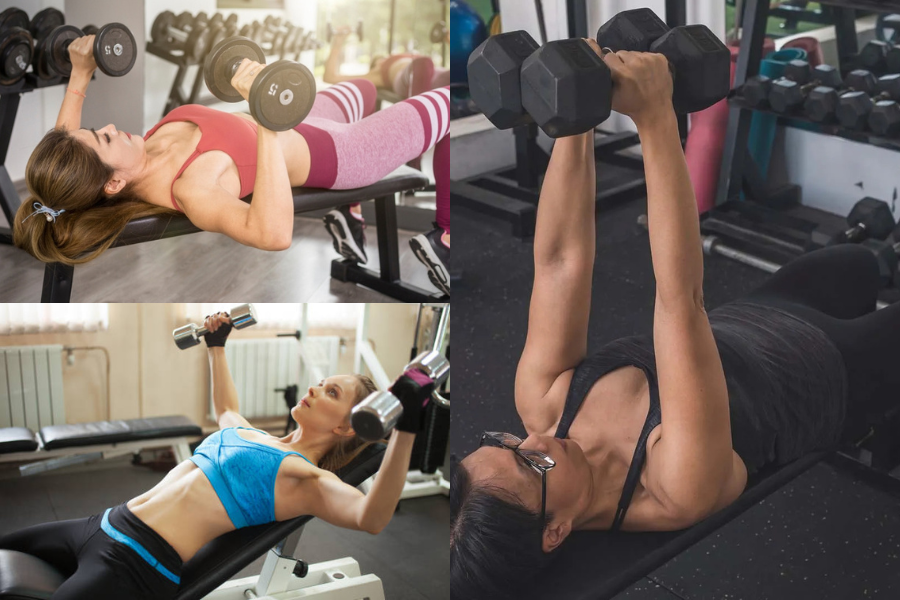
Whether you use a barbell or dumbbells, the bench press effectively targets your pecs, front shoulders, and triceps. Lying on a flat bench, hold the weight above your chest with straight arms. Slowly lower it until your elbows reach about a 90‑degree angle, then press back up.
You can perform bench presses at home with dumbbells or even sturdy household objects used as weights, as long as safety and control remain your priority.
Close grip bench press
By bringing your hands slightly closer together, you put more emphasis on your triceps while still recruiting your chest. This variation adds variety to your chest training and builds pressing strength that carries over to pushups and overhead work.
Fly variations for shape and control
Fly movements complement pressing exercises by emphasizing the inner portion of the chest and improving muscular control.
Dumbbell chest fly
Lie on a bench holding a pair of dumbbells directly above your chest with palms facing each other. Keeping a gentle bend in your elbows, slowly open your arms out to the sides until you feel a stretch across your chest. Then bring the weights back together over your chest, keeping the movement smooth and controlled.
This exercise is especially effective for targeting the inner chest area when you move with light to moderate weight and focus on form instead of speed.
Cable or band fly
If you have access to cables or resistance bands, standing fly variations allow you to work your pecs from slightly different angles. You can set your cables high for more upper chest focus or at shoulder height for general chest recruitment. Move slowly, imagine you are “hugging” a large tree, and avoid letting your shoulders roll forward.
Planks and dynamic core moves
Plank variations double as chest exercises because your pecs help stabilize your upper body when your hands are on the floor.
Plank shoulder taps, where you tap one shoulder at a time while holding a high plank, recruit your chest, shoulders, arms, back, abs, and legs all at once. Similarly, plank rows or pushup to renegade rows combine pressing and pulling work for a time‑efficient upper‑body challenge.
These moves are excellent finishers in a ladies chest workout because they build both strength and stability.
Sample 20‑minute ladies chest workout
Here is a simple circuit you can follow 1 to 2 times per week. You can do this at home with a pair of dumbbells and a sturdy bench or step.
Perform each exercise for 10 to 12 reps, or for 50 seconds followed by 15 seconds of rest. After completing all exercises, rest for 1 to 2 minutes, then repeat the circuit 3 times total.
- Incline pushups on a bench or sturdy surface
- Dumbbell floor press
- Hand release pushups
- Dumbbell chest fly on a bench or the floor
- Close grip dumbbell press
- Plank shoulder taps
This structure mirrors a recommended approach for women, where you choose 5 to 8 exercises, work for 10 to 12 reps or 50 seconds each, rest briefly between moves, and repeat for a 20 to 25 minute total session. Adjust your weights so that the last 2 reps feel challenging but still controlled.
Aim to finish each circuit feeling like you “could do 2 more reps” on each exercise, not like you have nothing left. That is the sweet spot where you build strength without burning out.
Tips to feel great after every session
How you perform your ladies chest workout matters as much as which exercises you choose. A few small tweaks can make the difference between feeling amazing and feeling wiped out.
Warm up your shoulders and upper back. Spend 5 minutes on light cardio and dynamic movements such as arm circles, band pull‑aparts, or wall slides. Warming up reduces stiffness and prepares your joints for pressing.
Focus on form before weight. Especially on chest work, sloppy form can stress your shoulders and neck. Keep your ribs knitted down, your core engaged, and your elbows around a 45‑degree angle from your sides on most pressing and pushup variations.
Use progressive overload gently. Improvement comes from doing a bit more over time, not everything at once. You can increase weight, add 1 to 2 reps, slow down the lowering phase, or trim rest intervals. Gradual change lets your muscles adapt while keeping soreness manageable.
Balance your training week. Chest work pairs well with back, legs, and core days, so your upper body stays balanced. Including pulling moves like rows or pull‑downs in other workouts supports shoulder health and posture alongside your pressing exercises.
Recover with intention. After your session, cool down with light stretching for your chest, shoulders, and triceps. Hydrate, refuel with a mix of protein and carbohydrates, and get adequate sleep. These habits help you come back to your next workout feeling strong instead of worn down.
Putting it all together
A consistent ladies chest workout routine is about more than chasing a certain look. When you train your chest thoughtfully, you strengthen some of the largest and most important muscles in your upper body. You support your posture, protect your shoulders, and make everyday tasks easier and more comfortable.
Start with 1 session per week, choose 5 to 8 exercises from the list above, and commit to a 20 to 25 minute routine. As you feel stronger, add a second weekly session or increase your weights slightly.
The goal is simple: walk away from each workout feeling accomplished, capable, and a little bit stronger than the week before.
About The Author