You’ll Love These Easy Gym Tricep Workouts for Toned Arms
Why gym tricep workouts matter
If you want stronger, more defined arms, focusing on gym tricep workouts is one of the smartest moves you can make. Your triceps make up roughly two thirds of your upper arm size, so they have a bigger impact on how your arms look and perform than your biceps do. When you press, push, or lock out a weight overhead, your triceps are doing a lot of the work.
Your triceps have three heads, the long, medial, and lateral. Well rounded gym tricep workouts make room for exercises that challenge all three. That means mixing compound presses, pushdowns, and overhead moves so you build strength, avoid nagging elbow pain, and see real changes in muscle tone.
Understand your triceps before you train
You do not need an anatomy degree to get more from your tricep training, but a quick overview helps you choose smarter exercises.
The long head runs down the back of your arm and crosses your shoulder joint. It responds especially well to overhead movements that put it in a stretched position, such as seated overhead dumbbell extensions. The lateral head sits on the outer side of your arm and gives that horseshoe look when you flex. The medial head lies deeper and helps stabilize your elbow on every press and extension.
When your gym tricep workouts ignore one of these heads, imbalance and discomfort often follow. If you never do overhead work, for example, the long head can lag behind, which may leave you with flat looking arms and more triceps pain after workouts. Building your plan around a mix of presses, dips, overhead extensions, and pushdowns keeps development even and your joints happier.
Start each workout with compound moves
The order of your exercises matters more than you might think. If you jump straight into tiny isolation moves like single arm kickbacks, your triceps will fatigue early. By the time you reach heavier compound lifts, you will not be able to use enough weight to really challenge the muscle.
A better approach is to begin your gym tricep workouts with compound exercises that let you push more load. Close grip bench presses and dips are two standouts. They work your triceps hard, but your chest and shoulders help, so you can move heavier weights and create a strong growth stimulus.
After those big moves are done, you can shift into more targeted isolation work such as skull crushers or overhead extensions. This sequence, heavy compound first and then lighter isolation, lets you build strength and size without burning out too soon or stressing your joints unnecessarily.
Think of your workout like a meal. Start with the main course, your heavy compound lifts, then finish with smaller isolation exercises as your side dishes.
Mix bodyweight, machines, and free weights
You can build impressive triceps in almost any gym, even a simple one, as long as you use the tools you have wisely. Each equipment type offers different advantages.
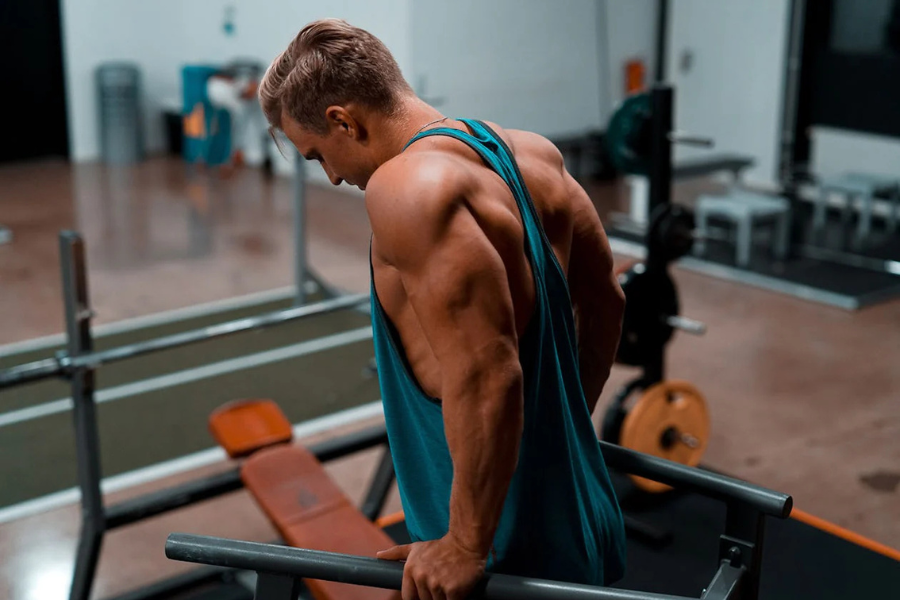
Bodyweight exercises like tricep dips, regular or diamond push ups, and bench dips are perfect if you want to feel your triceps working immediately. They teach you to control your body through space and can be scaled by adjusting your foot position or adding weight.
Machines and cables, such as tricep pushdowns, cable overhead extensions, and triceps press machines, give you a fixed path of motion and steady resistance. They are great for beginners or for finishing a workout with controlled, higher rep sets. The key is to avoid relying only on machines, because that can limit your range of motion and the stabilizing work your muscles need.
Free weights, especially dumbbells, allow the most natural motion and often the biggest stretch and squeeze. Because each arm works independently, you can correct strength imbalances and activate more muscle fibers. Research in 2026 highlighted how dumbbell tricep exercises improve pressing strength and exploit a larger range of motion for better growth potential.
Learn proper form to avoid elbow and shoulder pain
Good form is not just about looking right in the mirror. It is about sending the training stress to your triceps instead of your joints and surrounding muscles.
For most tricep exercises, keeping your elbows close to your sides or pointing straight ahead is a simple and powerful cue. When your elbows flare out during pushdowns or skull crushers, your shoulders take over and your elbows get cranked into awkward positions. Over time, that can mean irritation, joint strain, and less progress.
Controlled movement, both on the way down and on the way up, is another non negotiable. Letting weights drop quickly turns your tricep workout into a game of catching momentum. Moving with purpose, with a full but comfortable range of motion, gives your triceps more time under tension and a better growth signal. Pair that with steady breathing, exhaling as you press or extend and inhaling as you lower, and you will feel a clear difference.
Try these beginner friendly gym tricep exercises
If you are just getting started, a handful of reliable exercises can take you a long way. You do not have to do every variation on day one. Focus on the basics, then build from there as you grow more confident.
Some of the most beginner friendly options include:
- Tricep dips, either on parallel bars or using a sturdy bench
- Standard or diamond push ups with your hands set closer together
- Tricep pushdowns on a cable machine
- Cable overhead tricep extensions
- Triceps press machine
- Dumbbell tricep kickbacks
- Standing or seated dumbbell tricep extensions
These moves cover all three tricep heads and work in different positions: arms at your sides, arms overhead, and arms behind your body. That variety keeps your workouts balanced and your triceps fully engaged.
Use tricep pushdowns the smart way
The cable tricep pushdown deserves a special mention because it is one of the most accessible and effective gym tricep workouts you can do. With this movement you can target the long, medial, and lateral heads with small adjustments to grip and attachment.
To perform it well, stand tall with a slight bend in your knees, keep your elbows tucked by your sides, and move only at the elbow joint. Press the bar or rope down until your arms are straight, then pause briefly before returning to the starting point. Avoid swinging your back or letting your shoulders roll forward.
If you are a beginner, you might start with 4 sets of 8 reps at a low weight, focusing on form. As you get stronger, you can add more reps, more resistance, or both. To keep your workouts interesting, try different attachments like a straight bar, V angled bar, E Z bar, or rope, or train one arm at a time. Resistance bands can also mimic pushdowns if you work out at home.
Build a simple 30 minute tricep workout
You do not need a long session to see progress. With smart exercise choices and efficient pacing, you can complete a full tricep workout in about half an hour, including warm up and stretching.
Here is a sample beginner routine you can use at most gyms:
- Warm up: 5 minutes of light cardio plus gentle arm swings and shoulder circles
- Tricep dips: 3 sets of 10 reps
- Tricep pushdowns: 3 sets of 12 reps on the cable machine
- Dumbbell tricep extensions: 3 sets of 10 reps
Rest about 60 to 90 seconds between sets. Choose weights that feel challenging in the last two reps, but do not cause you to lose form. As your fitness improves, you can add one more isolation move such as dumbbell kickbacks or skull crushers, or you can increase the number of sets on your compound lifts.
Train enough, but not too often
Because your triceps help with so many pressing movements, it is easy to accidentally overtrain them. If you do heavy push ups, bench presses, and overhead presses one day, then come back with hard tricep isolation work the next morning, your muscles never get a chance to fully recover.
A good rule is to allow at least 24 hours, and ideally 24 to 48 hours, of recovery after upper body workouts that involve significant tricep work. That recovery window helps prevent nagging fatigue, ongoing soreness, and stalled muscle growth.
For muscle gain, many lifters do best training triceps twice per week with a total of 3 to 6 working sets per session in the 6 to 12 rep range at about 60 to 80 percent of their one rep max. You can split that volume between your main push day and an accessory or arm day so you are not cramming everything into one session.
Do not skip overhead tricep work
If you want fuller looking arms from every angle, overhead exercises should be a regular feature in your gym tricep workouts. When you lift your arms overhead, you put the long head of the triceps into a stretched position. That stretch under load can be a powerful trigger for hypertrophy.
Overhead tricep extensions can be done seated or standing with dumbbells, barbells, or cables. Pick the variation that feels most comfortable on your shoulders and elbows. Focus on keeping your upper arms as still as possible, hinge only at the elbows, and lower the weight until you feel a strong, but not painful, stretch at the back of your arms.
You can work overhead extensions heavier for sets of 8 to 10, or lighter for sets of 12 to 15 as a finisher. Either way, including them regularly ensures you are not leaving the largest part of your triceps undertrained.
Finish strong by locking out your reps
The final third of each tricep movement is where a lot of the magic happens. When you straighten your elbows fully and under control at the bottom of a pushdown or the top of a press, you recruit a large number of tricep fibers and send a clear signal for strength and size gains.
Rushing through this final phase or stopping short to keep constant tension may feel easier, but you leave results on the table. Instead, aim to lock out each rep without snapping your joints. Pause for a brief moment in that fully extended position, then return to the start smoothly.
You can apply this cue on close grip bench presses, dips, skull crushers, overhead extensions, and pushdowns. Over time, that deliberate lockout will help you build stronger, more defined triceps and better control on every pressing movement you do.
Stretch and cool down for healthier triceps
What you do after your last set matters too. A few minutes of stretching at the end of your workout can improve flexibility, ease muscle tension, and reduce your risk of strain during your next session.
Simple overhead tricep stretches, where you gently pull your elbow behind your head, and across body stretches are often enough. Hold each stretch for 20 to 30 seconds, breathe steadily, and avoid bouncing. These small habits keep your elbows and shoulders moving well, which makes it easier to maintain consistent progress over months and years.
If you train at a gym that encourages beginners and offers help with equipment setup, like many Judgement Free Zone style facilities, take advantage of the staff on duty. Asking someone to check your form on a new tricep exercise can boost your confidence and help you get more out of every workout.
Start with one or two of these tips in your next gym session, such as adding overhead extensions or cleaning up your pushdown form. As you layer in good exercise order, proper volume, and consistent stretching, you will notice your triceps getting stronger, your arms looking more toned, and your pressing lifts feeling smoother.
About The Author





