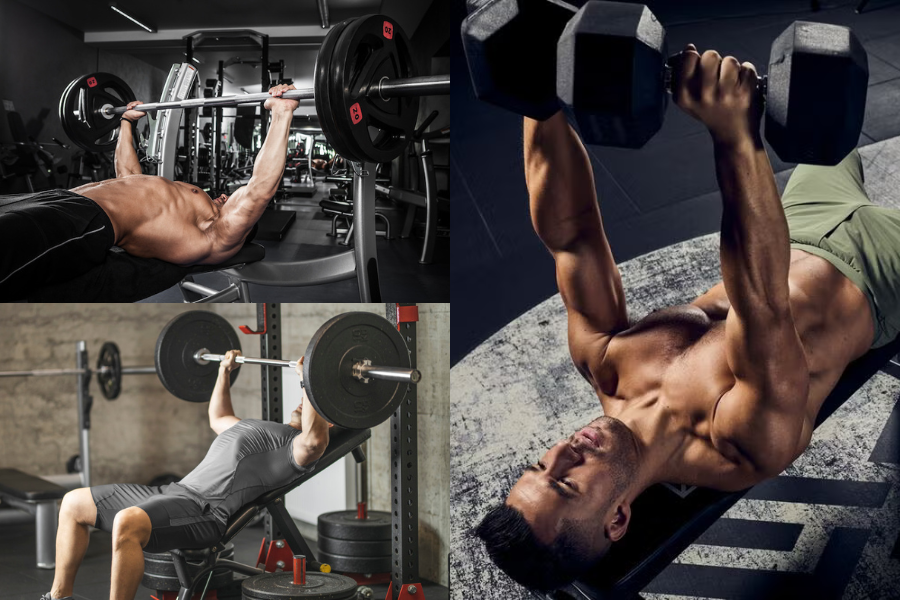
Boost Your Strength With the Best Chest Workout for Men
Why a focused chest workout matters
If you are like many men in the gym, your chest workout probably starts and ends with the barbell bench press. It feels powerful to load plates and push heavy weight, but relying only on that one move can stall your progress and even set you up for injury. A smart chest workout for men builds strength, size, and balance across your entire chest while protecting your shoulders and joints.
By learning how your chest muscles work, choosing the right mix of exercises, and paying attention to form, you can turn chest day into one of your most productive training sessions of the week. You will not need complicated machines or marathon workouts, just consistent training and a few key tweaks.
Understand your chest muscles
Your chest is more than a single slab of muscle. When you design a chest workout, it helps to know what you are actually training.
The main chest regions
You are mainly working the pectoralis major, which has two primary regions you can emphasize with different angles:
- Upper chest: The fibers that run from your collarbones to roughly halfway down your chest. These are often undertrained, which leads to a flatter upper torso.
- Middle and lower chest: The thicker area across the center and lower part of your chest, where most pressing exercises place the load by default.
If your routine is mostly flat bench with heavy weight and low reps, the lower portion tends to dominate while the upper chest lags behind. Over time this can create an unbalanced look and put extra stress on your shoulders and elbows.
Why incline work matters
Prioritizing incline presses and fly variations helps you bring up the thinner upper-pec region so your chest looks fuller and higher on your torso. Even a small shift in the bench angle changes where you feel the work, so building your plan around a mix of flat, incline, and (optionally) slight decline angles is key.
Common chest workout mistakes men make
Most chest plateaus are not about effort. They are about approach. If you can fix a few common mistakes, your existing effort will go much further.
Relying only on the barbell bench
Overreliance on heavy barbell benching with low reps is one of the biggest chest workout errors. It can:
- Overdevelop the lower pecs relative to the upper chest
- Raise the risk of pec strains or tears
- Put extra stress on your shoulders, elbows, and wrists
Barbells are useful for building strength, but they should not be your only chest tool.
Living on machines
Chest machines feel stable and convenient, but they lock you into fixed paths. Historically, many of the best-developed chests, such as bodybuilders from Arnold Schwarzenegger’s era, were built mostly with free weights rather than machines. Free weights force you to stabilize, recruit more muscle fibers, and move in ways that suit your body, not the machine.
Chasing weight instead of tension
Another common trap is working the weight instead of the muscle. If you bounce the bar, rush through reps, or let momentum do the job, you shift the load to your shoulders and triceps and away from your pecs. The result is less muscle growth, even if the weight on the bar keeps going up.
Skipping a proper warmup
Going straight from the locker room to your heaviest set is asking for trouble. Not warming up your chest and shoulders properly increases your risk of sprains, strains, or tears and limits your range of motion, which makes each set less effective.
Spending just 5 to 10 minutes on light cardio, mobility drills, and a couple of light warmup sets prepares your joints and nervous system so the working sets actually count.
Why dumbbells should anchor your chest day
Dumbbells are one of the most powerful tools you can use in a chest workout for men, especially if you want size, symmetry, and healthier joints.
Benefits of dumbbell chest exercises
Compared with barbells, dumbbells offer some important advantages:
- Greater range of motion so you can lower deeper and get a better stretch
- Joint friendly path since each arm can move independently
- Unilateral training, which helps correct left/right strength imbalances
- Easy grip adjustments to reduce wrist or shoulder discomfort
Because each arm moves on its own, you cannot hide a weaker side. Over time, this leads to a more balanced chest.
How to brace your body
Even though chest exercises happen while you are lying down, your core and glutes still matter. Squeezing your glutes and lightly bracing your abdominals during dumbbell presses and flyes keeps your torso stable and helps you press more safely and efficiently. You should feel solid on the bench, not wobbly.
Key dumbbell exercises for a bigger chest
The research you saw earlier highlighted ten essential dumbbell moves for chest development. You do not need all of them in a single workout, but knowing what each one does helps you build a targeted plan.
Below is a simple reference to how each main type of exercise fits into your routine:
| Exercise type | Examples | Main purpose |
|---|---|---|
| Compound presses | Dumbbell bench press, incline dumbbell press, decline dumbbell press | Build overall size and strength |
| Isolation moves | Dumbbell fly, incline fly, decline fly | Stretch and fully contract the pecs |
| Specialty | Dumbbell pullover | Add extra upper chest and ribcage emphasis |
Dumbbell bench press
The dumbbell bench press is one of the best chest exercises for men to build strength and size. A common guideline is 3 to 4 sets of 6 to 8 reps. This lets you train heavy enough for strength without sacrificing control.
Focus on:
- Feet flat and planted
- Shoulder blades gently pinched together on the bench
- Elbows at about a 45 degree angle to your torso, not flared straight out
Press the weights in a smooth arc, and avoid smashing them together at the top.
Incline dumbbell press
If your upper chest is behind the rest of your torso, this should be a priority. With the bench set at a low to moderate incline, 3 to 4 sets of 8 to 10 reps works well.
Because the angle shifts load toward your upper pecs and shoulders, use a slightly lighter weight than your flat press and concentrate on feeling the top half of your chest do the work.
Decline or slight decline press
You do not have to live on decline work, since most men already emphasize the lower chest. However, an occasional decline dumbbell press can round out your development, especially if you prefer the way your shoulders feel in that position.
Aim for moderate weight and controlled reps, keeping the same shoulder blade position and elbow angle you use on the flat bench.
Dumbbell fly variations
Dumbbell flyes are isolation exercises meant to stretch and contract the chest. However, many lifters lose tension near the top and let their arms take over. To make flyes productive:
- Use a light to moderate weight so your shoulders stay comfortable
- Move slowly, especially in the bottom stretch position
- Actively squeeze your chest at the top as if you are hugging a barrel
You can perform flyes flat, on a slight incline, or on a slight decline to highlight different fibers. The research recommends using them after your heavier pressing, usually for 2 to 4 sets in a moderate to higher rep range, for example 10 to 15 reps.
Dumbbell pullover
Dumbbell pullovers can hit your chest and lats at the same time. They are often used as a finishing move to emphasize the upper chest and serratus area. Keep the weight moderate and the range of motion comfortable. Focus on a strong stretch and controlled pull rather than brute force.
Build an effective chest workout for men
You do not need a complicated routine. A solid chest workout is built on a few smart choices:
- 2 to 4 exercises per session
- Start with compound presses, then move to isolation work
- 2 to 5 sets per exercise
- 5 to 30 reps depending on your goal
Here is how you might structure a balanced chest session using dumbbells as the base:
- Dumbbell bench press: 3 to 4 sets of 6 to 8 reps
- Incline dumbbell press: 3 sets of 8 to 10 reps
- Dumbbell fly (flat or incline): 3 sets of 10 to 15 reps
- Dumbbell pullover or push-ups: 2 to 3 sets of 12 to 15 reps
Most effective chest workouts last 30 to 60 minutes and include 4 to 6 total exercises, often combining presses, dips, push-ups, and fly variations. You can adjust the volume up or down based on your experience and recovery.
How often you should train your chest
For chest growth, training frequency matters just as much as what you do on a single day.
- Beginners usually do well with 1 to 2 chest focused sessions per week.
- Intermediate and advanced lifters often see great progress with 2 focused sessions weekly.
The research suggests that training your chest twice a week is ideal for most men, with 2 to 3 days of recovery between sessions. If your progress stalls and your recovery is solid, you might experiment with a third lighter session, but only if your shoulders and elbows feel good.
Spacing your chest workouts 2 to 3 days apart gives your muscles time to repair and grow stronger while helping prevent chronic soreness and fatigue.
Form tips to protect your shoulders and grow faster
Small technical details make a big difference in both safety and results.
Set your shoulders correctly
If your shoulders creep toward your ears or roll forward during pressing, you shift the load away from your chest. Protracting your scapula like this moves stress into your shoulders and arms. Instead, lightly pinch your shoulder blades together and keep them down toward your back pockets. This retracted position improves chest activation and gives you a stable base to press from.
Control the tempo and tension
To get the most from each rep:
- Lower the weight with control, instead of letting it drop
- Pause briefly at the bottom if your joints tolerate it
- Drive up smoothly while keeping your chest engaged
Adding intensity techniques like drop sets, partial reps, short pauses, or isometric holds can increase muscular stress beyond the usual 3 sets of 8 to 12. Use these sparingly at the end of a workout rather than on every set.
Avoid ego lifting
Piling on more weight than you can handle safely is one of the fastest ways to stall your chest progress. When you ego lift, your form breaks down and momentum takes over. Your triceps, shoulders, and even your lower back start doing more work than your pecs. Leave a rep or two in the tank on most sets, and increase weight only when you can hit all prescribed reps with solid technique.
Warmup, recovery, and realistic results
Your chest does not grow while you lift. It grows while you recover. Balancing training stress with smart recovery is what turns hard work into visible muscle.
Warm up before you go heavy
A simple pre-chest warmup might include:
- 5 minutes of light cardio to raise your heart rate
- Gentle arm circles and band pull-aparts for shoulder mobility
- 2 to 3 progressively heavier warmup sets of your first press
This routine prepares your joints and nervous system so your heavy sets feel smoother and safer.
Give your body what it needs to grow
Consistent progress depends on:
- Sleep: Aim for enough quality sleep to wake feeling rested, which is when most muscle repair happens.
- Nutrition: Make sure you eat enough calories and especially enough protein so your body has the raw materials it needs to build new muscle tissue.
- Balance: Manage pushing volume for shoulders and triceps so you do not overload the same joints on too many consecutive days.
Many men notice performance improvements in 3 to 4 weeks of focused chest training when they combine a smart plan with proper recovery. Visible changes in chest size often show up between 6 and 8 weeks of consistent work and a reasonable body fat level.
Putting it all together
A powerful chest workout for men does not require a complicated program or extreme weights. It comes from:
- Using dumbbells and free weights to train through a full range of motion
- Prioritizing both upper and lower chest with different bench angles
- Focusing on muscle tension, not just moving the heaviest weight
- Training your chest 1 to 3 times per week with enough recovery
- Warming up properly and progressing loads when your form is solid
Start by adjusting your next chest day rather than overhauling everything at once. Swap in dumbbell presses, add a dedicated incline movement, slow your reps, and pay attention to how your chest feels during each set. Those small changes, repeated week after week, are what build a stronger, fuller chest over time.
About The Author





