Simple Yet Effective Best Bicep Exercises for Results
Why bicep exercises matter
If you want stronger arms, better pulling strength, or just a T‑shirt fit you like more, focusing on the best bicep exercises is a smart place to start. Your biceps help you bend your elbows, rotate your forearms, and pull weight toward you, which means you use them in everyday life far more than you might realize.
You do not need a complicated routine to see progress. A handful of simple, well chosen movements, done with solid form, can build strength, size, and definition while helping you avoid common injuries.
Know your biceps before you train
You do not have to memorize anatomy charts, but understanding what you are training will help you choose the right exercises and angles.
Your upper arm flexors include:
- Biceps brachii: The classic “bicep” with two heads, a short head and a long head, that flex the elbow and rotate the forearm.
- Brachialis: Sits underneath the biceps and helps push the muscle outward, giving your arms a thicker look.
- Brachioradialis: Runs along your forearm and helps flex the elbow, adding to overall arm strength and forearm size.
Different grips and arm positions place slightly more emphasis on one area than another. That is why a mix of curls, hammer curls, and bodyweight pulling exercises works better than repeating a single move over and over.
Foundational bicep builder: Dumbbell curls
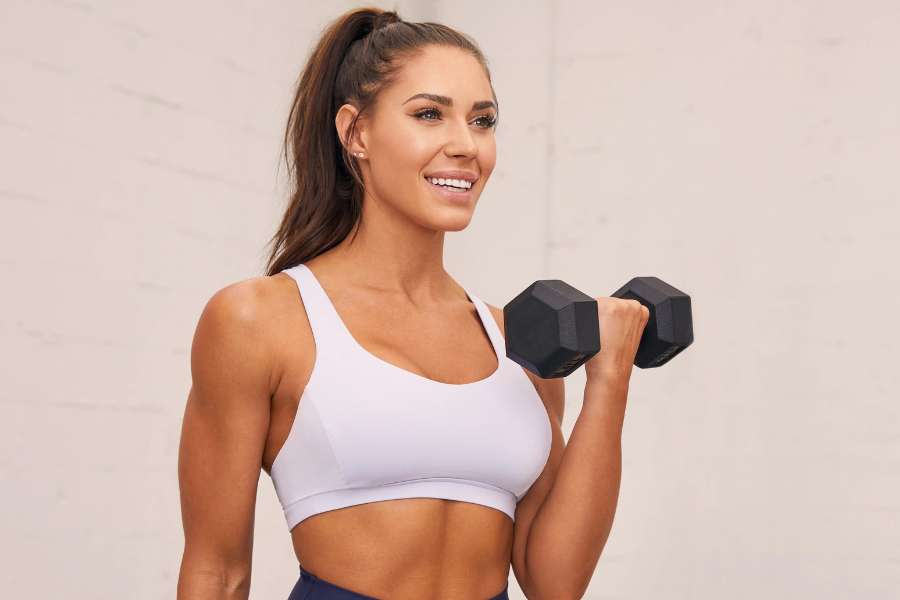
The dumbbell biceps curl is the classic move for a reason. It is accessible for most fitness levels and directly targets the biceps brachii.
To do it, stand or sit tall with a dumbbell in each hand, palms facing forward. Keep your elbows close to your torso and curl the weights toward your shoulders, then slowly lower them with control. Keeping your wrists straight and your torso still helps your biceps do the work instead of your shoulders or lower back.
Slowing down both the lifting and lowering phases increases time under tension, which is especially helpful for muscle growth. Dumbbells also let you train each side independently, so you can spot and correct strength differences between arms.
If you are new to training, you can even start with household items like a loaded backpack or a heavy purse, then gradually increase resistance as your strength grows.
Grip-changing essential: Hammer curls
Hammer curls use a neutral grip, with your palms facing each other, and they do more than just work your biceps. This variation targets your brachialis and brachioradialis, which boosts elbow flexion power and helps build fuller looking upper arms and stronger forearms.
Holding a dumbbell in each hand with your thumbs pointing up, curl the weights while keeping your elbows close to your sides. Avoid swinging or leaning back. Focus on lifting in a controlled line and squeezing at the top of the movement.
Because the neutral grip reduces wrist and shoulder stress, hammer curls are often a safer and more comfortable choice compared with some straight bar variations. You can also use resistance bands or a cable rope attachment to create standing band or cable hammer curls that keep steady tension on the muscles through the full range of motion, which can further lower your risk of bicep injury.
Isolation specialist: Incline dumbbell curls
When you want to really feel your biceps working without much help from your shoulders, the incline dumbbell curl is a strong option. By lying back on an incline bench set to around 45 to 60 degrees, you stretch the long head of the biceps and put it under more tension.
Sit back on the bench, let your arms hang straight down with a dumbbell in each hand, and keep your chest up. From there, curl the weights toward your shoulders without letting your elbows drift forward. Lower slowly until you feel a stretch at the bottom.
Because the position increases leverage on the biceps, you will often need lighter weights at first to maintain proper form and avoid strain. This exercise is excellent when you want to prioritize muscle feeling and control over heavy loading.
Forearm and bicep combo: Zottman curls
The Zottman curl gives you a lot of muscle involvement in a single movement. You curl the weight up like a regular dumbbell curl, then rotate your wrists at the top, and lower it with your palms facing down.
This combination lets you load the curling phase for the biceps, then challenge your forearms and brachioradialis during the lowering phase. Because your wrists rotate under load, it is wise to choose lighter weights and focus on smooth, controlled motion to protect the smaller muscles of your lower arms.
If you want stronger forearms without adding a separate exercise, Zottman curls are a simple way to get more work done in the same amount of time.
High fatigue method: 21s for biceps
The 21s technique is a training method rather than a single exercise, and you can apply it to curls with dumbbells, kettlebells, barbells, cables, or bands. You perform 21 total reps, broken into three segments of 7 reps each:
- Seven reps from the bottom of the movement to halfway up.
- Seven reps from halfway up to the top.
- Seven full range reps from bottom to top.
This style maximizes muscle fatigue by spending extra time in the parts of the movement where your biceps usually want to rest. It is an effective finisher when you want to end a workout with a strong pump, as long as you choose moderate weights and keep your form under control.
Machine and cable favorites
Free weights are not your only option. Certain machine and cable exercises keep constant tension on the biceps and can be easier for you to control.
EZ bar curls
An EZ bar has angled grips that let you hold it with a semi-supinated position. This grip can be kinder to your wrists while still strongly activating the biceps, brachialis, and brachioradialis.
Narrow grips tend to emphasize the long head of the biceps, while wider grips shift more stress to the short head. When you perform EZ bar curls standing, you will also feel your core and glutes working to stabilize your body, which can improve overall posture under load.
Compared with straight barbell curls, EZ bar curls often feel more comfortable across multiple sets and can reduce the urge to cheat with momentum if you stay focused on strict form.
Preacher curls
Preacher curls, especially with an EZ bar, are designed to remove cheating. By resting the back of your upper arms on an angled pad, you limit shoulder movement and momentum. This setup isolates the biceps, particularly the short head, which helps build that thicker look in the lower portion of the muscle.
Use an underhand grip, lower the weight in a controlled arc, and avoid locking out your elbows at the bottom. Whether you use a bar or dumbbells, controlled breathing and smooth reps matter more than the number on the weight stack.
Cable curls
Cable curls use a cable machine to provide constant tension throughout each rep. That consistent pull means your biceps do not get to rest at the top or bottom of the movement.
Stand tall, hold the bar or rope attachment, and curl without letting your elbows drift forward. Pay attention to spine alignment and avoid leaning back. Because cable resistance feels different from free weights, you may need to experiment a bit to find a weight that challenges you without breaking your form.
Bodyweight and at home options
Even if you do not have access to a gym, you still have effective options for training your biceps.
Chin ups
Chin ups are an advanced bodyweight move that involves your biceps, upper back, shoulders, and core. Using a supinated grip, with your palms facing you, pulls more work into the biceps. Changing grip width can slightly shift the emphasis between the long and short heads of the muscle.
If your current strength level does not allow full chin ups yet, you can scale them with a resistance band, a machine that assists you, or by practicing slow negatives where you lower yourself under control. Each variation helps you build bicep and pulling strength gradually while you practice proper technique.
Household and light equipment work
When traditional equipment is limited, you can still train with:
- Loaded backpacks or bags for curls.
- Light dumbbells or bands for hammer curls, cross body curls, and reverse curls.
- Close stance pushups with your hands closer together, which primarily hit your triceps but also make your biceps work harder to stabilize your arms.
By combining a few variations in a simple 30 minute session, such as inner bicep curls, reverse curls, and different grip widths, you can build and tone your biceps effectively at home.
Simple beginner bicep routine
If you are not sure where to start, you can use this beginner friendly structure. Aim for 2 bicep focused days per week, ideally with at least one rest day between them:
-
Warm up
Spend about 5 minutes on light cardio and dynamic arm movements. Add light resistance work and gentle stretching for your elbows and shoulders. -
Main exercises
Try 3 sets of 10 to 12 reps for each exercise at roughly 70 to 85 percent effort. You should feel muscle fatigue on the last few reps without needing to swing or jerk the weight.
- Seated dumbbell curls to isolate the biceps and reduce momentum.
- Standing EZ bar or dumbbell curls for overall mass.
- A preacher or concentration curl to target the short head and to address any side to side differences.
- Finisher
Optionally, do a set of 21s using a curl variation of your choice. Keep the weight light enough that you can complete all 21 reps without breaking form.
Follow a routine like this for 4 to 6 weeks before you add more volume or advanced techniques. As you get stronger, you can gradually increase weight or add another exercise, but keep movement quality as your main priority.
If you ever feel sharp or unusual pain, stop the set and reassess your form, range of motion, and weight selection before continuing.
Stay safe and protect your biceps
Hard training only helps if you can stay consistent, so protecting your biceps and tendons is just as important as chasing progress. Expert advice from orthopedic specialists highlights a few basics you should always keep in mind:
- Warm up properly before heavy work so your muscles and connective tissues are ready for load.
- Use correct posture, focus on smooth reps, and avoid rapid jumps in weight or volume.
- Build up your activity level gradually instead of trying to match advanced training plans right away.
- Stop exercising if you feel unusual pain, not just normal muscle fatigue.
- Include stretching before and after workouts to maintain flexibility around your shoulders and elbows.
Barbell curls in particular can place extra force on the long head of the biceps tendon, especially if you swing the bar or use a grip that does not suit your wrist structure. This is another reason why adding hammer curls, band work, and careful form can be a safer long term strategy.
Putting it all together
You do not need an endless list of movements to train your arms well. A straightforward routine built around a few of the best bicep exercises, such as dumbbell curls, hammer curls, incline curls, and a cable or preacher variation, will cover most of what you need.
Start with weights you can control, pay attention to how your joints feel, and give your muscles time to adapt. Over time, consistent effort and steady progress will do far more for your biceps than any complicated shortcut.
About The Author