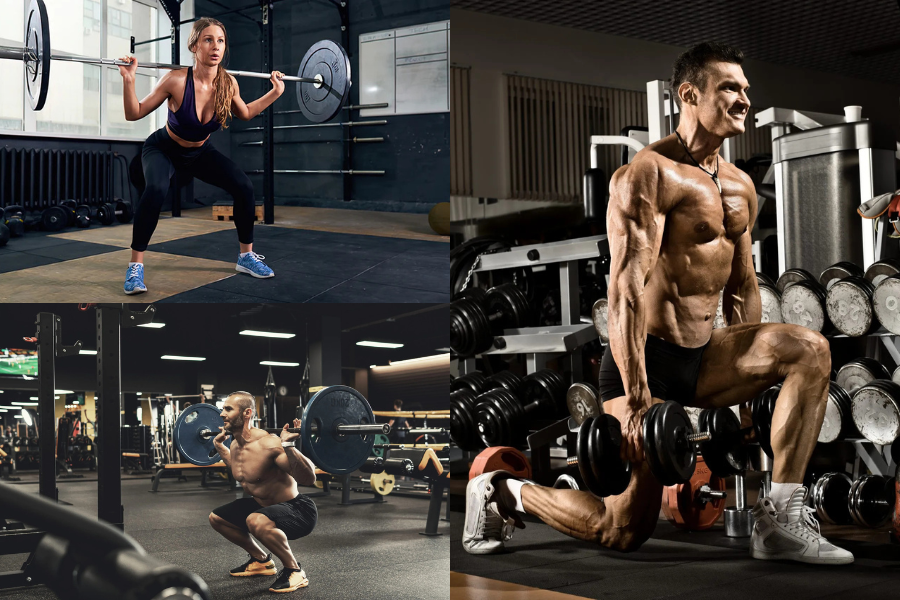
How Your Quad and Hamstring Workout Can Transform Your Legs
A smart quad and hamstring workout does much more than build bigger thighs. When you train these muscles in balance, you protect your knees, move more powerfully, and cut your risk of frustrating strains and tears. With a few focused exercises and habits, you can transform the way your legs look and feel.
Understand your quads and hamstrings
Your quadriceps sit on the front of your thighs and are made up of four main muscles: the rectus femoris, vastus lateralis, vastus medialis, and vastus intermedius. Together they extend your knee and help flex your hip, which you feel any time you squat, climb stairs, or get up from a chair. Training all four is essential for strong, well rounded quads.
Your hamstrings run along the back of your thighs. They are a group of three muscles that bend your knee and extend your hip, key moves for walking, running, and jumping. Because your quads are naturally more powerful than your hamstrings, they can overpower them if you are not careful, which is one reason hamstring tears are so common.
When you design your quad and hamstring workout, you are not just chasing muscle size. You are also trying to keep those front and back thigh muscles in balance so your knees, hips, and pelvis stay stable during daily life and sport.
Why balancing quads and hamstrings matters
If your quads are strong and your hamstrings lag behind, your risk of injury increases. Overdeveloped quads with undertrained hamstrings are linked to issues like hamstring strains, ACL tears, and general knee joint instability, according to a 2024 guide from American Sport & Fitness. An optimal hamstring to quadriceps strength ratio helps keep your joints aligned and better able to handle sudden changes in direction or speed.
Muscle imbalance is not just about the gym. If you sit a lot, your hip flexors and quads tend to get tight and dominant, while your hamstrings and glutes get weaker. Over time this can pull on your pelvis, contribute to tight hamstrings, and make running or squatting feel uncomfortable. Including unilateral exercises such as lunges and Bulgarian split squats is a practical way to check for asymmetries, because you will quickly notice if one leg feels less stable or weaker than the other.
You also need to think about fatigue. Because your quads are stronger, they can push your hamstrings to work harder than they are ready for during sprints or fast movements. When hamstrings fatigue too quickly, the risk of a pull or tear goes up, especially if you go from zero to all out effort without proper preparation.
Prevent injuries with smart training habits
Your quad and hamstring workout should protect your muscles as much as it strengthens them. A few habits make a big difference.
Start by increasing your training load gradually. Doing too much too soon is a classic setup for strains and tears. Aim to add only a small amount of weight, volume, or intensity each week so your tissues have time to adapt. Pair that with at least 48 hours between intense leg sessions so your muscles can repair and grow.
Hydration and nutrition matter more than you might think. Cramps are more common in the hamstrings than in the quads, and being under hydrated or low in minerals like calcium can make them more likely. Drinking water consistently and eating a balanced diet supports your legs during hard training.
Recovery techniques also belong in your plan. Foam rolling your hamstrings for 3 to 5 minutes after a workout, pausing for about 30 seconds on tight areas, can reduce soreness and improve flexibility. Rest days, light walks, or gentle cycling on off days keep blood flowing without overloading already tired muscles.
Finally, listen to soreness. It is normal to feel some muscle fatigue after a solid quad and hamstring workout, especially if you introduce new exercises. Sharp pain, swelling, or a sudden pulling sensation is different. If you suspect a strain, the usual first response is rest, ice or cold therapy, compression, and elevation. More severe tears might need imaging like an MRI and can take several months to heal, so getting medical advice early is wise.
Build stronger quads with focused moves
For quad growth, you want exercises that challenge knee extension and keep tension on the front of your thighs. Squats are still the foundation for leg mass, strength, and power, but how you squat changes which muscles work the hardest.
Quad focused squat variations, such as barbell front squats, heel elevated goblet squats, hack squats, and sissy squats, shift emphasis toward the quads by encouraging a more upright torso and deeper knee bend. For example, elevating your heels on small plates in a goblet squat allows your knees to travel further forward and drives more tension into the front of your thighs.
You can also use unilateral moves to target your quads and fix imbalances. Lunges and Bulgarian split squats, especially when you lightly elevate the front foot and keep your torso relatively upright, place a serious workload on the lead leg quadriceps. At the same time they train your balance and core stability, which carries over to almost every other lower body exercise.
Isolation work has a place too. Leg extensions essentially take everything else out of the equation so your quads do almost all the work. Because your body is supported by the machine, you can often handle more frequent sessions with less overall fatigue compared to heavy compound lifts. Single leg variations and brief pauses at the top of the movement help you feel and strengthen weak areas.
In terms of training frequency, aiming to work your quads twice per week is a practical guideline. Include at least two quad exercises per session and try to accumulate a minimum of ten quality sets each week in the 8 to 12 rep range. Leave at least 48 hours between hard leg days so you have time to recover.
Train your hamstrings for power and support
If your quads are the brakes and accelerators around your knee, your hamstrings are the stabilizers and shock absorbers. They respond especially well to low rep, explosive style work, which helps explain why Olympic lifters and sprinters often have well developed hamstrings.
A simple way to train them is to combine curling and hip hinging movements. For example, the hamstring giant set from a popular Muscle & Fitness routine uses leg curls, Romanian deadlifts, and glute ham raises. You perform three giant sets of 6 reps on each exercise, rest about 10 seconds between moves, and take two minutes between sets. The low reps and heavy weights recruit fast twitch fibers, which is exactly what you want for hamstring size and strength.
Romanian deadlifts and glute ham raises both train your hamstrings in a lengthened position as you hinge at the hip. This is useful because many hamstring injuries occur when the muscle is stretched beyond its normal range or loaded suddenly during a sprint. Strengthening the muscle where it is long can help prepare it for those moments.
You can balance that heavy work with more controlled leg curls and unilateral hip hinge variations, such as single leg Romanian deadlifts. These moves highlight any side to side differences, and they also challenge your glutes and lower back, which work closely with your hamstrings in most athletic movements.
Warm up and cool down the right way
How you start and end your quad and hamstring workout has a big effect on your risk of injury and how your legs feel the next day.
Before you lift, favor dynamic hamstring stretches that move your joints through a range of motion while increasing blood flow. Simple options include hamstring sweeps, alternating high kicks, and single leg Romanian deadlifts with light weight or just body weight. These drills prepare your muscles and nervous system for heavier loads without leaving you feeling sluggish.
After your workout, shift to static stretching. Holding quad and hamstring stretches for at least 30 seconds can increase overall flexibility and help protect your legs, according to guidance summarized in a 2024 article from the Journal of Sport and Health Science on Lose It!. A classic quad option is the standing foot grab stretch, where you brace yourself on a wall or chair, pull one foot toward your butt, and hold. For your hamstrings, the standing toe touch, where you hinge at the waist and reach for your toes while keeping weight in your heels, is a simple but effective choice.
You can also add a banded hamstring stretch if you have a resistance band. Sit, wrap one end around your foot, and gently pull your straight leg upward for several controlled reps. This can deepen the stretch and give you a bit more control over the angle.
Regular static stretching after workouts does more than keep you limber. It helps loosen tight muscles, maintains your range of motion, and reduces stiffness so you get more out of your strength sessions. Combined with foam rolling, it becomes a powerful routine for long term leg health.
Think of your warm up and cool down as bookends for your quad and hamstring workout. They do not take long, but they hold everything else in place.
Put it together into a sample workout
You can structure a balanced quad and hamstring workout by alternating between front and back of the thigh throughout the session or by dedicating specific days to each. Here is one example of a single full leg day you can adapt to your level:
- Dynamic warm up, 5 to 10 minutes of light cardio plus hamstring sweeps and body weight lunges.
- Squats for 15 minutes, choose a weight you can lift for about 10 reps, then perform as many controlled sets as possible in that time with short rests, focusing on full range of motion.
- Hamstring giant set, 3 rounds of leg curls, Romanian deadlifts, and glute ham raises for 6 reps each, 10 seconds between exercises, and 2 minutes between rounds.
- Quad finisher, 3 sets of sissy squats for 15 reps immediately followed by 30 reps of leg extensions, rest 2 minutes between sets.
- Cool down, 5 to 10 minutes of walking, then static quad and hamstring stretches and a few minutes of foam rolling.
This kind of session is intense, so you would only do it once per week at most, and you would keep your second leg day a bit lighter. As you progress, you can swap in different squat or hinge variations, or adjust sets and reps, as long as you maintain a balance between quad and hamstring work.
Key takeaways
Your quad and hamstring workout is your chance to build stronger, more stable legs that support everything else you do. Focus on these essentials:
- Train quads and hamstrings in balance to protect your knees and lower your injury risk.
- Use quad focused squats, unilateral work, and leg extensions for front thigh strength.
- Combine heavy hip hinges, curls, and fast twitch focused sets to build powerful hamstrings.
- Warm up dynamically, cool down with static stretching and foam rolling, and respect recovery.
If you are not sure where to start, pick one quad exercise and one hamstring exercise from this guide and add them to your next leg day. As they become familiar, you can build out a full routine that truly transforms your legs.
About The Author


