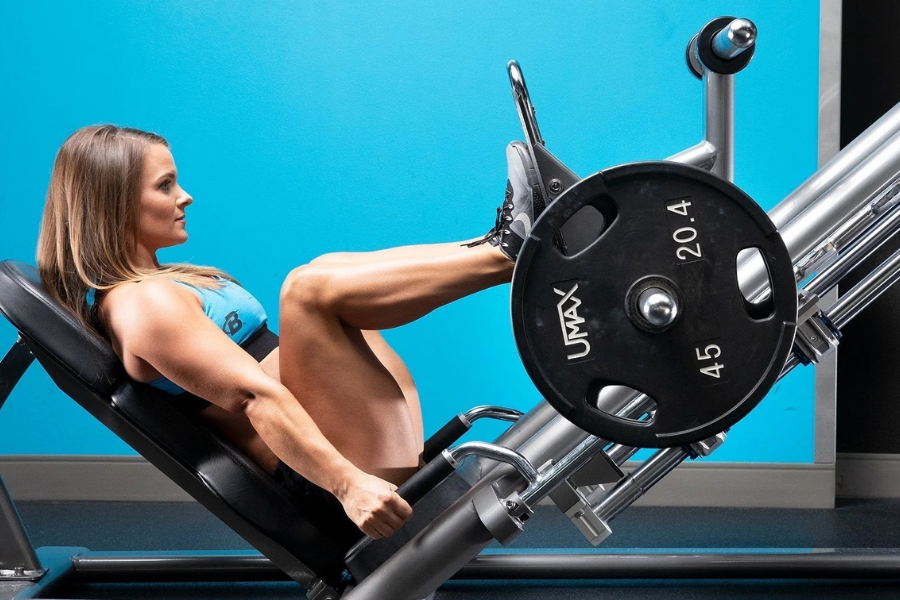
How Quadricep Workouts Transform Your Lower Body Power
A strong set of quads is about more than filling out your shorts. Smart quadricep workouts help you build lower body power, protect your knees, and make everything from squats to stairs feel easier. When you train your quads with good form and the right volume, you lay the foundation for almost every athletic and everyday movement.
Below, you will learn how your quadriceps work, the mistakes that hold your progress back, and exactly which exercises and workouts will transform your lower body strength.
Understand what your quadriceps actually do
Your quadriceps are the large muscles on the front of your thighs. They straighten your knees and, in one case, also help flex your hips. Together they drive movements like squats, lunges, jumping, and simply getting up from a chair.
Your quads are made up of four muscles that each play a specific role:
- Rectus femoris, crosses the hip and knee, helps flex your hip and extend your knee
- Vastus lateralis, the big outer thigh muscle that adds width and power
- Vastus medialis, the inner “teardrop” muscle that helps stabilize the kneecap
- Vastus intermedius, sits deep between the other three and assists with knee extension
Effective quadricep workouts challenge all four muscles so your thighs grow evenly, your knees feel supported, and your legs can actually transfer power into the ground.
Why quadricep workouts matter for power and health
Stronger quads do much more than look impressive in photos. They change how your whole lower body performs.
Good quadricep training helps you:
- Lift heavier on big compound moves like squats and deadlifts
- Sprint faster, jump higher, and accelerate more explosively
- Improve knee stability, which lowers your risk of knee injuries and joint wear
- Make daily tasks like climbing stairs, carrying groceries, and standing up easier
Research summarized by Healthline notes that strong, well conditioned quads improve knee stability and reduce the risk of knee injuries while making everyday movements feel smoother and more controlled. Other reviews highlight that better quadriceps strength is linked to a reduced risk of knee osteoarthritis and joint degeneration later in life, which makes your quad work a long term investment in joint health.
Common quad training mistakes to avoid
Before you load more weight on the bar, it helps to fix the habits that limit quad growth and strain your joints.
Using half reps instead of full range
Stopping your squats or leg presses halfway lets you move more weight, but it cheats your quads out of tension where they grow best. Partial reps also teach you to rely on momentum, not muscle control.
For most quad exercises, aim to:
- Lower with control until your knees are deeply bent, as long as it is pain free
- Pause briefly near the bottom instead of bouncing
- Drive up while keeping your feet flat and your knees tracking over your toes
You can shorten the range slightly if deep positions bother your knees, but make that a purposeful adjustment, not a way to lift ego weight.
Turning squats into a back and glute exercise
Leaning too far forward, pushing your hips way back, or sitting into a very wide stance shifts work away from your quads and into your hips and lower back. That can be useful when you want more glute focus, but it is not ideal for quad dominant squats.
To keep tension on your quads:
- Use a shoulder width or slightly narrower stance
- Let your knees travel forward over your toes instead of forcing your hips far back
- Keep your torso as upright as your mobility allows
Biomechanics research shows that more forward shin angle (tibia inclination) and a more upright torso increase the knee flexion moment and therefore the demand on your quadriceps, especially if your heels are slightly elevated.
Never training close to muscular failure
If every set feels easy, your quads have no reason to adapt. For muscle growth, you want most working sets to finish with about 1 to 3 reps still in the tank. You should feel a strong burn and a real challenge to keep good form on the last few reps.
You do not need to push every set to absolute failure, especially on heavy barbell movements, but you should regularly approach it on safer exercises like leg presses and leg extensions.
Key training principles for powerful quads
Once your form is under control, your results mainly come from how often you train, how much work you do, and the rep ranges you use.
Train your quads twice per week
Current strength training recommendations suggest that training a muscle group twice a week is ideal for growth and strength. For quads, that usually means:
- 2 quad focused sessions per week, or
- 2 lower body days with clear quad dominant exercises in each
Allow at least 48 hours between hard quad sessions to recover properly and come back stronger.
Aim for at least 10 quality sets per week
You can think of your weekly quad training in terms of hard sets, not just days in the gym. Many lifters see good progress when they reach:
- 10 to 15 hard working sets for quads per week
For example, you could do 3 sets of front squats, 3 sets of lunges, and 2 sets of leg extensions twice a week. That gives you 16 total sets, which is plenty for most people. Going much beyond 20 weekly sets often leads to fatigue without better results, especially if your sleep and nutrition are not dialed in.
Stay mostly in the 8 to 12 rep range
For hypertrophy and strength, 8 to 12 controlled reps is a sweet spot for many quad exercises. You can use:
- Lower reps, around 5 to 8, on heavy movements like back squats
- Moderate reps, around 8 to 12, on front squats, hack squats, and lunges
- Slightly higher reps, around 12 to 20, on leg extensions, goblet squats, and wall sits
Your goal is to reach muscular fatigue while still keeping form tight and the movement under control.
If you combine solid form, full range of motion, and 10 to 15 hard sets per week, your quadricep workouts will build both size and power without relying on complicated routines.
Best quad focused compound exercises
Compound movements give you the most strength and muscle for your time. To truly target your quads, you want versions of squats and lunges that emphasize knee extension over hip dominance.
Front squats
Front squats shift the bar to the front of your body, which naturally makes you keep your chest up and your knees driving forward. This increases quad recruitment compared with traditional back squats.
How to use them:
- Place the bar on the front of your shoulders
- Keep your elbows high and torso tall
- Sit straight down between your heels, letting your knees track over your toes
You can build up to 3 to 4 sets of 6 to 10 reps. Start lighter than your back squat while you learn the movement.
Heels elevated goblet squats
Goblet squats are beginner friendly and very quad focused, especially when your heels are slightly elevated on a plate or block. This increases your range of motion and targets the vastus medialis, the inner teardrop muscle.
Basic prescription from the research:
- 2 sets of 10 reps
- 60 seconds rest between sets
Holding the weight in front of your chest also helps you stay more upright and reduces strain on your lower back.
Hack squats and sissy squats
If you have access to a hack squat machine, you can use it to load your quads heavily while your back stays supported. Placing your feet lower on the platform and letting your knees travel forward increases quad tension.
Sissy squats are a more advanced bodyweight or assisted movement where your knees travel far forward while your torso leans back. These create intense tension on your quads and should be added gradually if your knees feel healthy and your current squat strength is solid.
Unilateral movements for balance and joint health
Training one leg at a time helps you spot and correct strength imbalances. It also challenges your balance and core stability, which carries over to sports and everyday life.
Split squats
Traditional split squats are a great introduction to unilateral quad work. You start in a lunge stance, then lower your hips straight down without letting your back knee hit the floor.
Research based recommendations include:
- 2 sets of 10 reps per leg
- About 30 seconds rest between sets
Keep your torso relatively upright and your stance moderate in length if you want more quad emphasis and slightly less glute stretch.
Bulgarian split squats
Bulgarian split squats take things up a level by elevating your back foot on a box or bench. This puts more load on your front leg and allows a deeper stretch in your quads and hip flexors.
For quad focus:
- Use a shorter stance
- Keep your torso upright
- Let your front knee travel forward over your toes
You can start with bodyweight and progress to dumbbells as you get stronger. A simple plan is 2 sets of 10 reps per leg with 30 seconds rest, as suggested in the research.
Lunges with front foot elevated
Elevating your front foot slightly on a low step increases the range of motion for your front leg, which means your quads work harder. Forward or reverse lunges both work, so choose the one that feels better on your knees.
Isolation and power moves that complete your quad training
Once you have your main squats and lunges in place, you can use accessory exercises to add targeted stimulus and explosive power.
Leg extensions
The leg extension machine isolates your quads with very little help from other muscles. This makes it ideal for finishing your workout, chasing a pump, or building strength when squats are limited by back or hip issues.
Useful variations include:
- Single leg extensions to fix imbalances
- Isometric holds at the top for 2 to 3 seconds per rep
- High rep “burnout” sets of 15 to 20 reps near the end of your session
Because leg extensions do not tax your whole body as much, they also recover faster than heavy squats.
Wall sits
Wall sits are a simple but brutal way to challenge your quads with a static hold. Slide your back down a wall until your knees are at roughly 90 degrees, then hold as long as you can while keeping your heels flat.
A basic structure from the research is:
- 2 sets of 30 seconds, or as long as possible
- 30 seconds rest between sets
You can progress by holding longer, adding a weight plate in your lap, or reducing your rest.
Plyometric jumps for explosive strength
Plyometric exercises teach your quads to produce force quickly, not just slowly under heavy load. Good options include squat jumps and box jumps, which also engage your glutes, calves, and core.
To keep them safe and effective:
- Limit sets to about 5 quality reps
- Focus on soft landings and good knee alignment
- Do them near the start of your workout when you are fresh
Studies on jump squat training three times per week over eight weeks show improvements in explosive strength and sprint performance, which reflects how powerful quad focused plyometrics can be when used correctly.
Sample quadricep workout templates
You can plug the exercises above into simple, repeatable sessions. Here are two examples, one for beginners and one for more experienced lifters.
Beginner quad focused day
Warm up for 5 to 10 minutes with brisk walking, leg swings, and light bodyweight squats.
Then:
- Goblet squats, 2 to 3 sets of 10 reps
- Split squats, 2 sets of 10 reps per leg
- Wall sits, 2 sets of 30 seconds
- Quad foam rolling, 2 sets of 20 seconds per leg with 30 seconds rest
Start with about 2 sets of each movement if you are new, then add a set over time as your strength and recovery improve.
Intermediate to advanced quad power session
Warm up as above, then:
- Front squats, 3 to 4 sets of 6 to 8 reps
- Bulgarian split squats, 3 sets of 8 to 10 reps per leg
- Leg extensions, 3 sets of 12 to 15 reps
- Optional finish, 2 sets of squat jumps, 5 reps each with full rest between sets
You can run this session twice a week with at least 48 hours between workouts, adjusting sets so your total weekly quad volume stays in the 10 to 15 set range.
Recovery habits that keep your quads progressing
Heavy quadricep workouts are demanding, so your progress depends as much on recovery as it does on what you do in the gym.
Helpful recovery practices include:
- Quad foam rolling for 2 sets of about 20 seconds per leg after tough sessions
- Easy walking or cycling on off days to keep blood flowing
- Enough protein and calories to support muscle repair
- Consistent sleep so your body can rebuild between workouts
If your knees feel irritated, consider using more knee extensor biased squats with an upright torso and forward shin angle, but avoid deep ranges that cause pain. When in doubt, shorten the range a little, use lighter loads, and build up gradually as your strength and comfort improve.
With smart exercise choices, solid technique, and consistent effort, your quadricep workouts will transform not just how your legs look, but how powerful and capable your entire lower body feels.
About The Author


