Best Tricep Exercises to Sculpt and Tone Your Arms Quickly
A strong tricep routine does more than add shape to the back of your arms. The best tricep exercises help you press more weight, stabilize your shoulders, and make everyday movements like pushing a door or getting up from the floor feel easier. Since your triceps make up about two thirds of your upper arm, focusing on them is one of the fastest ways to see visible changes in arm definition.
Below, you will find a clear guide to the best tricep exercises, why they work, and how to put them into a simple workout you can start right away.
Understand your triceps first
Your triceps sit on the back of your upper arm and have three parts or heads. The long head runs along the back of your arm and crosses your shoulder, the lateral head forms the outer “horseshoe” shape, and the medial head sits deeper and helps with stability. Together, they control elbow extension, which is any motion where you straighten your arm.
Because the triceps are involved in pressing, stronger triceps often mean a stronger bench press, push up, and overhead press. Research and major fitness brands highlight that tricep muscles can make up around 70 percent of total arm mass, so they are essential for building bigger, more sculpted arms and for improving compound lifts like bench press and push ups.
When you choose tricep exercises, look for a mix that stretches the muscle under load, fully contracts it, and challenges all three heads from slightly different angles.
Best bodyweight tricep exercises
Bodyweight tricep exercises are convenient and joint friendly, especially when you are just getting started or training at home.
Tricep dips
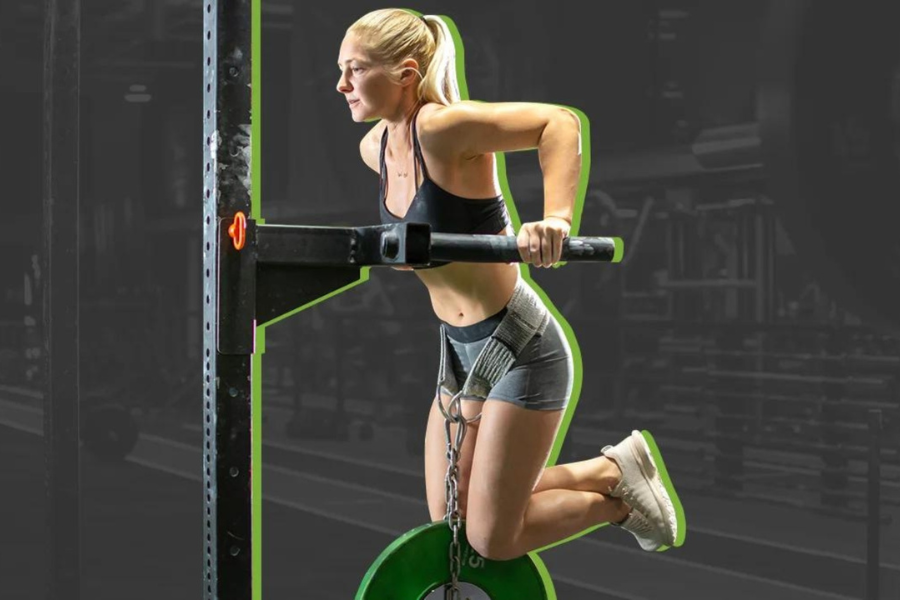
Tricep dips use your body weight to hit the back of your arms while your core works to keep your hips off the ground. You can do them on a sturdy chair or bench at home, or on parallel bars if you have access. They mainly target the lateral head, and when you adjust hand position you can shift emphasis within the triceps.
Sit on the edge of the chair with hands beside your hips, then walk your feet forward and slide your hips off the seat. Bend your elbows to lower your body, keeping your torso close to the chair, then press back up without locking out your elbows. Beginners can reduce the range of motion or keep knees bent to reduce shoulder stress. As you get stronger, you can straighten your legs or eventually use two benches or bars to increase difficulty.
Be careful not to dip too low, hunch your shoulders, or lean far forward, since that will drag your chest into the movement and can irritate your shoulders. If you have existing shoulder issues, it is often better to replace dips with push ups or cable pushdowns.
Close grip push ups
Close grip push ups are one of the simplest and most effective tricep moves you can add to your routine. Place your hands slightly narrower than shoulder width and keep your elbows close to your torso as you lower. This hand placement shifts more of the load from your chest to your triceps and also engages your core when you keep your abs tight throughout the movement.
If full push ups are too difficult, start with your hands on a bench or counter and gradually work closer to the floor. Focus on smooth, controlled reps and do not let your elbows flare out wide.
Best dumbbell tricep exercises
Dumbbells give you a greater range of motion and allow each arm to work independently. That helps you correct imbalances and build more even strength on both sides, which is one reason dumbbell tricep exercises are highly effective for muscle growth and strength.
Close grip dumbbell bench press
The close grip dumbbell bench press is a powerful compound move that trains your chest and shoulders but shifts more emphasis to your triceps. Lying on a bench, hold two dumbbells close together over your chest with palms facing each other and elbows tucked in tight to your sides. Lower the weights under control until your elbows are at about a 90 degree angle, then press back up while squeezing your triceps hard at the top.
Because dumbbells reduce stress on the shoulder joint and allow a more natural path for your arms, you can often use nearly as much weight as you would on the barbell version while staying comfortable.
Lying dumbbell tricep extension (skull crusher)
The lying dumbbell tricep extension, often called a skull crusher, is a classic hypertrophy exercise. It is especially good at targeting the long head of the triceps by placing it in a lengthened position. Lie on a bench with dumbbells above your chest and arms slightly angled back, not perfectly vertical. Keeping your upper arms still, bend your elbows to lower the weights near the sides of your head, then extend your arms again.
Keeping your arms slightly angled backward instead of straight overhead helps maintain tension at the top so you do not “lose” the muscle work between reps. Focus on control and avoid letting your elbows flare or the weights drift toward your face.
Overhead dumbbell tricep extension
Overhead tricep extensions shine when you want to grow the long head, which gives your arms that full, rounded look. Stand or sit tall, hold a single dumbbell with both hands or one dumbbell in each hand, and press it overhead. Keeping your upper arms close to your head, bend your elbows to lower the weight behind your head, then extend to return to the starting position.
The overhead position puts the tricep in a stretched state, and studies highlighted by the European Journal of Sport Science suggest that training muscles in a lengthened position can enhance hypertrophy. Men’s Health UK notes that both single arm and two hand overhead extensions effectively engage all heads of the triceps when you keep your upper arms steady as you lower the dumbbell behind your head.
Dumbbell tricep kickback
The dumbbell tricep kickback is excellent for achieving full contraction and maximum shortening of the tricep. Hinge at the hips with a flat back, support yourself with one hand on a bench, and hold a dumbbell in the other hand. With your upper arm lifted so it is slightly behind your torso, bend your elbow to bring the weight near your hip. Then extend your elbow until your arm is straight and your upper arm stays behind your body.
This behind the body position is what makes kickbacks unique. It lets you squeeze the triceps hard at peak contraction, which many other movements do not provide as effectively.
Other advanced dumbbell options
Once you are comfortable with the basics, you can experiment with more advanced moves such as the dumbbell JM press, the rolling tricep extension, or even a dumbbell upright dip, where you keep the body upright to load the triceps more heavily and can progressively add weight with a strapped on dumbbell. These are better choices after you have a foundation of strength and stable elbows.
Best cable and band tricep exercises
Cables and resistance bands keep constant tension on your triceps throughout the range of motion and are easy to adjust for beginners.
Tricep pushdowns
Tricep pushdowns, especially with a rope attachment and neutral grip, are one of the best ways to isolate your triceps. Stand tall facing the cable stack, grab the rope with palms facing in, and start with elbows tucked at your sides at about 90 degrees. Push the rope down until your arms are straight, then slowly return to the start without letting your elbows drift forward.
Rope pushdowns emphasize the lateral and medial heads, while variations like reverse grip pushdowns focus more on the medial head. The key is to keep your upper arms pinned to your sides and avoid using your shoulders to swing the weight.
Band tricep kickbacks and pushdowns
If you do not have cable machines, bands can provide a similar training effect and even add a stability challenge. You can do band tricep kickbacks by anchoring the band under your front foot or to a low point behind you, then hinging forward and extending your elbow as you would with dumbbells.
For band pushdowns, anchor the band overhead, grip the ends, and perform the same motion as a cable pushdown. Because the resistance increases as the band stretches, you have to control the entire movement, which can improve stability of surrounding muscles and ligaments.
Keep your shoulders relaxed and your ribs down during any cable or band work. If you feel strain in your lower back or neck, reset your posture before your next rep.
How often you should train triceps
You do not need to train triceps every day to see changes, but you do want regular, consistent work. Recent training reviews suggest that to maximize tricep growth, you should train them at least twice per week with a total volume of about 12 to 28 sets per week at a moderate weight and in the 8 to 12 rep range.
Personal trainers also recommend working your triceps 2 to 3 times per week using a mix of bodyweight, dumbbell, and band exercises. If you use lighter weights, match that with higher repetitions to avoid overexertion, and aim to reach fatigue around the ninth or tenth rep in a set.
Plan at least one rest day between heavy tricep sessions so your muscles can recover and grow, and try to get 7 to 9 hours of sleep per night, which supports muscle repair.
Sample tricep workout you can try
Here is a simple tricep focused session you can plug into your week. Warm up first with 5 to 10 minutes of light cardio, then some dynamic stretches for your shoulders and elbows.
-
Close grip push ups
3 sets of 8 to 12 reps -
Close grip dumbbell bench press
3 sets of 8 to 10 reps -
Overhead dumbbell tricep extension
3 sets of 10 to 12 reps -
Tricep pushdowns or band pushdowns
3 sets of 10 to 15 reps -
Dumbbell tricep kickbacks
2 to 3 sets of 12 to 15 reps
Finish with gentle stretching for your triceps and shoulders to improve flexibility and reduce muscle tension. Stretching before and after tricep workouts can enhance your range of motion and lower your injury risk, which is why many beginner friendly programs emphasize it.
Adjust the sets and reps to your current fitness level. If you are new, start on the lower end of the volume range and focus on mastering form.
Key tips for faster tricep results
To get the most out of the best tricep exercises, pay attention to a few form and programming details. Keep your upper arm position stable on most isolation moves, like extensions and kickbacks, so your triceps do the work instead of your shoulders. Use a full but comfortable range of motion, especially on overhead and skull crusher variations, and avoid rushing through reps.
Switch your routine every 3 to 4 weeks so your body does not adapt completely. You can change the order of exercises, try new variations, or adjust your rep ranges. Combine that with progressive overload, which simply means adding weight, reps, or sets over time, and your triceps will have a steady reason to grow.
Choose one change to start with today, such as adding close grip push ups to the end of your workout, and notice how your arms feel more engaged. As you build consistency, these tricep exercises will not only sculpt and tone your arms, they will also make your entire upper body feel stronger and more capable.
About The Author


