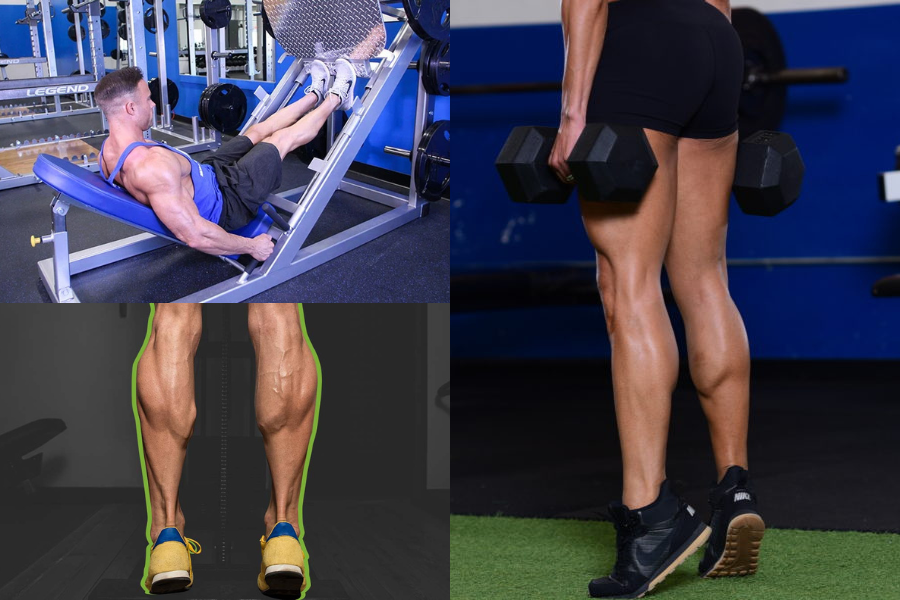
Friendly Calf Workouts to Help You Build Endurance
Calf workouts are about much more than appearance. Strong calves support every step you take, improve your balance, and help you move with more ease and confidence. With a few friendly, focused calf exercises, you can build endurance in your lower legs without crushing workouts or complicated equipment.
Below, you will find simple calf workouts and tips you can use at home or in the gym to gradually build strength, stability, and stamina.
Understand your calf muscles
Before you jump into calf workouts, it helps to know what you are training. Your calves are small compared to your quads or glutes, but they work hard all day.
Your main calf muscles are:
- Gastrocnemius. This is the larger, more visible muscle that sits on the back of your lower leg. It crosses both your knee and ankle and helps you point your toes and bend your knee. It works hardest when your leg is straight, such as in standing calf raises.
- Soleus. This flatter muscle sits underneath the gastrocnemius. It works most when your knee is bent, such as in seated or bent-knee calf raises. The soleus helps stabilize your lower leg and ankle while you stand, walk, and run.
Both muscles are responsible for plantar flexion, which is the motion you use when you push off the ground during walking, running, and jumping, as explained by the International Sports Sciences Association. When you design your calf workouts, you want to train both of these muscles so your lower legs are strong and balanced.
Why calf endurance matters
If your calves tire quickly, you feel it everywhere. Your ankles may wobble on uneven ground, your knees can feel unstable, and even a short jog can leave your lower legs burning. Targeted calf training improves endurance so your calves can keep up with everything else you ask of your body.
Calf workouts that focus on endurance help you:
- Maintain good form when you walk, hike, or run longer distances
- Improve ankle mobility and overall lower body fluidity
- Reduce your risk of common issues like shin splints, knee instability, and Achilles strains
Calf training is also a simple way to boost athletic performance. Stronger, more resilient calves can improve your explosiveness during jumps and sprints and support better posture and balance during everyday movements, as highlighted by experts at MensHealth in 2024 and by ISSA in 2023.
Key principles for friendly calf workouts
Calves respond best when you train them with more intention than just walking around or throwing in a few half-hearted raises after leg day. A few simple principles will help you build endurance without beating yourself up.
Train both straight- and bent-knee positions
Straight-knee calf raises focus on the gastrocnemius, while bent-knee variations shift more work to the soleus. You need both for complete lower leg development and better endurance.
In practice, that means including:
- A standing variation, like regular calf raises
- A bent-knee variation, like seated or bent-knee calf raises
This balance is essential, since the soleus does a lot of the quiet stabilizing work when you stand or move throughout the day.
Use enough range of motion and load
Your calves are already used to thousands of low-intensity steps per day. To grow stronger, they need a different challenge. ISSA notes that short, partial reps with light effort are a common mistake. To make progress, you want:
- A deliberate range of motion that feels challenging but controlled
- A load that makes the final reps of each set feel difficult, without pain
Sports rehab specialist David Grey also points out that the bottom half of the calf raise is where most strength-building occurs. Focusing your effort in that challenging mid-range, rather than bouncing through tiny reps, helps your workouts pay off.
Mix rep ranges and training styles
Your gastrocnemius has a nearly equal mix of slow- and fast-twitch muscle fibers. That means it responds well when you vary your calf workouts. You can:
- Use moderate reps, like 8 to 15, with controlled tempo for strength
- Use higher reps, like 15 to 25, for endurance and muscle pump
- Include explosive work, like jump rope or small hops, for power and coordination
Alternating between “volume” days with more total reps and “strength” days with heavier resistance keeps your calves adapting instead of stalling.
Support recovery and consistency
Endurance improves when you train often enough and recover well. ISSA emphasizes progressive overload along with good sleep to support muscle repair and hormone regulation. Aim to:
- Train calves 2 to 3 times per week for general strength and endurance
- Work up to 4 to 5 shorter sessions per week if your goal is calf size and stamina, as suggested by Arsenal Strength in 2025
- Get enough sleep and include some light stretching after workouts to keep your lower legs feeling loose and ready
Beginner-friendly calf endurance routine
If you are new to calf workouts, this routine will help you build a base. You can perform it at home using just your body weight and a step or sturdy book.
Try this routine 2 to 3 times per week, with at least one rest day between sessions:
- Standing calf raises
Stand tall, feet hip-width apart, hands resting lightly on a wall or chair for balance.
Rise slowly onto your toes, pause briefly, then lower in a controlled way.
- 3 sets of 15 to 20 reps
- Focus on pressing evenly through the big toe and little toe
- Avoid bouncing and keep your movements smooth
- Bent-knee calf raises
From a slight knee bend (like a mini squat), lift your heels and lower them, keeping your knees bent the whole time. This emphasizes the soleus.
- 3 sets of 12 to 15 reps
- Keep your chest upright and heels moving directly up and down
- Tiptoe walks
Stand on your toes and walk slowly across the room, keeping your heels off the ground.
- 3 rounds of 20 to 30 seconds
- Rest 30 to 45 seconds between rounds
- Wall stretch for calves
Place your hands on a wall, step one foot back, and press that heel down while you gently lean forward.
- Hold 20 to 30 seconds per side
- Repeat 2 times each leg
This routine gives you a mix of static and dynamic work so you build strength, endurance, and mobility at the same time.
Intermediate calf workouts for more stamina
Once your beginner routine feels comfortable, you can increase the challenge with more volume, single-leg work, and a small plyometric element. These workouts are still friendly, but they ask your calves to work a bit harder.
Try one of the following two workouts 2 to 3 times per week. Leave at least one rest day between sessions.
Workout A: Strength and stability
- Single-leg standing calf raises
Stand on one leg on a step or sturdy platform so your heel can lower slightly below the edge. Hold a railing or wall for balance if needed.
- 3 sets of 10 to 15 reps per leg
- Use slow, controlled movements and focus on pushing through the full foot
- Seated calf raises (with weight if available)
Sit on a chair, feet flat. Place a dumbbell or heavy book on your knees if you have one. Lift your heels, pause, and lower.
- 3 sets of 12 to 20 reps
- Keep your knees at about 90 degrees to target the soleus
- Farmer’s carry on tiptoe
Hold a moderate weight in each hand, stand on your toes, and walk in a straight line.
- 3 rounds of 20 to 30 seconds
- This challenges your calves, ankles, and balance together
- Calf stretching between sets
Lightly stretch your calves for 10 to 15 seconds between sets. According to ISSA, stretching between sets and after training can enhance mobility, muscle pump, and recovery.
Workout B: Endurance and explosiveness
- High-rep standing calf raises
Perform 2 sets of standing calf raises with a slightly faster tempo than usual, but stay in control.
- 2 sets of 20 to 25 reps
- Jump rope intervals
If your joints tolerate it, jump rope at an easy pace. Fitness experts Ebenezer Samuel and Don Saladino recommend intervals of 30 seconds on and 30 seconds off for 3 to 4 rounds.
- Start with 3 rounds and build to 4
- Focus on soft landings on the balls of your feet
- Low jump squats
From a quarter squat, perform small, controlled jumps, focusing on using your calves to push off and land softly.
- 3 sets of 8 to 10 reps
- Keep the jumps low to protect your joints
- Downward dog calf stretch
From a plank, push your hips back into a downward dog position and gently pedal your heels one at a time.
- 30 to 45 seconds
- Repeat 2 times
This combination of higher reps and light plyometrics helps your calves store and release energy efficiently, which is exactly what you need for better endurance in running, hiking, or everyday activity.
Sample weekly plan
To make these calf workouts easier to follow, here is one way you might organize them:
Example weekly schedule
- Monday: Beginner or Workout A
- Wednesday: Light walking or general cardio, include calf stretching
- Thursday: Workout B
- Saturday: Optional additional beginner routine or longer walk with hills
You can adjust the days to fit your schedule. The goal is to sprinkle calf work through your week instead of cramming everything into one long session.
Common calf training mistakes to avoid
Calf workouts are simple, but there are a few patterns that can hold you back. You will get better results if you watch for the following:
Using too little weight or effort
It is easy to underestimate how strong your calves already are. Many people train with loads that are too light, which does not create enough stimulus for growth or endurance. Gradually increase resistance or reps so the final few repetitions of each set feel challenging but still safe and controlled.
Relying on tiny, bouncy reps
Short, low-intensity reps mimic the steps you already take all day. To grow and get stronger, your calves need a greater range of motion and more intensity. Focus on slow lowers, a steady push back up, and avoid using momentum.
Doing everything seated
Seated calf raises are helpful for targeting the soleus, but sports rehab specialist David Grey notes that excessive variety or too many seated movements is not necessary. Standing calf raises remain one of the best overall options for building strong, functional calves that support you in daily life.
Skipping rest and recovery
Calves can handle frequent work, but that does not mean they never need a break. If you are doing calf raises every day with low weight and no clear plan, you might not see much progress. Instead, aim for consistent training with intentional load and make sure you get enough sleep so your muscles can repair and adapt, as ISSA highlights.
When to be cautious or seek help
Calf workouts should feel challenging, not painful. Pay attention to how your lower legs respond:
- Mild burning or fatigue during your sets is normal
- Sharp pain, sudden swelling, or difficulty bearing weight is a sign to stop
In cases of severe pain or symptoms that do not improve with rest, consult a healthcare professional. Calf muscle strains can result from running or jumping without proper warm-up, and ignoring serious symptoms can make recovery longer and more complicated.
If you have a history of Achilles tendinopathy or frequent calf strains, start with lower-intensity variations, such as seated calf raises, gentle tiptoe walks, or simple balance work, and build up slowly.
Building calf endurance at your own pace
You do not need an advanced gym program to benefit from calf workouts. A few focused movements performed several times a week can:
- Strengthen the gastrocnemius and soleus
- Improve ankle stability and balance
- Boost your walking, running, and jumping performance
- Support healthier circulation in your lower legs
Start with the beginner routine, pay attention to your form, and gradually progress to the intermediate workouts when you feel ready. Over time, you will notice that stairs feel easier, your stride feels more powerful, and your lower legs stay fresher for longer.
Choose one exercise from this guide to try today, such as a simple set of standing calf raises. Your future self, walking more comfortably and confidently, will thank you.
About The Author