Get Shredded with a Friendly Chest Routine for Men
A strong, defined chest does more than fill out a T‑shirt. With the right chest routine for men, you can boost strength, support better posture, and burn extra calories, all while building muscle you can see and feel.
Below, you will find a friendly, practical guide to training your chest, whether you work out at home, in a gym, or a mix of both.
Understand your chest muscles
Before you load up the bar or start knocking out pushups, it helps to know what you are actually training.
Your chest is mainly made up of two muscles:
- Pectoralis major. This large, fan-shaped muscle covers most of your upper chest. It is responsible for pushing, hugging, and bringing your arms toward the middle of your body.
- Pectoralis minor. This smaller triangular muscle sits underneath the pec major. It helps stabilize your shoulder blade and supports lifting and rotating movements.
These muscles are involved whenever you push something away, press yourself off the floor, or move your arms across your body. Because they are big muscles, training them can use a lot of energy and help increase your overall metabolism, which supports fat loss and getting leaner.
Warm up to protect your shoulders
Cold, tight muscles have a limited range of motion and are more likely to strain or tear. A quick warmup is your insurance policy.
Spend 5 to 10 minutes on:
- Light cardio. Brisk walking, an easy bike, or jumping jacks until you feel slightly warm.
- Dynamic upper body moves. Arm circles, band pull-aparts, and light pushups on a wall or countertop.
- Scapula activation. Practice pulling your shoulder blades back and down as if you are tucking them into your back pockets.
This last point is key. When you retract and gently squeeze your shoulder blades together during presses, you protect your shoulders and help your pecs do more of the work instead of your delts.
Tip: If your shoulders feel pinchy or unstable during chest exercises, slow down, reset your shoulder blades, and reduce the weight until the movement feels solid and smooth.
Start with bodyweight chest training
If you think you need a barbell to build a strong chest, you do not. Pushup variations alone can deliver a serious workout, especially if you are consistent.
Core pushup variations
Here are the main pushup styles that belong in a chest routine for men:
- Regular pushup. Hands just outside shoulder width, body in a straight line from head to heels. This hits your mid-chest, shoulders, and triceps.
- Incline pushup. Hands on a bench, box, or sturdy table. This reduces the load and is perfect if regular pushups feel too hard or if you are warming up.
- Decline pushup. Feet elevated on a step or bench while hands stay on the floor. This increases difficulty and shifts more focus to your upper chest.
- Wide pushup. Hands set wider than shoulder width. This increases chest activation and slightly reduces triceps involvement.
- Time under tension pushup. Lower slowly in 3 to 4 seconds, pause for 1 second at the bottom, then press up. The slower pace increases muscle fatigue and growth even without extra weight.
You can also explore more advanced options like diamond pushups, Spiderman pushups, and one-arm pushup progressions once your base strength improves.
Simple at-home chest circuit
You can build an effective no-equipment workout just with pushups and a bit of cardio for conditioning. For example:
- 10 regular pushups
- 10 incline pushups
- 10 decline pushups
- 5 slow time under tension pushups
- 20 star jumps
- 20 mountain climbers
Rest 60 to 90 seconds, then repeat for 2 to 3 total rounds. This sequence challenges different angles of your chest and trains your heart and lungs at the same time.
According to an eight-week at-home plan highlighted by Men’s Health UK in 2024, structured bodyweight press-up routines like this can significantly increase chest size and strength over time by progressing from endurance to strength and power phases.
Progress with dumbbells and stability work
Once pushups feel comfortable, adding external resistance lets you continue to grow. Dumbbells are especially useful because they demand more stability, which means more muscle recruitment.
Key dumbbell chest moves
You can hit your chest from different angles with just a bench and a pair of dumbbells:
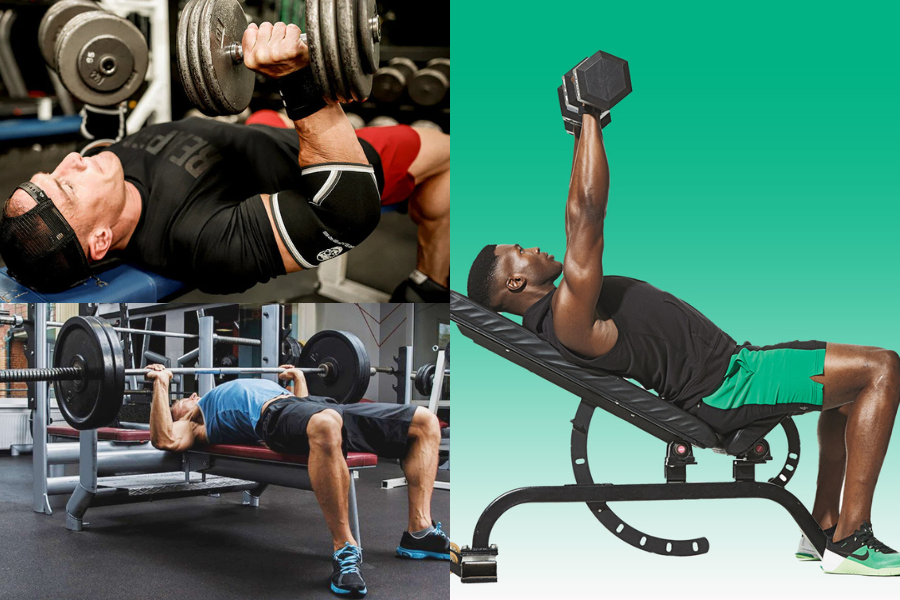
- Flat dumbbell bench press. Lie on a flat bench, dumbbells over your chest, palms facing forward or slightly inward. Lower them under control, keeping your upper arms at roughly a 45-degree angle to your torso, not flared straight out to the sides. This protects your shoulders and helps your chest handle the load.
- Incline dumbbell bench press. Set the bench to about 30 to 45 degrees. This shifts emphasis to your upper chest and gives you a bigger stretch at the bottom.
- Decline dumbbell press. With the bench at a small decline, you will feel more work in your lower chest.
- Dumbbell chest fly. With a slight bend in your elbows, open your arms wide and then bring the weights together in a hugging motion. This encourages horizontal adduction across your midline, which is crucial for full chest development.
Start with lighter weights that you can control and gradually increase as your form and strength improve. Rushing to heavy dumbbells often leads to elbow flare and shoulder discomfort, especially in beginners.
Stability and mind-muscle connection
Including exercises that challenge your stability helps you feel your pecs more clearly in every rep. For example:
- Single-arm dumbbell bench presses
- Alternating dumbbell presses
- Pushups with one hand on a small elevation like a low step
These moves make your core and stabilizing muscles work harder, plus they sharpen your ability to engage your chest instead of letting your shoulders or triceps take over.
Build serious size with dips and cables
When you are ready for heavier work, compound movements that let you load up safely are your next step.
Dips for lower chest strength
Chest dips are among the best exercises for building lower chest size and strength. Using parallel bars or two stable surfaces:
- Support your weight with straight arms.
- Lean your torso slightly forward and let your elbows flare a bit to emphasize your chest over your triceps.
- Lower yourself in a controlled motion until you feel a stretch across your chest, stopping before your shoulders feel strained or jammed.
- Press back up without locking out hard at the top.
As you get stronger, you can add weight with a dip belt or by holding a dumbbell between your legs. Just make sure you never sacrifice control or shoulder comfort for extra plates.
Use cables to fully engage the chest
Classic chest lifts like the barbell bench press, incline bench, and dips are excellent for strength. However, they do not always take your arms all the way across your body, which is where your chest fully shortens.
Cable crossovers and fly variations fill that gap. For example, many coaches recommend pairing heavy presses with cable work as a drop set:
- Mid chest. Barbell bench press followed immediately by horizontal cable crossovers.
- Upper chest. Incline dumbbell press followed by low-to-high cable crossovers.
- Lower chest. Weighted dips followed by high-to-low cable crossovers.
This combination lets you overload the muscle, then finish it with lighter work that emphasizes that full squeeze across your midline.
Use smart technique to protect your shoulders
Chest training is only helpful if it does not leave your shoulders wrecked. A few key technique habits go a long way:
- Keep elbows at about 45 degrees. Flaring them straight out to 90 degrees during bench presses is a common beginner mistake that can cause shoulder stress, as noted by coaches like Men’s Health fitness director Ebenezer Samuel. A 45-degree angle engages your chest while keeping your joints in a safer position.
- Set your shoulder blades. Pull them back and down into the bench or toward your back pockets before you press. This protects your shoulders and lets your pecs drive the movement.
- Check your forearms on incline presses. Your forearms should be vertical, roughly perpendicular to the floor, throughout the press. If they angle too far forward or backward, your shoulders end up taking more strain.
- Avoid ego lifting. Choose a weight that lets you control the full range of motion without bouncing, twisting, or relying on a spotter to do half the work.
You can increase intensity with techniques like drop sets, paused reps, or partials to failure, but only after your form is consistent.
Plan your weekly chest training
How often you train your chest depends on your current level and recovery:
- Beginners. Aim for chest work 1 or 2 times per week, often as part of a full-body or upper-body day.
- Intermediate and advanced lifters. Two focused chest sessions per week works well for most men. You might have one heavier, lower-rep day and one lighter, higher-rep day.
In general:
- Aim for at least 10 quality sets per week that directly target your chest if building size is a priority.
- Most chest workouts last 30 to 60 minutes and include 4 to 6 exercises with 3 to 4 sets each.
Balance your pressing with back work such as rows to keep your shoulders healthy and your posture strong. This helps counter the forward pull of a growing chest and hours spent sitting.
Recovery matters as much as your actual workout. Make sure you get enough sleep, eat enough protein to support muscle repair, and give your chest at least 48 hours before you hit it hard again. Training it 1 to 3 times per week works well for most men as long as you listen to your joints and energy levels.
Put it all together
To recap, an effective, friendly chest routine for men has a few key pieces:
- A short warmup that wakes up your shoulders and shoulder blades
- Pushup variations as your foundation, especially if you train at home
- Dumbbell presses and flies to add load and improve stability
- Dips and cable work to target upper, mid, and lower chest fully
- Smart technique, moderate weight choices, and balanced weekly volume
You do not need marathon sessions or a crowded gym. Start with two chest-focused workouts per week, pick 4 to 6 of the exercises above, and commit to slow, steady progress. In a few weeks, you will feel stronger. In a few months, you will see the difference every time you look in the mirror or pull on a fitted shirt.
About The Author


