Amazing Shoulder Exercises for Women to Try Today
A strong, stable shoulder girdle helps you lift groceries, hold yoga poses, and maintain good posture at your desk. Targeted shoulder exercises for women can also ease stiffness, reduce injury risk, and create the toned upper body shape you want.
Below, you will find simple stretches, beginner friendly strength moves, and a sample routine you can start today. All you need is a bit of space and, for some exercises, a light pair of dumbbells or a resistance band.
Understand why shoulder exercises matter
Your shoulders are involved in almost every upper body movement you make. They are also one of the most mobile and unstable joints in your body, which makes them vulnerable to pain and overuse.
Shoulder pain or tightness affects roughly 18% of people worldwide and tends to affect women slightly more. Regular shoulder work helps you counteract hours spent typing, scrolling, and driving. It teaches the muscles around your shoulder blades to work in unison, which strength coach Geoff Rose, CPT, notes is essential for preventing pain and injury.
If you want better posture, more graceful yoga transitions, or simply stronger arms, training your shoulders 2 to 3 times per week is a smart place to start.
Warm up your shoulders safely
Before you pick up weights, you will want to get blood flowing to the area and gently increase your range of motion. A proper warm up prepares your joints and reduces injury risk.
Spend 3 to 5 minutes on light, low impact movement, such as:
- Easy marching in place
- A short walk around your home
- Gentle stationary cycling
Follow that with dynamic shoulder drills. For example, standing arm circles or banded external rotations help lubricate the joint and wake up the rotator cuff muscles, which support your deltoids and stabilize your shoulder. Gymshark recommends this kind of dynamic warm up for better performance in shoulder workouts.
Move slowly and avoid anything that causes sharp pain. Warm up should feel like you are easing your body into motion, not forcing it.
Try gentle stretches for tight shoulders
If your shoulders feel stiff from sitting or stress, simple stretches can offer relief. Aim to do these 3 to 6 times per week, breathing steadily and never pushing into pain.
Across the chest stretch
The across the chest stretch improves flexibility around the back of your shoulder and helps you regain comfortable range of motion.
- Stand or sit tall with relaxed shoulders.
- Bring your right arm across your chest at shoulder level.
- Use your left hand to gently pull the right arm closer to your body until you feel a stretch in the back of the shoulder.
- Hold for 15 to 30 seconds while breathing slowly.
- Switch sides.
If you notice discomfort in the joint, lower your arm slightly until the stretch feels more manageable. You can still improve flexibility without forcing your shoulder into a stressful angle.
Yoga poses for shoulder release
Yoga poses are an excellent way to combine stretching and gentle strengthening. Two especially helpful options are:
- Downward Dog: From hands and knees, lift your hips up and back until your body forms a V shape. Press through your hands and lengthen from wrists to hips. This stretches the shoulders and back while teaching them to support your body weight.
- Child’s Pose: Kneel on the floor, sit your hips back toward your heels, and reach your arms long in front of you. Let your chest relax toward the mat. This pose relieves tension in the shoulders and neck and is a nice cooldown after upper body work.
Use these poses at the end of your day or after strength training to keep your shoulders supple and relaxed.
Build strength in all shoulder muscles
For strong, sculpted shoulders, you will want to target several muscle groups. The deltoids are the primary movers, and they have three heads: front, side, and rear. Supporting muscles include the rotator cuff, trapezius, rhomboids, lats, and upper back.
To shape your shoulders without overloading the joint, prioritize higher reps with moderate weight. The International Sports Sciences Association suggests 12 to 15 plus reps with moderate loads to build toned, shapely muscles. Gymshark’s 2024 guidelines also recommend working in the 8 to 12 rep range at around 70 to 80 percent of your one rep max for muscle growth.
Start with light weights such as 3 to 5 pounds or a light resistance band, and only progress when the last few reps feel challenging but still controlled.
Key shoulder exercises for women
Below are some of the most effective shoulder exercises for women. Mix and match them to create your own routine, or use the sample workout later in this guide.
1. Shoulder press
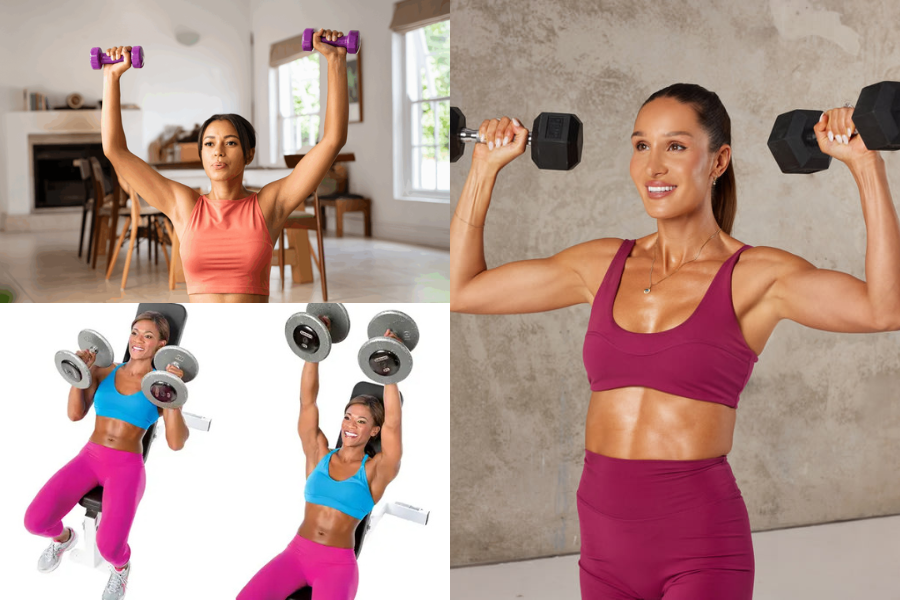
The shoulder press strengthens the front and side heads of your deltoids and helps you build everyday pressing strength.
- Sit or stand tall with a dumbbell in each hand, elbows bent, and weights at shoulder height.
- Keep your core engaged and ribs stacked over your hips.
- Press the weights straight up until your arms are almost fully extended.
- Lower back to the starting position with control.
Aim for 2 to 3 sets of 8 to 12 reps. If you are new to lifting, you might prefer doing this seated first for extra stability, then progress to standing to challenge your core and balance.
2. Lateral raise
Lateral raises focus on the side of your shoulders, which contributes to that rounded, athletic look.
- Stand with feet hip width apart, a light dumbbell in each hand at your sides.
- Soften your knees and gently tuck your hips under to protect your lower back.
- With a slight bend in your elbows, lift your arms out to the sides until they reach shoulder height.
- Pause briefly, then lower slowly.
Choose a weight that lets you complete 12 to 15 reps without swinging your body. As you get stronger, you can move from seated to standing raises to recruit more core stability.
3. Front raise
Front raises emphasize the front deltoids and help with movements such as lifting objects to shoulder height.
- Stand tall holding dumbbells in front of your thighs, palms facing your legs.
- Engage your core and keep your shoulders back and down.
- Raise the weights straight out in front of you to shoulder height.
- Lower back down with control.
Perform 2 to 3 sets of 10 to 12 reps. If your shoulders feel strained, reduce the range of motion slightly or use lighter weights until your strength improves.
4. Upright row
The upright row works your shoulders and upper traps and can add definition to your upper back.
- Stand with feet hip width apart, holding a pair of dumbbells in front of your thighs with palms facing your body.
- Lead with your elbows as you lift the weights up toward your collarbone.
- Keep the dumbbells close to your body and stop when your elbows reach about shoulder height.
- Lower slowly.
Use a light to moderate weight and complete 8 to 12 reps. If you have any existing shoulder issues, go slowly and avoid lifting the weights higher than is comfortable.
5. Reverse fly
The reverse fly targets the rear deltoids and upper back, muscles that are often undertrained compared with the front of the shoulders.
- Stand with feet hip width apart and knees slightly bent.
- Hinge forward at the hips with a flat back, letting the dumbbells hang toward the floor, palms facing each other.
- With a slight bend in your elbows, lift your arms out to the sides until they are in line with your shoulders.
- Squeeze your shoulder blades together, then lower with control.
Aim for 2 to 3 sets of 12 to 15 reps. Focus on slow, deliberate movement instead of heavy weight. This helps you strengthen the often forgotten back of the shoulders and supports better posture.
Sample 25 minute shoulder workout
You can build an effective shoulder workout in about 20 to 25 minutes using just a few of the exercises above. Try this routine 1 to 2 times per week, or pair it with a full body workout.
- Warm up, 3 to 5 minutes of light cardio plus arm circles
- Shoulder press, 3 sets of 8 to 12 reps
- Lateral raise, 3 sets of 12 to 15 reps
- Reverse fly, 3 sets of 12 to 15 reps
- Upright row or front raise, 2 to 3 sets of 10 to 12 reps
- Cool down with across the chest stretches and Child’s Pose
Rest 30 to 60 seconds between sets. If you are short on time, pick any three of the moves and do 2 sets of each.
To see visible changes in shoulder tone, consistency matters more than intensity. Many women notice improvements in strength and shape within 8 to 12 weeks when they train shoulders 2 to 3 times per week and allow for proper rest and recovery.
How often to train and when to progress
Shoulders are relatively small muscles, so they respond well to regular but sensible training. A good rule of thumb is:
- 2 to 3 shoulder focused sessions per week, about 20 minutes each
- 12 to 15 reps per set with moderate weights if your main goal is shaping and toning
- 8 to 12 reps with slightly heavier loads if you want more strength and muscle size
You can do one dedicated shoulder day or sprinkle a couple of exercises into full body workouts. Start with light weights such as 3 to 5 pounds, resistance bands, or even bodyweight, especially if you are new or returning to exercise. When the last few reps of a set feel easy and your form stays solid, increase the weight slightly or add another set.
Remember that you cannot spot reduce fat from your shoulder area, but building lean muscle there increases overall metabolism and creates a more sculpted look as your body composition improves.
Stay safe and know when to get help
Proper technique and listening to your body are just as important as the exercises themselves. Keep these safety tips in mind:
- Warm up with low impact activities before you lift.
- Move through a comfortable range of motion and never push into sharp or sudden pain.
- Avoid rounding your back or twisting your hips when you lift weights.
- Focus on slow, controlled reps instead of speed.
If you have had shoulder surgery or a significant injury, ask a doctor or physical therapist before you start a new routine. The American Shoulder and Elbow Surgeons recommend a structured rotator cuff and shoulder conditioning program that typically runs for 4 to 6 weeks, then continues 2 to 3 days per week as maintenance. This type of supervised program is designed to restore strength, flexibility, and joint stability after an issue and is especially helpful if you are recovering from an injury.
If your shoulder pain persists or worsens after two weeks of gentle self care and exercises, it is time to see a medical professional. They can offer a proper diagnosis and personalize your treatment plan so you can return to training safely.
Putting it all together
Strong, healthy shoulders support almost everything you do with your upper body, from carrying kids to flowing through yoga to progressing your lifts in the gym. By combining simple stretches, targeted strength work, and consistent practice, you can reduce pain, improve posture, and build the toned shoulders you are after.
Start with one change today. Add across the chest stretches to your evening routine, or try one circuit of shoulder presses and lateral raises with light weights. As those moves become part of your week, you can gradually build up to a full shoulder workout that fits your lifestyle and goals.
About The Author