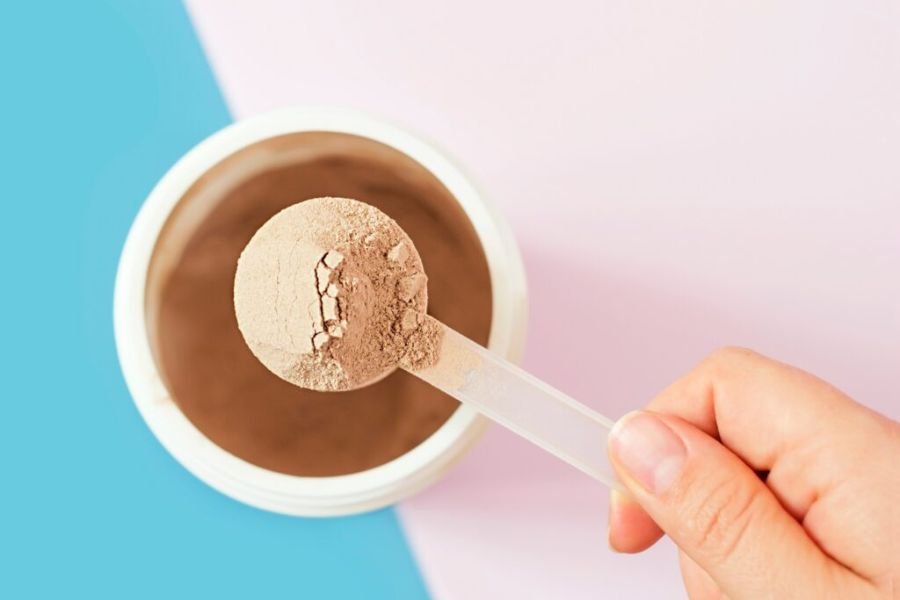
Whey Protein Powder for Lean Muscle Mass
Whey protein for lean muscle is one of the most researched and practical supplements you can add to your routine. It supports muscle growth, helps you keep muscle while losing fat, and can make it easier to hit your daily protein goals when you are busy.
Below, you will learn what makes whey effective, how it compares to other protein sources, and how to use it in a way that actually moves the needle for lean muscle mass.
Understand what whey protein is
Whey is the liquid part of milk that is left over during cheese making. When it is filtered and dried, you get whey protein powder. It is a complete, high quality protein that contains all nine essential amino acids and is especially rich in leucine, the branched chain amino acid that most strongly triggers muscle protein synthesis, which is the process of building new muscle tissue (Healthline).
Your body digests whey quickly, so the amino acids reach your muscles fast. This is one key reason whey protein is so popular for post workout shakes and for anyone who wants to support lean muscle without spending all day cooking.
Know why whey is great for lean muscle
If your goal is lean muscle, you want to build or maintain muscle while limiting excess body fat. Whey protein helps on both sides of that equation.
First, it supports muscle growth and strength. Numerous studies show that when you combine whey protein with resistance training, you can increase strength, gain muscle, and reduce body fat more effectively than training alone (Healthline). In one 12 week study on young men, a protein blend that included whey protein hydrolysate taken before and after workouts significantly increased muscle size, strength, and endurance compared with a placebo (Journal of Exercise Nutrition & Biochemistry).
Second, whey can help you manage your appetite and body weight. Compared with proteins like casein and soy, whey protein has been linked to better feelings of fullness, which can help you eat fewer calories while still protecting your muscle mass (Healthline). One randomized 12 week trial using a specialized whey fraction called Prolibra found that subjects lost significantly more body fat and preserved more lean muscle than a control drink, even on a modestly reduced calorie diet (Nutrition & Metabolism).
Taken together, this makes whey especially useful if you want to recomp your body or diet without sacrificing hard earned muscle.
Compare types of whey protein
You will usually see three main types of whey on the shelf: concentrate, isolate, and hydrolysate. All can support lean muscle, but they differ in cost, processing, and macro profile.
-
Whey protein concentrate (WPC)
Often labeled with percentages like WPC80, this form is the most common and budget friendly. It typically contains around 70 to 80 percent protein, with the rest coming from carbs, fats, and milk components. Because it is less processed, it tends to retain more micronutrients and has a creamier taste, which many people prefer for daily use (Kinetica Sports). -
Whey protein isolate (WPI)
Isolate is filtered further so it usually delivers 90 percent or more protein by weight. That means higher protein per scoop, with less lactose, fat, and carbs, which appeals if you want a leaner shake or have mild lactose intolerance. One example formulation provides about 24 grams of protein with only 0.2 grams of fat per serving (Kinetica Sports). Because of this high purity and rapid absorption, whey isolate is often considered the gold standard for muscle growth (Healthline). -
Whey protein hydrolysate (WPH)
Hydrolysate is pre digested with enzymes so it is absorbed even faster. In the 12 week Korean study, a supplement containing whey hydrolysate and BCAAs taken before and after resistance exercise enhanced muscle hypertrophy and performance (Journal of Exercise Nutrition & Biochemistry). It can be a good choice if you want minimal digestion time, although it is often more expensive and can taste slightly more bitter.
For most people who want whey protein for lean muscle, a good quality concentrate or a blend of concentrate and isolate offers the best balance of cost, taste, and results. If you are very calorie conscious or sensitive to lactose, isolate can be worth the upgrade.
Get your daily protein right
No matter how good your whey is, it will not do much if your total protein intake is too low. To support lean muscle, research suggests you should aim for about 0.6 to 0.9 grams of protein per pound of body weight per day, which is about 1.4 to 2.0 grams per kilogram (Healthline). Some experts even recommend around 2.2 grams per kilogram if you are training intensely and specifically chasing muscle gain (Naked Nutrition).
You will get part of this from food, such as meat, fish, eggs, dairy, beans, and lentils. Whey protein steps in to conveniently fill the gap so you can hit your target day after day without cooking every meal from scratch.
A simple way to plan is to divide your daily protein into 3 to 4 roughly equal meals or snacks. For most adults, this works out to about 20 to 40 grams of protein at each meal (Healthline). A single scoop of whey usually contains around 20 to 25 grams, so one or two shakes can make your goals more realistic.
Time your shakes for best results
You do not need to obsess over an ultra short anabolic window, but timing still matters a little when you use whey protein for lean muscle.
Several lines of research show that:
- Whey protein is especially effective when consumed around workouts, because the fast digesting amino acids support recovery and muscle repair when your muscles are most receptive (Healthline).
- In practice, drinking whey anytime from about 15 to 60 minutes after training is a convenient way to tick this box and aligns with studies where post workout shakes improved muscle strength and size over weeks of training (Vinmec).
- Newer evidence suggests that the muscle building window may actually last up to 2 hours after exercise rather than just 30 minutes, which takes the pressure off if you cannot drink a shake immediately (Vinmec).
- Your total daily protein intake is still the biggest factor for growth and body composition, more so than exact timing (Healthline).
You can also use whey at other times. Many people like a scoop between meals for extra satiety or as a quick breakfast when time is tight. Just avoid stacking a shake directly on top of an already very high protein meal, because your body can only use so much protein at once. Spreading protein across 3 to 4 eating occasions each day tends to work better than cramming it into one or two huge servings (Myprotein).
Use the right dose for you
Research and practical guidelines both suggest that 1 to 2 scoops of whey protein per day, roughly 25 to 50 grams, is appropriate for most healthy people who are also eating protein rich foods (Healthline). This is enough to support lean muscle growth without crowding out whole foods.
How much you personally use depends on your current diet and goals:
- If your meals are already high in protein, one scoop post workout might be all you need.
- If you struggle to reach your target, you might prefer one scoop after training and another at a different time, such as mid afternoon.
- If you are in a calorie deficit, a shake mixed with water or a low calorie milk alternative gives you a lot of protein for relatively few calories, which helps keep muscle while losing fat (Naked Nutrition).
If you have kidney or liver issues, or you have been told to limit protein intake, you should talk with your healthcare provider before increasing protein or adding supplements.
As a simple rule of thumb, think of whey as a convenient protein rich food, not as a magic shortcut. It works best when it fills the gaps in an already balanced diet and training plan.
Pair whey with smart training and nutrition
Whey protein for lean muscle works only if you give your body a reason to build that muscle. That means you still need consistent resistance training and a foundation of solid nutrition.
On the training side, your muscles have to be challenged through weight lifting or bodyweight exercises. Studies that found increases in muscle circumference, strength, and endurance from whey supplementation all combined protein with resistance exercises such as curls and leg curls, typically over at least 10 to 12 weeks (Journal of Exercise Nutrition & Biochemistry).
On the nutrition side, you need enough calories to support muscle gain, or at least not an extreme deficit if you are mainly trying to lean out. Your meals should include:
- High quality protein sources, including whey, meat, fish, eggs, or plant proteins.
- Carbohydrates to fuel your workouts and help shuttle amino acids into muscles. Whey combined with carbs during or after workouts has been shown to improve performance, recovery, and soreness (Vinmec).
- Healthy fats from foods like nuts, seeds, avocados, and olive oil.
This combination supports muscle protein synthesis, workout performance, and recovery, which together make your whey intake far more effective (Myprotein).
Decide if whey or plant protein is better for you
You might be wondering whether you could just use a plant based protein and get similar results. In many cases, you can. When protein powders contain similar amounts of total protein and BCAAs, both whey and plant based options can support muscle hypertrophy effectively (Healthline).
Whey still has a few advantages:
- It naturally contains all essential amino acids in a well balanced profile and is especially high in leucine, the key anabolic trigger for muscle growth (Healthline).
- It is usually absorbed very quickly, which is good for post workout use.
- It is widely studied and has a long track record supporting both strength gains and fat loss when combined with resistance training (Healthline).
Plant proteins can be better if you are lactose intolerant, vegan, or simply prefer non dairy options. Just pay attention to the label. Look for 20 to 30 grams of protein per serving and at least 1 to 3 grams of leucine, since this range is important for muscle protein synthesis (Healthline).
Put it all together
Whey protein for lean muscle is effective because it gives you a high quality, complete protein that your body absorbs quickly and uses efficiently to build and maintain muscle. It can help you:
- Increase strength and lean mass when you lift regularly.
- Preserve muscle while losing body fat.
- Hit your daily protein targets more easily, even on busy days.
If you want to start simply, you can:
- Estimate your daily protein goal using 0.6 to 0.9 grams per pound of body weight.
- Choose a whey concentrate or isolate that gives you about 20 to 25 grams of protein per scoop.
- Add one shake after your workouts and adjust up to a second scoop daily if your food intake is not quite enough.
From there, you can fine tune based on how you feel, how your body changes, and what fits your routine. Over time, consistent training plus smart use of whey will support the lean, strong physique you are working toward.
About The Author


