Delicious Magnesium Foods That Support Your Heart Health
Magnesium foods might not sound exciting at first, but once you learn how much they do for your heart, they become a lot more appealing. Magnesium supports more than 300 processes in your body, including healthy heart rhythm, muscle contractions, blood pressure control, and energy production, so getting enough through food is one of the simplest ways to care for your cardiovascular health (Cleveland Clinic).
Many people still fall short of the recommended intake, even though magnesium is found in everyday foods such as beans, leafy greens, nuts, seeds, and whole grains (Harvard T.H. Chan School of Public Health). With a few smart swaps and additions, you can turn your regular meals into heart friendly, magnesium rich plates.
Understand how much magnesium you need
Before you stock your fridge, it helps to know your target. The Recommended Dietary Allowance (RDA) for adults is about 400 to 420 milligrams per day for men and 310 to 320 milligrams per day for women, with slightly higher needs during pregnancy and breastfeeding (Harvard T.H. Chan School of Public Health). Experts place the general adult range between 310 and 420 milligrams, depending on age and sex (Cleveland Clinic).
Most people can reach these amounts from food alone when magnesium foods show up in meals and snacks on a regular basis (Healthdirect Australia). If you rely heavily on refined grains, processed snacks, and sugary drinks, your intake may fall short without you realizing it.
If you focus on fiber rich plant foods, you usually boost magnesium at the same time, since many high fiber foods are naturally high in magnesium too (USDA WICWorks).
See how magnesium supports your heart
Your heart is a muscle that never gets a break, so it relies on steady supplies of minerals to work smoothly. Magnesium helps regulate heart rhythm, supports normal muscle contractions, assists with blood pressure control, and plays a role in energy production inside heart cells (Cleveland Clinic).
Magnesium rich diets are linked with better health outcomes, including higher bone mineral density, reduced risk of high blood pressure, and lower risk of stroke, although it is hard to completely separate magnesium from the other nutrients found in the same foods (Harvard T.H. Chan School of Public Health). The bottom line is that when you eat more magnesium foods, you usually eat more fiber, potassium, and antioxidants too, which all support a healthier cardiovascular system.
On the flip side, not getting enough magnesium over time may affect blood pressure, blood sugar control, and nerve and muscle function. Your body uses magnesium for building bones and teeth, keeping your immune system healthy, and making energy and protein, so this is a mineral you want to respect in every life stage (USDA WICWorks).
Fill your plate with magnesium rich plant foods
Plant foods are your most reliable and versatile source of magnesium. You can build a heart supportive menu by centering meals around legumes, leafy greens, nuts, seeds, and whole grains.
Legumes and beans
Legumes, including lentils, chickpeas, black beans, kidney beans, and soybeans, are naturally rich in magnesium and fiber. They help stabilize blood sugar, provide plant based protein, and support a healthy gut. They are also WIC eligible in some packages, which makes them more accessible for many families (USDA WICWorks).
You can stir beans into soups and stews, toss them into salads, or mash them into spreads. Even a simple bowl of chili or a lentil salad can cover a good portion of your daily magnesium needs while also giving you potassium and iron.
Dark leafy greens
Dark leafy greens are often called superfoods in part because of their magnesium content (Cleveland Clinic). Spinach, Swiss chard, collard greens, and kale all bring magnesium, along with vitamin K, folate, and antioxidants that protect your blood vessels.
You can blend a handful into a smoothie, sauté them with garlic as a side dish, or pile them into grain bowls. Aim to include some form of dark leafy greens in at least one meal per day, even if it is just a small handful in your sandwich or omelet.
Nuts and seeds
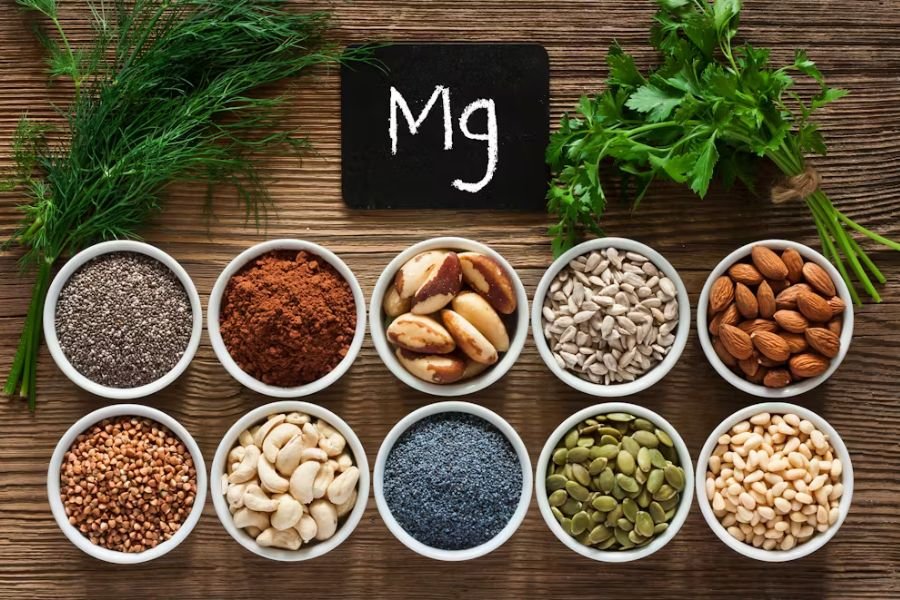
Nuts and seeds are some of the most concentrated magnesium foods you can add to your day. Almonds, cashews, peanuts, pumpkin seeds, and chia seeds deliver magnesium along with protein, fiber, and healthy fats that are known to support heart health (Cleveland Clinic).
These foods also appear on lists of magnesium rich options for WIC participants, especially nuts and seeds like almonds, cashews, peanuts, pumpkin seeds, and chia seeds (USDA WICWorks). A small handful as a snack, a sprinkle over oatmeal or yogurt, or a spoonful of nut butter on toast can move you closer to your daily target without much effort.
Whole grains
Whole grains such as oatmeal, brown rice, quinoa, barley, and whole wheat contain magnesium in their bran and germ. When grains are heavily processed and refined, like white rice or white bread, much of the magnesium is lost. Food processing in general can reduce magnesium content in plant foods, and soil levels of magnesium may also be declining, which affects how much you get from crops (Harvard T.H. Chan School of Public Health).
When you choose whole grains most of the time, you support not only your magnesium intake but also your fiber and B vitamin intake. Swapping white pasta for whole wheat or pairing your dinner with quinoa instead of refined grains adds up over weeks and months.
Enjoy magnesium rich fruits for a sweet boost
Fruits contribute to your overall magnesium intake, especially some less common varieties that pack more of this mineral than you might expect. At the same time, they offer vitamin C, fiber, and antioxidants that help protect your heart.
Some of the higher magnesium fruits include:
- Prickly pear, about 127 milligrams of magnesium per cup of raw fruit, which is around 30 percent of the Daily Value (Health)
- Dried figs, about 101 milligrams per cup, or 24 percent of the Daily Value, plus over half your daily fiber needs (Health)
- Durian, about 72.9 milligrams per cup, or 17 percent of the Daily Value, along with about 53 percent of the Daily Value for vitamin C (Health)
- Jackfruit, about 47 milligrams per cup, or 11 percent of the Daily Value, and 16 percent of the Daily Value for potassium, another mineral that supports healthy blood pressure and heart function (Health)
- Avocado, about 43.5 milligrams per cup of cubes, or just over 10 percent of the Daily Value, plus heart friendly monounsaturated fat and relatively few carbohydrates (Health)
If these fruits are not always available where you live, you can still benefit by adding smaller amounts when you see them in your market. A few dried figs as a snack, avocado on whole grain toast, or a small serving of jackfruit in a stir fry can help round out your magnesium intake.
Add animal foods and water for extra support
You do not have to eat only plants to get enough magnesium. Animal foods provide useful amounts, especially if you include a variety of protein sources in your routine.
Fish, poultry, and meat
Fish, poultry, and beef all contain magnesium, and they also offer protein, iron, zinc, and B vitamins (Harvard T.H. Chan School of Public Health). Fatty fish like salmon and mackerel have the added benefit of omega 3 fats, which are known to protect the heart.
If you already plan your meals around a protein source, you can simply be more mindful of sides. Pairing fish or poultry with magnesium foods like beans and leafy greens gives you a balanced, heart focused plate.
Water as an overlooked source
Depending on where you live, your drinking water may be a meaningful source of magnesium. If you drink the commonly recommended two liters of water per day, this could provide up to 240 milligrams of magnesium in some regions (Cleveland Clinic).
The amount varies by water source, so you cannot count on a specific number, but it is a helpful reminder that hydration supports micronutrient intake too. If you prefer sparkling or mineral water, check the label to see if magnesium is listed.
Know when supplements might be helpful
Food should be your first choice for magnesium because it comes packaged with other heart friendly nutrients and fiber. Most people can obtain what they need from a mix of plant and animal foods, especially when they eat legumes, dark leafy vegetables, nuts, seeds, and whole grains regularly (Healthdirect Australia).
However, certain health conditions and older age can affect how well you absorb magnesium or how much you take in, and very high doses of zinc can also interfere with magnesium absorption (Healthdirect Australia). In these cases, your healthcare provider may suggest a supplement and will usually tailor the dose to your needs.
It is important not to self prescribe high dose magnesium supplements. Large amounts can cause side effects and may interact with medications such as bisphosphonates, some antibiotics, certain acid reflux and stomach ulcer treatments, and diuretics (Healthdirect Australia). Some products also include vitamin B6 in different chemical forms, and you should stop taking them and contact a professional if you notice tingling, burning, or numbness that could signal peripheral neuropathy (Healthdirect Australia).
If you suspect your magnesium intake is low, start by tracking your meals for a few days and looking for chances to add magnesium foods. Then, if you still have concerns, bring a record of what you eat to your next appointment and talk through supplement options together.
Build a heart friendly magnesium routine
You do not have to overhaul your diet overnight to support your heart with magnesium. A few steady changes make a real difference over time. For example, you could:
- Swap sugary breakfast cereal for oatmeal topped with nuts and seeds
- Replace part of the meat in tacos or chili with black beans or lentils
- Add a side of sautéed spinach or kale to dinner a few nights per week
- Snack on a small handful of almonds or a few dried figs instead of chips
- Use avocado as a creamy spread on whole grain toast or sandwiches
Magnesium rich foods sit at the center of many balanced, satisfying meals. When you choose them more often, you feed your heart, your bones, your muscles, and your energy levels at the same time. Start with one change that feels easiest today, then layer on others as they become habits. Over the long run, your heart will benefit from every magnesium rich bite.
About The Author


