Why You’ll Love This Hamstring and Glute Workout for Results
A strong hamstring and glute workout does much more than build a nicer backside. When you train this part of your lower body, you support your spine, improve athletic performance, and even help your body burn more calories at rest because muscle tissue is more metabolically active than fat. That is why a smart plan that targets your glutes and hamstrings can pay off in both strength and long term health.
Below, you will see why this type of workout is so effective, the key exercises to focus on, and a simple routine you can start using right away.
Understand why glutes and hamstrings matter
Your glutes and hamstrings sit at the heart of your posterior chain. These muscles power almost every step, climb, and jump you perform during the day, whether you are running for a bus or picking up a laundry basket.
The gluteus maximus is the largest muscle in your body. It drives hip extension, supports your lower back, and helps with daily movements like standing from a chair and climbing stairs. The gluteus medius and minimus stabilize your hip and thigh whenever you are on one leg. That stability is critical for balance and for avoiding hip and knee strain.
Your hamstrings run along the back of your thighs and consist of three main muscles: the biceps femoris, semitendinosus, and semimembranosus. They flex your knees, extend your hips, and help decelerate your body when you run or jump. Because they are so involved in explosive movement, they are also a common site of injury if they are weak or tight.
When you strengthen both glutes and hamstrings together, you create a more powerful, coordinated lower body. This is useful for athletes, but it also matters if you simply want to carry groceries, play with your kids, or walk up hills without discomfort.
See how this workout supports your goals
You might be interested in a hamstring and glute workout for different reasons: aesthetics, performance, injury prevention, or metabolic health. The good news is that training this area consistently supports all of those goals.
First, building muscle in your lower body can raise your daily energy expenditure. Muscle tissue uses more calories to maintain itself than fat, so adding lean mass in your legs and hips can slightly boost your resting metabolic rate and support weight management over time.
Second, strong glutes stabilize your pelvis and lower back. Poor glute function is linked with low back pain because your spine ends up taking on more load when your hips are weak. Enhancing glute strength can help reduce that stress and improve your posture during activities like walking, standing, and lifting.
Third, resilient hamstrings lower your risk of strains and pulls, especially if you run or play sports that involve sprinting, cutting, or jumping. They help control the swing of your leg and absorb force when your foot hits the ground.
Finally, training both muscle groups together tends to improve your overall athletic power. Heavy compound movements such as deadlifts, hip thrusts, and step ups build hip extension strength that carries over to sprint speed, jump height, and even simple tasks like climbing stairs with ease.
Know what makes this workout different
Not all lower body routines are created equal. Many leg days are quad dominant and leave your hamstrings and glutes under trained. A hamstring and glute workout that is built with intention focuses more of your effort on the back side of your body instead of just your thighs.
This approach leans on compound lifts that train multiple joints and muscle groups at once. Squats, deadlifts, hip thrusts, Romanian deadlifts, step ups, and split squats all fall into this category and are among the best options for glute and hamstring development. These moves allow you to use relatively heavy loads, which is important if you want to gain strength and muscle.
You then fill in any gaps with targeted isolation work like hamstring curls, hip extensions, or glute kickbacks. According to guidance from the International Sports Sciences Association, combining these isolation exercises with big compound movements allows you to build strength and muscle mass more efficiently, while also dialing in activation for any muscles that lag behind.
Over time, this blend of heavy lifts and focused accessories supports better hip stability, more powerful hip extension, and a posterior chain that can handle real world demands.
Start with a quick warmup that protects your joints
Before you jump into your main sets, you want to prepare your muscles and joints. A short warmup increases blood flow, improves mobility, and reduces injury risk, especially if you spend much of the day sitting.
A simple structure looks like this, and you can complete it in about 10 to 15 minutes:
- 5 to 10 minutes of light cardio to raise your heart rate. This can be brisk walking, easy cycling, or a gentle jog.
- Dynamic activation exercises that target your hips and hamstrings, such as knee hugs, glute bridges, lunges with elbow to instep, and standing hip flexions.
Glute bridges are especially useful as part of your warmup. They train hip extension, activate both glutes and hamstrings, and prepare you for heavier hip thrust or deadlift work later in the session.
If you are new to strength training or have a history of pain or injury, consider checking your form with a personal trainer or physical therapist. Getting early feedback on your technique can help you move more efficiently and prevent issues before they start.
Focus on the most effective exercises
When you build your hamstring and glute workout, you will get the most out of your time if you center it on a handful of highly effective movements. Here are some of the best choices and what they do for you.
Squats
Squats are a foundational lower body exercise. They mainly target your quadriceps, but they still train your glutes and hamstrings, especially if you squat deeper and sit your hips back. Squats are valuable because they build overall leg strength, improve hip and knee mobility, and prepare you for real world tasks like sitting and standing.
Even though squats emphasize your quads more than your hamstrings, they belong in most lower body programs because they teach you how to brace your core, control your knees, and coordinate your hips and ankles under load.
Conventional deadlifts
Barbell deadlifts are one of the strongest moves you can perform. They train your hamstrings, glutes, and spinal erectors during heavy hip extension. With proper technique, they help you safely pick weight up from the floor while building significant muscle throughout your posterior chain.
If your main goal is hamstring growth, deadlifts deserve a central place in your routine. A common recommendation is to perform around three sets of six to eight reps, using a load that feels challenging while you can still maintain good form.
Romanian deadlifts (RDLs)
Romanian deadlifts are a variation where you lower the bar only to about mid shin level, keeping a slight bend in your knees and emphasizing a hip hinge. This move focuses on the eccentric, or lowering, portion of the lift, which is particularly effective for hypertrophy and strength in your hamstrings and glutes.
Because RDLs share similar mechanics with conventional deadlifts, they can also improve your performance on the main lift. You can perform them with dumbbells or a barbell, which makes them easy to adapt to your equipment.
Hip thrusts and glute bridges
Hip thrusts are a progression of the glute bridge, usually performed with your upper back on a bench and often with a barbell or machine for added load. They are excellent for increasing hip extension strength and gluteus maximus size, and they engage your hamstrings without placing as much stress on your lower back as some other heavy lifts.
If you have a sensitive lower back, hip thrusts can be a joint friendly way to push intensity. Bodyweight or light barbell versions still provide good activation, and you can increase weight over time as your technique improves.
Step ups and split squats
Step ups are a compound exercise that requires you to drive through one leg at a time. Research suggests they activate glutes and hamstrings as effectively as classic movements like squats, deadlifts, and hip thrusts, especially when you use a higher step and add weight.
Split squats are another single leg option that taxes your glutes, quads, and hamstrings. Both exercises help address side to side imbalances, challenge your balance, and build hip stability that carries over to running and everyday movement.
Hamstring curls and hip extensions
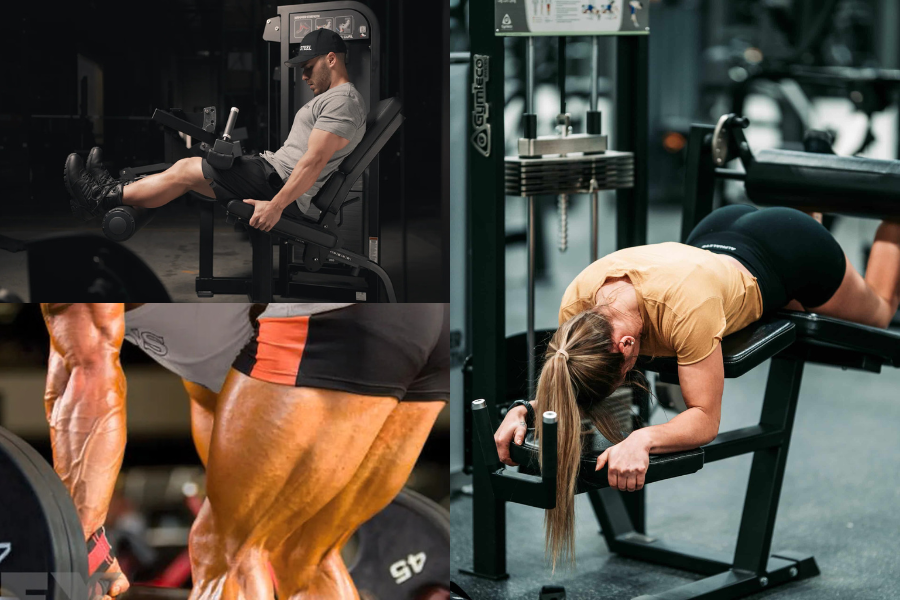
Leg curls, whether on a machine or with a stability ball or dumbbell, isolate your hamstrings. They let you focus on fully flexing and extending the knee, and they work well at moderate to higher rep ranges. Slow, controlled reps with a full range of motion are key if you want to maximize muscle activation.
Hip extensions, such as back extensions or cable hip extension variations, further train your glutes and hamstrings around the hip joint. Together with leg curls, they round out the compound lifts so you do not neglect any part of your posterior chain.
Try this simple hamstring and glute workout
You can structure an effective routine without making it complicated. Below is a sample workout that pulls together the movements you have just read about. You can perform it two times per week, with at least one rest or light activity day in between.
- Warmup
- 5 to 10 minutes light cardio
- 2 sets of 10 glute bridges
- 2 sets of 8 per side lunges with elbow to instep
- Main workout
- Conventional deadlift: 3 sets of 6 to 8 reps
- Hip thrust: 3 sets of 8 to 10 reps
- Romanian deadlift: 3 sets of 8 to 10 reps
- Step ups: 3 sets of 8 to 12 reps per leg
- Hamstring curls: 3 sets of 10 to 15 reps
Rest for 60 to 90 seconds between sets. Start with weights that feel moderately challenging and leave one or two reps in the tank at the end of each set. As you become more confident with your form, you can gradually increase load or add an extra set to your compound exercises.
If you train at home without machines, you can swap hamstring curls for stability ball leg curls or dumbbell leg curls, and you can use dumbbells instead of a barbell for deadlifts and Romanian deadlifts.
Recover well so you can keep progressing
Your results do not only depend on what you do during the workout itself. How you recover between sessions also shapes your strength and muscle gains.
Foam rolling your glutes and hamstrings for 30 to 60 seconds per side after training can help reduce muscle tightness and soreness. Combined with gentle stretching, this can leave your legs feeling less stiff the next day and may allow you to move more freely in your next session.
Adequate protein intake, hydration, and sleep matter as well, because your muscles repair and grow between workouts, not during them. If you have more complex goals around body composition or performance, a sports nutritionist can help you fine tune your diet and overall lifestyle to support your training and recovery.
Put it into practice
A dedicated hamstring and glute workout asks for effort, but it rewards you with stronger hips, more resilient knees, better posture, and a small but meaningful boost to your metabolic health. You do not have to adopt every exercise at once. You can start with just deadlifts, hip thrusts, and one type of hamstring curl, then layer in step ups or split squats once those moves feel comfortable.
Choose one or two of the ideas here to apply in your next lower body day. Over a few weeks, you will likely notice that climbing stairs feels easier, your runs feel more powerful, and your legs recover faster. From there, you can keep adjusting sets, reps, and exercise choices so your routine grows along with your strength.
About The Author