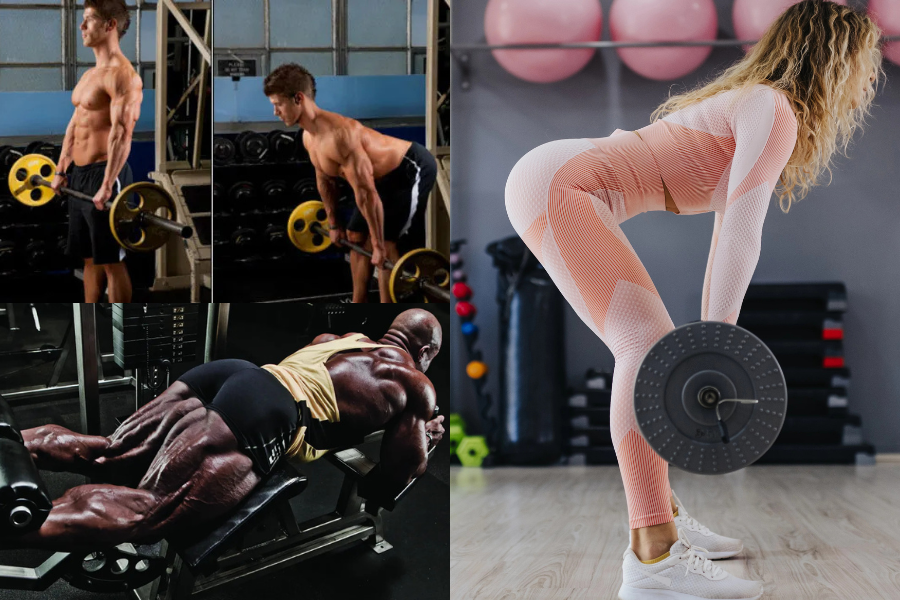
How Hamstring Isolation Exercises Help You Avoid Pain
A few focused hamstring isolation exercises can be the difference between feeling strong and springy or tight and achy every time you move. When you directly train the muscles on the back of your thigh, you build strength where you are probably weakest, which helps you avoid pain in your knees, hips, and even your lower back.
Below, you will learn what your hamstrings actually do, why they are often undertrained, and how to use hamstring isolation exercises to protect your body and improve performance.
Understand what your hamstrings do
Your hamstrings are a group of three muscles on the back of your thigh: the biceps femoris, semitendinosus, and semimembranosus. Together, they control two major movements that you use constantly.
First, they flex your knee, which means pulling your heel toward your glutes. Second, they extend your hip, which is the motion you use when you walk, run, stand up from a chair, or climb stairs. These muscles balance the work of your quadriceps on the front of your thigh and help keep your lower body joints stable.
When your hamstrings are weak or tight, your quads tend to take over. This quad dominance can throw off alignment at your knees and hips. Over time, that imbalance increases the risk of strains and aches when you cut, jump, land, or even sit for long hours, as highlighted in a blog from the National Institute for Fitness and Sport. Strengthening your hamstrings directly helps you restore that balance.
Why isolation exercises matter
You already use your hamstrings in big compound lifts like squats and lunges. The problem is that those same exercises heavily involve your quads and glutes. If your hamstrings are already the weak link, they can keep lagging behind, which leaves you with the same imbalance that caused issues in the first place.
Hamstring isolation exercises zoom in on the back of your thigh, so you can:
- Correct strength imbalances between the front and back of your legs
- Build muscle where you are underdeveloped
- Support better knee and hip stability
- Reduce your risk of hamstring strains and pulls
A 2023 research review on eccentric hamstring training found that focusing on the lengthening phase of these exercises can reduce hamstring injury rates by roughly 56.8 to 70 percent while improving the strength balance between hamstrings and quadriceps. That is a big payoff from a few targeted movements done consistently.
Key benefits for pain prevention
When you consistently perform hamstring isolation exercises, you are not just training for bigger legs. You are giving key joints the support they need to move without complaining.
Stronger hamstrings can help you:
- Ease knee discomfort by better controlling knee flexion and stabilizing the joint
- Support your lower back during bending and lifting by sharing the workload with your glutes and spinal erectors
- Improve hip stability, which matters for walking, running, and side to side movements
NIFS points out that many people, including athletes, simply do not train their hamstrings enough compared to their quads. This undertraining shows up as knee pain, tightness in the back of the thigh, or recurring strains. Isolation work fills this gap in a direct and controlled way, and it is especially valuable if you are returning from injury and cannot tolerate heavy compound lifts yet.
Top hamstring isolation exercises to try
You have many effective options for targeting your hamstrings. Some use machines, some use free weights, and others use just your bodyweight. Mix and match based on what equipment you have and your current strength level.
Romanian deadlift (RDL)
Romanian deadlifts are one of the best hamstring isolation exercises you can add to your routine. You perform them with a soft bend in the knees and a deep hip hinge, which loads your hamstrings in a lengthened position and trains them to control that stretch.
You can do RDLs with a barbell, dumbbells, or kettlebells. Focus on pushing your hips back, keeping your spine neutral, and stopping when you feel a strong stretch in the back of your thighs without rounding your lower back. For strength and muscle building, aim for around 3 to 4 sets of 6 to 8 reps, as suggested in the hamstring guide on the Gymshark site.
Single leg Romanian deadlifts add a balance challenge and are excellent for waking up each side individually. A study cited by Gymshark found that RDL variations and kettlebell swings are among the best exercises for activating the biceps femoris, the largest hamstring muscle.
Seated and lying leg curls
Leg curl machines are classic hamstring isolation tools for a reason. They directly train knee flexion, which is one of the primary jobs of your hamstrings.
- Seated leg curls tend to emphasize the inner hamstrings, particularly the semitendinosus. These are popular with bodybuilders because they help shape the back of the thigh and correct imbalances that can lead to injury.
- Lying leg curls, also called prone leg curls, place more emphasis on the outer hamstrings and are ideal for higher rep sets or training close to failure without worrying about losing balance.
NIFS notes that leg curls play a key role in strengthening the posterior chain and should be a regular feature of your leg workouts, especially if you are trying to reduce the gap between your quad and hamstring strength.
To get more from each rep, Gymshark recommends using an explosive one second lift followed by a slow three second lowering phase. That slow eccentric is what helps protect you from strains and improve muscle growth.
Nordic hamstring curl
Nordic hamstring curls are a challenging bodyweight isolation move that focus heavily on the eccentric phase. You anchor your ankles, lower your body toward the floor from a tall kneeling position, and use your hamstrings to control the descent.
Even if you can only lower partway before using your hands for support, you are still getting powerful eccentric work. Nordic curls are frequently highlighted in research and by coaches for their ability to build hamstring strength and reduce injury risk, especially in sports that involve sprinting and sudden changes of direction.
Good mornings and hip extensions
Good mornings involve hinging at the hips with a barbell on your upper back and a gentle bend in your knees. This movement pattern isolates your hamstrings and glutes by focusing on hip extension, with your spinal erectors working to maintain a neutral back. Gymshark notes that these are excellent for building posterior chain strength when used alongside isolation curls.
Hip extensions and glute ham raises on a Glute Ham Developer (GHD) are more advanced options. They combine controlled hip flexion and extension with strong hamstring activation throughout the movement. These can be demanding, so they are better for you once you have built a solid strength base.
Stiff leg deadlifts and hip thrust variations
Stiff leg deadlifts look similar to RDLs but with straighter legs. This position reduces quad contribution and shifts more of the load onto your hamstrings. A practical range is 3 to 4 sets of 8 to 10 reps.
You can also tweak hip thrusts to involve your hamstrings more. Placing your feet slightly further away and a bit wider than usual changes the angle at your hips and knees, which increases hamstring involvement while still training your glutes.
How often to train your hamstrings
To get meaningful results, you want to train your hamstrings regularly enough, but not so much that they never recover.
A useful guideline from recent training advice is to target your hamstrings around 2 to 3 times per week. You can work them during leg days or fold them into full body sessions. Over the course of a week, aim to include:
- One or two hip hinge movements, such as Romanian deadlifts, good mornings, or stiff leg deadlifts
- One or two knee flexion movements, such as seated or lying leg curls or Nordic curls
Gymshark suggests placing most of your isolation work after your big compound lifts like squats and conventional deadlifts. This lets you use your energy on heaviest moves first, then finish by thoroughly fatiguing the hamstrings with focused curls.
Use progressive overload without overdoing it
Your hamstrings respond best when you steadily challenge them. Progressive overload means adding a little more stress over time so your muscles have a reason to get stronger.
That can look like:
- Increasing the load by a small amount
- Adding one or two reps to each set
- Adding an extra set for one or two exercises
- Slowing down the eccentric phase for more control and muscle tension
Guidelines based on training level suggest that beginners should increase difficulty roughly every 4 to 6 weeks, intermediates every 6 to 8 weeks, and advanced lifters around every 4 to 6 weeks. This pace lets you adapt without rushing into joint pain or overuse problems.
Common mistakes to avoid
A few small errors can turn good hamstring isolation exercises into joint stress instead of muscle work. Watch out for these and adjust your form so you get more benefit with less risk.
One common issue is loading up too much weight on leg curls and then jerking the weight up. This usually leads to swinging your hips off the pad or using your lower back to help, which takes work away from your hamstrings. NIFS and Gymshark both emphasize using loads that you can control through the full range with a steady tempo and proper pad placement.
Another mistake is rushing the eccentric phase. Since the lengthening part of the movement is so effective for strength and injury prevention, you only hurt your progress by letting gravity do the work. Think about actively resisting the weight on the way down.
Finally, do not let your programming drift back to quad heavy sessions. Standard routines often revolve around squats, leg presses, and leg extensions. If you are not intentional, your hamstring exercises can slowly disappear from your plan. Keep at least one or two isolation movements in every lower body workout.
Putting it all together
To use hamstring isolation exercises to avoid pain, you do not need a complicated routine. A simple starting plan might be:
At least two times per week, pair one hip hinge with one curl variation, train with control, and increase difficulty every month or so.
Over time, this approach will build stronger, more resilient hamstrings that support your knees, hips, and lower back. You will likely notice more power in your steps, more stability when you lift, and fewer moments where tight or weak hamstrings hold you back.
Try adding a light set of Romanian deadlifts and a few sets of leg curls to your next leg workout. Pay attention to how your hamstrings feel over the next couple of weeks, and adjust your volume and load so you feel challenged, not wrecked. With steady attention, those small, focused exercises can make a big difference in how comfortably you move every day.
About The Author


