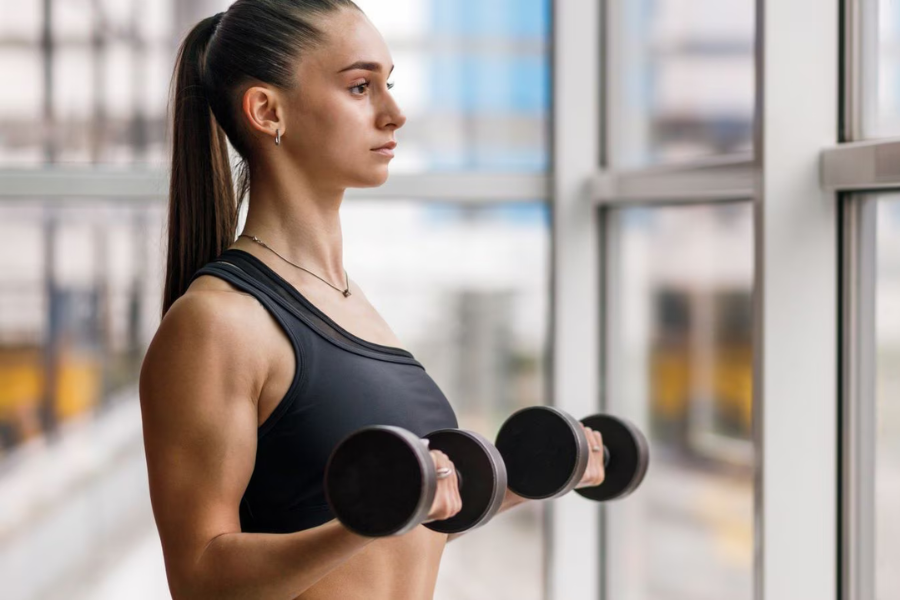
Feel The Burn With Bicep Workouts Using Resistance Bands
A set of resistance bands might not look like much, but they can give your arms a serious workout. If you want bigger, stronger biceps without a full rack of weights, bicep workouts with resistance bands are an easy way to start right at home.
Below, you will learn how band training works for your arms, how to choose the right bands, and exactly which exercises to do for a complete bicep workout that you can feel from the first few reps.
Why train biceps with resistance bands
Resistance bands are more than a backup option when you do not have dumbbells. They can actually challenge your biceps in a slightly different and very effective way.
When you curl a dumbbell, the weight stays the same throughout the movement. With bands, resistance increases the farther you stretch the band. This variable resistance means your biceps work harder near the top of the curl, where they are strongest, and a little less at the bottom, where they are weaker. Physical therapist Erika Mundinger explains that this changing resistance strengthens your muscles differently than a constant 15 pound dumbbell would.
Bands also provide tension in both directions. You feel the pull when you lift the band and when you lower it, which helps you control the eccentric, or lowering, part of each rep. According to Magma Fitness, this constant tension can promote muscle growth and strength development efficiently without heavy equipment.
On a practical level, bands are light, portable, and usually more affordable than a full set of weights. That makes it easier to stay consistent, which matters more than any single exercise.
How resistance bands target your biceps
Your biceps are not just one simple muscle. A good routine for bicep workouts with resistance bands should hit several areas in slightly different ways so your arms grow evenly.
When you train with bands you can hit:
- The short head of the biceps, which adds fullness to the inner part of your arm
- The long head of the biceps, which contributes to the outer peak
- The brachialis, a muscle under the biceps that helps push the upper arm wider
- The brachioradialis, a forearm muscle that supports elbow flexion
For example, a wide grip curl with the band shifts more emphasis to the short, inner head, because your forearms point outward. A close grip curl brings more work to the long, outer head. Gymreapers notes that grip changes like these are a simple way to change which part of the biceps does more of the work.
Other variations like drag curls, where your elbows travel slightly behind your body, increase activation of the long head. Bayesian curls, where the band is anchored behind you, place the biceps in a stretched position at the bottom of the movement. That deep stretch under load can be a strong growth signal.
By mixing these angles, you help every part of your biceps and the surrounding muscles grow, instead of only hitting the same line of pull over and over.
Choosing the right resistance bands
You do not need a complicated setup to start. You just want bands that let you adjust difficulty as you get stronger and that feel comfortable in your hands.
Resistance bands typically vary by:
- Thickness and width
- Length
- Level of resistance, often color coded
Lighter colors usually indicate lighter resistance and darker colors indicate heavier resistance. You can move up to thicker, stronger bands as your strength improves so you always have a way to progress your bicep workouts with resistance bands.
Closed loop bands with or without handles work well for curls and other upper body moves. They are versatile, easy to store, and simple to bring to the park, a hotel room, or any small space.
Gymreapers recommends their Military Resistance Band Set as a durable option that handles a variety of bicep exercises, from curls to band assisted chin ups, at home or on the road.
If you are just starting out, pick a band light enough that you can do around 15 solid curls with control, but heavy enough that the last few reps feel challenging.
Form basics for band bicep curls
Most band bicep moves share a few key technique points. Once you learn these, the individual exercises will feel more natural.
Stand with your feet about hip width, knees slightly bent. Anchor the band securely under one or both feet or to a sturdy point, such as a heavy piece of furniture or a closed door with a proper attachment.
Keep your shoulders relaxed and your elbows close to your sides. As you curl, focus on bending at the elbow instead of swinging your whole arm or your upper body. Think about keeping your wrists in line with your forearms so you are not bending them excessively.
On the way up, lift in a smooth, controlled motion and squeeze your biceps at the top. On the way down, lower slowly and keep tension on the band rather than letting it snap back. This controlled lowering phase increases your time under tension, which a number of lifters notice as a stronger pump with bands compared to dumbbells, likely due to longer muscle engagement.
If you feel your lower back or shoulders doing more work than your arms, reset, use a slightly lighter band, or shorten your range of motion until your form feels solid.
Key resistance band bicep exercises
You can build an entire arm routine around bands. These exercises cover different grips and angles so you can train your biceps thoroughly without extra equipment.
1. Standing band curl
This is your basic curl, but the band keeps tension on your biceps throughout the movement.
Stand on the center of the band with both feet. Hold the ends or handles with your palms facing forward and your arms straight down. Curl your hands toward your shoulders while keeping your elbows in place. Pause briefly at the top, then lower slowly.
If the band feels too easy, step your feet wider apart to increase the stretch. You can also cross the band in an X before you grip it to raise the resistance.
2. Wide grip band curl
This variation focuses more on the short head of the biceps for inner arm fullness.
Stand on the band and take a wider grip than your shoulders with your palms facing up. Let your forearms angle slightly outward. Curl up in the same way as the standing curl and lower under control.
The change in your forearm angle might feel small, but over time it helps build a rounder appearance from the front.
3. Hammer curl with bands
Hammer curls bring the brachialis and brachioradialis into the movement, which helps build thickness through the upper arm and forearm.
Stand on the band and hold the handles with your palms facing each other, like you were holding a pair of hammers. Keep your elbows close to your sides and curl your hands toward your shoulders without twisting your wrists.
Because this grip shares the work across more muscles, you may be able to handle a slightly heavier band here than with standard curls.
4. Reverse grip band curl
Flip the usual palm up curl on its head to hit your forearms and brachioradialis more directly.
Stand on the band and grab the ends with your palms facing down. Keep your wrists steady and curl your hands toward your shoulders. You will likely notice the strain higher in your forearms, which supports overall arm strength and joint stability.
5. Drag curl with bands
Drag curls shift tension more to the long head of your biceps.
Stand on the band and hold the handles with palms facing up. Instead of curling your hands forward in an arc, pull your elbows back and drag your hands up along your torso toward your chest. Your elbows should move slightly behind your body.
This position places the long head under more tension, which can help with building that upper arm peak.
6. Bayesian band curl
The Bayesian curl, popularized by Menno Henselmans, stretches your biceps significantly at the bottom, which can be a very strong driver of growth.
Anchor the band behind you at about hip height. Stand facing away from the anchor and hold the end of the band in one hand with your arm extended slightly back and your palm facing up. From this stretched position, curl your hand forward toward your shoulder while keeping your elbow fixed.
Because this exercise loads the biceps in a stretched position, start with a lighter band and higher reps until you are comfortable with the feel.
7. Band crucifix curl
This variation hits your biceps in a more outward, almost sideways position.
Anchor the band at about shoulder height to your right. Stand sideways to the anchor so your left side faces away from it. Hold the band in your left hand with your arm extended out to the side at shoulder level and your palm facing up. Curl your hand toward your head like a sideways curl, then slowly return.
You might feel this more in the outer portion of your biceps and your shoulders. Keep the movement small and controlled to protect your joints.
8. Band assisted chin up
The band assisted chin up is technically a back exercise, but it hits your biceps very hard as well.
Loop a sturdy band over a pull up bar and place one knee or foot in the hanging end. Take an underhand grip on the bar with your palms facing you and your hands about shoulder width apart. From a dead hang, pull your chest up toward the bar, then lower with control.
The band helps lift part of your bodyweight so you can complete more reps or even learn your first chin up. Because it combines underhand grip, forearm supination, and both elbow and shoulder flexion, it puts your biceps into a strong, fully contracted position at the top.
You can also reverse this and use a band to overload the top part of the movement by standing on the band and pulling against it if you have no pull up bar.
Sample resistance band bicep workout
Once you are familiar with the exercises, you can put them together into a focused session. Here is a sample routine inspired by Gymreapers that you can adapt to your level:
- Band assisted chin ups
- 3 to 4 sets to near failure
- Rest 150 to 180 seconds between sets
- Band hammer curls
- 3 sets of 12 to 15 reps
- Rest about 60 to 90 seconds between sets
- Wide grip band curls
- 3 sets of 15 to 25 reps
- Rest about 60 seconds between sets
Aim for this routine 2 times per week, leaving at least one full rest day between sessions. Start with the lower end of the rep ranges and focus on clean form. As the sets get easier, move up to a stronger band, add a set, or slow down the lowering phase to increase time under tension.
If you want more variety, you can rotate in drag curls, Bayesian curls, or crucifix curls in place of the wide grip curl every few weeks.
Simple rule of thumb: choose a band that makes your final 3 reps of each set feel challenging, but not sloppy. If you cannot complete your target reps with good form, lighten the band. If you can breeze through every set, go heavier.
Getting the most from band bicep training
There is no clear winner between bands and weights for building muscle. In fact, experts suggest combining resistance band work and traditional weights can be ideal for strength, muscle definition, and overall functional fitness.
If you only have bands, you can still make excellent progress by:
- Training your biceps 2 times per week
- Using enough resistance that your final reps are tough
- Controlling both the lifting and lowering parts of each movement
- Using different grips and angles across your exercises
- Progressively increasing resistance, reps, or sets over time
You may also notice a different kind of pump with bands. Some lifters report a stronger burn and more soreness compared to similar dumbbell curls, likely due to longer time under tension and the constant pull of the band throughout the movement, as discussed by users cited by Magma Fitness.
Start by adding one or two band exercises to your next arm workout, or try the full routine above. With a single set of bands and a bit of space, you can build bigger, stronger biceps and feel every rep along the way.
About The Author


