Simple Calf Strengthening Exercises to Prevent Injuries
Calf strengthening exercises are a small habit with a big payoff. When you build stronger calves, you support your ankles, protect your knees, and make everyday movements like walking, climbing stairs, and jogging feel easier.
Below, you will find simple calf strengthening exercises you can do at home with little or no equipment. You will also learn why your calves matter so much for injury prevention and how to put the moves together into an easy routine.
Why your calves matter for injury prevention
Your calf muscle is more than just one muscle you feel at the back of your lower leg. It is a group of muscles that work hard every time you stand, walk, or run.
The two main muscles are the gastrocnemius and the soleus. They join together above your heel to form the Achilles tendon, which connects to your heel bone and lets you push off the ground when you walk, run, or jump. Because of this connection, calf strengthening exercises directly support your ankle joint and overall lower leg stability.
The gastrocnemius is the larger, upper calf muscle with mostly fast‑twitch fibers, so it helps with explosive movements like sprinting and jumping. The soleus sits underneath and closer to the lower calf. It has more slow‑twitch fibers, which means it works quietly in the background to support posture and endurance for standing and walking over time.
When these muscles are strong and flexible, they help you to:
- Propel your body forward with every step
- Absorb impact when your foot hits the ground
- Stabilize your ankle and lower leg
- Maintain your overall posture while you move and stand
Good calf strength is linked to a lower risk of calf tears and strains, ankle sprains, plantar fasciitis, shin splints, knee pain, and even some stress fractures. On the other hand, if you neglect your calves, you may notice more fatigue, tightness, and a higher chance of overuse injuries.
How strong calves help you move better
If you like to run, play court sports, or simply stay active, calf strengthening exercises can make your movement feel more powerful and controlled.
Stronger calves:
- Improve your final push off the ground when running or sprinting
- Help you change direction quickly and safely in sports that require fast footwork
- Reduce calf pain and fatigue during longer walks, hikes, or runs
- Support your ankles so they can handle uneven surfaces and quick stops
Calf strength also matters for day‑to‑day comfort. If your calves are weak, other muscles like your feet or shins may take over, which can lead to pain and strain over time. Building strength helps your lower legs share the workload more evenly.
Warm up before calf strengthening exercises
Before you jump into calf exercises, take a few minutes to get your blood flowing. A gentle warm up prepares your muscles and reduces the risk of strain.
You can try:
- A 5 to 10 minute brisk walk around your neighborhood or on a treadmill
- Light marching in place, gradually lifting your knees a bit higher
- An easy set of ankle circles and gentle heel raises
Staying active in general, warming up before workouts, and drinking enough water all help keep your calf muscles healthy and less prone to cramps and strains.
Simple calf strengthening exercises you can do anywhere
The exercises below target both the gastrocnemius and the soleus. Start with bodyweight only, focus on slow and controlled movements, and add progressions as you grow stronger.
1. Standing calf raises
Standing calf raises are one of the most direct and accessible calf strengthening exercises you can do almost anywhere.
How to do them:
- Stand tall with your feet hip‑width apart and your hands resting lightly on a wall or chair for balance.
- Press through the balls of your feet as you slowly lift your heels as high as you comfortably can.
- Pause at the top and squeeze your calves.
- Lower your heels back down with control until they touch the floor.
Aim for 2 to 3 sets of 10 to 15 repetitions. Move slowly, especially on the way down, so your muscles do the work instead of momentum.
To increase the challenge over time, you can:
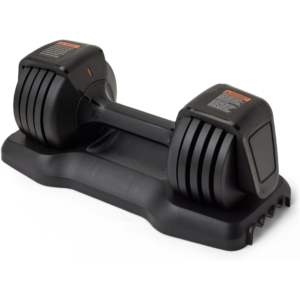
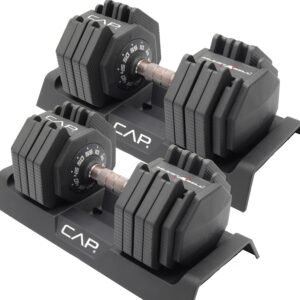
- Hold a light dumbbell in one hand
- Stand with the balls of your feet on a step so your heels sink a little below the edge at the bottom of each rep
- Add a pause at the top of each raise for 2 to 3 seconds
2. Single‑leg calf raises
Once standard calf raises feel easy, single‑leg calf raises help you build more strength and balance. They are especially helpful if you want to correct side‑to‑side differences.
How to do them:
- Stand near a wall or sturdy surface for support.
- Shift your weight onto one leg and slightly bend the opposite knee so your foot is off the floor.
- Press through the ball of your standing foot to lift your heel, coming up onto your toes.
- Squeeze your calf at the top, then lower slowly.
Start with 1 to 2 sets of 8 to 10 repetitions on each leg. You can add more reps as your strength improves.
To make this more challenging, try:
- Holding dumbbells by your sides
- Standing on a step to increase your range of motion
- Increasing your speed slightly for a more dynamic effort once you have good control
Single‑leg calf raises are a very effective way to focus on each calf separately and can be an excellent progression in your routine.
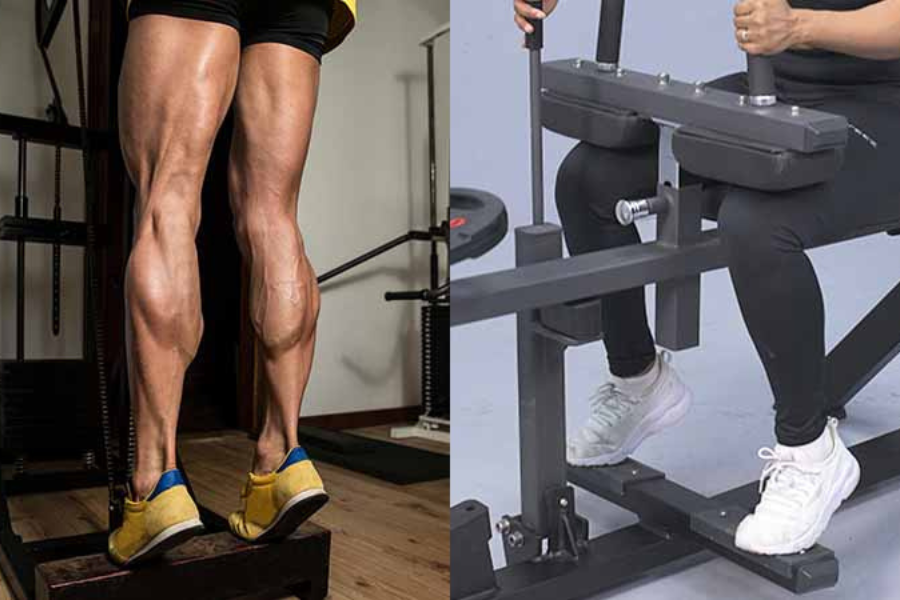
3. Bent‑knee or seated calf raises for the soleus
When you bend your knee, you shift more of the work to the soleus muscle, which plays a key role in endurance and posture.
You can do this exercise seated or standing with bent knees.
Seated version:
- Sit on a chair with your feet flat on the floor, hip‑width apart.
- Place something on your thighs for added resistance if you have it, such as a backpack or a pair of dumbbells.
- Keeping your knees bent to about 90 degrees, lift your heels as high as you can.
- Pause and squeeze, then lower your heels slowly back down.
Standing bent‑knee version:
- Stand with your feet hip‑width apart and knees lightly bent as if you are in a small squat.
- Keeping your knees at the same angle, lift your heels.
- Pause at the top, then lower with control.
Focus on a slow, controlled rhythm and aim for 2 to 3 sets of 12 to 15 repetitions. Seated calf raises are often used in bodybuilding programs and physical therapy because they target the soleus so directly.
4. Hopping drills for dynamic strength
Once you have built a base of strength with controlled calf raises, you can add simple hopping drills to make your calves more powerful and responsive.
Hopping exercises mimic the demands of running and sprinting by combining explosive calf raises with quick ground contact. They help you practice using your calf strength in real‑world movement.
Try this basic drill:
- Stand with your feet hip‑width apart and your knees slightly soft.
- Perform small hops in place, focusing on landing softly on the balls of your feet.
- Keep your torso upright and your heels off the ground as much as possible.
Start with 2 sets of 15 to 20 light hops. As you build confidence, you can:
- Hop side to side over a line on the floor
- Increase your speed a little
- Shorten your ground contact time so your feet spend less time on the floor
If you have a history of foot, ankle, or knee pain, progress more slowly or check with a professional before adding higher impact work.
Do not forget calf flexibility and mobility
Strength without flexibility can leave your calves feeling tight and uncomfortable. Tight calves may contribute to issues such as shin splints or plantar fasciitis. Regular stretching and mobility work help your muscles stay supple and support a healthy range of motion.
Simple calf stretch:
- Stand facing a wall and place your hands on it at about chest height.
- Step one foot back and press the heel of the back foot into the floor, keeping the knee straight.
- Lean gently into the wall until you feel a stretch down the back of your calf.
- Hold for about 30 seconds, then switch sides.
To stretch the deeper soleus muscle, repeat the stretch but bend the back knee slightly while keeping your heel on the floor.
Foam rolling your calves and doing stretches for related areas like your hamstrings, glutes, and lower back can also ease calf tightness, especially if nerve irritation or muscle imbalances are involved.
Combining calf strengthening exercises with regular stretching and foam rolling keeps your lower legs both strong and comfortable, which is key for preventing overuse injuries.
Building a simple calf routine
You do not need a long workout to see benefits. The key is consistency and gradual progression.
Here is a sample routine you can try 2 to 3 times per week:
- Warm up: 5 to 10 minutes of brisk walking
- Standing calf raises: 2 sets of 12 to 15 reps
- Single‑leg calf raises: 1 to 2 sets of 8 to 10 reps per leg
- Seated or bent‑knee calf raises: 2 sets of 12 to 15 reps
- Light hops in place: 2 sets of 15 to 20 hops (optional once you feel ready)
- Finish with calf stretches: 30 seconds per side, 2 to 3 rounds
If you are new to exercise or are recovering from a calf strain, start with fewer sets and lower repetitions. Over time, you can add weight, increase your repetitions, or introduce more dynamic moves.
Pay attention to your form. Keep your movements smooth and controlled, avoid bouncing at the bottom of each rep, and stop if you feel sharp pain. Mild muscle fatigue or a gentle burn is normal, but pain is a sign to ease off.
When to be cautious and seek help
Most people can safely start basic calf strengthening exercises at home. However, you should take extra care or talk with a healthcare provider if you:
- Have a history of calf tears or chronic strains
- Are experiencing sudden or severe calf pain
- Notice swelling, warmth, or bruising in your lower leg
- Have ongoing foot, ankle, knee, or back issues
Overuse injuries are common when the calves are pushed too hard without enough rest. Rest days, proper footwear, and balanced strength in your hips and glutes all help your calves do their job without getting overloaded.
If you have recently had a calf strain or tear, especially in the soleus, resting alone is usually not enough. A structured strengthening plan is important to avoid repeated strains when you return to running or sport.
Bringing it all together
Calf strengthening exercises might seem like a small addition to your routine, but they play a big role in how you move and feel. Strong, flexible calves help you walk, run, and jump with more ease and less risk of injury.
You can start simple today with one exercise, such as standing calf raises after your next walk. As that becomes a habit, layer in single‑leg and seated variations, along with a few quick stretches. Over time, your ankles will feel more stable, your stride will feel more powerful, and your lower legs will be better prepared for whatever activities you enjoy.
About The Author