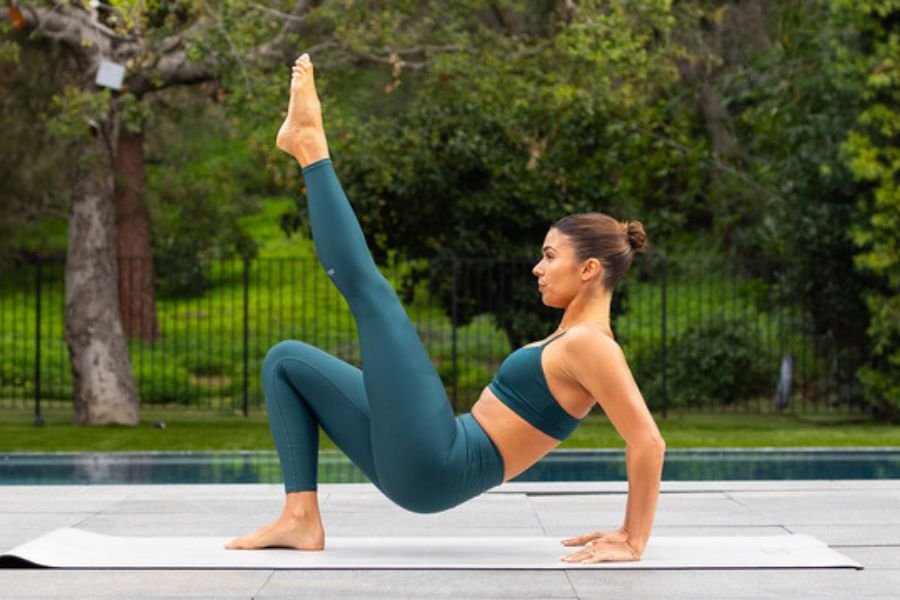
Does Yoga Count as Strength Training? Cardio? Both?
A yoga class can leave you sweaty, sore, and pleasantly tired. So does yoga count as strength training, cardio, or both? The short answer is that yoga can absolutely build strength and boost your heart health, but how much depends on the style you choose, how often you practice, and your current fitness level.
Below, you will see how yoga fits into strength and cardio guidelines, when it “counts” on its own, and when you might want to combine it with other workouts.
What counts as strength training and cardio?
Before you decide whether yoga fits the bill, it helps to know what experts mean by strength training and cardio.
Strength training usually involves:
- Working your muscles against resistance, like weights, bands, or your own body weight
- Getting close to fatigue in the muscles you are training
- Progressively making things harder over time
Researchers often look for improvements in muscle strength, endurance, or power. That can come from lifting dumbbells, using resistance bands, or holding your body in challenging positions, such as planks or lunges.
Cardio, or aerobic exercise, usually means:
- Your heart rate and breathing stay elevated for several minutes or longer
- Large muscle groups are working rhythmically, such as walking, cycling, or swimming
Public health guidelines commonly recommend at least 150 minutes per week of moderate intensity cardio plus 2 days per week of strength training for general health.
The big question is whether yoga sessions reliably tick those boxes.
How yoga builds strength in your body
When you think of yoga, you might picture long stretches and flexible poses. In reality, many yoga styles train your muscles in ways that look a lot like bodyweight strength work.
Isometric strength in yoga poses
Most yoga postures are isometric exercises. Your muscles contract without changing length as you hold a position. Example poses include plank, Warrior 2, Chair, and Boat.
A study that combined physical postures (yogasanas) with yoga breathing maneuvers for 12 weeks found significant improvements in muscular strength, flexibility, and balance in young adults, even when no weights were used (Journal of Ayurveda and Integrative Medicine). The postures functioned similarly to traditional resistance exercise through improved neural drive and muscle recruitment.
Other research has shown that consistent yoga practice increases muscle strength, flexibility, and balance, which supports the idea that yoga can serve as a form of strength training for a wide range of ages (Johns Hopkins Medicine).
Functional strength and muscle endurance
You might not be maxing out your squat with a barbell in yoga class, but you are often:
- Holding lunges and squats in poses like Warrior and Goddess
- Supporting your body weight on your arms in poses like Forearm Plank or Crow
- Engaging your core for long periods to stabilize in balancing poses such as Tree
These positions demand muscular endurance and what trainers call functional strength, meaning strength that helps you move and stabilize your body in everyday life.
A 12 week Hatha yoga program improved muscle strength and endurance along with aerobic fitness and flexibility in adults, not just stretchiness (GoodRx). Another study in older sedentary adults found that eight weeks of yoga significantly improved functional fitness, and the results were comparable to traditional strengthening exercises using bands and equipment (Self).
These changes suggest that for many people, especially beginners or those returning to exercise, yoga does count as strength training.
Where yoga strength has limits
Yoga is especially good at:
- Building endurance in your legs, hips, core, and shoulders
- Strengthening smaller stabilizing muscles that are sometimes ignored in the gym
- Improving joint control, balance, and mobility
However, experts note some limitations:
- Yoga includes many “pushing” movements, such as planks and arm balances, but very few “pulling” movements that would challenge muscles like your back in the same way as rows or pull ups (Man Flow Yoga)
- It is harder to apply very heavy, progressive resistance in yoga, so you may not reach your maximum strength and power potential the way you would with a barbell or machine weights
This is why weight training is usually considered more effective if your main goal is maximum muscle size and strength, while yoga shines for overall, balanced strength and control (Man Flow Yoga, Gaiam).
Does yoga count as strength training for you?
Whether yoga “counts” for you depends a lot on your starting point, your goals, and how you practice.
When yoga is enough on its own
Yoga can serve as your primary strength training if:
- You are new to exercise or returning after a long break
- You want to improve functional strength, balance, and mobility
- You prefer bodyweight movement over weights
- You do a moderately challenging style at least two or three times per week
Vinyasa, power, hot yoga, Ashtanga, and many Hatha classes often use sequences of lunges, planks, and standing poses that require you to support your body weight. These styles are particularly effective for building muscle strength, especially when you hold poses for longer or flow continuously between them (GoodRx, Self).
If you are consistent, you are likely to feel noticeably stronger in your legs and core, often within a few months.
When you should add other strength work
You may want to complement yoga with resistance training if:
- You want to build significant muscle mass or maximal strength
- You are an experienced lifter and yoga feels relatively easy
- You need more focused training for your back, arms, or a specific sport
Weight training allows you to add resistance in small, controlled jumps over time. Doctors and trainers still consider progressive resistance work with weights one of the most effective ways to prevent bone loss and maintain a healthy metabolism (Gaiam).
Many experts suggest a combination approach. Yoga gives you mobility, balance, and isometric strength. Weights and bands fill in gaps, especially for pulling strength and muscle mass (Man Flow Yoga).
If you like how you feel after yoga and you are getting stronger, it counts. If you have more specific strength goals, you can keep your yoga practice and simply layer other resistance training on top.
Does yoga count as cardio?
You might not think of yoga as heart pumping cardio, yet some practices can raise your heart rate and breathing enough to qualify as aerobic exercise.
Gentle vs vigorous styles
Gentle yoga styles, such as restorative or slow Yin, usually keep your heart rate fairly low. They are fantastic for relaxation, flexibility, and recovery, but they probably do not replace a brisk walk or bike ride when it comes to cardio.
On the other hand, vigorous styles like power yoga, Vinyasa, many Hatha classes, or hot yoga link breath with almost continuous movement. You might:
- Move repeatedly from plank to Chaturanga to upward dog
- Transition through standing sequences without long breaks
- Hold strong, leg heavy poses like Chair and Warrior for time
Research has found that these more active forms of yoga can improve aerobic fitness, meaning your body becomes better at using oxygen during exercise (GoodRx). For many people, a challenging Vinyasa or hot class feels similar to a moderate intensity cardio workout.
How to tell if your yoga is cardio
A simple way to check is to use your breathing and speaking as a guide during class:
- If you can talk but not sing, and your heart rate feels clearly elevated, you are likely in a moderate intensity cardio zone
- If you can only say a few words at a time before pausing, and the class feels very demanding, you are probably in a vigorous zone
If your yoga regularly feels like that for 20 to 40 minutes at a time, it can contribute to your weekly cardio quota.
Using yoga for strength, cardio, or both
You do not need to pick one label for yoga. With a little planning, you can use different styles and schedules to get a mix of strength and cardio benefits.
If you want mainly strength
Aim for:
- 2 to 3 weekly sessions of stronger styles, such as Vinyasa, power, Ashtanga, or standing pose focused Hatha
- Poses that challenge your legs, core, and upper body, like Chair, Warrior sequences, Plank variations, and balances like Crow or Side Plank
Holding these poses for longer periods or repeating flowing sequences several times makes the work more strength focused. If you want extra credit, gradually choose more advanced variations, such as moving from High Plank to Forearm Plank or adding arm balances (Yoga Journal).
If you want mainly cardio
Choose:
- Faster paced classes that keep you moving almost the entire time
- Flows where you move through sun salutations and standing sequences without long rests
Your goal is to keep your heart rate at a moderate level for at least 20 minutes. You can still get strength benefits, but the emphasis is on continuous movement.
If you want a balanced routine
If you like the idea of yoga serving as both strength training and cardio, a weekly mix might look like this:
- 2 days: Vigorous Vinyasa or power classes for strength and cardio
- 1 day: Gentle or restorative yoga for recovery and flexibility
- Optional 1 to 2 days: Short walks, cycling, or simple weight sessions if you want extra cardio or targeted strengthening
This kind of schedule can support general fitness, stress reduction, and long term joint health, without needing a gym membership.
Putting it all together
Yoga does count as strength training, especially for beginners and people returning to exercise, because it challenges your muscles with body weight resistance and improves endurance, balance, and functional strength (Johns Hopkins Medicine, GoodRx). Vigorous yoga styles can also contribute meaningfully to your weekly cardio when they raise your heart rate for sustained periods.
At the same time, traditional resistance training with weights or bands remains the most direct path to maximum muscle and bone strength, and adding it can fill in some of yoga’s gaps, particularly for pulling movements and higher loads (Gaiam, Man Flow Yoga).
You do not have to choose sides. You can let yoga be:
- Your main strength and cardio training if you are newer to exercise and your classes are challenging
- A powerful complement to an existing strength or cardio routine
- A recovery and mobility tool that keeps you moving well as you age
If you are unsure where to start, try two moderately challenging classes per week for a month and pay attention to how your body feels. You will have your own clear answer to whether yoga “counts” long before you step back on the mat for month two.
About The Author


