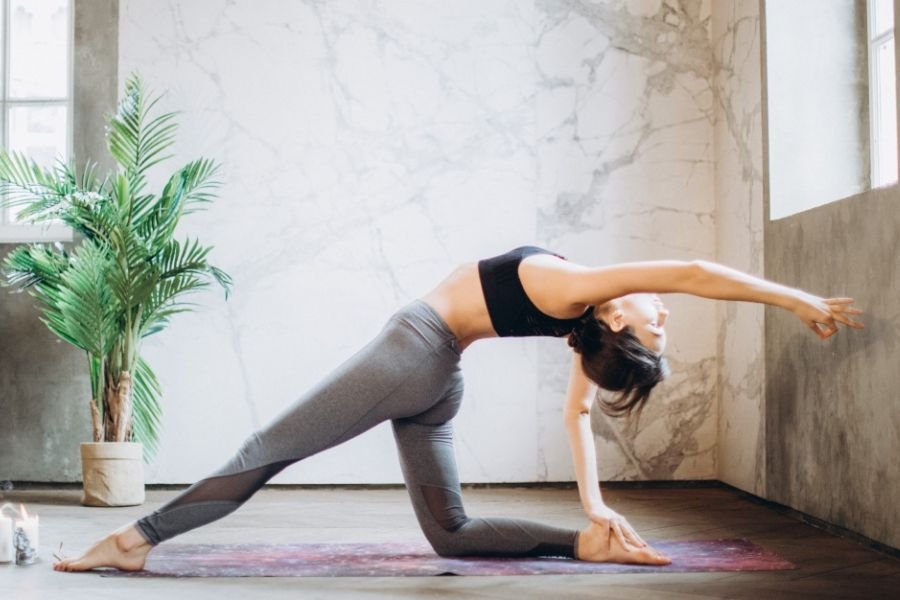
What is the best time of day to do yoga?
A common question when you start or deepen your practice is simple: what is the best time of day to do yoga? The honest answer is that there is no single perfect time that suits everyone. Your body, schedule, and goals all play a role, and research supports the idea that consistency matters more than the clock you practice by (Verywell Fit, militarydonor.com).
Instead of trying to force yourself into a rigid ideal, you can match your yoga practice to your natural rhythms. Below, you will see how morning, afternoon, and evening yoga each support your health differently, plus simple ways to choose a time that you can actually stick with.
Understand how your body clock affects yoga
Your body follows a circadian rhythm. This internal clock influences your hormones, body temperature, and energy levels throughout the day. It also changes how yoga feels at different times.
In the early morning, stress-related hormones tend to be higher, which is part of what helps you wake up. Your body temperature and muscle flexibility are usually lower at this time, so you may feel stiff on your mat (militarydonor.com). Later in the day, your body is warmer and your joints often feel more open, which can make certain poses feel easier.
Traditional yoga philosophy also highlights specific transition times in the day, called sandhyas, as especially powerful moments for practice. These occur around sunrise, noon, and sunset and are considered ideal for meditation and mindful movement because your energy is naturally shifting (Yoga International).
In practical terms, this means you can use your body clock as a guide instead of a rulebook. Morning might be best for clarity and discipline, afternoons for stronger physical work, and evenings for release and recovery.
If you remember only one thing: the best time of day to do yoga is the time you can show up for regularly.
Morning yoga to start your day
Morning yoga has a loyal following for a reason. It can set the tone for everything that follows, both physically and mentally.
Benefits of morning yoga
When you practice in the morning, you work with a quieter environment and a relatively blank slate in your mind. Traditional teachings, such as the concept of Brahma Muhurta between about 4 a.m. and 6 a.m., say this is the most auspicious time to practice because your mind is fresh from sleep and daily distractions have not begun yet (Yoga International).
Modern perspectives back this up in practical ways:
- A Danish study found that morning or afternoon yoga helped people stay more focused and even-tempered throughout the day. Evening yoga did not offer the same boost to daytime concentration (Women’s Health UK).
- Morning practice can energize you, sharpen your focus, and help you set clear intentions before the day pulls you in different directions (militarydonor.com).
- Some research suggests that people who naturally prefer mornings may show traits like conscientiousness and emotional stability, which can make it easier to maintain an early routine (Yoga Journal).
You may also find that morning sessions are easier to protect from interruptions than evening ones. There are usually fewer work demands, social obligations, or family tasks competing for your time.
What morning practice should look like
Because your joints and muscles can be stiff after sleep, morning yoga usually works best when you start slowly. According to guidance from several sources, a realistic morning practice can be:
- 10 to 30 minutes on busy days
- 30 to 45 minutes when you have more time (militarydonor.com)
Focus on:
- Gentle warm ups for the spine and hips
- Gradual standing flows like sun salutations
- Breathwork to wake up your nervous system
- Short meditation to set your mindset
If your main goal is physical health, some teachers recommend practicing around sunrise. This transition point is believed to support overall vitality and balance, even if your focus is more on fitness than on spiritual growth (Isha Foundation).
Afternoon yoga for strength and reset
Afternoon tends to be overlooked, but it can be an ideal time for yoga if your schedule allows it.
By this point in the day, your body temperature has usually risen, your muscles are more pliable, and your energy may be fluctuating. This makes mid to late afternoon a good window for either a strong session or a strategic reset.
Why afternoon sessions work well
Several experts point out that afternoon yoga can be especially helpful if you notice your stress and anxiety building as the day goes on. Stepping onto your mat can give you a much-needed pause before evening responsibilities start (Yoga Journal).
You might choose an afternoon practice if you:
- Feel too groggy or rushed in the morning
- Hit an energy slump after lunch
- Want time between work and home life to clear your head
- Prefer a physically stronger practice when your body is warm
Traditional teachings also recognize noon, one of the sandhya times, as a powerful moment to meditate. Even a short mid-day session can help you refocus, reset your posture, and reduce that heavy, mid-afternoon feeling (Yoga International).
How to use afternoons effectively
In the afternoon, you can typically move a bit more boldly. Your practice might include:
- Longer standing sequences or balance poses
- Strength-focused flows when you want a workout flavor
- Gentle backbends if you have been sitting all day
- Short breathing practices to counter screen fatigue
Some traditions suggest that yogic practices are best done before about 8:30 a.m. or after 4:00 to 4:30 p.m., when temperatures are cooler. This timing helps manage the internal heat that can build during practice, particularly in warm climates (Isha Foundation).
If you can step away for even 15 to 20 minutes, you may find that an afternoon session leaves you more productive and calm for the rest of your day.
Evening yoga for release and better sleep
If mornings feel impossible and afternoons are packed, you might naturally gravitate toward evening yoga. This is one of the most common times to practice, especially if you work standard hours.
Benefits of evening practice
Evening yoga helps you downshift from doing to being. It gives you space to process the day, release physical tension, and soften your nervous system before sleep.
Several sources point to clear benefits:
- Yoga in the evening can be an effective way to decompress, soothe your body, and support a better bedtime routine (Women’s Health UK).
- At least 20 minutes of yoga about an hour before bed has been linked to improved sleep in people who struggle with restlessness at night (Women’s Health UK).
- Restorative evening sessions can be especially helpful during colder, darker months when your nervous system may feel more strained. Slow poses plus breathwork can lower heart rate and blood pressure, which encourages deeper relaxation (Women’s Health UK).
Traditional teachings also recommend the sunset period as a good time for practice and meditation because it marks a natural transition from day to night. This can help you mentally separate work and home life (Yoga International).
How to structure your evening yoga
To support rest rather than overstimulation, the character of your evening class or home practice matters more than the exact hour.
Aim to:
- Practice 1 to 3 hours before bedtime, so your body has time to unwind (militarydonor.com)
- Choose slower, soothing poses, such as forward folds, gentle hip openers, and supported inversions (Himalayan Yoga Institute)
- Include breathing exercises that lengthen your exhale and cue your nervous system to relax
Avoid very intense, fast paced, or highly energizing sequences late at night. These can raise your heart rate and alertness and may make it harder to fall asleep, especially if you tend to be sensitive to stimulation in the evening (militarydonor.com).
Traditional yoga guidance on timing
If you are curious about the more traditional side of yoga, several sources outline how ancient wisdom and modern teachers view timing.
Across different lineages you will see some common threads:
- The sandhya times, or transitions at sunrise, noon, and sunset, are considered the most powerful moments to meditate and practice, because your inner and outer environments are shifting together (Yoga International, Isha Foundation).
- The Brahma Muhurta, roughly 3:30 a.m. to just before sunrise, is described as the most supportive for deep spiritual work. At this time the body and the planet are believed to be in a kind of subtle alignment that can enhance awareness (Isha Foundation).
- For purely physical benefits, such as strength and flexibility, many teachers favor around sunrise when the day is cool and quiet (Isha Foundation, Himalayan Yoga Institute).
Some schools recommend practicing twice a day, morning and evening, to keep your energy balanced, support spiritual progress, and prepare your body both to meet the day and to rest at night (Himalayan Yoga Institute).
If these ideas appeal to you, you can experiment with shorter sessions at these transition times and see how you respond. Start with 15 to 20 minutes and increase slowly as it feels comfortable (Yoga International).
How to choose the best time for you
Once you understand how different times of day support different benefits, you can choose based on your life instead of someone else’s ideal.
Ask yourself a few questions:
- What is my main goal right now?
- If you want energy and mental clarity, lean toward morning.
- If you want strength and a mid-day reset, try afternoon.
- If you want stress relief and better sleep, focus on evening.
-
When am I most likely to be consistent?
Experts emphasize that the best time is the time you can commit to regularly. Even 10 to 15 minutes of daily practice can be more helpful than a long session once a week (militarydonor.com, Verywell Fit). -
What fits my personality and lifestyle?
A psychotherapist quoted by Yoga Journal points out that you should match your practice time to your natural tendencies. If mornings make you anxious, you might benefit from a calming early session. If you wake up sluggish, an energizing flow may serve you better (Yoga Journal). -
What obstacles show up most often?
If evenings are always crowded with obligations or you are usually exhausted, you might be more successful with a short, protected morning window. If early alarms are unrealistic, give yourself permission to practice later without guilt (Himalayan Yoga Institute).
You can also experiment for a week at a time. Practice in the morning for seven days and notice how you feel. Then switch to afternoon or evening. You will quickly learn when your body and mind respond best.
Combine different times for maximum benefit
You do not have to choose just one time for the rest of your life. In fact, some experts suggest that you can get the best of all worlds by pairing shorter practices at different times of day.
For example, one approach that many people find sustainable is:
- A brief, energizing practice in the morning
- A slower, more restorative practice in the evening
This combination allows you to enjoy the clarity and focus of early movement plus the deep relaxation and sleep benefits of nighttime yoga (Women’s Health UK).
If you are new to yoga or to a regular routine, you can start small. Try:
- 10 minutes of gentle stretches and breathwork after waking
- 10 to 20 minutes of calming poses and slow breathing before bed
As you build the habit, you can extend either session or keep them short and focused. What matters most is that you show up for yourself in a way that feels supportive, not punishing.
Putting it all together
The question of what is the best time of day to do yoga can sound complicated, but your answer can be simple. You now know that:
- Your body and mind feel different at various times because of your circadian rhythm.
- Morning yoga is excellent for energy, focus, and discipline.
- Afternoon sessions work well for strength and a mental reset.
- Evening practice is ideal for unwinding, processing the day, and improving sleep.
- Traditional teachings highlight sunrise, noon, and sunset as especially potent moments, but modern experts agree that consistency is more important than exact timing.
If you are unsure where to begin, choose the time that feels easiest to protect for the next week and commit to just 10 to 15 minutes. Adjust from there based on how your body feels and how your life flows. Over time, you will naturally discover the rhythm that keeps you returning to your mat.
About The Author


